
Author: Ma Zhi
Published by the IoT Think Tank
Please indicate the source and origin when reprinting
—— [Introduction] ——
The IoT Think Tank will publish a series of articles written by Mr. Ma Zhi every Friday afternoon in the second article slot—”Exploring Domestic and International IoT Platforms”.

The IoT Think Tank will publish a series of articles written by Mr. Ma Zhi every Friday afternoon in the second article slot—“Exploring Domestic and International IoT Platforms”
—— Domestic ——
(1) Baidu IoT Hub Access
(2) Alibaba Cloud IoT Suite
(3) QQ IoT · Smart Hardware Open Platform
(4) JD Micro Link
(5) Smart Cloud IoT Cloud Service Platform and Smart Hardware Self-Development Platform
(6) Qingke Cloud FogCloud
(7) Ablecloud IoT Self-Development and Big Data Cloud Platform
(8) China Mobile IoT Open Platform OneNet
—— International ——
(1) Amazon AWS IoT
(2) Microsoft Azure IoT
(3) IBM Watson IoT
(4) Ayla Networks
Platform Positioning
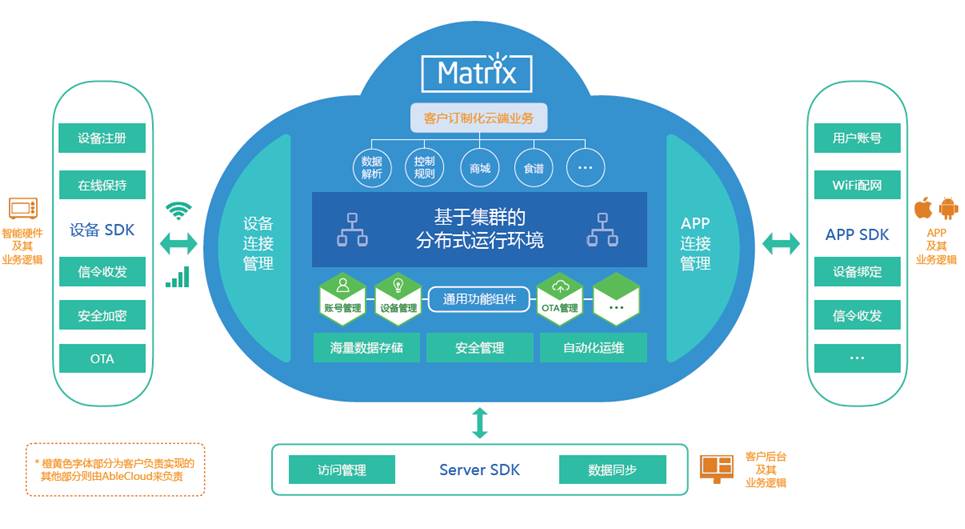
The platform is aimed at IoT hardware manufacturers, providing infrastructure for device networking and management, remote viewing and control, customized cloud function development, and massive hardware data storage and analysis, accelerating the intelligent networking of hardware.
Architecture
Services
Hardware Development
Hardware Development – Device Networking Firmware
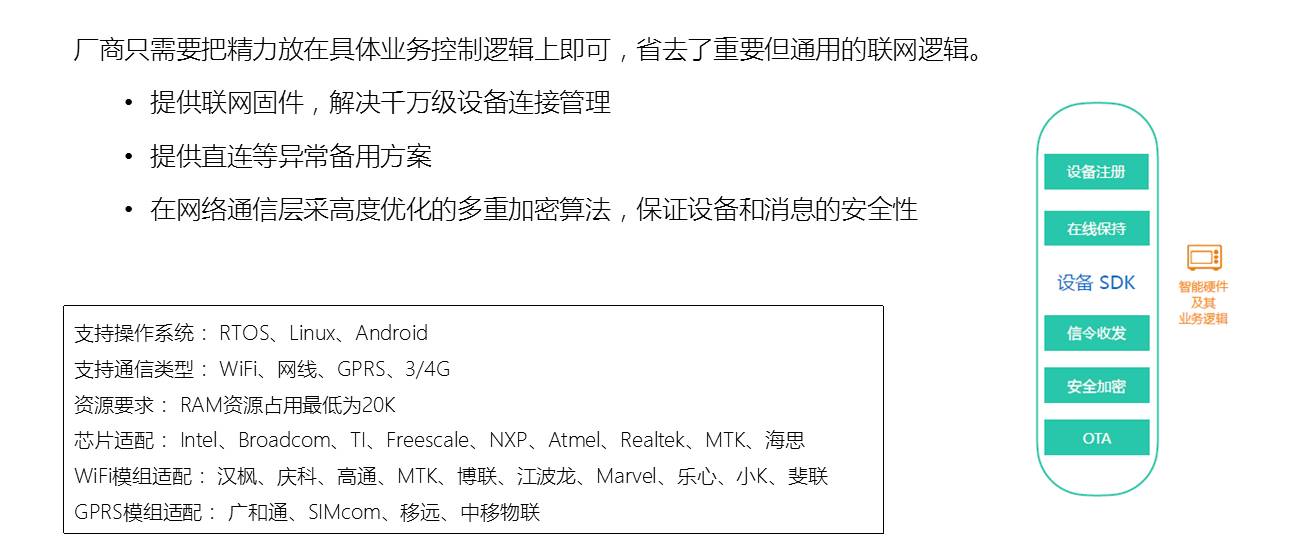
The networking firmware has excellent adaptability and has successfully run on more than ten networking modules from mainstream WiFi manufacturers, using a binary protocol optimized algorithm to meet stringent power consumption requirements with high operational efficiency and low runtime resource consumption:
-
Device Authentication: Uses RSA encryption algorithm to enhance device security and reduce complexity in manufacturing;
-
Traffic Control: Reasonable allocation of resources such as bandwidth to prevent resource contention and congestion;
-
OTA Upgrade: Enables firmware to be downloaded and updated over the network, supporting various methods such as silent, forced, and targeted upgrades;
Currently, the platform supports not only WiFi devices but also provides complete access solutions for devices using different communication protocols such as SIM cards and Bluetooth.
Hardware Development – WiFi Product Access
For WiFi product access, Ablecloud provides two development modes:
-
Using MCU+WiFi for development: In this mode, manufacturers choose an MCU based on their business needs and implement their business logic on the MCU. Ablecloud provides corresponding standard WiFi firmware based on the WiFi module model. The MCU only needs to communicate with the cloud according to the communication instructions set by Ablecloud.
-
Direct secondary development on the WiFi module: Manufacturers directly utilize the processor on the WiFi module to implement the corresponding business logic. Ablecloud provides the firmware source code for the corresponding WiFi module, allowing manufacturers to conduct secondary development based on the source code.
Ablecloud uses binary format protocol communication, adopting big-endian format.
APP Development
APP Development – SDK Main Features
-
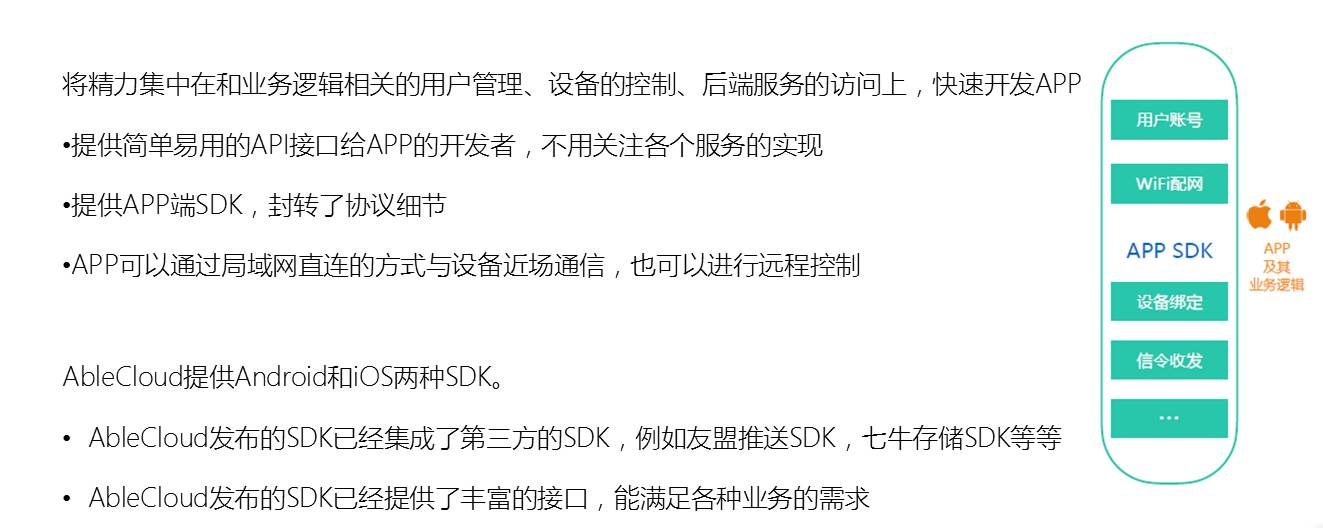
Account System: Login, registration, sending verification codes, third-party login, user avatars, user personal information.
-
Device Activation: Configuring router passwords for WiFi devices using technologies like smartconfig.
-
Device Management – Standalone Devices: Binding, unbinding, sharing, and inviting standalone devices.
-
Device Management – Gateway Devices: Binding, unbinding, sharing invitations, and adding, deleting, sharing, and inviting sub-devices.
-
Device Management – Home Model: Device management based on family units, including creating and deleting families and rooms; adding and deleting standalone and gateway devices in families and rooms; adding and deleting family members.
-
OTA: Checking for firmware updates, displaying update content, and confirming device firmware updates.
-
Real-time Message Synchronization: Real-time synchronization of data between the APP and the storage based on websocket.
-
Scheduled Tasks: Setting scheduled tasks for devices via the APP. The cloud will send the set instructions to the device at the scheduled time.
-
Push Notifications: The APP receives push notifications from the cloud.
-
File Storage: Storage of block files such as images and audio.
-
Access Services: Accessing cloud UDS services.
-
User Feedback: AbleCloud provides an interface for user feedback on the APP side. Developers can create a page for users to submit feedback.
-
Leaderboard: The SDK provides a user leaderboard feature, allowing real-time updates and cumulative ranking data for sports, points, etc., with top ranking features available by day, week, and month.
-
Weather Query: The SDK can retrieve outdoor PM2.5, AQI (air quality), and weather conditions.
Backend Service Development
-
Provides a service development framework and cloud runtime platform, allowing developers to focus solely on implementing their business logic without worrying about RPC service framework development, service publishing, deployment, scaling, monitoring, and operations.
-
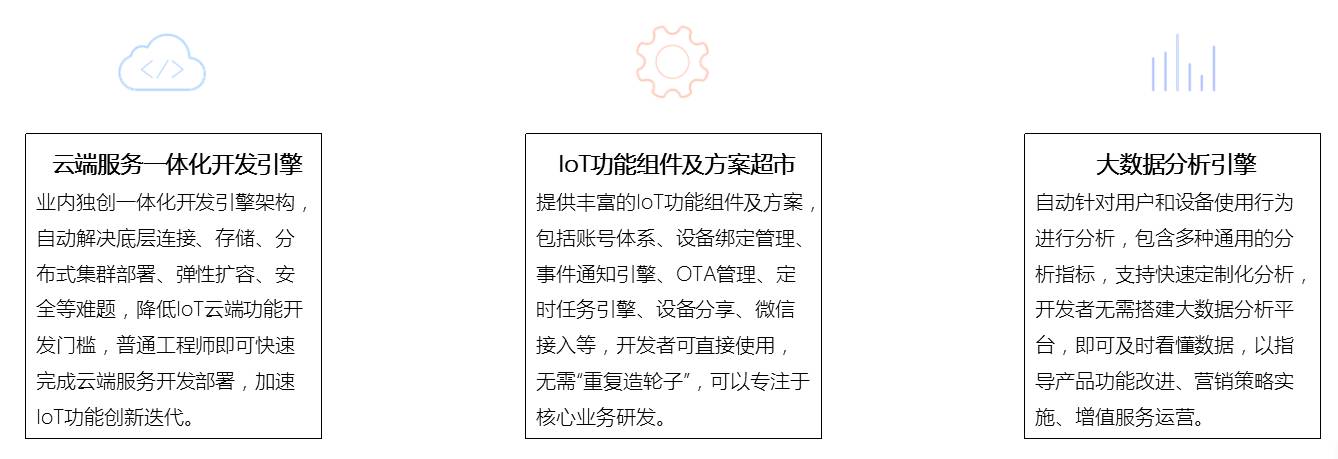
Offers a series of general cloud services that developers can directly apply without redundant development, significantly speeding up development.
-
Supports UDS (User Defined Service) for developing backend user-defined services. UDS is a Java program running on the AbleCloud cloud platform, primarily used to process data reported by devices and control commands and queries sent from the APP to the device.
IoT Functional Components and Solution Supermarket
-
Device Access Engine: To accelerate manufacturer access speed, mainstream WiFi modules are adapted. After burning the firmware provided by AbleCloud into the WiFi module, the device can connect to the cloud.
-
Device Binding Management: Provides the most suitable device binding management methods for smart devices in different application scenarios such as wearables, smart homes, and smart buildings.
-
Device Sharing: Supports one-person management and multi-person shared use of smart devices. Users only need to scan the QR code shared by the manager to gain access to the corresponding device.
-
Device Group Management: Smart devices can be grouped by usage scenario, location, or user, allowing unified control of devices within the same group.
-
Event Notification Engine: Deeply integrated with the mature APP notification system of Youmeng, supporting notification forms such as SMS and email, ensuring timely delivery of event notifications to users.
-
Local Device Interaction: No need to worry about the broadband network situation of the router; the APP and devices can directly perform quick operations and responses within the same WiFi environment.
-
OTA Management: Supports full upgrades, incremental upgrades, targeted upgrades, silent upgrades, manual upgrades, and version management and upgrade tracking.
-
Scheduled Task Engine: Scheduled tasks for smart devices can be configured and executed by the cloud, notifying devices to respond on time, enabling collaborative IoT intelligence.
-
Large File Storage: Supports storage of documents, images, audio, and video generated by devices and the APP, with a maximum single file capacity of 4GB.
-
WiFi Device Access Solutions: WiFi devices can connect directly to the cloud and perform local interactions, providing SDKs compatible with RTOS, Android, Linux, etc., allowing device-side calls to achieve connection, authentication, and transmission functions with the cloud.
-
Bluetooth Device Access Solutions: Bluetooth devices need to report data to the cloud via the APP, providing SDKs compatible with iOS, Android, and H5 pages, allowing APP or H5 page calls to achieve connection and reporting to the cloud.
-
SIM Card Device Access Solutions: SIM card devices interact directly with the cloud, characterized by strong mobility and limited internet traffic, achieving a good balance between communication real-time and traffic usage efficiency to meet the needs of different device applications.
-
Gateway Device Access Solutions: Gateway devices not only connect to the cloud but also manage connections with sub-devices, providing a comprehensive solution for remote control, gateway configuration synchronization, and data reporting for gateway devices and their sub-devices.
Integrated Smart Development Engine
Relying on public IaaS platforms (Alibaba Cloud and AWS), designed with a microservices approach, the development engine features automatic load balancing, adaptive elastic scaling, and distributed deployment capabilities, providing a simple and easy-to-use cloud service development framework, supporting manufacturers in customizing their business development and providing one-stop application hosting services for online operations and monitoring throughout the entire lifecycle.
Virtual Development Platform: It adopts PaaS virtualization technology, supports rapid verification of product prototypes, convenient development of customized business services, supports local quick debugging and cloud system testing, and automatic service deployment, helping developers quickly develop and debug cloud services.
Automated Operation and Maintenance System: Automatic distributed deployment, building a 7*24 operational guarantee system to ensure the normal and efficient operation of each service node, effectively improving the stability and reliability of online services through automated fault handling.
Big Data Analysis Engine
Launches a data mining algorithm operation platform and report engine, supported by a streaming data real-time computing engine, enabling efficient implementation of general mining algorithms and developer self-researched algorithms, with results displayed in a user-friendly report format, supporting the following features:
-
General Analysis Models: Encapsulates general analysis models such as group analysis, funnel analysis, retention rate analysis, and session analysis, making it easy for teams without algorithm engineers to perform basic big data analysis.
-
User Profile: The real-time analysis platform supports customized profiles for users and devices for analyzing various profile attributes.
-
Offline Big Data Mining: Provides developers with offline data mining tools for mining offline local data sets.
Big Data Analysis Platform Features
-
Real-time Big Data Collection: Operational data generated by smart devices and behavioral data generated by users can be real-time aggregated to the cloud for storage, available for data analysis and self-learning.
-
Massive Data Processing: The output speed of data analysis results depends on the processing speed of historical massive data, supporting T-level data processing simultaneously, achieving second-level output of computation results.
-
Highly Encapsulated General Analysis Models: Encapsulates general analysis models such as group analysis, funnel analysis, retention rate analysis, session analysis, and interval distribution analysis, making it easy for teams without algorithm engineers to perform basic big data analysis.
-
Real-time Data Analysis: Ordinary data analysis engines can only support analysis of data from nearly a day ago, while streaming real-time computing engines can analyze data from nearly 10 minutes ago.
-
Profile: The analysis platform supports customized profiles for users and devices for analyzing various profile attributes, helping accelerate product iteration and optimize user experience based on big data, and helping discover potential users and optimize marketing strategies through big data mining.
-
Group Classification: Manufacturers can filter interested user groups based on conditions and save them for any subsequent analysis. Groups can include both users and devices.
-
User Portrait: Supports tagging analysis results for user portraits. User portraits serve as a broad portrait function, supporting not only users but also devices.
-
Offline Big Data Mining: In addition to providing a powerful online data mining engine, offline data mining tools will also be provided for developers to mine offline local data sets.
-
Open Data Analysis Open API: An open data analysis Open API is available, allowing developers to import externally stored data into the engine for analysis and computation.
Security Solutions
Adopts a multi-layer security protection system, encrypting communication protocols and access security authentication for the APP side, cloud side, and device side, ensuring the security of smart hardware communication and data. Specific measures include:
-
The database is backed up in real-time through replica replication, with regular full backups of data, and all read and write operations on the database are processed through escaping to prevent external injection attacks;
-
The device access process to the cloud undergoes four handshakes for secure authentication via RSA protocol; after device access, signaling is encrypted using dynamic AES to ensure the security of data transmission;
-
Interactions between the APP and the cloud are authenticated based on user identity, using SHA1 signature algorithms to prevent replay attacks and account forgery attacks; the account system employs encryption measures to prevent brute force attacks such as database dumping and account cracking;
-
Conducts security audits on account/mobile/device behaviors, managing control models based on binding relationships to protect devices from malicious control in various scenarios.
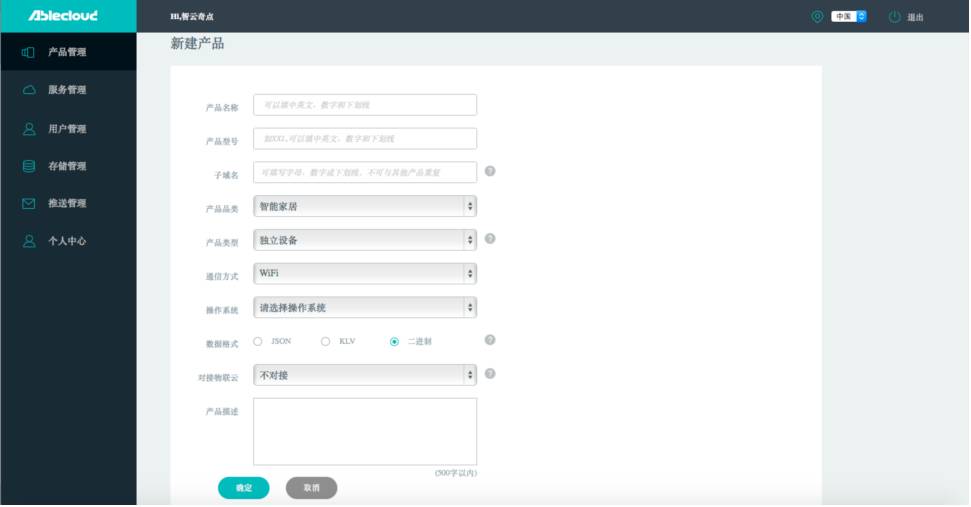
Development Interface – Create Product
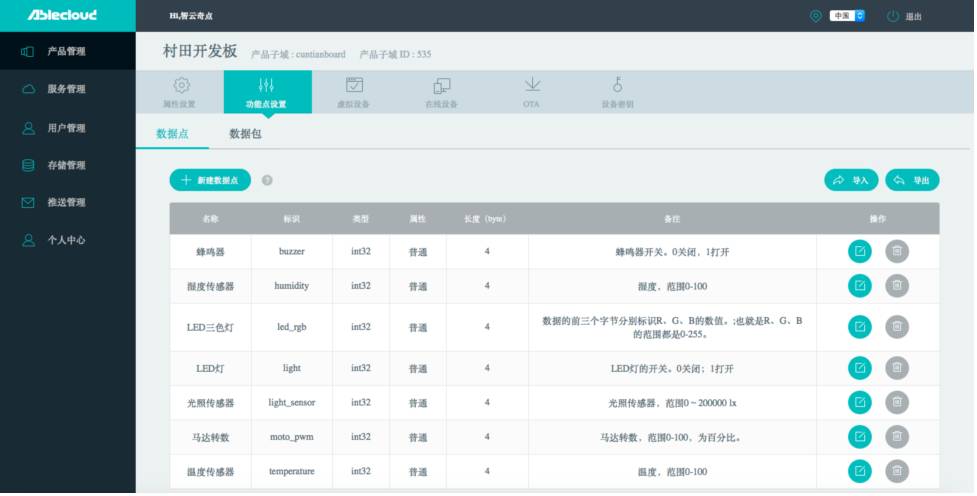
Development Interface – Data Point Definition
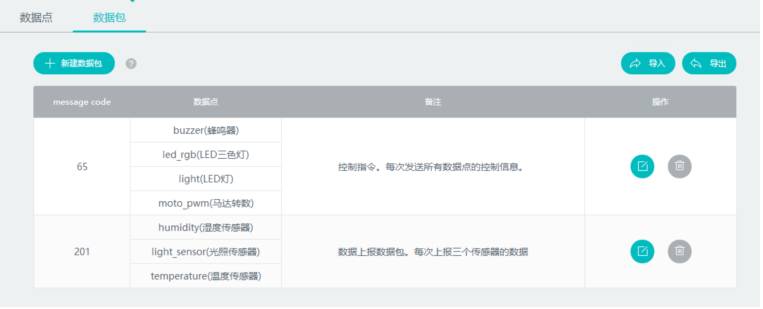
Development Interface – Data Packet Definition
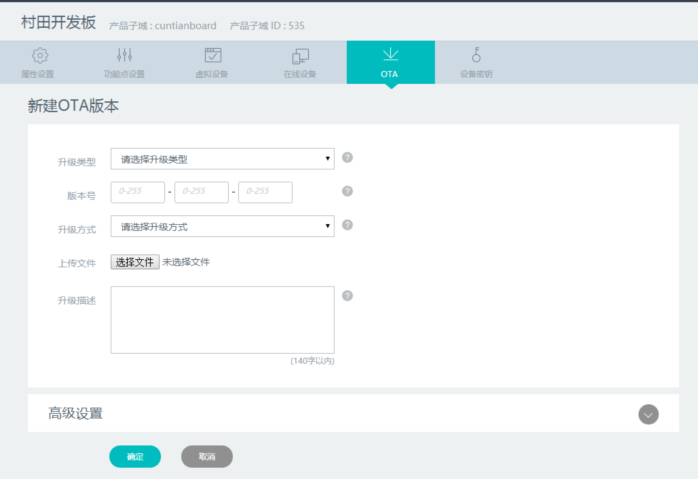
Development Interface – OTA
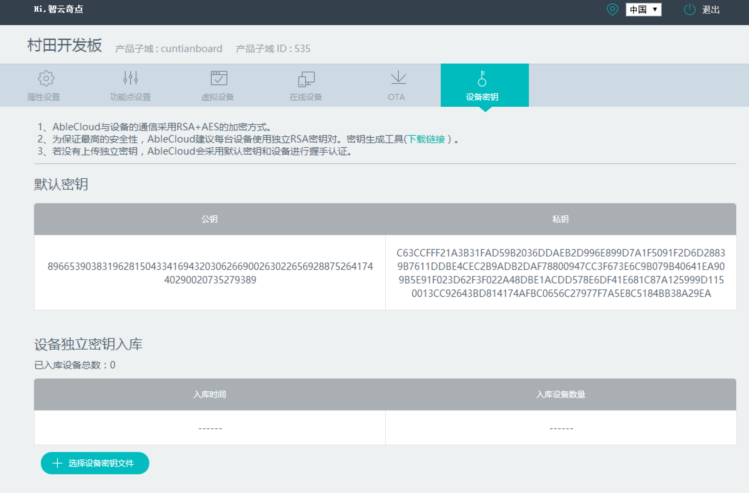
Development Interface – Device Secret Key
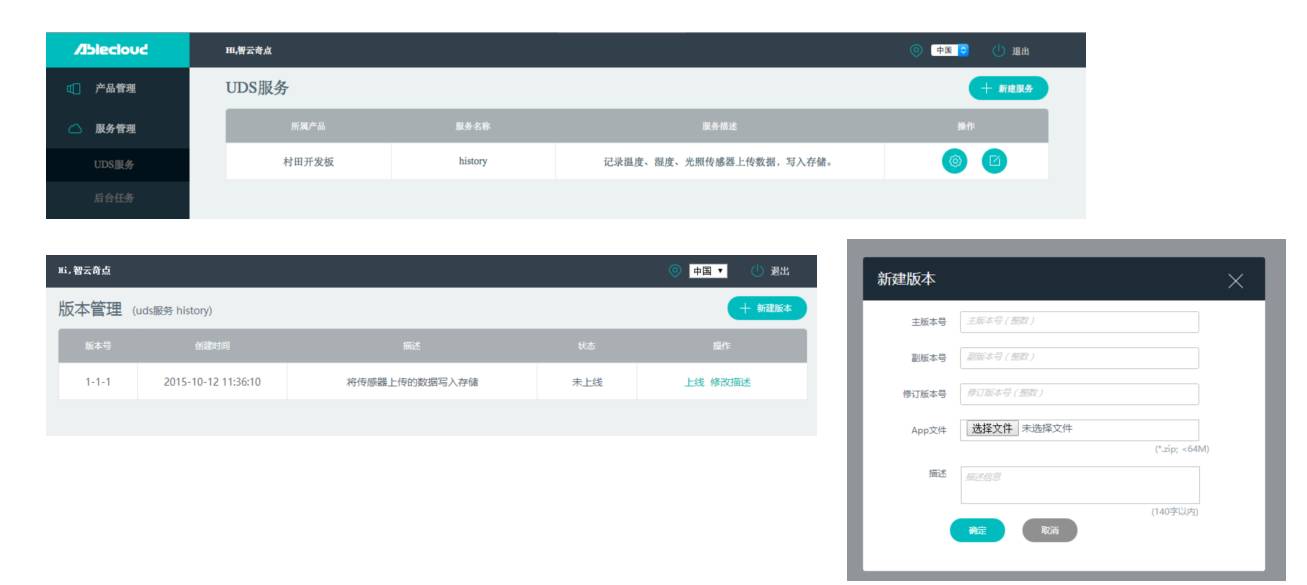
Development Interface – UDS User Defined Service
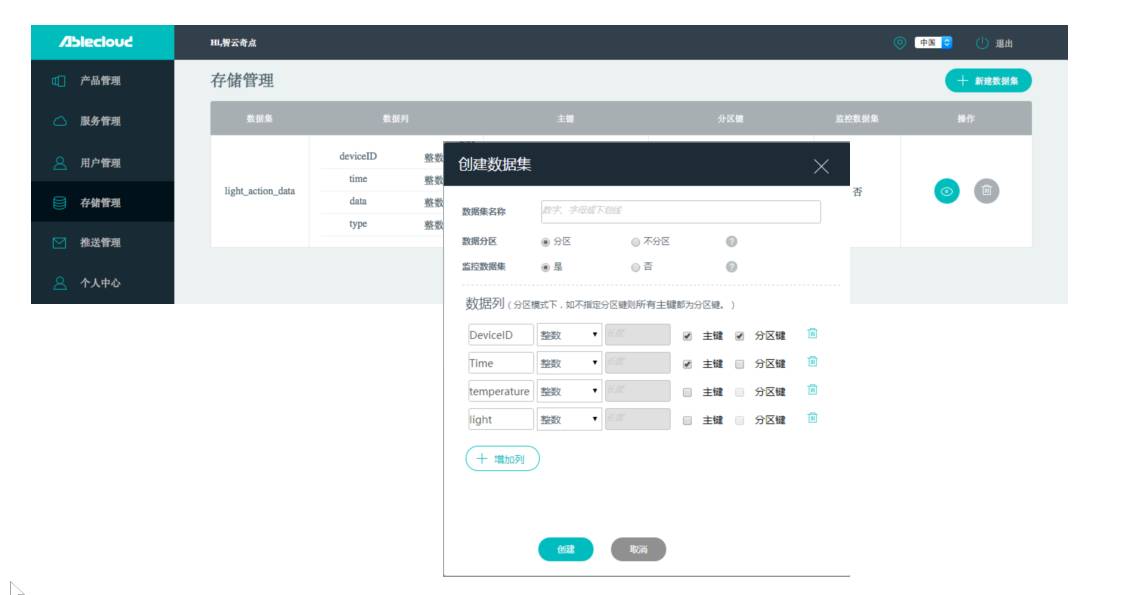
Development Interface – Data Set Storage

Previous Popular Articles (Click on the title to read directly):
-
[Heavyweight] IoT Industry Panorama Report, Leading the Domestic IoT Industry’s Two-Dimensional Perspective
-
Interview with Academician Wu Hequan: Four Good News Indicate That IoT Development Has Entered the Right Track
-
The First Low-Power Wide Area Network (LPWAN) Market Report in China Released: Where is the Next IoT Opportunity? [Text Version]
-
A Cartoon Explains: What is LoRa Behind NB-IoT That Everyone is Talking About?
-
A Cartoon Explains: Besides WiFi and Bluetooth, What Can the Recently Popular NB-IoT Do?
-
McKinsey’s Heavy Report: How Can Enterprises Tap into the Value of “Industry 4.0”? (Collection Edition)