

Introduction
Surgical robots are advanced medical devices invented with the development of minimally invasive surgery and related underlying technologies.Surgical robots are used to achieve precision control of surgical instruments in the field of minimally invasive surgery that exceeds human capabilities. Surgical robots typically consist of a surgical control console, a surgical cart equipped with robotic arms, and an imaging system. Surgeons sit at the surgical control console, viewing a three-dimensional image of the surgical area transmitted by an endoscope placed inside the patient, and control the movement of the robotic arms as well as the surgical instruments and endoscopes attached to them.The robotic arms simulate human arms, providing surgeons with a range of movements that mimic human wrist actions while filtering out hand tremors.The robotic surgical system is a comprehensive integration of multiple modern high-tech means, widely used in clinical surgical applications. Surgeons can operate the robot away from the surgical table, which is a completely different concept from traditional surgery, and is undoubtedly a revolutionary surgical tool in the field of minimally invasive surgery worldwide.After decades of development, surgical robots are now mainly used in five rapidly growing major surgical fields, among which orthopedic surgical robots are an extremely important segment.
Market Overview
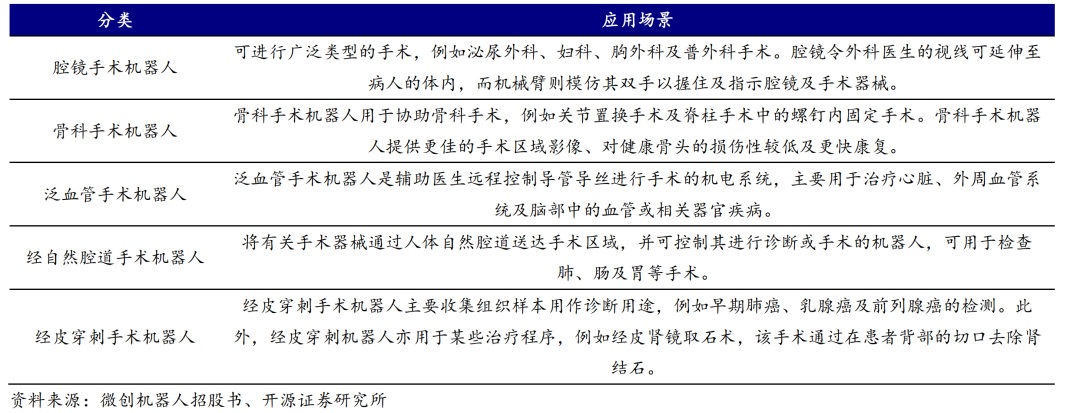
Currently, with the rapid penetration of new technologies such as artificial intelligence and the Internet of Things, healthcare is fully integrating with robotics, leading to a major transformation in surgical technology.The surgical robot industry is experiencing rapid development, with a hot market that attracts significant capital investment.According to Frost & Sullivan statistics, the global robotic surgery market was valued at $6.1 billion in 2020, and is expected to grow at a compound annual growth rate of 17.60% from 2021 to 2028, reaching $22.27 billion by 2028 (approximately 141.4 billion yuan).China’s surgical robot market is developing rapidly, according to Frost & Sullivan statistics, the market size increased from 853.6 million yuan in 2016 to 2,934.5 million yuan in 2020, with a compound annual growth rate of 36.2%. It is expected that by 2030, the market size of surgical robots in China will reach 58,425.9 million yuan, with a compound annual growth rate of 34.9%.Surgical robots apply robotic technology in the medical field, and evidently, robotic surgery refers to the type of surgical procedures performed using robotic systems, with the development of robotic-assisted surgery aiming to overcome the limitations of existing minimally invasive surgical procedures and enhance surgeons’ capabilities in performing open surgeries.Surgical robots integrate various disciplines such as medicine, materials science, automatic control, digital image processing, biomechanics, and robotics into a new interdisciplinary science. Generally, from the perspective of clinical medicine application, surgical robots can be mainly divided into laparoscopic surgical robots, orthopedic surgical robots, vascular surgical robots, natural orifice surgical robots, and percutaneous surgical robots.The following two figures illustrate the application scenarios and market size of each major segment of surgical robots for readers’ reference.
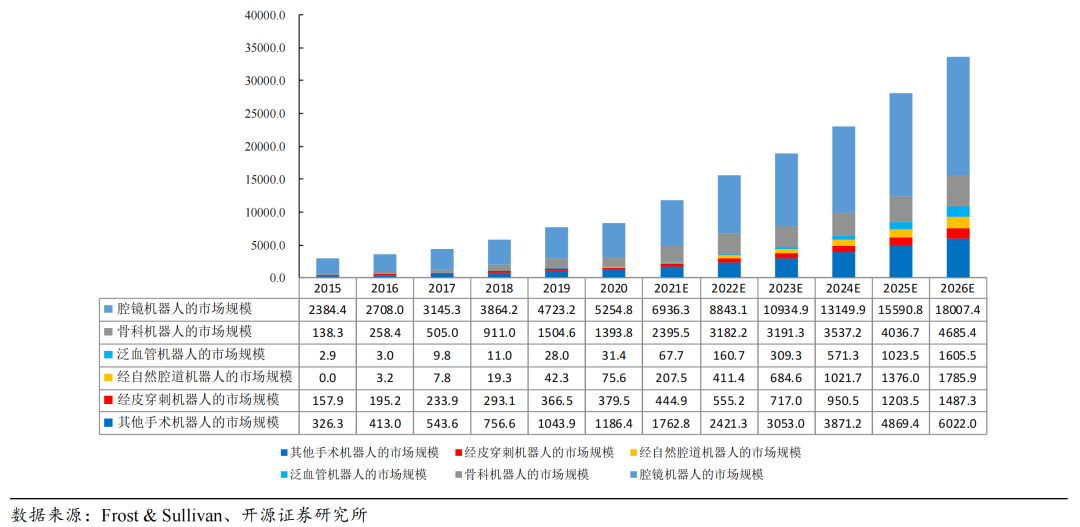
Orthopedic surgical robots refer to advanced medical devices that can be operated by strictly trained doctors during orthopedic surgeries, capable of executing surgeries according to the doctor’s plan.The orthopedic surgical robot system mainly includes: “brain” — the main control computer system; “eyes” — optical tracking system; “arms” — robotic arm host.Orthopedic surgical robots are primarily applied in three types of surgeries, namely joint replacement surgeries, spinal surgeries, and orthopedic trauma surgeries.Robot-assisted joint replacement surgeries are the most widely used and complex among these three types of surgeries. According to data from Frost & Sullivan, the global market size for joint replacement surgical robots was $725.0 million in 2020, accounting for approximately 52.0% of the global orthopedic surgical robot market.According to data from Frost & Sullivan, the number of robot-assisted joint replacement surgeries completed in China increased from zero in 2015 to 243 in 2020, and is expected to further grow at a compound annual growth rate of 162.8% from 2020 to 2026, reaching 79,964 cases by 2026. The penetration rate of robot-assisted joint replacement surgeries in China was below 0.1% in 2020, and is estimated to reach 3.1% by 2026.The author believes that as time progresses, major manufacturers in the domestic surgical robot market will face the following five aspects of competition:1.Technical battle, with many entrants, severe competition, and currently, foreign advanced giants have certain advantages in technology; domestic manufacturers can only stand out by being “superior” in technology.2.Clinical battle, although there are many types of surgical robots, it is still an industry under strong regulatory scrutiny of medical device laws, and the market audience is primarily large hospitals in big cities; in the process of so many brands being launched, clinical resources have become extremely precious.3.Financing battle, surgical robots are highly multidisciplinary products, with long R&D cycles, high clinical requirements, and tight human resources in all aspects, which inevitably require substantial investment; thus, the play of surgical robots in the capital market is essentially “the stronger the capital, the higher the success rate”.4.Marketing battle, as domestic and foreign manufacturers gradually launch their products, they need to “sell out” and require recognition from various market groups, and more importantly, need to occupy market share; therefore, “selling well” among many similar types of surgical robots with the same indications is the ultimate goal of major manufacturers and a “long-term strategy”.5.Patent battle, patents are extremely important for surgical robots; they represent not only the evolution of technology but also an important weapon for various surgical robot manufacturers in market competition, even the “ultimate weapon”; avoiding design risks and occupying market share requires the assistance of patents, and the success of Da Vinci in the field of laparoscopic robots is precisely due to patents.
MAKO Exploration
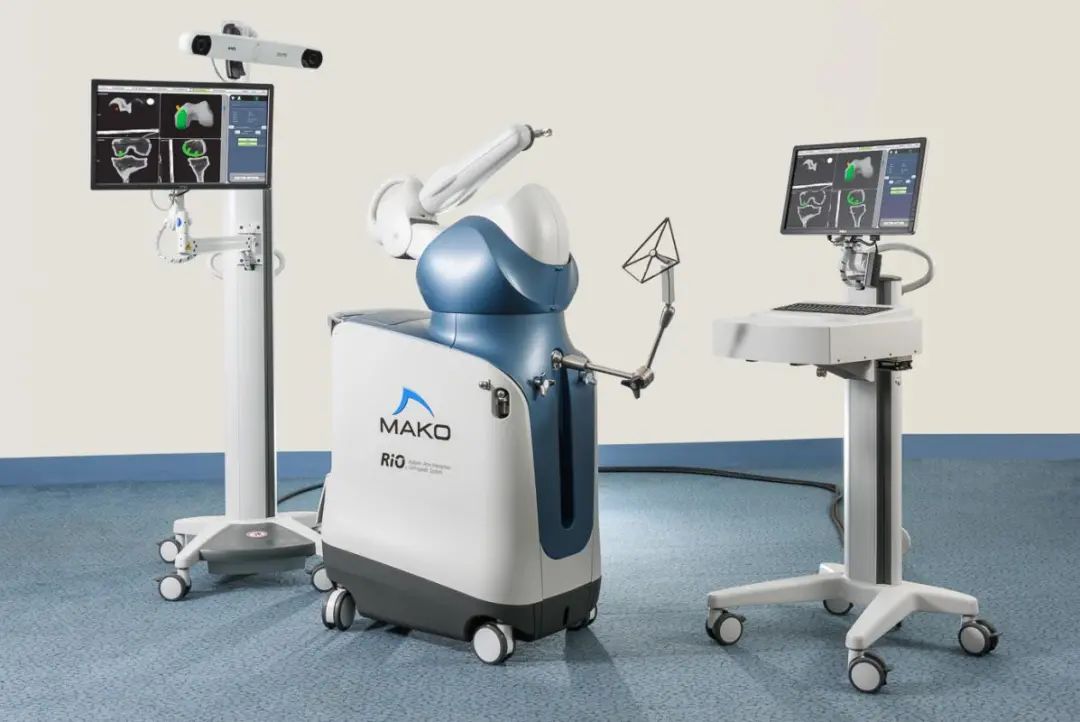
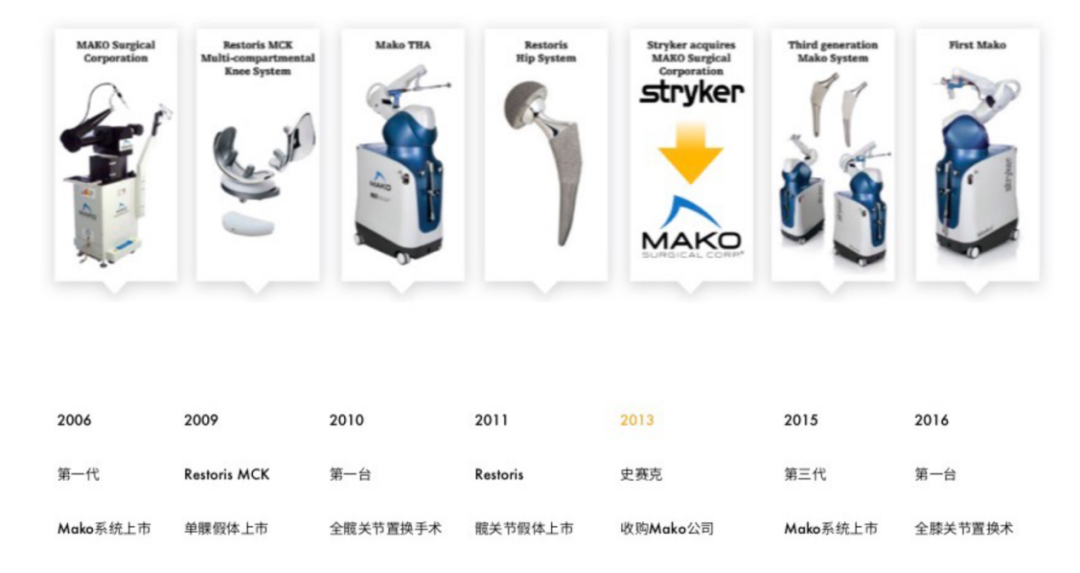
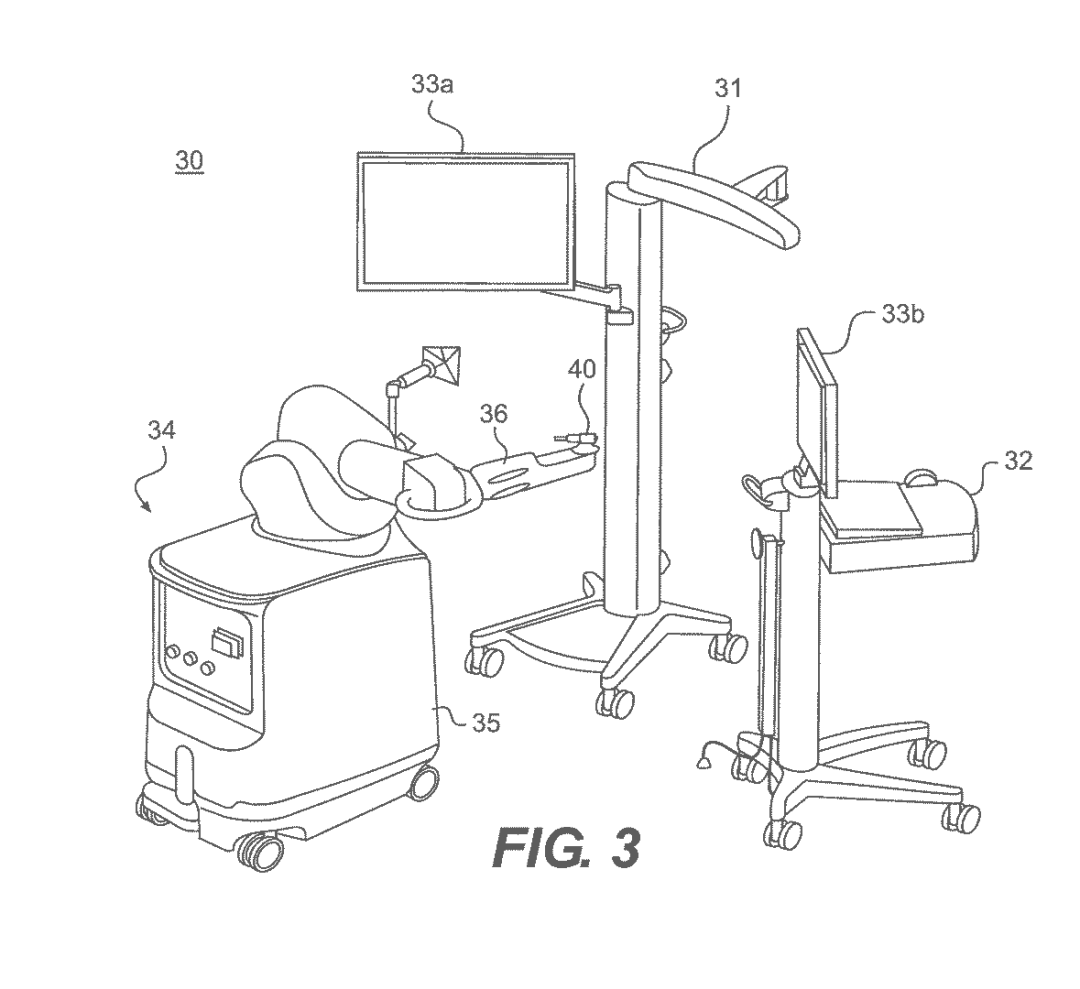
The Mako surgical robot was launched in the United States in 2006 and can assist doctors in performing total hip arthroplasty, total knee arthroplasty, and partial knee arthroplasty.As of 2020, over 28 countries worldwide have installed and used Mako robots, completing over 350,000 surgeries in 14 years.The Mako robot is based on two core technologies: intelligent surgical planning technology and intelligent assisted osteotomy technology.The intelligent surgical planning technology creates a 3D intelligent model based on CT scans to generate personalized surgical plans for patients, while providing dynamic adjustments during surgery to maximize the precision and personalization of joint surgeries. The intelligent assisted osteotomy technology employs an innovative and efficient osteotomy module that integrates high-speed milling, oscillating saws, and power tools, while achieving millimeter-level precise osteotomy control and cruise protection during surgery, empowering the surgeon to achieve minimally invasive and refined osteotomy control.The following figure shows a product illustration of the Mako surgical robot.
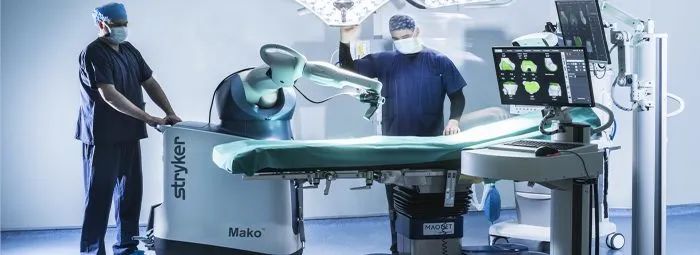
Stryker Corporation is one of the largest orthopedic and medical technology companies globally, headquartered in Kalamazoo, Michigan, USA, with 14 production, research, and sales divisions worldwide, covering products related to joint replacement, trauma, craniofacial, spine, surgical equipment, neurosurgery, ENT, interventional pain management, minimally invasive surgery, navigational surgery, and emergency transport.In 2013, Stryker acquired Israeli Mako Surgical Company for nearly $1.7 billion, successfully bringing Mako under its umbrella, and is committed to improving its surgical applications based on Stryker’s excellent prosthetics.It is not an exaggeration to say that the acquisition of Mako has brought significant benefits to Stryker, making Mako the most advanced joint replacement surgical robot, widely adopted globally.The working scene of the Mako surgical robot is shown in the following figure:
Patent Analysis
For patents related to the Mako surgical robot, the author conducted a search on the patent situation concerning the Mako robot, and the results are presented as follows:
Technical Context
In 2006, the first generation of Mako orthopedic robots was born in Florida, USA, successfully performing the first partial knee replacement surgery.In 2015, the third generation Mako intelligent orthopedic robot system was launched, successfully integrating Accolade and Trident series prosthetics into total hip replacement applications.In 2016, after successfully performing the Triathlon total knee replacement surgery, it marked the maturity of the Mako intelligent orthopedic robot system’s application in joint replacement and fully demonstrated the advantages of robotic surgery.The following figure shows the technical development roadmap of the Mako orthopedic robot.
Patent Overview
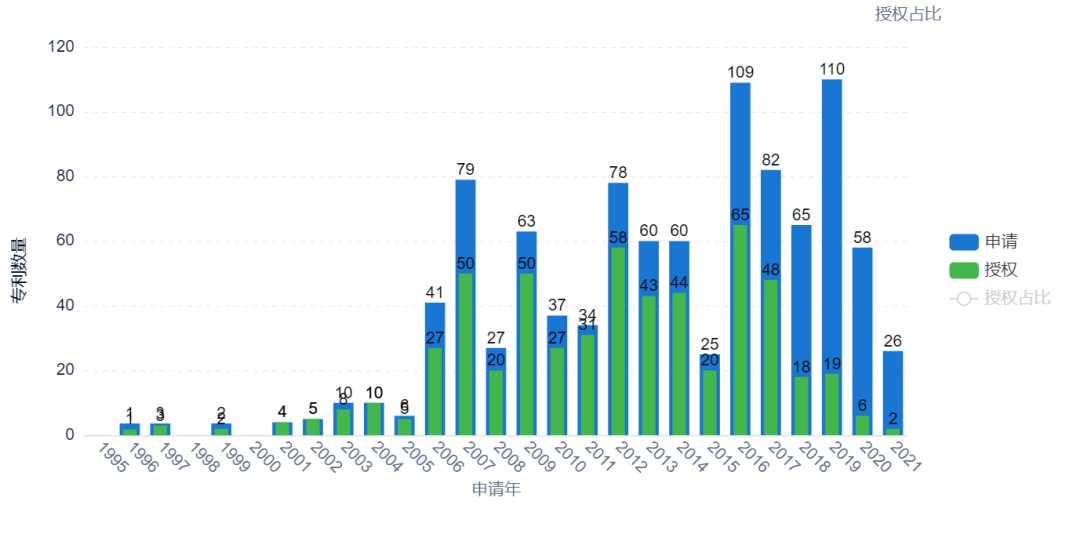
The following figure shows the application and authorization status of patents related to the Mako surgical robot.
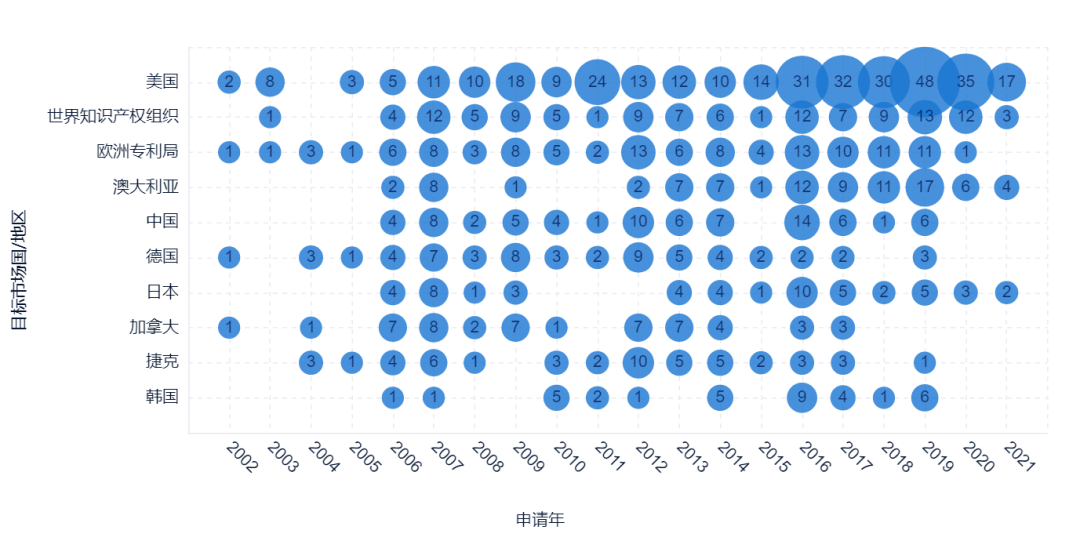
The following two figures illustrate the patent layout situation of the Mako surgical robot, clearly showing the geographical distribution of Mako’s patents, with the primary target countries for patent applications concentrated in the United States, Europe, and China, among other regional centers.

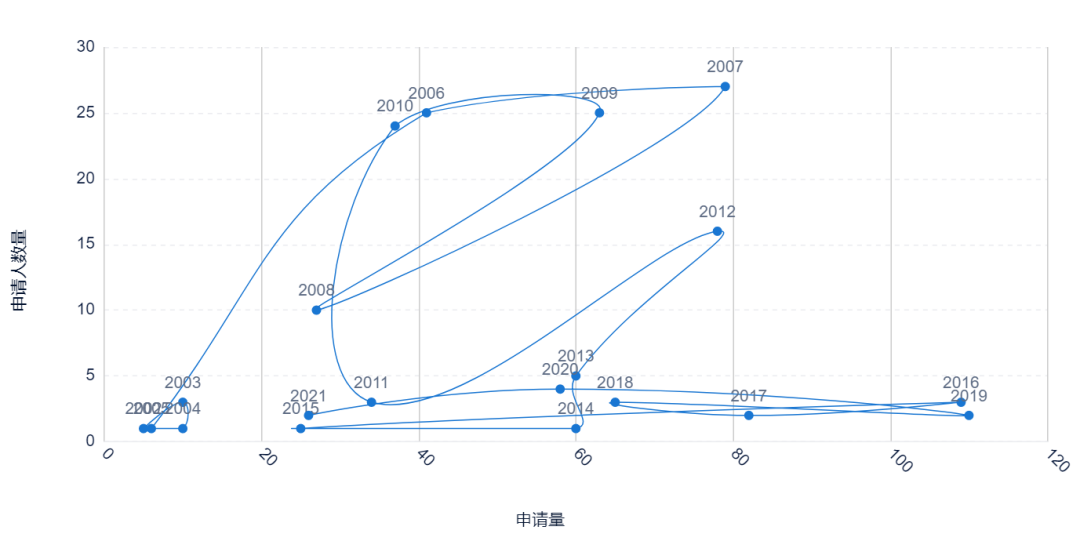
The following figure shows the technology lifecycle of the Mako surgical robot.
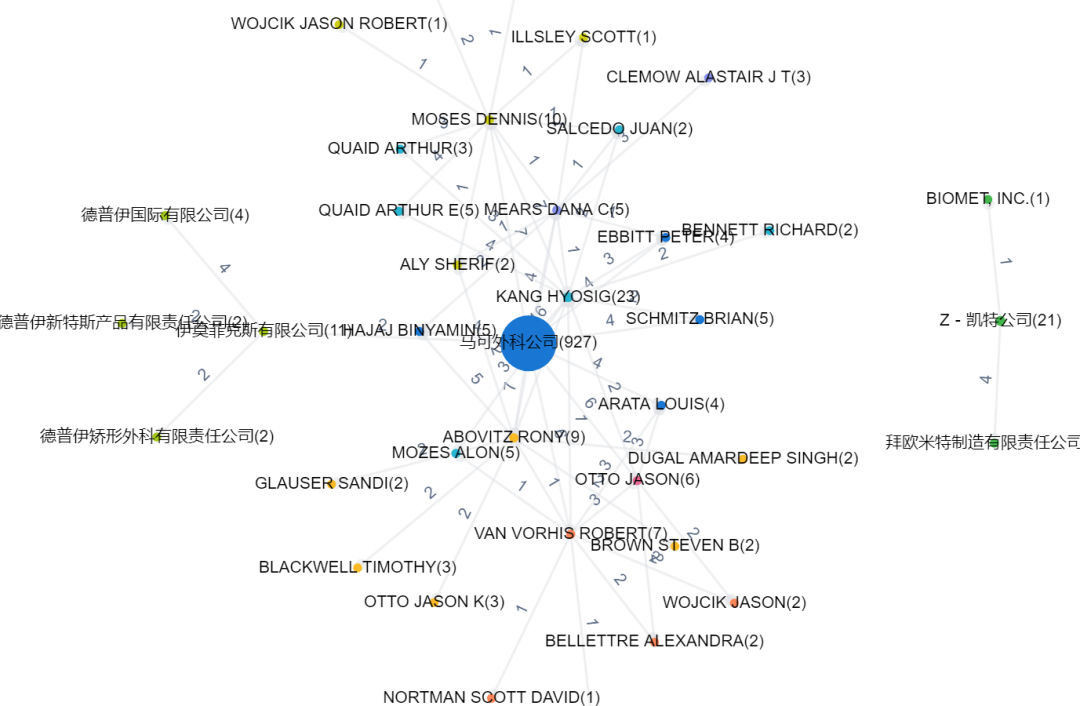
The following figure illustrates the patent cooperation situation related to the Mako surgical robot, clearly showing that MAKO SURGICAL has many partners for patent applications related to the Mako surgical robot, such as research institutions, partner companies, scientists, etc., which is significantly related to its Israeli company background and also reflects a commonality in the R&D of surgical robots, that is, collaboration with numerous related units for joint development.
The following figure shows the patent map of patents related to the Mako surgical robot, from which the technical branches of patents related to the Mako surgical robot can be clearly observed.
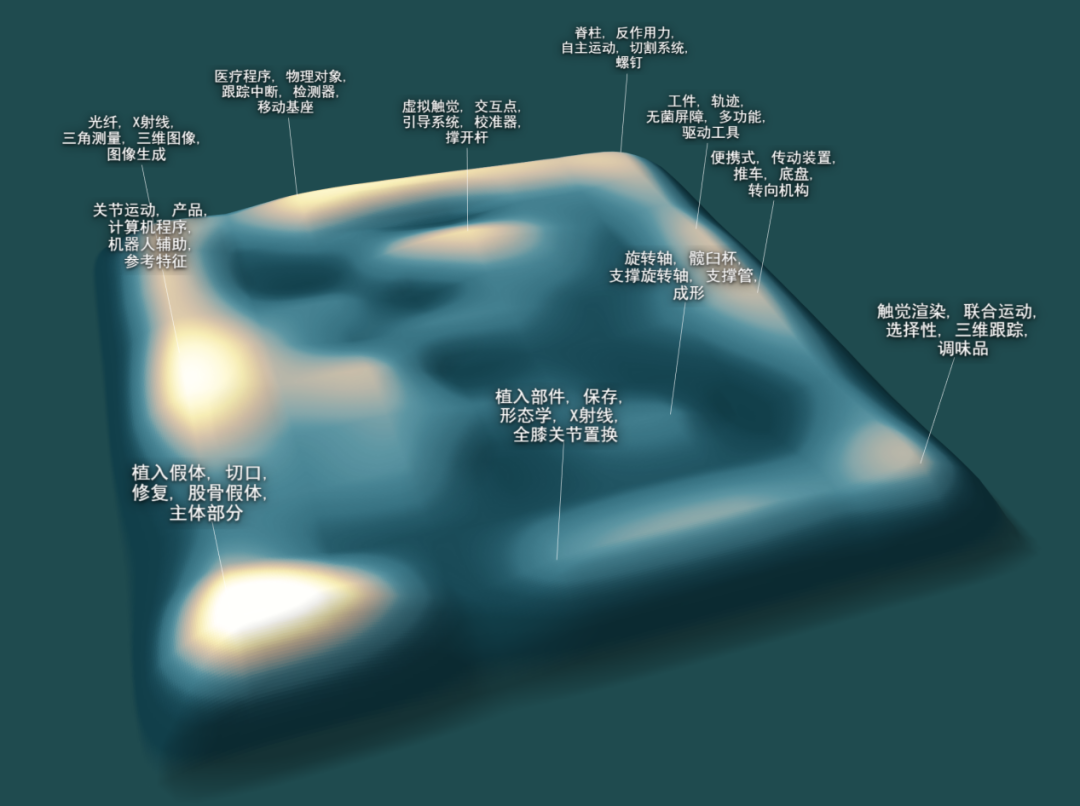
Important Patent Analysis
The author has selected four sets of patents from those related to the Mako surgical robot for analysis, with the relevant results as follows, the complete patent list for the Mako surgical robot has also been compiled; if you wish to obtain the complete patent list, please contact the author for further exchange and learning:
01

|
Publication/Announcement Number |
US7302288B1 |
Application Date |
1996-11-25 |
|
Invention Title |
Tool position indicator |
||
|
Technical Problem Addressed |
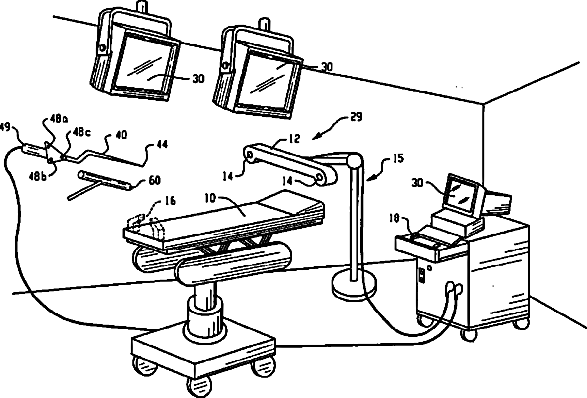
Although image-guided surgery systems are more accurate and provide the surgeon with more information compared to previous techniques, it is sometimes difficult to visualize, with reference to image data displayed on the monitor, the manipulation required to place the surgical tool in the desired position and orientation. As will be appreciated, the surgeon is required to visualize the position of the tool with respect to the image data and then relate that information to a required motion of the tool in relation to the patient. This task is complicated by the three-dimensional nature of the required manipulation, the two-dimensional nature of the images, and the often disparate positions of the monitor and the patient. | ||
|
Technical Solution |
A tool for use with a surgical navigation system includes a plurality of LEDs mounted to the distal end of the tool. The LEDs provide an indication of the direction in which the tool must be moved to reach a desired position. Four LEDs mounted along perpendicular axes are provided. Modes for indicating the desired location, orientation, rotation, and depth are provided. A mode indicator may also be provided. The tool is designed for use with a surgical navigation system which includes an infrared localizer and computer system. The indicators assist the surgeon in positioning the surgical tool in relation to the patient. Indicators other than LEDs may be used; the indicators may also be mounted in alternate locations in the operating room environment. |
||
|
Related Diagrams |
|
02
|
Publication/Announcement Number |
US8391954B2 |
Application Date |
2010-02-02 |
|
Invention Title |
System and method for interactive haptic positioning of a medical device |
||
|
Technical Problem Addressed |
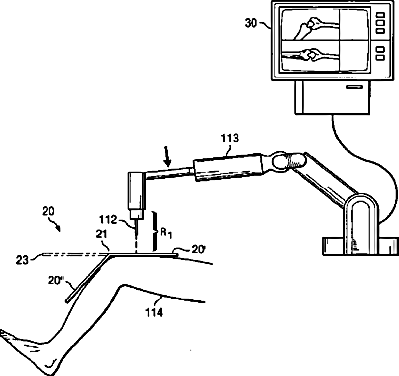
When defining a plan using a tracked tool, it can be difficult to simultaneously position the tool appropriately in multiple degrees of freedom (DOFs). Similarly, when aligning a tracked instrument with a plan, it is difficult to control the position of the tool in multiple simultaneous DOFs, especially where high accuracy is desirable. It is perhaps not a coincidence that navigation systems have had their largest acceptance in cranial neurosurgery, where most applications involve specifying a trajectory to a feature of interest without hitting critical features. Often, the tip of the tool is pressed against the anatomy and pivoted, effectively decoupling the position and orientation planning of the trajectory. |
||
|
Technical Solution |
A combination of a haptic device and a computer-assisted medical system is used for interactive haptic positioning of a medical device coupled to the haptic device. A reconfigurable haptic object facilitates the positioning of the medical device and/or the haptic device. The haptic object may be modified in response to the application of a force against the haptic object by a user of the haptic device pushing the haptic device against the haptic object. Preferably, the haptic object moves in the direction of the force applied by the haptic device. The medical device may be guided to a desired pose relative to a target area from its current position. The user may approach the target area from its current position and still be provided with haptic cues to enable the user to guide the medical device to the target area. |
||
|
Related Diagrams |
|
03
|
Publication/Announcement Number |
US9456765B2 |
Application Date |
2015-09-23 |
|
Invention Title |
Systems and methods for measuring parameters in joint replacement surgery |
||
|
Technical Problem Addressed |
Although conventional computer-assisted techniques for measuring hip replacement parameters may increase the speed and precision of the measurements, their accuracy depends largely upon the accuracy with which the surgeon positioned the femur after implantation of the replacement joint. Indeed, if the surgeon fails to return the femur to the precise position and orientation, the hip parameters are subject to considerable error. In some cases, this error may lead the surgeon to conclude that an improperly aligned prosthetic is within an acceptable threshold of planned surgical goals, and end the surgery. In other cases, an alignment error may lead the surgeon to conclude that a properly aligned prosthetic deviates unacceptably from the threshold of planned surgical goals, causing the surgeon to make unnecessary adjustments to the position of the prosthetic implant(s) that may lead to a misalignment. In either case, the patient may experience post-operative discomfort or, in the case of a severe misalignment, a dislocation of the prosthetic femoral head from the acetabular cup. Such discomfort and/or dislocation may require corrective surgery, prolonged rehabilitation, and undue expense. | ||
|
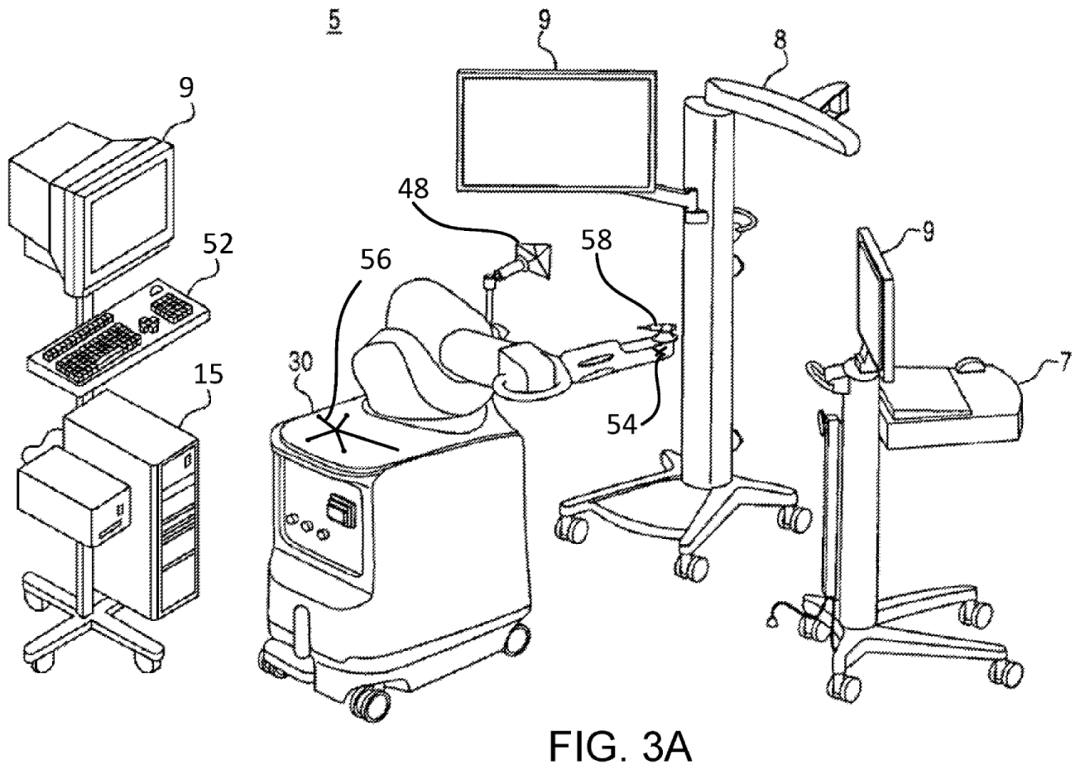
Technical Solution |
A computer-assisted surgery system includes a display, an input device configured to receive data input by a user, and a processor, coupled to the input device and the display. The processor is configured to establish a first position of a pre-operative center of rotation of a joint in a first coordinate space of a first bone and a second coordinate space of a second bone and establish a second position of the pre-operative center of rotation of the joint in the first coordinate space, wherein the second position is a projection into the first coordinate space of the position of the pre-operative center of rotation maintained in a constant position in the second coordinate space. The processor is further configured to determine a change in a parameter associated with the joint based on the first and second positions and output a result indicating the determined change to the display. |
||
|
Related Diagrams |
|
04
|
Publication/Announcement Number |
US10959857B2 |
Application Date |
2019-02-26 |
|
Invention Title |
Registration tools, systems, and methods |
||
|
Technical Problem Addressed |
Intra-operative registration of the pelvis can be challenging because of the complex geometry of the pelvis and, in particular, the concave nature of the acetabulum. While certain methods exist in the art for registration of a patient pelvis, there is a need in the art for registration methods that increase accuracy while decreasing registration time. |
||
|
Technical Solution |
A registration system including a bone pin guide and a bone pin clamp. The bone pin guide may include a guide body, a first guide including a first guide through-hole having a first longitudinal axis, and a second guide including a second guide through-hole having a second longitudinal axis. The bone pin guide may guide first and second bone pins into a bone via the first and second guides. The bone pin clamp may include a clamp body, first, second, and third clamp through-holes extending through the clamp body, a plurality of registration indents defined on the clamp body, and a clamping mechanism including at least one adjustable fastener. The bone pin clamp may receive the first and second bone pins in the first and third clamp through-holes and guide a third bone pin into the bone via the second clamp through-hole. |
||
|
Related Diagrams |
|
Conclusion
Compared to traditional orthopedic surgeries, Mako can assist orthopedic clinicians in achieving high-quality and efficient surgical goals, and the relevant technology can benefit patients undergoing high-difficulty, high-risk back surgeries.This technology makes spinal surgeries safer and more precise. It is evident that China is also one of the countries benefiting from Mako’s technology.
As industry insiders commonly recognize, orthopedic surgical robots are gradually gaining market favor, riding the fast track of intelligent and refined development, with favorable medical insurance policies, and major domestic orthopedic robot manufacturers will undoubtedly regard Mako as an important benchmark and reference, collaborating with various stakeholders in industry, academia, and clinical practice, continuously innovating, and promoting smarter, more precise, and minimally invasive development in China’s orthopedic industry; related intellectual property issues will also become key research topics for major orthopedic robot manufacturers, and the subsequent R&D of related products and patent affairs deserve ongoing attention.
This article was first published on October 19, 2021, original author: Medical IP Jun, updated on June 23, 2022, please indicate the source and author when reprinting.
END

Author Profile

Medical IP Jun, intellectual property scholar. Contact: 13402588726
More exciting contentWelcome to add “Medical IP Jun” WeChat
 Serious Statement1. This article is copyrighted by Medical Device Intellectual Property (ID: gh_75ab8657f185).2. Media and other public accounts wishing to reprint the manuscript must apply through a message at the end of the article and can only be reprinted after receiving permission.3. Reprints must indicate the source and author in the “under the title + before the text” position.4. Unauthorized reductions, screenshots, commercial uses, and failure to indicate sources and authors as required will be pursued and reported.


Long press the QR code to follow Medical Device Intellectual Property

Focus on medical device intellectual property
Creating the most professional platform
Previous Recommendations
First Release | Surgical Robot Patent Analysis Report (Minimally Invasive Medical)
First Release | Surgical Robot Patent Analysis Report (Medtronic)
Hot Topic | Surgical Robot Patent Analysis Report (Precision Medical)
First Release | Vascular Interventional Medical Device Patent Analysis Report (Shockwave)
In-Depth | Heart Valve Medical Device Patent Analysis Report
Study | Thermage Patent Analysis Report
Dialogue | A Look at Medical Devices from the Perspective of Intellectual Property
First Release | Cardiac Pacemaker Patent Analysis Report (Abbott)
First Release | Medical Endoscope Patent Analysis Report (Wireless Endoscope)
In-Depth | Heart Valve Patent Analysis Report (Mitral Valve)
Research Report | Artificial Heart Patent Analysis Report (CorWave)
Research Report | Renal Artery Ablation Device Patent Analysis Report (RDN)
First Release | Surgical Robot Patent Analysis Report (Stryker)
In-Depth | Brain-Computer Interface Patent Analysis Report
First Release | Continuous Glucose Monitoring Medical Device Patent Analysis Report (Dexcom)