On November 17, 2025, the drug clinical trial registration and information disclosure platform showed that AstraZeneca registered the B7-H4 ADC Puxitatug Samrotecan (P-Sam, AZD8205) in a single-agent controlled physician’s choice chemotherapy treatment for patients with advanced/metastatic endometrial cancer (EC) that selectively expresses B7-H4 (≥25% tumor cell expression) and has progressed during or after platinum-based chemotherapy and anti-PD-1/anti-PD-L1 treatment in the Phase III clinical BLUESTAR-Endometrial01 study.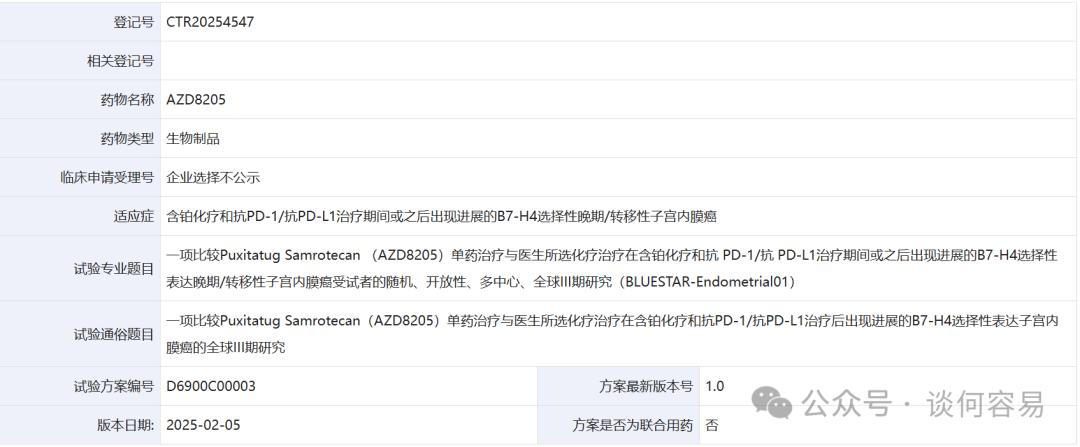 The purpose of the trial is to evaluate the efficacy and safety of P-Sam compared to physician’s choice chemotherapy (doxorubicin or paclitaxel) in patients with advanced/metastatic EC who have previously received platinum-based chemotherapy and anti-PD-1/anti-PD-L1 treatment and have progressed after treatment. The co-primary endpoints are PFS and OS, with secondary endpoints including ORR, DoR, and safety.
 Dr. Xiang Yang from Peking Union Medical College Hospital is the leading PI for the domestic portion of this Phase III clinical trial. The BLUESTAR-Endometrial01 study plans to enroll 700 participants, including 105 patients from China. The international portion has already begun recruiting, while the domestic portion has not yet started, with preliminary completion expected in November 2027.P-Sam is a B7-H4 ADC drug developed by AstraZeneca, with a payload of TOP1 inhibitor and a DAR value of 8.
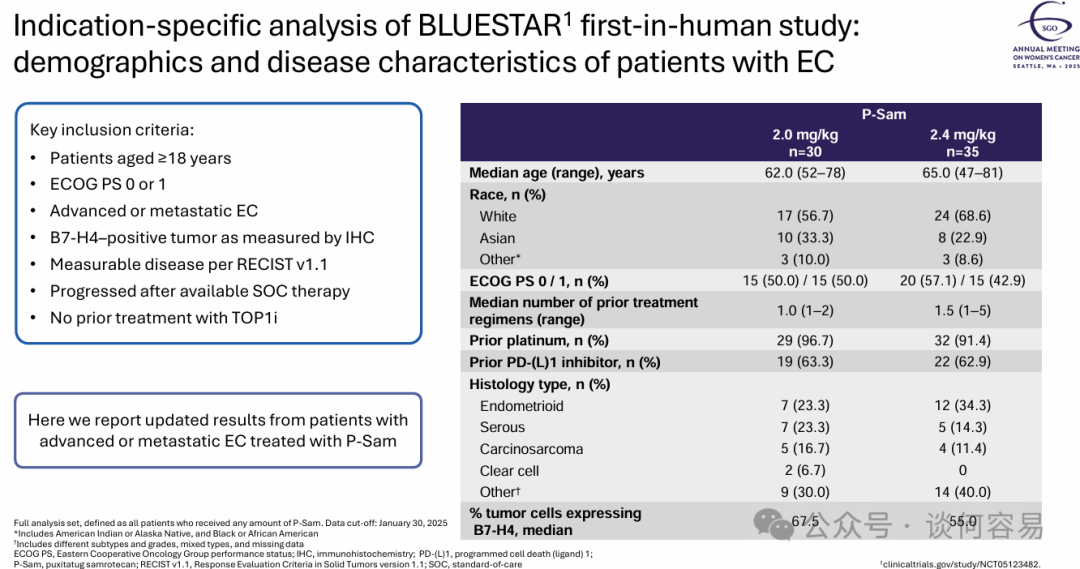
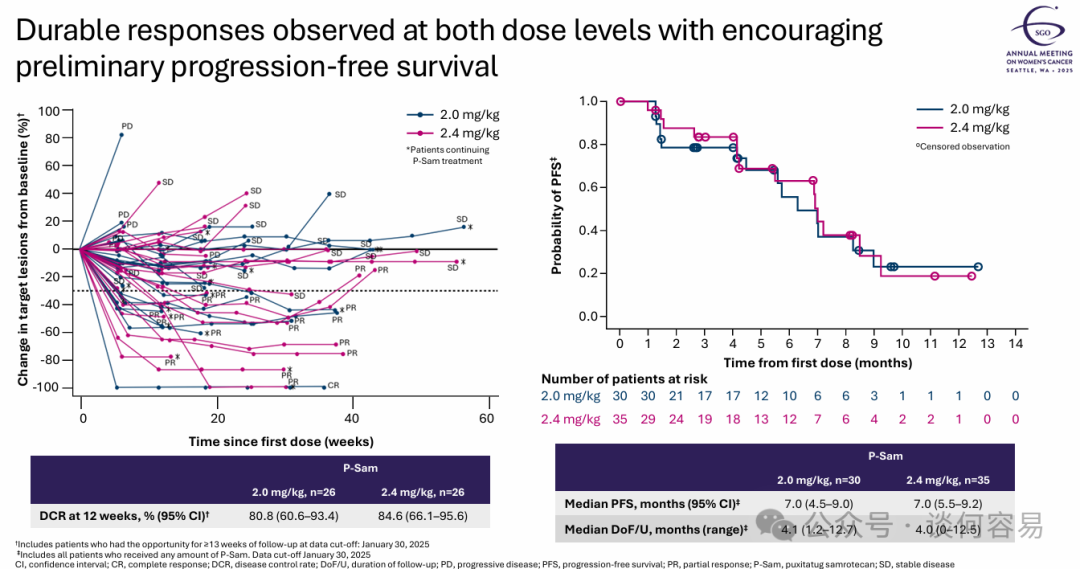
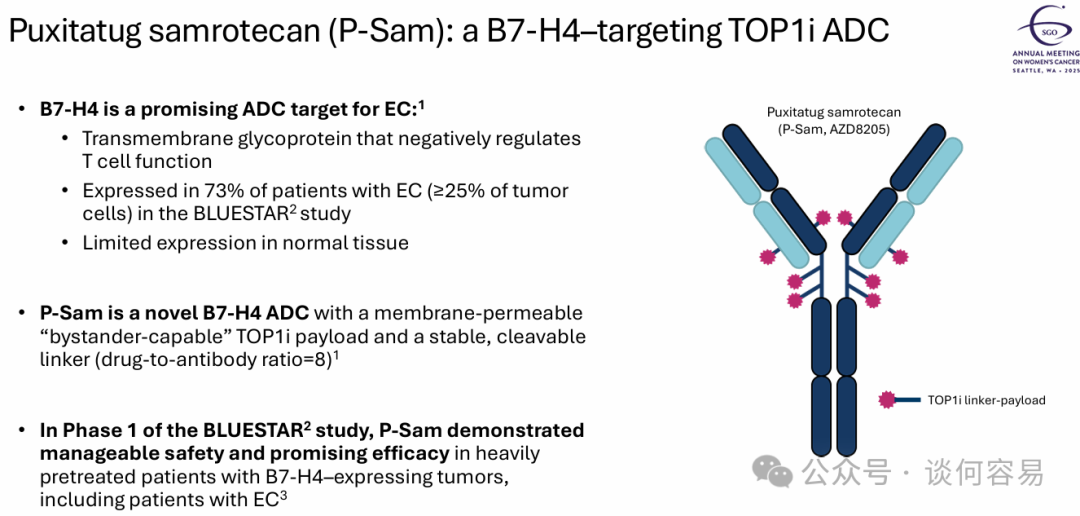 At the 2025 SGO Annual Meeting on Women’s Cancer, AstraZeneca announced the latest research results of the P-Sam I/IIa clinical BLUESTAR study (NCT05276548).The study included 65 patients with advanced or metastatic EC, assigned to two dosing cohorts: 2.0 mg/kg every 3 weeks (n = 30) or 2.4 mg/kg (n = 35), with a median prior line of treatment of 1L and 1.5L, respectively. All patients were B7-H4 positive and had not previously received TOP1 inhibitor treatment.
 The results showed that the cORR for the two dosing groups was 34.6% and 38.5%, respectively, with a DCR of 80.8% and 84.6% at 12 weeks, and both groups had an mPFS of 7.0 months.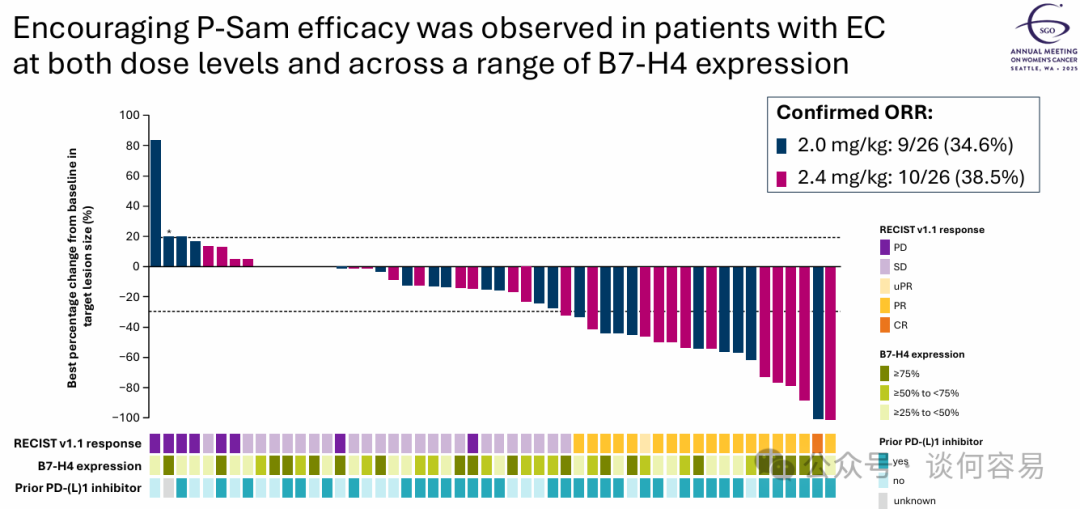
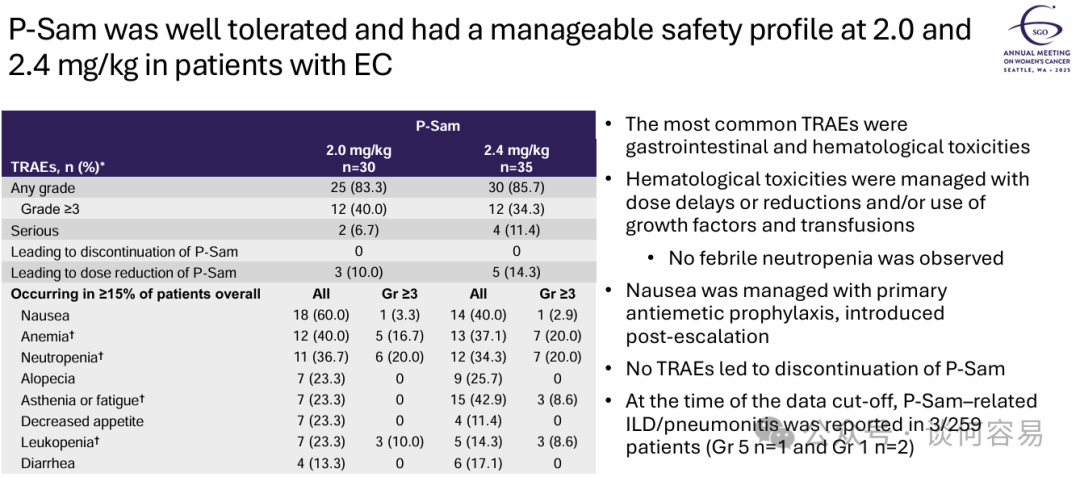
 In terms of safety, most TRAEs were gastrointestinal and hematological toxicities, with ≥3 grade TRAEs in both groups being 40.0% and 34.3%, respectively, and TRAEs leading to dose reductions being 10.0% and 14.3%, respectively, with serious TRAEs ranging from 6.7% to 11.4%. As of the data cutoff date, 3 cases of drug-related interstitial lung disease/pneumonitis were reported, one of which was grade 5.
 According to the Insight database, there are currently 10 active B7-H4 ADCs under development globally, of which 6 have entered clinical stages. Hansoh/GSK’s HS-20089 was the first to register for Phase III clinical trials in February this year, treating ovarian epithelial cancer,P-Sam is the second B7-H4 ADC to enter Phase III clinical trials, while the others are still in early clinical stages.Notably, in February this year, Pfizer’s 2024 financial report indicated that it had terminated the development of the B7-H4 ADC felmetatug vedotin, resulting in an impairment of approximately $1 billion in intangible assets.Overall,P-Sam shows promising efficacy in the treatment of EC in later lines, but safety remains to be observed.