Implementing LVDS High-Speed ADC Interface with Xilinx FPGA
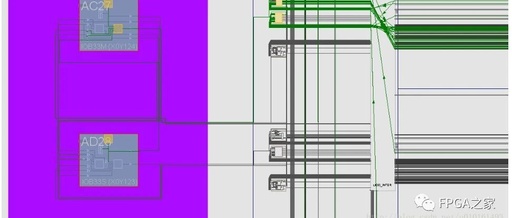
Implementing LVDS High-Speed ADC Interface with Xilinx FPGA

Welcome FPGA engineers to join the official WeChat technical group Clickthe blue textto follow us at FPGA Home – the best and largest pure FPGA engineering community in China LVDS stands for Low-Voltage Differential Signaling. The selectIO of FPGA is very powerful, supporting various IO interface standards, with voltage and current configurable. Its interface rate … Read more
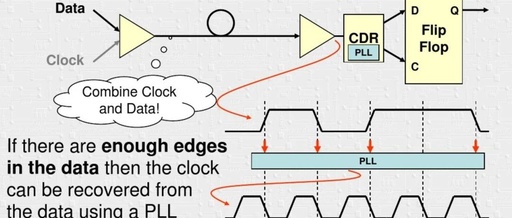
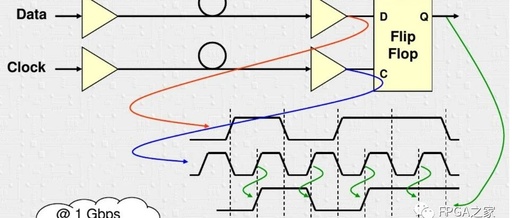
In-Depth Study of Xilinx High-Speed Transceivers Serdes

In-Depth Study of Xilinx High-Speed Transceivers Serdes

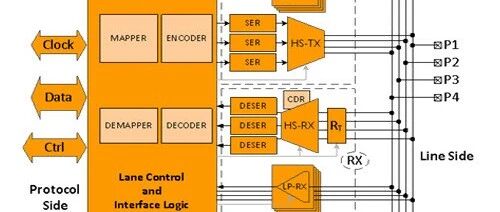
1. Why Use Serdes    Traditional source-synchronous transmission separates clock and data. There are no issues at lower rates (<1000M). As the rates increase, this becomes problematic   Due to inconsistent delay and jitter in transmission lines, the receiver cannot sample data correctly, resulting in misaligned eye diagrams. This leads to the idea of recovering the … Read more

In-Depth Study of Xilinx High-Speed Transceivers (Serdes)

In-Depth Study of Xilinx High-Speed Transceivers (Serdes)

Welcome FPGA engineers to join the official WeChat technical group. Clickthe blue textto follow us at FPGA Home – the best and largest pure FPGA engineer community in China 1. Why Use Serdes Traditional source synchronous transmission separates clock and data. This works fine at lower rates (<1000M). However, this becomes problematic at higher rates. … Read more

Xilinx 7 Series FPGA SelectIO Overview

Xilinx 7 Series FPGA SelectIO Overview

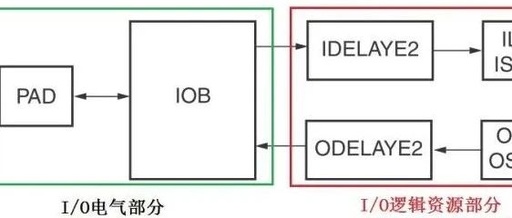
Table of Contents 0. Reprint Instructions 1. IO Interface Introduction 2. IO Logic Resource Introduction 3. Advanced IO Logic Resource Introduction 4. IO_FIFO Introduction 0. Reprint Instructions FPGAs are suitable for concurrent data processing, but where does the data come from? This is what this article will discuss.SelectIO — The Vanguard of Data Transmission There … Read more

Topic 5: Serializer/Deserializer Chips for Surround View Camera Parking Controller Applications

Topic 5: Serializer/Deserializer Chips for Surround View Camera Parking Controller Applications

Based on the provided technical parameters and industry background, the MIPI-A-PHY v1.1.1 serializer/deserializer chips that match the description are most likely from Texas Instruments (TI) or Renesas Electronics. The following is a detailed analysis: 1. Texas Instruments (TI) TI’s DS90UB96x series (such as DS90UB963Q-Q1 and DS90UB964Q-Q1) is an automotive-grade SerDes solution designed for MIPI-A-PHY, supporting … Read more

GMSL Upgraded to GMSLE: Camera SerDes Will Ultimately Be Replaced by Ethernet

GMSL Upgraded to GMSLE: Camera SerDes Will Ultimately Be Replaced by Ethernet

[Image] By the end of 2024 and the first half of 2025, there will be two significant events in the camera SerDes field: one is the acquisition of Aviva Link by automotive chip giant NXP for $240 million, and the other is the introduction of Ethernet-compatible GMSLE by ADI, the absolute leader in the automotive … Read more

Comprehensive Guide to Selecting SerDes Chips Based on Screen/Camera Resolution (Formula Derivation + Practical Cases)

Comprehensive Guide to Selecting SerDes Chips Based on Screen/Camera Resolution (Formula Derivation + Practical Cases)

🚀 Comprehensive Guide to Selecting SerDes Chips Based on Screen/Camera Resolution (Formula Derivation + Practical Cases) 1. Why Select SerDes Based on Resolution? First, let’s briefly discuss the background: SerDes (Serializer/Deserializer) essentially compresses/decompresses data bandwidth, transmitting high-speed data (screen images, camera video) to another location. The higher the resolution, the higher the refresh rate/frame rate, … Read more

Practical Case: Selecting GMSL2 SerDes Solution for an 8-Megapixel Camera! (Including Formula Derivation and Selection Process)

Practical Case: Selecting GMSL2 SerDes Solution for an 8-Megapixel Camera! (Including Formula Derivation and Selection Process)

🚀 Practical Case: Selecting GMSL2 SerDes Solution for an 8-Megapixel Camera! (Including Formula Derivation and Selection Process) 1. Background Setting In this project, there is a camera with the following requirements: Sensor: 8 Megapixels Resolution: 3840 × 2160 (4K) Frame Rate: 30FPS Color Depth: 12bit (RAW12 format) Output Interface: MIPI CSI-2 Must use GMSL2 protocol, … Read more

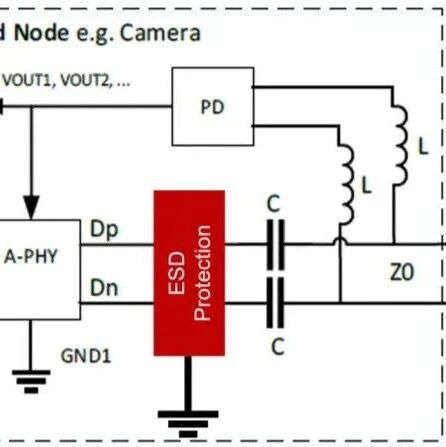
MIPI A-PHY and Its Electrostatic Discharge (ESD) Protection

MIPI A-PHY and Its Electrostatic Discharge (ESD) Protection

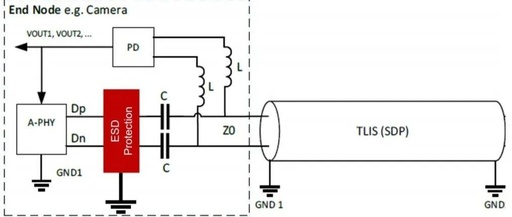
#01MIPI A-PHY Background Introduction As an emerging ultra-high-speed wired data transmission method for in-vehicle applications, MIPI A-PHY is a high-speed serializer-deserializer (SerDes) physical layer interface specification designed specifically for automotive applications, aimed at meeting the automotive industry’s demand for high-performance, long-distance communication. The primary feature of this technology is its high speed, followed by reliability, … Read more

MIPI A-PHY and Its Electrostatic Discharge (ESD) Protection

MIPI A-PHY and Its Electrostatic Discharge (ESD) Protection

This article is approximately 5,700 words long and is recommended for saving and reading. Author | Intuitive Explanation Produced by | Automotive Electronics and Software #01MIPI A-PHY Background Introduction As an emerging ultra-high-speed wired data transmission method for in-vehicle applications, MIPI A-PHY is a high-speed serializer-deserializer (SerDes) physical layer interface specification designed specifically for automotive … Read more