The Reason for Connecting a Pair of Ground Capacitors on Both Sides of the MCU
The Reason for Connecting a Pair of Ground Capacitors on Both Sides of the MCU

Many MCU developers are puzzled by the practice of connecting a pair of ground capacitors on both sides of the MCU crystal, as these capacitors can sometimes be omitted. After consulting various books, it is found that there is little explanation provided; the most mentioned points are that ground capacitors have a stabilizing effect or … Read more
Why Do Chip Substrates Prefer the Crystal Orientation?

In chip manufacturing, the “substrate” not only determines the physical foundation of the wafer but also profoundly affects the electrical performance, reliability, yield, and process compatibility of the devices. But have you noticed? The vast majority of CMOS chips use <100> crystal-oriented silicon substrates. Why does almost the entire industry “favor” the <100> orientation? Today, … Read more

Urgent! The Capacitor on the Circuit Board Exploded Before Delivery, What to Do?

Urgent! The Capacitor on the Circuit Board Exploded Before Delivery, What to Do?

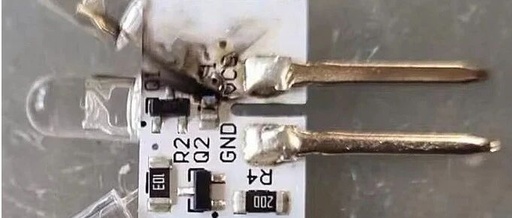
A friend made an LED constant current circuit board and found that the capacitor exploded.With the delivery time approaching and mass production about to start, there was a lot of urgency, so help was sought in the group.This is the schematic of the problematic circuit board:The capacitor that exploded is C1, which is an MLCC … Read more

Why Do Circuit Boards Require So Many Resistors, Capacitors, Inductors, and Other Electronic Components?

Why Do Circuit Boards Require So Many Resistors, Capacitors, Inductors, and Other Electronic Components?

Learning about electronics can be confusing due to the thousands of models of electronic components available. How can one remember them all? Why are so many electronic components necessary?Why are there so many different resistor values, various capacitor capacities, and different sizes of inductors? There are numerous types of transistors and different models of integrated … Read more

Function and Differences Between Chip MLCC Capacitors and Silicon Capacitors

Function and Differences Between Chip MLCC Capacitors and Silicon Capacitors

The application of AI technology has increased the requirements for product computing power, speed, bandwidth, low latency, and low power consumption. Due to the increased switching frequency of transistors, parasitic inductance exists in power lines and PCB traces, which can easily cause delays, leading to voltage fluctuations and noise. The decoupling capacitors in chips can … Read more

Connecting a Resistor and Capacitor Between the PCB GND and Chassis GND for Better Performance

Connecting a Resistor and Capacitor Between the PCB GND and Chassis GND for Better Performance

The chassis is made of metal, and there is a screw hole in the middle, which connects to the ground. Here, a 1M ohm resistor is connected in parallel with a 0.1uF capacitor to the ground of the circuit board. What are the benefits of this setup? If the chassis ground is unstable or has … Read more

Chip Manufacturing Process

Chip Manufacturing Process

Reading Good Books Together From a pile of sand to a precision chip, what processes are involved, and what technologies are required at each stage? 1. From Sand to Silicon Wafer. The term “semiconductor” refers to materials that have electrical conductivity between that of conductors and insulators. Conductors, such as iron, copper, and silver, can … Read more

Why is There a Significant Difference in Light Absorption Depths of Different Wavelengths in Silicon Materials for Image Sensors?

Why is There a Significant Difference in Light Absorption Depths of Different Wavelengths in Silicon Materials for Image Sensors?

The relationship between the light absorption depth of silicon materials in image sensors and the wavelength of light can be explained by the physical mechanisms of photon energy and material interaction, as detailed below: 1. The Wave-Particle Duality of Light: Differences in Photon Energy Light exhibits wave-particle duality, and its energy formula is: E = … Read more

Does a Large Voltage Divider Resistor Cause Inaccurate ADC Sampling?

Does a Large Voltage Divider Resistor Cause Inaccurate ADC Sampling?

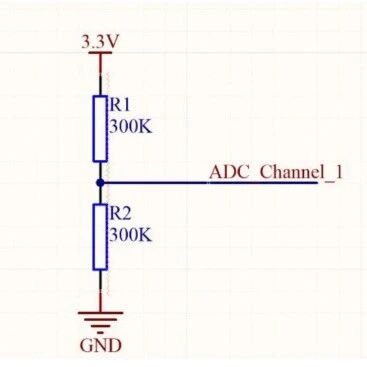
1. Problem Description: In ADC sampling circuits, especially in low-power product battery voltage sampling circuits, larger voltage divider resistors are typically chosen. This helps to reduce the additional power consumption caused by the voltage divider circuit. However, this can lead to inaccurate voltage sampling. 2. Problem Analysis When the ADC samples a single-ended voltage, if … Read more

HSE Q&A (Issue 40: Instrument Safety)

【Question 1】Do SIS and DCS valves need to be set up separately? Can SIL1 and below be shared? 【Answer】1)Refer to “Design Specifications for Safety Instrumented Systems in the Petrochemical Industry” (GB/T 50770-2013): Measurement and actuators are best set up independently. When control valves are shared, it should ensure thatSIS takes priority. 2)Refer to “Acceptance Specifications … Read more