The application of AI technology has increased the requirements for product computing power, speed, bandwidth, low latency, and low power consumption. Due to the increased switching frequency of transistors, parasitic inductance exists in power lines and PCB traces, which can easily cause delays, leading to voltage fluctuations and noise. The decoupling capacitors in chips can compensate for transient current deficiencies, achieving voltage stability while filtering out high-frequency noise.
1. What is the basis for selecting capacitor values?
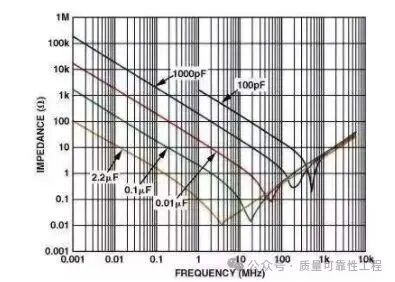
a. The noise frequency of chip switching is between 10-100MHz, so the selected capacitor needs to match this fluctuation frequency. The classic formula for capacitor impedance is Zc = 1/(2πfC), where frequency f and capacitance C are inversely proportional to impedance. When the chip noise frequency is high, the capacitor impedance is low, which can absorb high-frequency noise; when the frequency is low, the capacitor impedance is high, and its effect weakens.
b. Generally, a 100nF capacitor can absorb most of the noise at 10MHz; if the chip noise reaches 100MHz, the effect is even better. Additionally, if the selected capacitor has strong filtering capability for low-frequency noise, such as a high capacitance of 1uF, it may generate parasitic inductance that affects high-frequency performance. Therefore, the selection of capacitor values is crucial.
c. Therefore, if the chip noise frequency is primarily low-frequency, a high-capacitance capacitor should be selected; if the chip noise is primarily high-frequency, a low-capacitance capacitor should be selected. If both exist, they should be used in combination, with high-capacitance for power compensation and low-capacitance for filtering high-frequency waves.
 2. What are the advantages of silicon capacitors?
a. The capacitance stability of silicon capacitors is outstanding; even with changes in temperature and external voltage, their capacitance remains almost unchanged. The high dielectric types of multilayer ceramic capacitors (MLCC) are sensitive to voltage, which can affect capacitance and, consequently, filtering effectiveness.
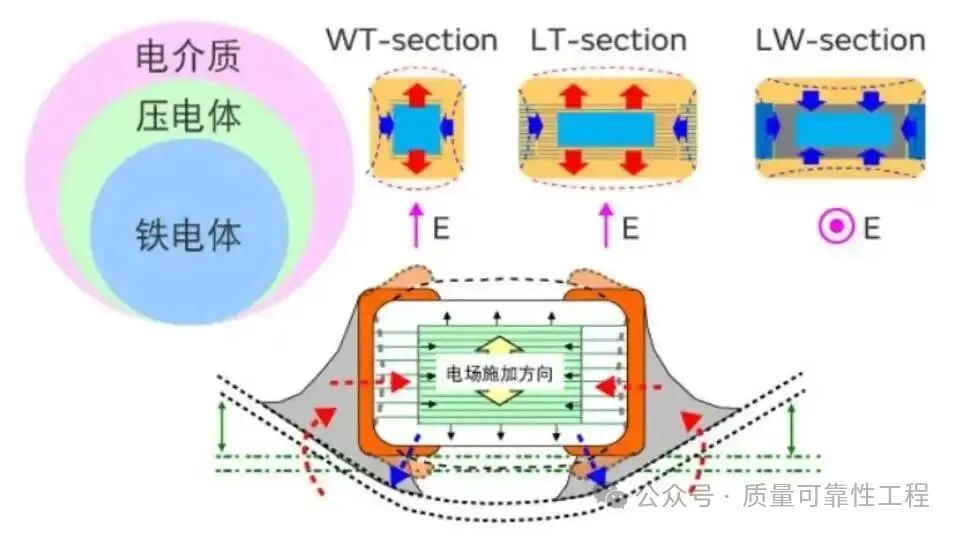
b. Additionally, ceramic capacitors are piezoelectric components; when voltage changes occur, ceramic capacitors can resonate, leading to squealing. In contrast, silicon capacitors do not resonate, thus preventing squealing.
c. Therefore, the application of silicon capacitors is the mainstream choice for future chips with high power quality requirements, especially for advanced integrated packaging, such as the capacitor design used in Apple mobile phone chips.