Why Do Circuit Boards Require So Many Resistors, Capacitors, Inductors, and Other Electronic Components?
Why Do Circuit Boards Require So Many Resistors, Capacitors, Inductors, and Other Electronic Components?

Learning about electronics can be confusing due to the thousands of models of electronic components available. How can one remember them all? Why are so many electronic components necessary?Why are there so many different resistor values, various capacitor capacities, and different sizes of inductors? There are numerous types of transistors and different models of integrated … Read more
Detailed Analysis of Resistors in Embedded Hardware

Detailed Analysis of Resistors in Embedded Hardware

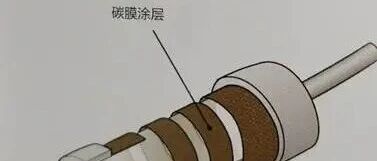
A resistor is a component that produces resistance. Its main function is to impede the flow of current in a conductor. The internal structure of a carbon film resistor is shown in the figure below. 1.1.1 Parameters of Resistors When understanding resistors in a production environment, we need to focus on the following parameters: 1)Resistance … Read more

The Most Comprehensive Explanation of I2C Communication: From Protocol to Hardware Design

The Most Comprehensive Explanation of I2C Communication: From Protocol to Hardware Design

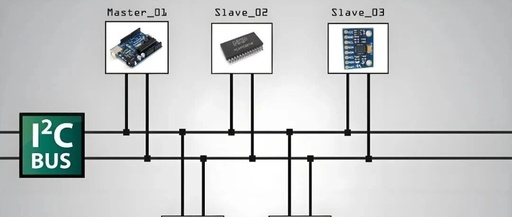
The I²C (Inter-Integrated Circuit) protocol was developed by Philips Semiconductors (now NXP Semiconductors) and released in 1982. It is a serial, half-duplex bus primarily used for communication between chips over short distances at low speeds. The I²C bus consists of two bidirectional signal lines: one data line (SDA, serial data) for sending and receiving data, … Read more

Why Pull-Up Resistors are Necessary for I2C

Why Pull-Up Resistors are Necessary for I2C

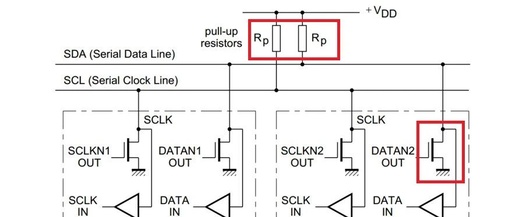
When using the I2C bus, if the internal chip does not integrate pull-up resistors, two external pull-up resistors need to be added. The reason is that the I2C bus generally has an open-drain (OD) structure, where OD stands for Open Drain, meaning it is a leakage circuit, with Drain referring to the drain of the … Read more