Learning about electronics can be confusing due to the thousands of models of electronic components available. How can one remember them all? Why are so many electronic components necessary?Why are there so many different resistor values, various capacitor capacities, and different sizes of inductors? There are numerous types of transistors and different models of integrated circuits. Could we not package them into a single chip? Wouldn’t that reduce size and cost?This is because they are not universal chips; it is not feasible to concentrate all circuits into one chip. This would lead to low utilization of that chip, and integrating resistors and capacitors into the chip would significantly increase its size and manufacturing costs, making it unsuitable for mass production.In most circuits, electronic components such as resistors, capacitors, transistors, and inductors are essential for the operation of integrated circuits (chips). An integrated circuit can be designed to work with different circuits using external resistors, capacitors, etc.The most common application of standalone resistors is in heating elements, such as heating rods and heating coils.Standalone capacitors are less common; they typically work in conjunction with resistors and other components to form circuits. Common capacitors are used in filtering circuits.Inductors also work in filtering circuits and are important components in circuits. They can generate magnetic fields, which can induce voltage through the inductor. They require other electronic components to work effectively.The most common application of diodes is in rectifier bridges, converting AC to DC.Transistors are widely used in switching and amplification applications, with many applications as switches.Integrated circuits vary based on their applications, such as operational amplifiers for signal amplification, memory for data storage, and voltage comparators for detecting voltage changes and controlling outputs.These electronic components are configured based on different circuit designs, which are tailored to user needs. Each chip has its own peripheral circuits, and when these chips are interconnected, they form a circuit board.So how can one remember so many component models? In reality, there is no need to memorize them. Understanding the characteristics of each component is essential. Electronic components are applied in practice; by studying circuit diagrams and observing their combinations, and by hands-on experimentation with various circuits and modifying component parameters to see the changes, one can gradually learn to design circuits using electronic components.Finding the simplest circuit to experiment with is the most effective way to learn.By observing diagrams and conducting experiments, one can gradually gain familiarity with various components.
The reason for the many resistor values
1. To limit the current in a circuit, different circuits and electronic components require different currents, and resistors are used to generate varying currents.2. To produce different voltages, all detection and control in a circuit ultimately convert to voltage. Voltage control is necessary, and two resistors can be used to create a reference voltage. The voltage collected by sensors is amplified and compared to this reference voltage. When it exceeds the reference voltage, a voltage comparator outputs a signal to control a relay, which in turn controls high power, lights, or temperature, depending on the controlled device. Thus, the resistor values are selected based on the amplified voltage from different sensors to design various reference voltages.Every component on a circuit board has its role. Electronic components are only becoming smaller; they will not replace any specific component. Understanding the characteristics of each electronic component is crucial for better circuit board repair and design.


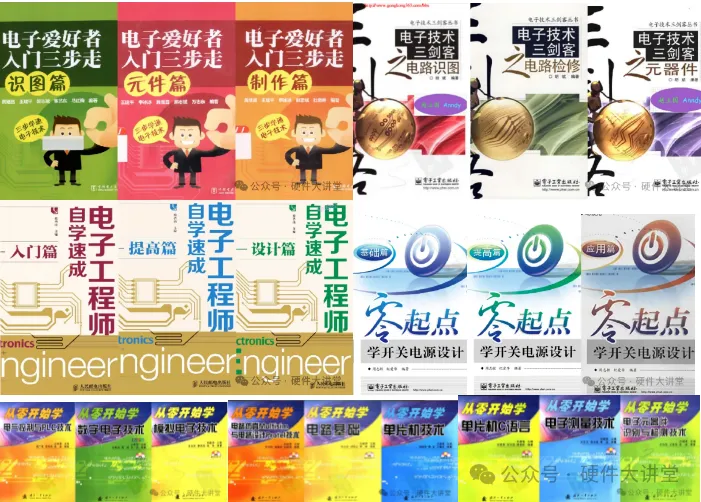
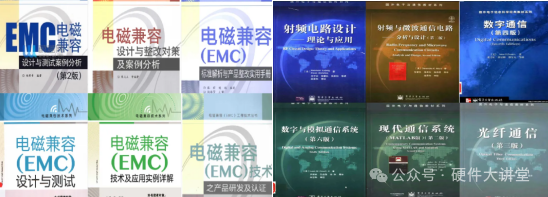
Screenshots of some electronic books from the 400G collection