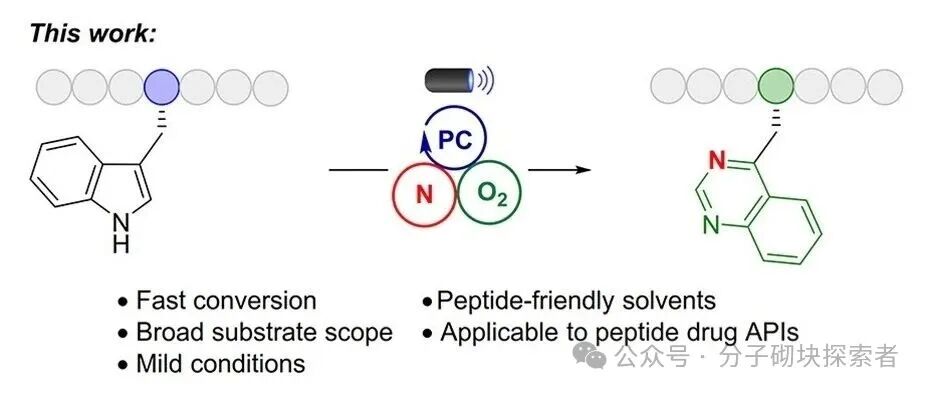
 Image source: J. Am. Chem. Soc.Introduction:Site-specific late-stage modification of natural peptide chains is an ideal strategy for developing bioactive peptide analogs in an efficient and economical manner. The emerging concept of scaffold editing provides new ideas for developing next-generation methods for late-stage peptide modifications. This study developed a simple tryptophan-specific late-stage modification method for peptide chains based on photocatalytic indole-quinazoline editing. This method demonstrates broad applicability in both linear and cyclic peptide substrates and has been successfully applied to the modification of commercially available peptide drugs. The proposed reaction mechanism is based on the oxidation of tryptophan by singlet oxygen and the blocking of the indole oxidative cleavage process by ammonia molecules.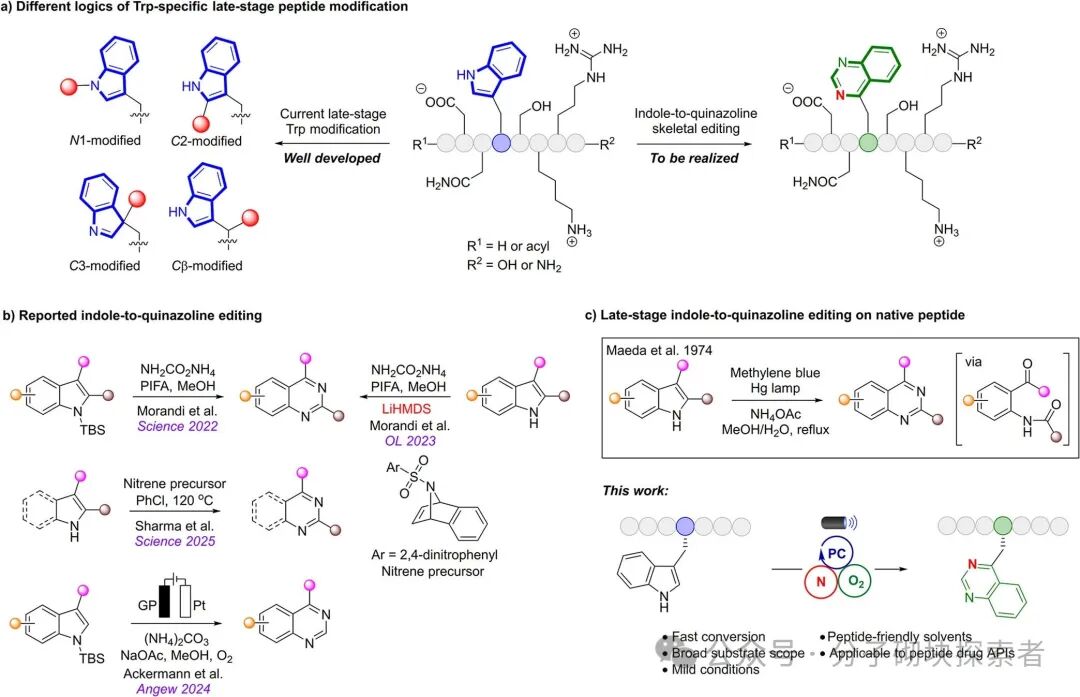
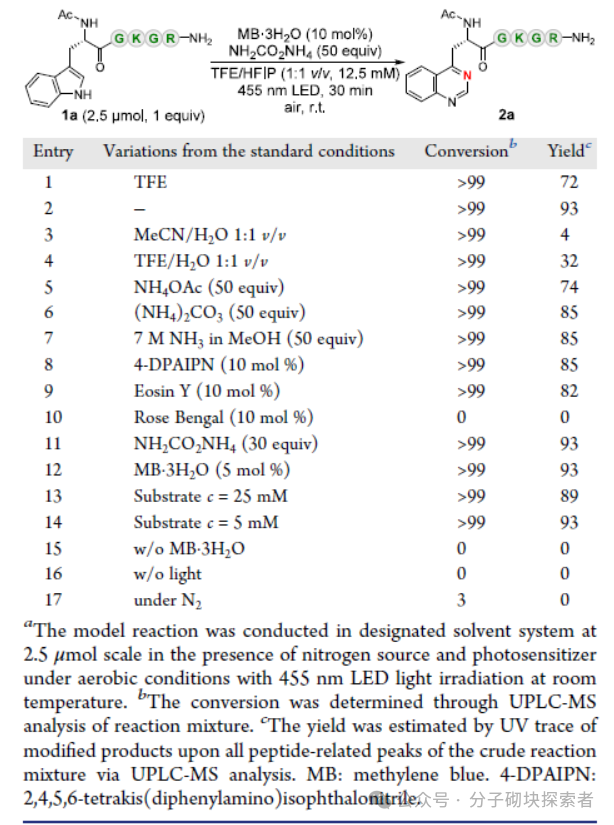
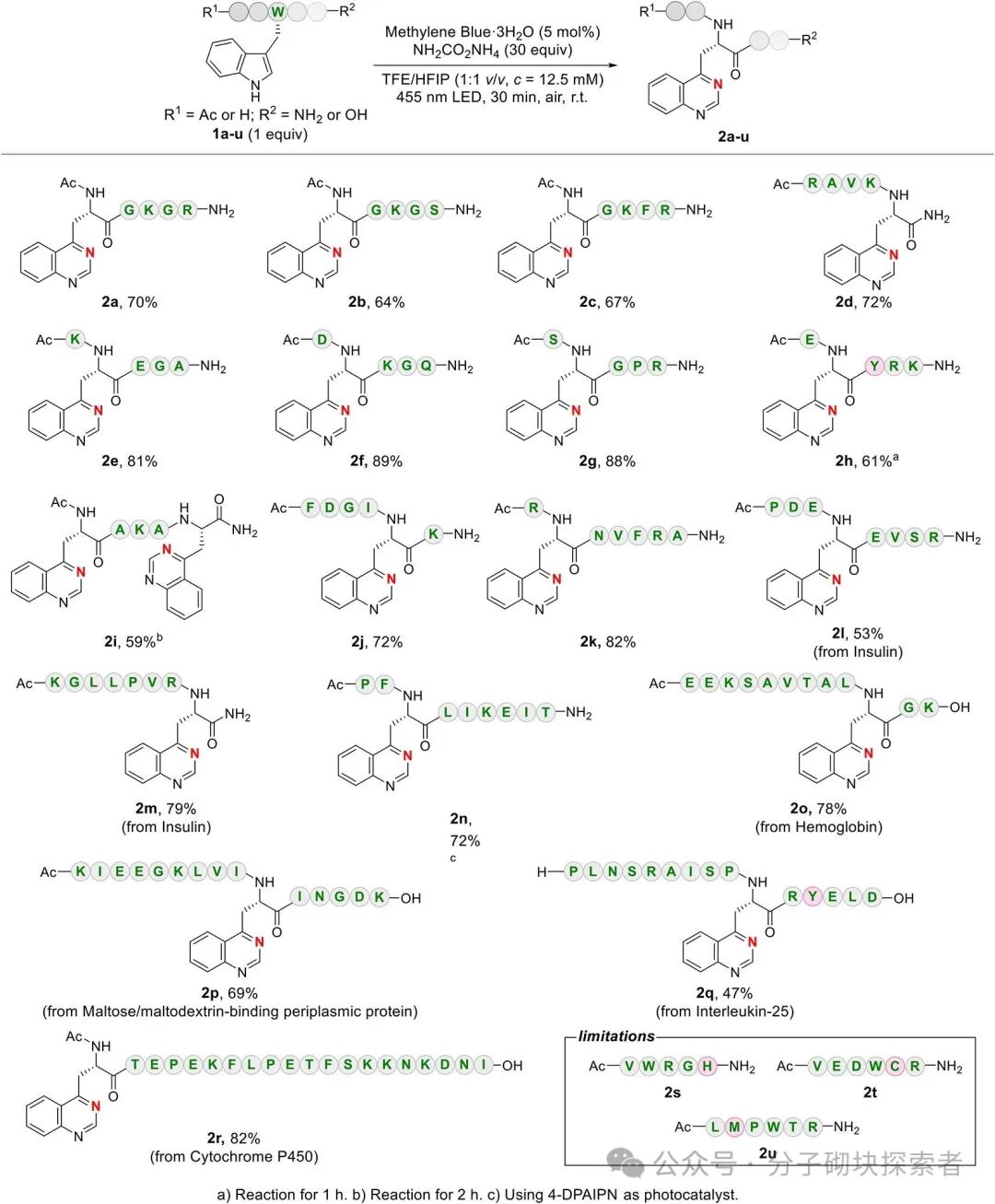
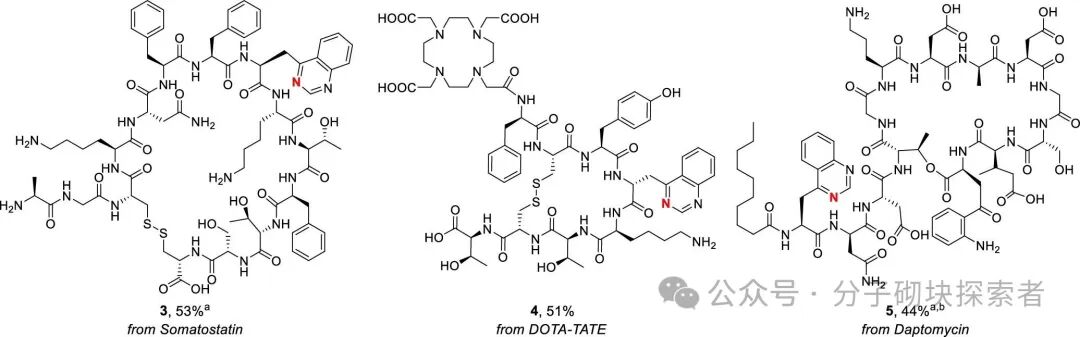 Image source: J. Am. Chem. Soc.
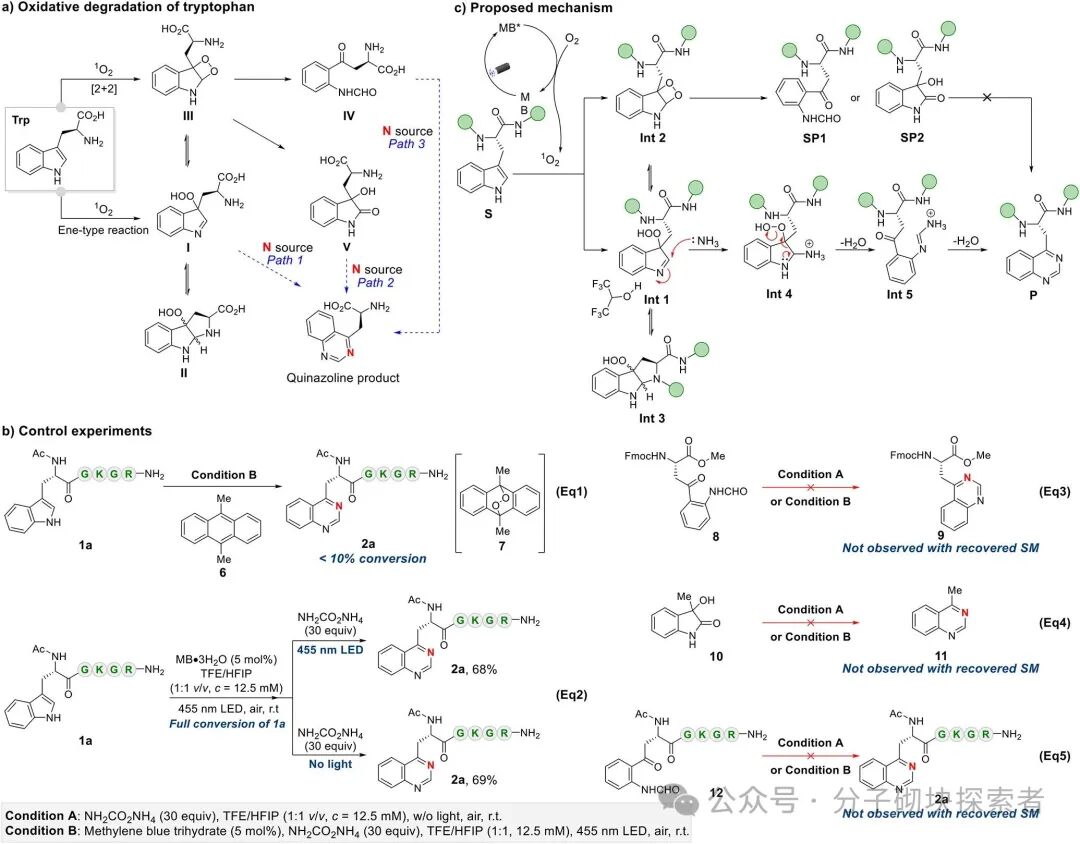 Image source: J. Am. Chem. Soc.
Conclusion:
A simple tryptophan-specific late-stage modification method for peptide chains based on photocatalytic indole-quinazoline editing has been developed. This method shows good compatibility with 18 natural amino acids (excluding histidine and methionine) and free N-termini, where cysteine can participate in the reaction in a protected form via disulfide bonds.By using peptide-friendly solvents TFE and HFIP, this method is applicable to hydrophobic and aggregation-prone peptide chains, which often occur in the presence of tryptophan. By modifying peptides of varying lengths (5 to 20 amino acids) and cyclic peptide drugs, products containing quinazoline structures were obtained with moderate to good yields (44% to 89%), demonstrating the synthetic potential of this method. The reaction proceeds through a hydrogen peroxide tryptophan intermediate, where the oxidative cleavage of indole (producing NFK) is interrupted by ammonia. This method is believed to have significant value for peptide drug development and can further expand the application space of quinazoline pharmacophores in medicinal chemistry.
References:
Late-Stage Tryptophan Modification of Native Peptides through Photochemical Indole-to-Quinazoline Editing
J. Am. Chem. Soc. 2025
https://doi.org/10.1021/jacs.5c12511