

First People’s Hospital of Zhoukou City Medical Laboratory Department Zhao Kunpeng
When children have a fever or a cold, doctors often recommend blood tests, mainly checking the blood routine and C-reactive protein. Many parents often ask: Doctor, what is the difference between C-Reactive Protein and High-Sensitivity C-Reactive Protein?
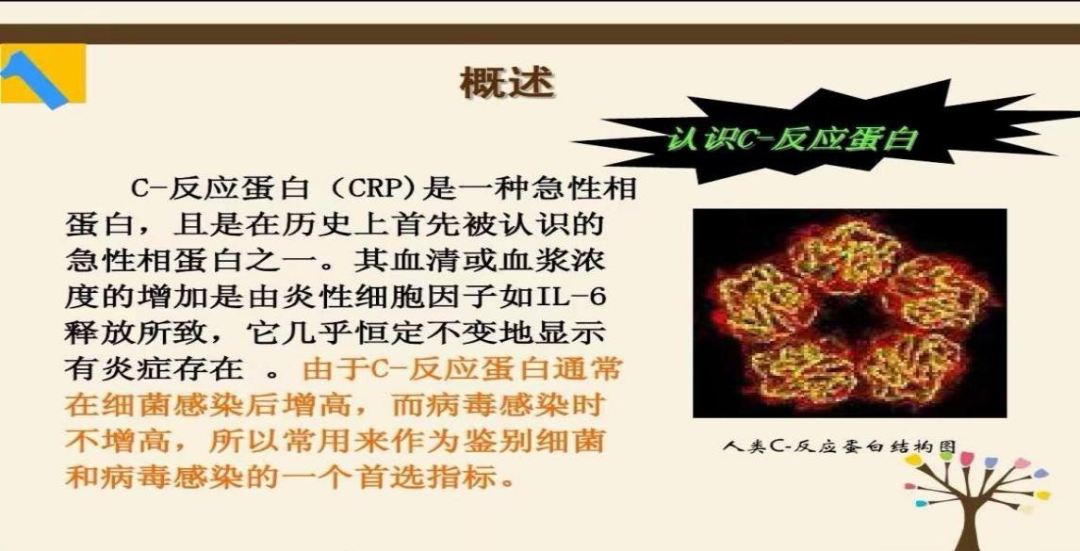
First, let’s understand their specific definitions C-Reactive Protein, abbreviated as CRP, and High-Sensitivity C-Reactive Protein, commonly referred to as hsCRP. C-Reactive Protein (CRP) is a protein produced by the liver during inflammation or infection. It is an acute phase protein whose levels rise rapidly after inflammation or infection. High-Sensitivity C-Reactive Protein (hs-CRP) is a more sensitive measurement method for CRP. The hs-CRP test can detect small changes in CRP levels, allowing for earlier detection of low-grade inflammation or infection. So, what are the specific differences between CRP and hsCRP? The detection range and sensitivity are different! The detection range for CRP is 0-10 mg/L, while hsCRP can detect lower concentrations of C-Reactive Protein, with a detection range of 0-5 mg/L. Therefore, when patients need to test for lower levels of C-Reactive Protein, hsCRP is a more suitable choice due to its higher sensitivity. Clinical applications differ: CRP is mainly used for screening, monitoring, and treatment evaluation of bacterial or viral infections in children or adults, various inflammatory processes, and assessing tissue necrosis and damage recovery, as well as drug efficacy. hsCRP is more commonly used in the diagnosis and risk assessment of cardiovascular diseases. For example, in cases of minor myocardial damage where the patient does not yet show obvious symptoms, regular CRP may not accurately detect this, necessitating the use of hsCRP for higher sensitivity testing. Additionally, it can serve as an auxiliary diagnostic indicator to assess the abnormality of other cardiovascular risk factors. Furthermore, hsCRP can also be used in relevant examinations and treatment evaluations for bacterial infections in newborns. Overall, hs-CRP is more sensitive and can detect small changes in CRP levels, used for early detection of inflammation or infection. CRP is an acute phase protein used to assess the degree of inflammation or infection.