Antibody-drug conjugates (ADC) mainly consist of three “modules”: an antibody (generally a monoclonal antibody), a linker, and a cytotoxic drug (Payload). In recent years, ADC drugs have stood out among biopharmaceuticals due to their combination of the potent killing effect of chemotherapy drugs and the precise targeting of antibody drugs, earning them the title of “biological missiles” and becoming a hot research topic in cancer treatment, gradually expanding their range of indications. For these long-term used drugs, they significantly reduce side effects based on traditional chemotherapy methods, increase medication safety, and enhance patient compliance.
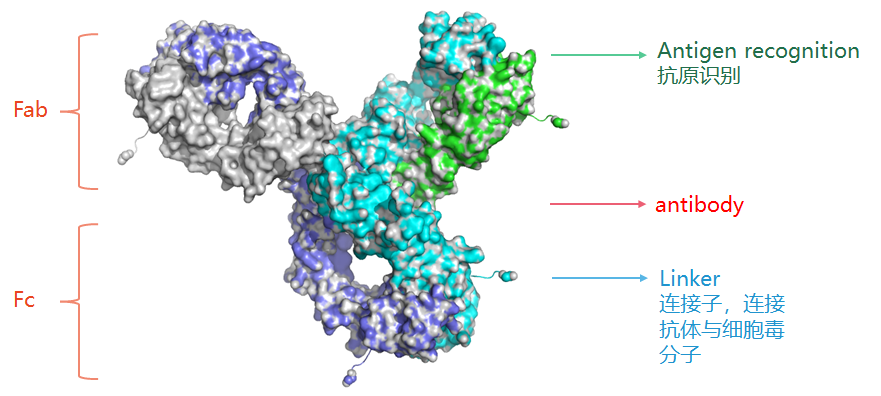
Structure diagram of ADC drugs
As of August 2022, five ADC drugs have been approved for marketing in China, namely Emicizumab (brand name: Herceptin, T-DM1), Veltuzumab (brand name: Anshili), Vedotin (brand name: Aidiqi), Ogarituzumab (brand name: Beibosa), and Gozatuzumab (brand name: Tuodavi). In addition, there are over 100 ADC candidate drugs in clinical stages globally, and this number continues to grow.
With the in-depth development of ADC drugs, from the first generation of cleavable linkers connecting mouse or chimeric antibodies to the second generation of fully humanized antibodies, further evolving into site-specific conjugation of fully human antibodies or Fab fragments, three generations of ADC products have been developed, further improving the stability of ADC drug molecules, making the drug-antibody ratio (DAR) more controllable, reducing immunogenicity, and enhancing drug safety and effectiveness.
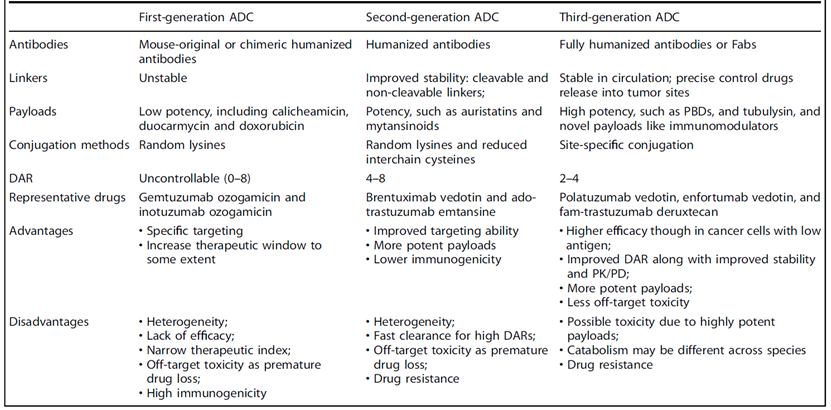
Summary of characteristics of three generations of ADC products
(Data source: Antibody drug conjugate: the “biological missile” for targeted cancer therapy. Signal Transduction and Targeted Therapy (2022) 7:93)
To ensure the safety, effectiveness, and quality control of the drugs, research on their critical quality attributes is essential. Compared to individual antibody molecules or cytotoxic drugs, ADC drugs have more complex molecular structures, and the large antibody molecules need to maintain their biological activity. Size exclusion chromatography (SEC) is commonly used to detect their aggregates and fragment impurities, while ion exchange chromatography (IEX) is used to study their critical quality attributes and charge heterogeneity; for small molecule compounds, purity is a key quality attribute, and reverse-phase chromatography is the most commonly used detection method. In addition, the chirality of natural and synthetic cytotoxic molecules should also be tested; after conjugation, the DAR of ADC drugs is a key indicator determining the drug’s effective payload, and hydrophobic interaction chromatography (HIC) is currently the standard detection method. Moreover, in stability studies, small-pore SEC chromatography is often used to detect small molecule dropouts. Therefore, for ADC drugs, it is necessary to develop corresponding analytical methods for different “modules”, posing greater challenges for quality research.
Saifen Technology has accumulated rich experience in the development of analytical methods for ADC drugs, with certain technical accumulation in antibody molecular analysis, ADC drug purity analysis, and DAR value detection.
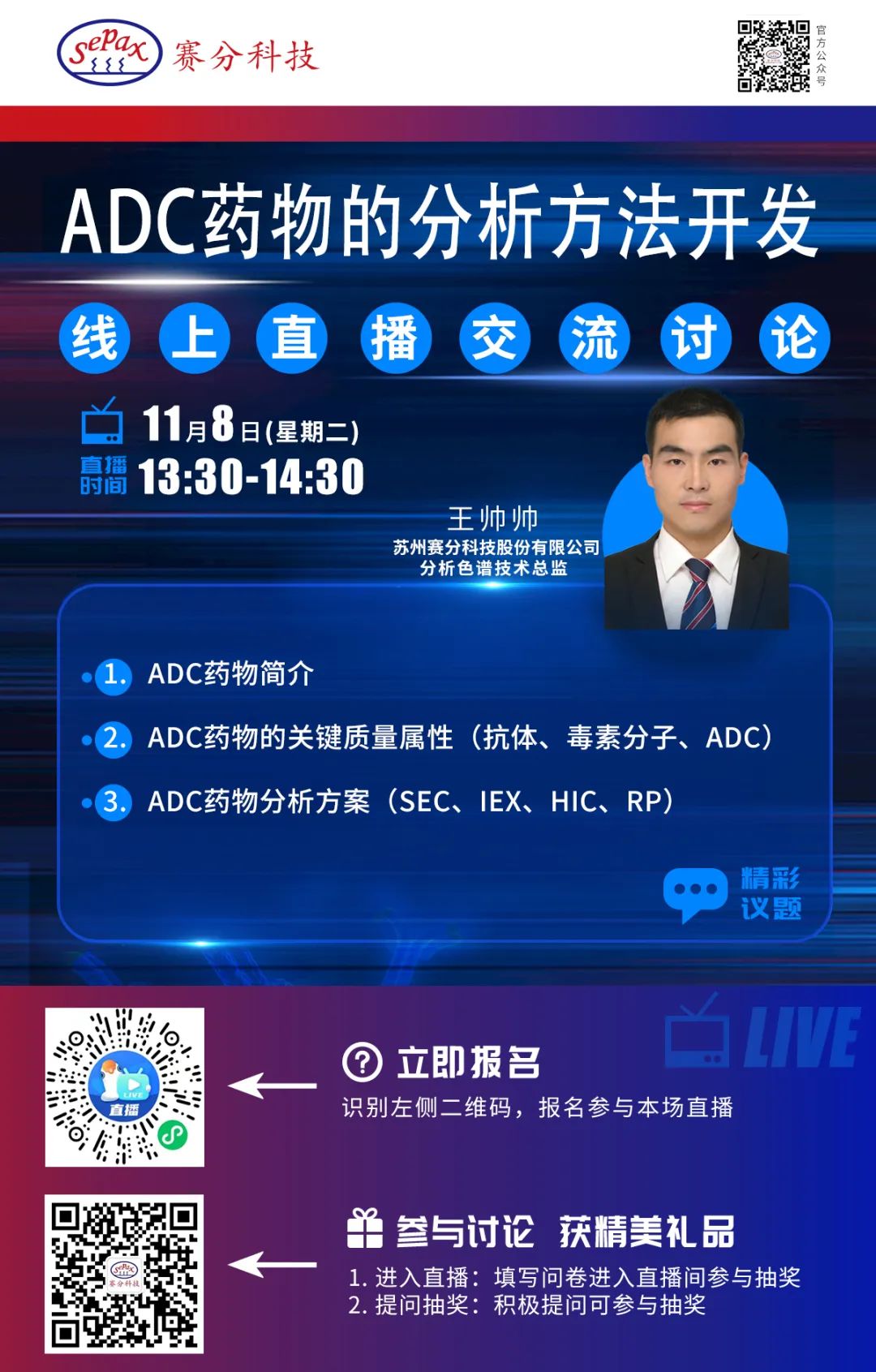
Here, on November 8th from 13:30 to 14:30, Saifen Technology will hold an online seminar on “Development of Analytical Methods for ADC Drugs” in collaboration with the Biopharmaceutical Circle, and we look forward to your participation.
End of article benefits! Register to watch this live broadcast, actively participate in interactive discussions, and have the opportunity to receive exquisite gifts prepared by Saifen Technology. Welcome to participate.
【Speaker Introduction】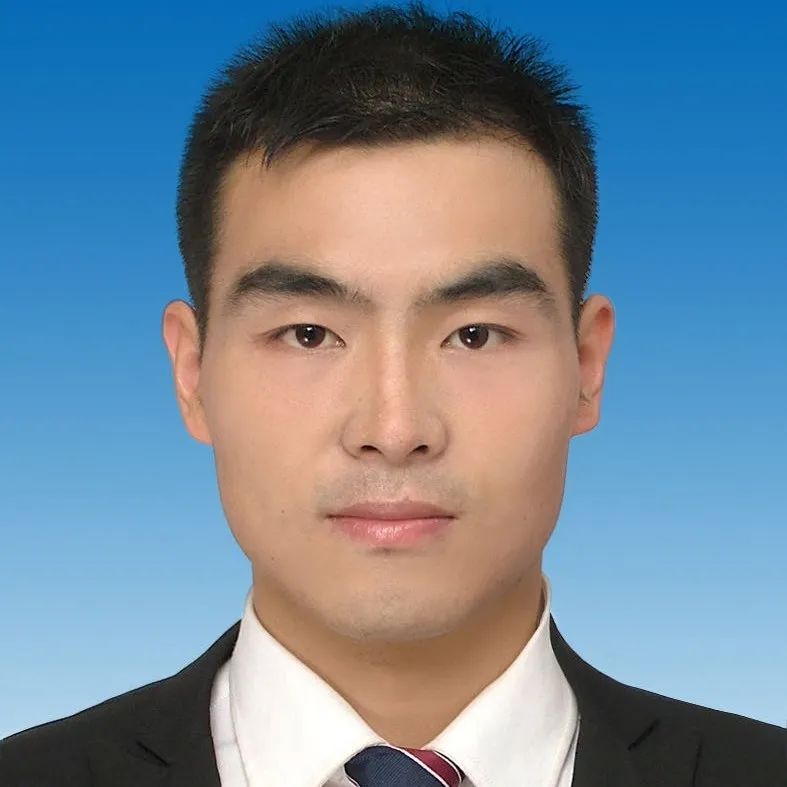
Wang Shuai
Director of Analytical Chromatography Technology at Suzhou Saifen Technology Co., Ltd.
Wang Shuai, graduated from Shanghai Ocean University with a master’s degree in Food Engineering, currently serves as the Director of Analytical Chromatography Technology at Suzhou Saifen Technology. Previously, he worked as a training engineer for the Thermo Fisher liquid chromatography product line and is responsible for the development of biopharmaceutical analytical methods at Saifen Technology, organizing and participating in technical support work for over 1000 different biological samples, accumulating rich experience in the development of analysis methods for antibodies, ADCs, mRNA, and other biopolymers.
About Saifen Technology Saifen Technology was founded in Delaware, USA, focusing on chromatography technology for nearly 20 years, with over 5000 global customers.
Saifen Technology focuses on biopolymers such as antibodies, vaccines, insulin, recombinant proteins, and mRNA, providing full-cycle analysis chromatography and industrial purification solutions for Chinese biopharmaceutical companies from R&D, quality control, to pre-clinical, clinical, and production processes, based on top international R&D capabilities and a production base in Yangzhou with an annual output of 100,000 liters of chromatography media.

—END—
Statement
This article is intended for knowledge sharing and has no commercial purpose. If there is any infringement, please contact the editor in time. Scan the WeChat QR code to add the editor of Yao Shikong, contact the editor regarding business cooperation, or join the Yao Shikong WeChat group for more news.