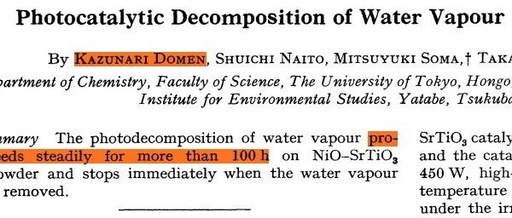
Photocatalytic Complete Water Splitting Using NiO-SrTiO3: Discovery of H2 Reoxidation to Water

Photocatalytic Complete Water Splitting Using NiO-SrTiO3: Discovery of H2 Reoxidation to Water

1980-Journal of the Chemical Society, Chemical Communications – Photocatalytic Complete Water Splitting Using NiO-SrTiO3: Discovery of H2 Reoxidation to Water – Kazunari Domen – University of Tokyo【Citation】Kazunari Domen, Shuichi Naito, Mitsuyuki Soma, et al.Photocatalytic Decomposition of Water Vapour on an NiO-SrTiO3 Catalyst[J].Journal of the Chemical Society, Chemical Communications, 1980, 12:543-544.【Source】 https://pubs.rsc.org/en/content/articlelanding/1980/c3/c39800000543 Kazunari Domen conducted experiments … Read more

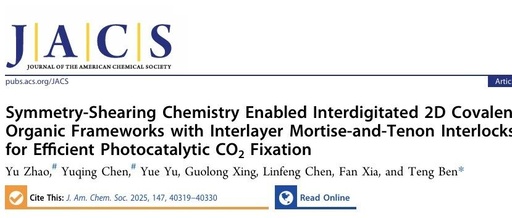
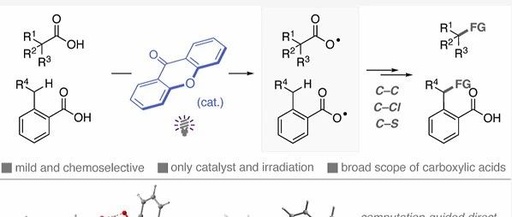
New Breakthrough in Photocatalysis! Direct Conversion of Carboxylic Acids to Radicals, Adding a New Tool for Green Chemistry, Goodbye to Heavy Metals!

New Breakthrough in Photocatalysis! Direct Conversion of Carboxylic Acids to Radicals, Adding a New Tool for Green Chemistry, Goodbye to Heavy Metals!

Image source: J. Am. Chem. Soc.Introduction: The carboxyl radical, as a highly reactive intermediate, is expected to open unique transformation pathways for radical chemistry. However, the current methods for directly generating carboxyl radicals from carboxylic acids mostly rely on environmentally unfriendly processes, and their applications are mainly limited to decarboxylation functionalization reactions. This study proposes … Read more

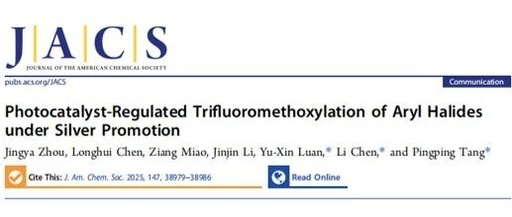
Timeless: Photocatalytic Dehalogenative Coupling

Timeless: Photocatalytic Dehalogenative Coupling

From J. Am. Chem. Soc. Hi, everyone! Since 2014, the field of radical chemistry has developed rapidly, establishing various methods for constructing Csp²-Csp³ bonds, achieving remarkable results in practical applications. Among these methods, photocatalytic dehalogenative coupling has remained timeless over the years, becoming a classic method for constructing Csp²-Csp³ bonds in photochemistry: “Timeless” — Photocatalytic … Read more

3D-Printed COF/Zeolite Composites: Enhancing Photocatalytic H₂O₂ Production Efficiency by 52%

3D-Printed COF/Zeolite Composites: Enhancing Photocatalytic H₂O₂ Production Efficiency by 52%

Research BackgroundHydrogen peroxide (H₂O₂), as a green oxidant, has wide applications in bleaching, disinfection, environmental remediation, and green energy storage. However, traditional methods for producing hydrogen peroxide (such as the anthraquinone process) are energy-intensive and generate a large amount of harmful waste. Therefore, developing sustainable photocatalytic methods for H₂O₂ production has become a research hotspot. … Read more

Synergy between Unique Pt-C Coordination and Pt Quantum Dots on TiO2 for Exceptional Photocatalytic Methanol Dehydrogenation Performance

Synergy between Unique Pt-C Coordination and Pt Quantum Dots on TiO2 for Exceptional Photocatalytic Methanol Dehydrogenation Performance

First Author: Zhou Tong, Luo Zhongge, Zhao Jiangting Corresponding Authors: Liu Qingju (Yunnan University, e-mail:[email protected]) Tang Junwang (Tsinghua University, e-mail: [email protected]) Abstract:Photocatalytic hydrogen production is considered a promising strategy to mitigate the environmental impact of carbon-intensive chemical industries. Previous studies have shown that loading single atoms can significantly enhance photocatalytic efficiency, and their catalytic activity … Read more

Transfer Dynamics of Photo-Generated Carriers in Catalysis

Transfer Dynamics of Photo-Generated Carriers in Catalysis

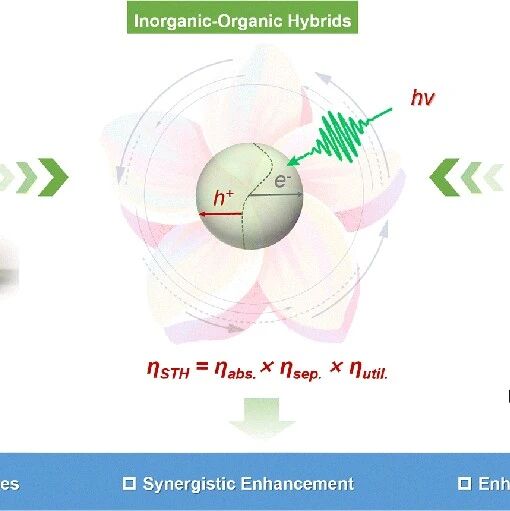
First Author: Jun Wang Corresponding Authors:Central South University, Liu Min,Munich University, Emiliano Cortes DOI:https://doi.org/10.1039/D5CS00512D Semiconductor-based light-assisted catalytic reactions, utilizing solar energy for chemical fuel production and pollutant treatment, largely depend on the separation and migration of carriers. Despite significant efforts to enhance carrier separation, the understanding of carrier transfer dynamics remains limited, hindering large-scale applications. … Read more

Overview of Transfer Dynamics of Photo-generated Carriers in Catalysis from Central South University Chem. Soc. Rev.

Overview of Transfer Dynamics of Photo-generated Carriers in Catalysis from Central South University Chem. Soc. Rev.

Full Text Overview — Semiconductor-based light-assisted catalytic reactions that utilize solar energy for chemical fuel production and pollutant treatment heavily rely on the separation and migration of carriers. Despite extensive efforts to enhance carrier separation, the understanding of carrier transfer dynamics remains limited, hindering large-scale applications. This article systematically studies the characteristics of carrier transfer … Read more

Rebuilding After Breaking: A Comprehensive Interpretation of Defect Engineering in Ti-MOFs

Rebuilding After Breaking: A Comprehensive Interpretation of Defect Engineering in Ti-MOFs

Summary This review systematically examines the structural classification, defect construction methods, and functional applications of titanium-based metal-organic frameworks (Ti-MOFs). First, the authors elaborate on the importance of defect engineering in regulating the properties of solid materials and point out that Ti-MOFs are difficult to synthesize and introduce defects due to the strong oxygen affinity of … Read more

Morphology-Controlled Long-Range Photogenerated Charge Carrier Transfer Pathway for Enhanced Photocatalytic Hydrogen Production

Morphology-Controlled Long-Range Photogenerated Charge Carrier Transfer Pathway for Enhanced Photocatalytic Hydrogen Production

This study successfully prepared controllable π-π conjugated stacking of T-ZnTPyP and H-ZnTPyP through thermal regulation. The high temperature effectively restricted the participation of water molecules in the T-ZnTPyP stacking structure, enhancing the thermal stability of the material and accelerating the short-range migration rate of photogenerated charge carriers. Field Overview: Photocatalytic water splitting for hydrogen production … Read more

Professor Bai Feng from Henan University in Nano Letters: Regulating Porphyrin Supramolecular π-π Conjugation Channels to Enhance Photocatalytic Hydrogen Production Activity

Professor Bai Feng from Henan University in Nano Letters: Regulating Porphyrin Supramolecular π-π Conjugation Channels to Enhance Photocatalytic Hydrogen Production Activity

Scientific Materials Station Article Information Regulating the Long-Range π-Conjugated Charge Carrier Transfer Pathway of Porphyrin Assemblies to Enhance Photocatalytic Hydrogen Production Activity First Author: Liu Shuanghong, PhD Student Corresponding Authors: Zhu Rui, Associate Professor; Bai Feng, Professor; Zhong Yong, Associate Professor Affiliation: College of Nano Science and Materials Engineering, Henan University Scientific Materials Station Research … Read more