Recently, a research team from the University of Virginia in the United States has developed a novel 3D printing material that is compatible with the human immune system. This material is expected to promote the rapid and safe development of various medical technologies, including artificial organ transplantation and drug delivery. This groundbreaking achievement was published in the latest issue of Advanced Materials.
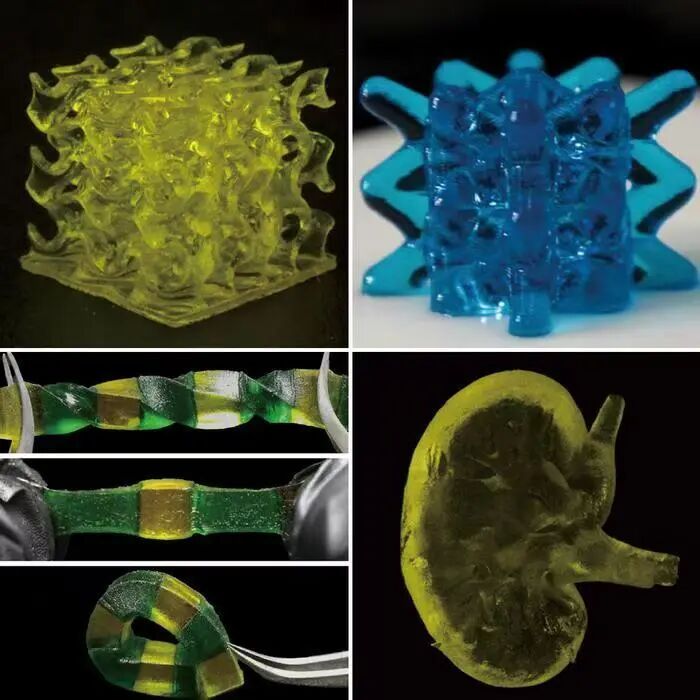 The new polymer can be widely applied in fields ranging from artificial organs to advanced batteries. Image source: University of Virginia.jpg
The research team demonstrated a method to alter the properties of polyethylene glycol (PEG) to create a stretchable network structure. PEG has been widely used in biomedical technologies such as tissue engineering, but traditional production methods (which involve crosslinking PEG polymers in water and then removing the water) lead to fragile structures that crystallize and cannot maintain integrity when stretched.
To address this issue, the team drew inspiration from the molecular design used in manufacturing highly elastic rubber, employing a “foldable bottle brush” structure that makes the material both strong and highly elastic. The polymer molecules have many flexible side chains radiating from a central backbone, which can fold like an accordion to store additional length that can be unfolded, achieving high stretchability. They applied the foldable bottle brush polymer concept to PEG by exposing the precursor mixture to ultraviolet light for a few seconds, initiating polymerization to form the bottle brush structure network, successfully creating a 3D printable, highly stretchable PEG-based hydrogel and solvent-free elastomer.
Team members stated that by changing the shape of the ultraviolet lamp, many complex structures can be created, providing new possibilities for the future manufacture of artificial organs or drug delivery systems. Furthermore, experiments have shown that this stretchable 3D printed PEG material is biocompatible, with cell culture tests confirming its compatibility with biological tissues, making it suitable for in vivo materials such as organ scaffolds.
Looking ahead, this material may be combined with other materials to produce 3D printed products with different chemical compositions, expanding various applications. For example, compared to existing solid polymer electrolytes, the new material exhibits higher conductivity and stretchability at room temperature, highlighting its potential as a high-performance solid electrolyte in advanced battery technologies. The team stated that they will continue to explore its application prospects in solid-state battery technology.
Source: Science and Technology DailyNote: Image source from the internet, please notify for removal if there is any infringement!