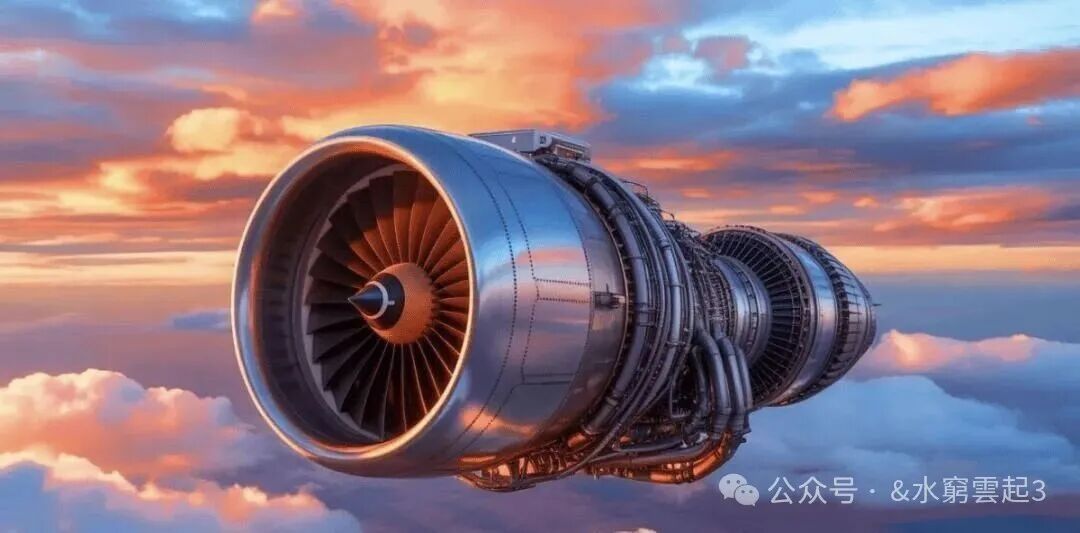
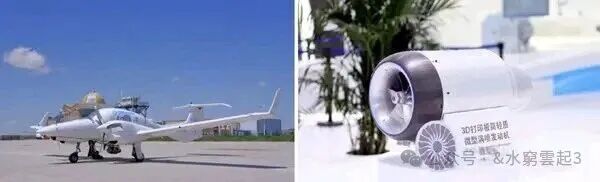
The roar of an aircraft soaring at an altitude of six thousand meters heralds the birth of a new aviation technology path.A turbofan engine produced using additive manufacturing technology has traced a historic trajectory in the skies over Inner Mongolia. This engine flew continuously for over thirty minutes at an altitude of six thousand meters, maintaining a stable speed of 0.75 times the speed of sound.On November 13, China Aviation Engine Group announced that its self-developed 3D printed minimalist turbofan engine successfully completed its first single-engine flight test.This flight test was successfully completed, marking a significant breakthrough in the engineering application of 3D printed engines. Compared to traditional manufacturing processes, over three-quarters of the weight of this engine’s components are produced using 3D printing, significantly reducing the number of parts and achieving lightweight, high-performance design goals.In the aviation industry, every technological breakthrough is the result of countless researchers’ hard work and wisdom. The successful first flight of this 3D printed minimalist turbofan engine marks a solid step forward for China in the path of independent innovation in aviation power systems.Flight test data shows that the engine operated stably at an altitude of 6000 meters at a speed of 0.75 Mach for 30 minutes, successfully completing the first single-engine flight test of China’s independently developed 3D printed minimalist turbofan engine.
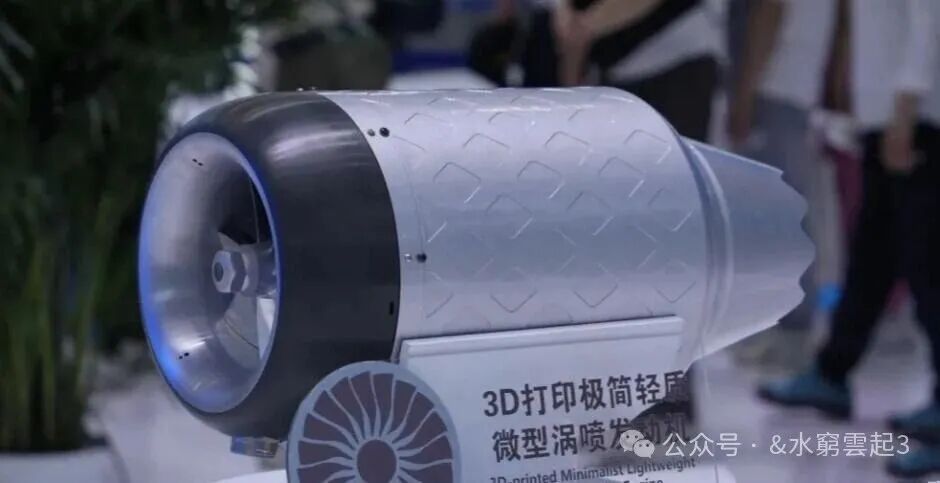
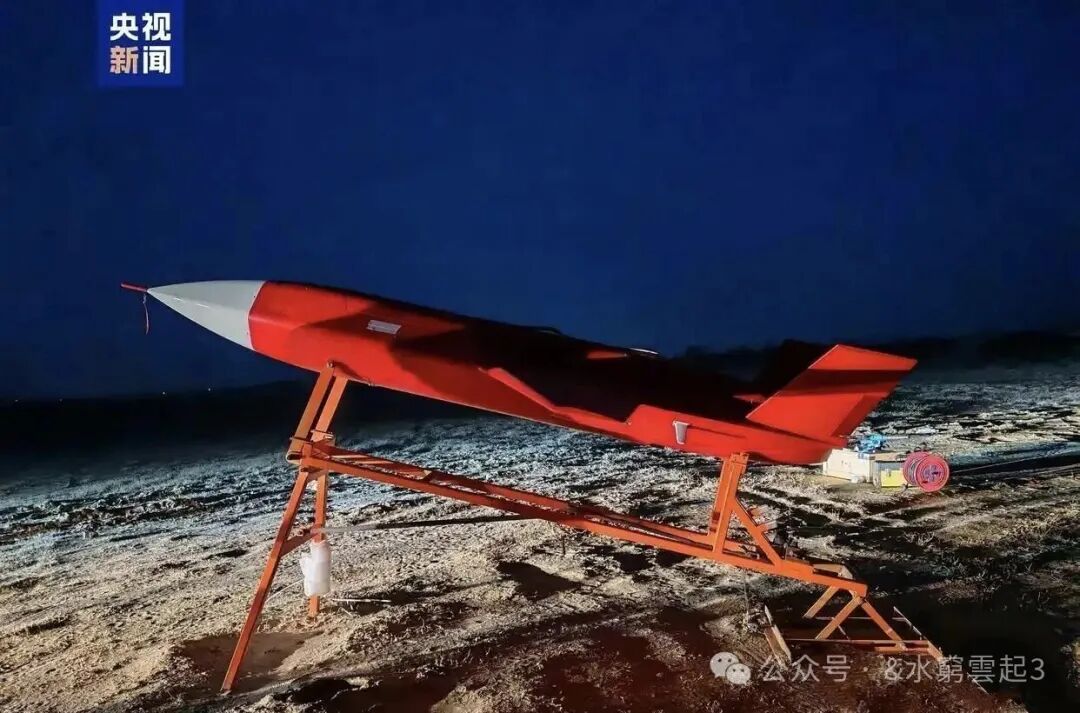
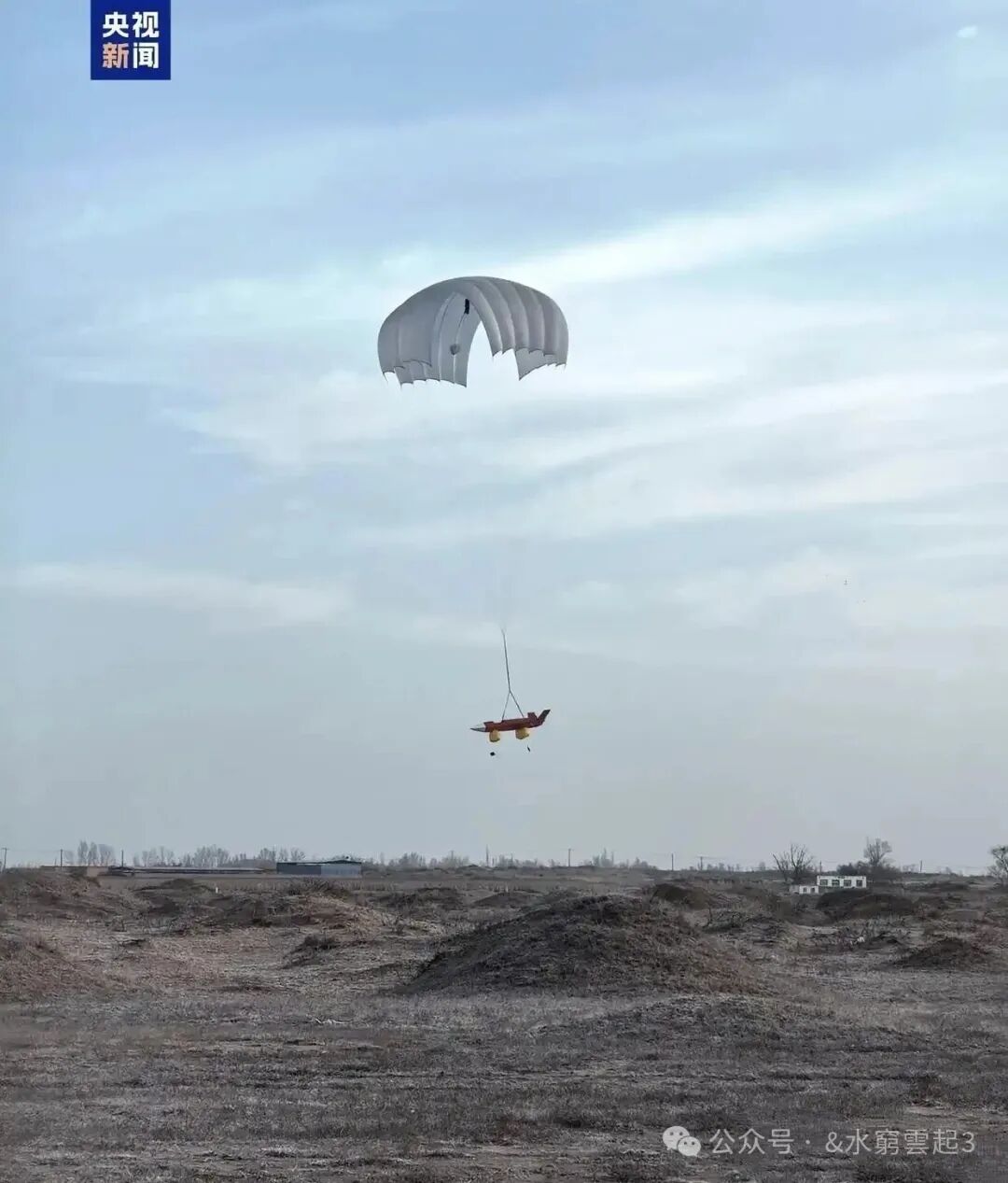
This success was not accidental. Looking back to July 1 of this year, the engine was mounted on a test platform in Inner Mongolia and completed its first flight verification. At that time, the maximum flight altitude was 4000 meters, laying the foundation for this more challenging flight test. Mi Dong, director of the chief engineer’s office at the China Aviation Engine Research Institute, stated: “The success of this single-engine flight test indicates that the engine’s reliability has been further validated at higher flight altitudes and in more complex environments, testing the compatibility of the engine with the aircraft.”The excellent performance of this engine provides a new power solution for applications in cruise missiles, drones, and target aircraft, showcasing promising application prospects.This engine represents a revolutionary breakthrough in aviation engine manufacturing technology. It employs multidisciplinary topology optimization additive manufacturing technology, successfully achieving a revolutionary integration of aviation engine design concepts and manufacturing processes.As the first 160 kg thrust class multidisciplinary topology optimized additive manufacturing turbofan engine to complete flight verification in China, its development process embodies the hard work of many researchers. The research and development team, under the careful guidance of Academician Yin Zeyong’s workstation, explored cutting-edge technologies and overcame many limitations of traditional design and manufacturing.3D printing technology, also known as additive manufacturing, fundamentally changes the manufacturing paradigm of aviation engines.
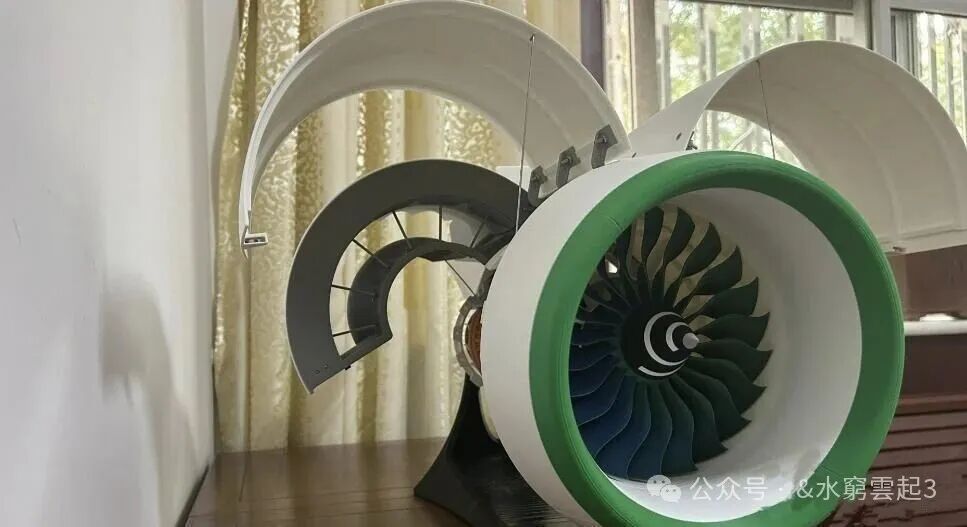
Traditional aviation engine manufacturing requires thousands of parts to be processed and assembled separately, while this engine significantly reduces the structural weight through integrated design, while achieving significant improvements in key performance indicators.Specifically, 3D printing technology brings three revolutionary advantages:It greatly reduces the number of parts, simplifying the production process.It significantly lightens the engine’s weight, improving the thrust-to-weight ratio.It simplifies maintenance processes, enhancing battlefield emergency repair capabilities.The engine developed by China Aviation Engine Group uses 3D printing for all rotor components and over three-quarters of the total weight of the engine. This technological path significantly reduces production complexity while meeting the stringent environmental requirements of high altitude and high-speed flight.The “minimalist” design concept represents a significant shift in thinking and philosophy in the current manufacturing industry. In the aviation field, traditional engines are often closely associated with “high complexity,” requiring thousands of high-precision components to operate seamlessly together.The breakthrough of the minimalist turbofan engine launched by China mainly lies in the significant simplification of traditional complex structures. 3D printing technology allows engineers to integrate hundreds or even thousands of independent parts that previously needed to be processed and assembled separately into a significantly reduced number of core functional modules through whole-form printing.
This “decomposing into whole” production method brings multiple and revolutionary comprehensive benefits. In terms of reliability, there has been a leap forward; as the number of components decreases exponentially, the potential connection points and failure points in the equipment are also significantly reduced. The reliability of aviation engines is directly related to flight safety, and every connection point is a potential source of failure. 3D printing technology fundamentally improves the inherent reliability of the engine by reducing connection points.In terms of performance boundaries, three-dimensional printing technology gives engineers unprecedented creative freedom. Technicians can break through the limitations of traditional processing methods to create complex geometric shapes, including internal conformal cooling channels and biomimetic lattice lightweight structures, which were previously difficult to achieve.This technological breakthrough has led to significant advancements in core performance indicators such as weight control, heat dissipation efficiency, and thrust-to-weight ratio.In today’s context where turbofan engines are widely used, one might question why there is a need to reinvest in the research and development of a seemingly basic turbofan engine model. In fact, this fully demonstrates the wisdom of China’s aviation engine field, which is both grounded in reality and looking to the long term.First, turbofan engines, with their relatively simplified structure, become an ideal carrier for verifying the overall performance of additive manufacturing technology under extreme conditions.
Through the successful verification of this platform, core process modules can be modularized and systematically transplanted to more complex engine models such as turbofans and turboshafts, forming a technology development route that is controllable in risk and outstanding in efficiency.Secondly, in the fields of target aircraft, cruise missiles, and small drones, turbofan engines still occupy an important and irreplaceable market position. These types of equipment impose strict standards on the economic efficiency, production efficiency, and high-speed characteristics of power systems.The rapid response mechanism and production cost optimization capabilities provided by additive manufacturing technology precisely meet the core needs of these fields. According to market analysis, 3D printing technology can reduce manufacturing costs by about 30% and shorten the R&D cycle by 40%, with broad application space in both military and civilian aviation fields in the future.The enhancement of aviation power does not rely on the success of a single model but depends on the degree of perfection of the overall technological ecosystem. From turbofans to turbofan engine series, from manned aircraft to drone platforms, China is gradually establishing an independent and controllable aviation power system with a complete hierarchy. This technological breakthrough fills a crucial technical gap in this system.From long-term dependence on others to opening up a new track, China’s aviation engine field is achieving leapfrog development.
The aviation engine, hailed as the pinnacle of modern industrial technology, has its core manufacturing processes and innovative technologies firmly controlled by top Western enterprises, creating insurmountable technical barriers and industrial closed loops.If we follow the traditional development path, we will face the reality of long technology iteration cycles and insufficient accumulation of basic processes, while also having to deal with a tight network of intellectual property protection. The breakthrough progress of additive manufacturing technology opens up a development path for China’s aviation power industry that transcends conventional methods.This signifies that we are no longer limited to catching up within established technological frameworks but are building an independent technological system in a new dimension. Through innovative manufacturing processes, we have successfully avoided the precision casting and forging technology systems that the West has developed over decades, instead utilizing digital design platforms to develop high-performance power devices with a new engineering concept.This technological transformation significantly reduces the aviation industry chain’s dependence on the international division of labor system. Compared to managing a complex global parts procurement network, achieving independent assurance of key basic materials is not only more operationally feasible but also greatly enhances the level of industrial security.When production processes no longer limit the realization of creativity, Chinese R&D teams can fully leverage their engineering wisdom. We can base our designs on national defense strategies and operational needs to create power systems that are uniquely tailored and perfectly compatible with China’s aviation equipment system.
The strong attention from the international community, from the European and American aviation industries to various national safety regulatory organizations, indicates that China has achieved a qualitative leap in the field of 3D printed aviation engine technology. With the successful application of 3D printing technology in aviation engines, its future development prospects are highly anticipated. According to market analysis, 3D printing technology will drive aviation power systems towards lighter and more modular directions. It is expected that by 2026, the proportion of 3D printing in the manufacturing of aviation engine components will increase from the current less than 10% to 25%, becoming an important support for high-end equipment manufacturing.Regarding future development paths, Mi Dong, director of the chief engineer’s office at the China Aviation Engine Research Institute, pointed out: “Next, we will focus on two things: first, continue to conduct more challenging flight tests to verify adaptability in extreme environments and expand to more flight platforms. Second, optimize batch production processes to quickly achieve product success from technological success.”As the maturity of technology increases, future 3D printed engines may cover an altitude range of 5000 to 10,000 meters, with speed targets potentially exceeding 1 Mach. This will further expand their application scenarios, not only in military fields but also in civilian drones, emergency rescue, and other areas, showcasing broad potential.However, the application of 3D printing technology in the aviation field still faces some challenges.
Professor Li Yinghong from the Air Force Engineering University and an academician of the Chinese Academy of Sciences pointed out that current 3D printing technology faces issues such as “low efficiency, high costs in industrial and large-scale applications; high stress, and insufficient fatigue strength.”To address these challenges, Li Yinghong proposed the “i-3D” intelligent composite additive manufacturing technology, which includes intelligent monitoring systems and intelligent process design, building an intelligent full-chain production line; composite refers to multi-energy field composite equipment and processes; integration refers to the integration of material manufacturing.Chief engineer of the Equipment Industry Development Center of the Ministry of Industry and Information Technology, Zuo Shiquan, believes: “In the future, 3D printing equipment will gradually move towards large sizes (large forming areas), high efficiency (multiple lasers), new technologies (flying printing/metal adhesives, etc.), and refinement (micro-nano metal printing).”In the future, with design optimization and the in-depth application of 3D printing technology in aviation engines, the R&D cycle of engines is expected to be further shortened, accelerating China’s independent R&D and manufacturing process in aviation power. China Aviation Engine Group has already planned to continue conducting more challenging flight tests and optimize batch production processes to quickly achieve product success from technological success.As 3D printing technology continues to mature, it is likely to extend beyond the aviation engine field.
From spacecraft to ship power, from energy equipment to precision instruments, this digital and intelligent manufacturing concept will reshape the entire high-end manufacturing landscape.As night falls, a drone quietly ascends, powered by a 3D printed turbofan engine. It does not require complex assembly workshops and lengthy supply chains; it can be manufactured in a short time with just design files and specialized materials. This is the future of manufacturing.