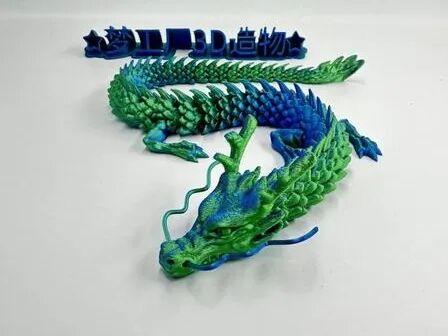
3D printing technology is accelerating its penetration into various fields such as industry, healthcare, and consumer products due to technological breakthroughs and cost reductions. With the empowerment of AI and the improvement of the industrial chain, its application prospects are becoming increasingly broad, which can be elaborated on in the following core areas and trends:
- Industrial Manufacturing: Reshaping Production and Supply Chain Models
- Aerospace and Automotive Industries Continue to Breakthrough: In the aerospace sector, 3D printing can precisely manufacture complex structural parts such as rocket engine components and lightweight aircraft brackets, reducing fuel consumption and minimizing material waste from traditional processing, making it a key manufacturing technology in this field. The automotive industry widely uses it for rapid prototyping and custom tooling, with some manufacturers beginning to produce final-use parts such as engine components and interior accessories, balancing strength and lightweight requirements. In the future, it will further advance towards mass production of core structural components.
- Distributed Manufacturing as a New Direction: This technology will drive the manufacturing industry from centralized mass production to “global design, local production.” Companies can print products on demand in areas close to consumption by transmitting digital files, significantly reducing logistics costs and inventory pressure. For example, parts do not need to be transported over long distances; local production centers can quickly respond to repair and replacement needs, enhancing supply chain resilience.
- Widespread Adoption of Conventional Medical Applications: Currently, 3D printing is widely used for customized implants, surgical guides, and dental products, precisely made according to patients’ bone sizes and dental shapes, improving treatment outcomes and comfort. As technology matures, the costs of these customized medical products will gradually decrease, further popularizing them in grassroots medical institutions.
- Exploration of Bioprinting Frontiers: The core direction for the future is to evolve from biomimetic implants to functional human tissues and organ printing. Currently, explorations in printing biological tissues such as rotator cuffs and anterior cruciate ligaments have been achieved. If future breakthroughs can overcome the challenges of organ transplant rejection and functional activation, it will fundamentally change the reliance on donations for organ transplants, triggering revolutionary changes in the medical field. Additionally, it also has potential in personalized drug production, allowing for customized drug dosages and formulations for specific patients.
- Widespread Adoption in the Consumer Market: Consumer-grade 3D printers have entered the “thousand-yuan era,” and with AI modeling tools, ordinary users can print toys, home decorations, etc., without complex design skills. Meanwhile, designers and studios can leverage this technology to provide small-batch customization services, such as custom jewelry and personalized clothing, opening up new consumer markets. The rapid development of companies like Tuo Zhu Technology and Chuangxiang Sanwei also confirms the enormous potential of the consumer market.
- Deep Integration of Education and Cultural Creativity: In the education sector, once 3D printers enter the classroom, they can transform abstract scientific and mathematical concepts into physical models, helping students understand knowledge and stimulate hands-on creativity. In the cultural creative field, artists are provided with creative freedom, whether for complex sculptures or uniquely shaped cultural products, all can be accurately presented through 3D printing, promoting the integration of art and technology.
- Exclusive Applications in Extreme Environments: In space exploration, 3D printing can utilize local materials such as lunar soil to print components for lunar bases, reducing the high costs of space transportation. In the deep-sea field, there is hope for on-site repair printing of deep-sea equipment in the future, solving the challenges of difficult maintenance and high transportation costs, becoming a key technological support for operations in extreme environments.
- Green Innovations in New Energy and Construction: In the new energy sector, it can manufacture high-efficiency battery electrodes, fuel cell components, and wind turbine blades, helping to enhance the performance and lightweight levels of new energy devices. In the construction field, 3D printed houses and bridge components have already been preliminarily implemented, using special concrete or composite materials for printing, which can reduce material waste and lower labor costs. In the future, it will achieve large-scale applications in scenarios such as affordable housing construction and temporary buildings after disasters.
- AI Reduces Barriers and Improves Efficiency: The integration of AI and 3D printing has become an inevitable trend. AI can generate 3D models from text or images, lowering the modeling threshold; during the printing process, it can also monitor and adjust parameters in real-time to ensure print quality while achieving predictive maintenance of equipment, reducing downtime due to failures.
- Multi-Material and Structural Innovations Break Through Limitations: New printing technologies solve the strength and deformation issues of high-density metal and ceramic parts through methods such as soaking metal salts and ceramic materials in hydrogel scaffolds. In the future, it will also achieve the integration of rigid and flexible materials in a single print, embedding electronic components to directly manufacture fully functional products, bringing new design space to industries such as consumer electronics and soft robotics.