[Paper Link]
https://doi.org/10.1016/j.jechem.2025.10.025
[Author Affiliation]
China University of Petroleum (Beijing)
[Abstract]
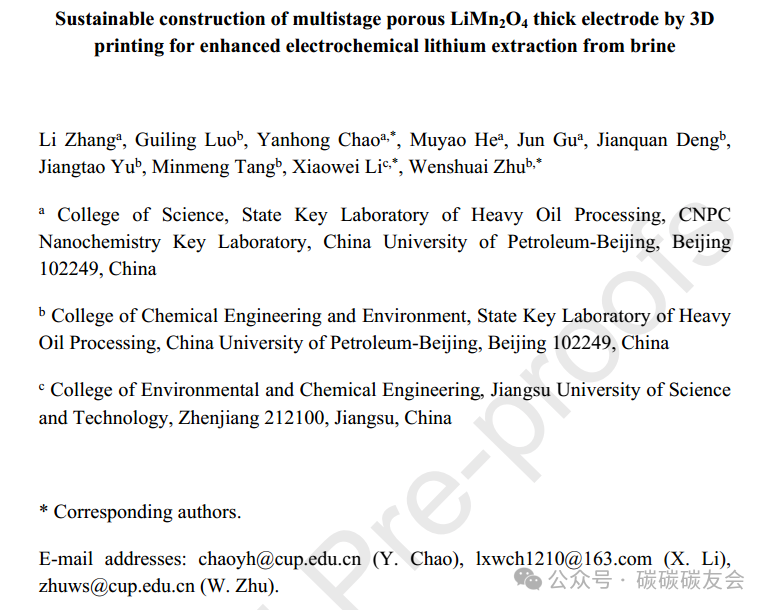
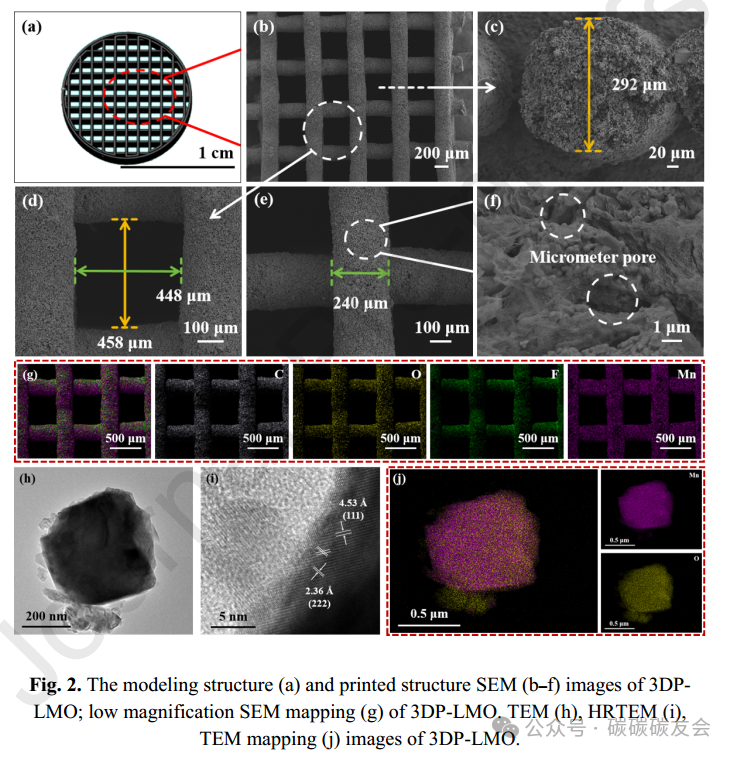
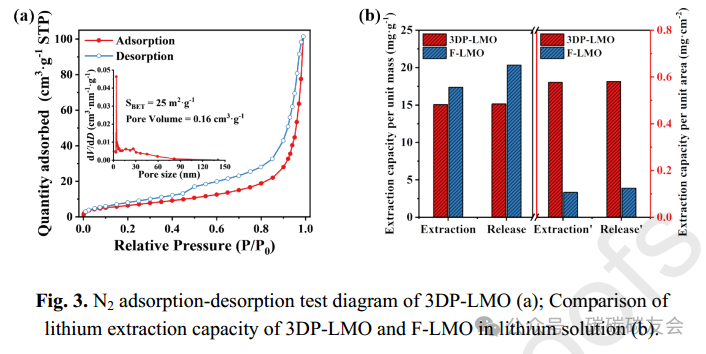
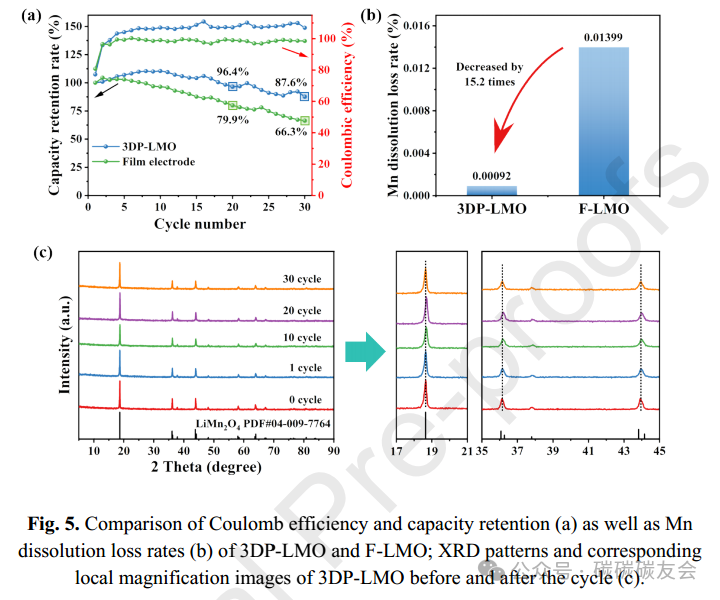
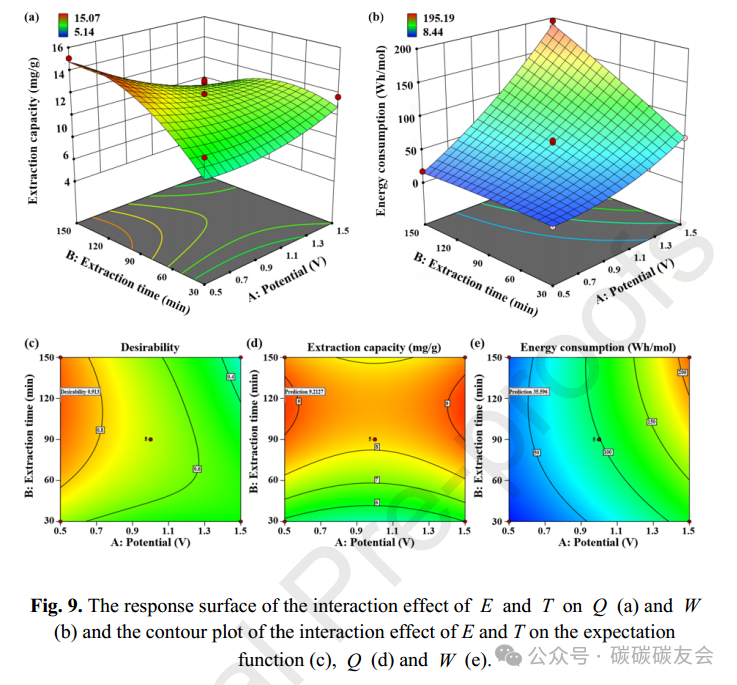
The electrochemical liquid lithium extraction technology has gained widespread attention due to its high selectivity, efficiency, and environmental friendliness. However, the low specific energy density and poor stability of traditional film electrodes (F-LMO), along with the manganese dissolution loss caused by the Jahn-Teller distortion of LiMn2O4, hinder their industrial scalability. This paper presents a sustainable method for fabricating durable and efficient multi-level porous LiMn2O4 thick electrodes using 3D printing technology (3DP-LMO) to enhance lithium recovery from brine. The multi-level porous structure reduces mass transfer resistance and shortens the ion diffusion path, facilitating an accelerated diffusion rate of Li+. Additionally, the three-dimensional conductive network composed of reduced graphene oxide (rGO) and carbon nanotubes (CNT) synergistically interacts with the multi-level pores, effectively mitigating the polarization phenomenon of the electrode and improving the stability of 3DP-LMO. Compared to F-LMO, the specific extraction capacity of 3DP-LMO increased by 5.5 times, and the manganese dissolution loss rate was only 1/15. Notably, the capacity retention rate of 3DP-LMO was 87.6%, significantly better than that of F-LMO (66.3%). Based on quasi-in-situ X-ray diffraction results, the mechanisms of lithium insertion and extraction in 3DP-LMO were elucidated. Furthermore, the lithium extraction parameters were optimized using response surface methodology central composite design (RSM-CCD), achieving a lithium extraction capacity of 15.66 mg g−1 and reducing energy consumption to only 12.33 Wh mol−1. The results indicate that 3DP-LMO significantly enhances lithium extraction performance and stability, showing considerable potential for practical applications.
[Experimental Method]
Experimental Procedure:
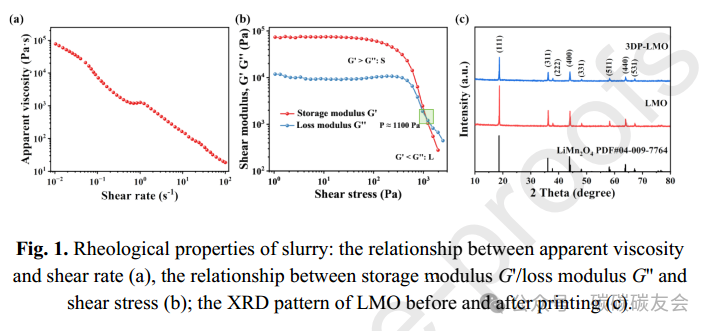
PVDF was dissolved in NMP (solid-liquid ratio 1:10 g mL−1) and stirred with a magnetic stirrer until homogeneous. LMO, rGO, and CNT (mass ratio of 14:1.5:1.5) were ground in a mortar for 30 minutes. Subsequently, 5.0 g of the prepared PVDF/NMP solution was added to the mortar and ground uniformly to obtain the 3D printing ink.
[Graphical Abstract]
[Main Conclusions]
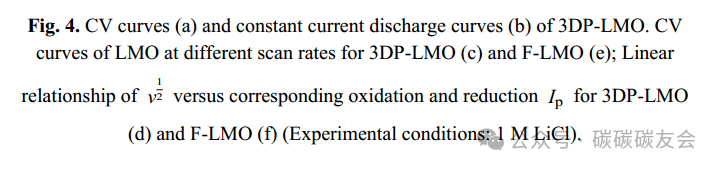
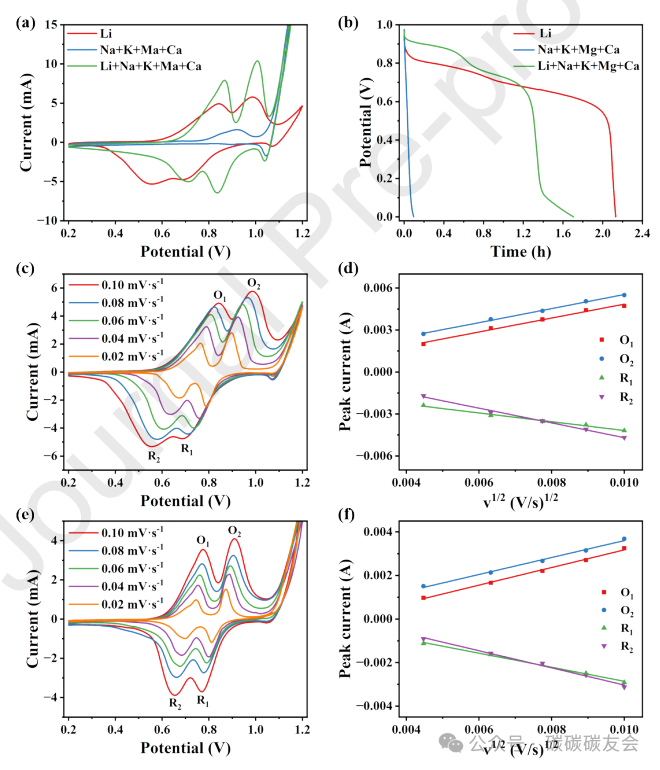
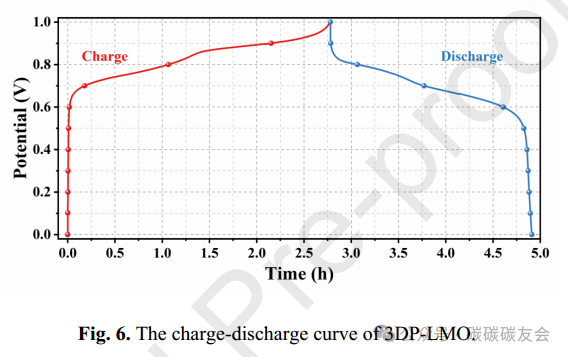
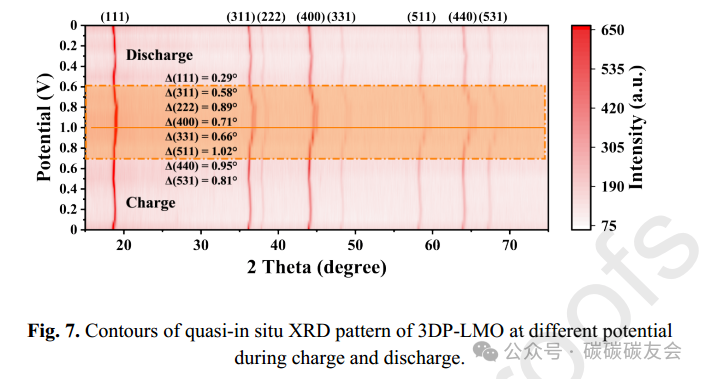
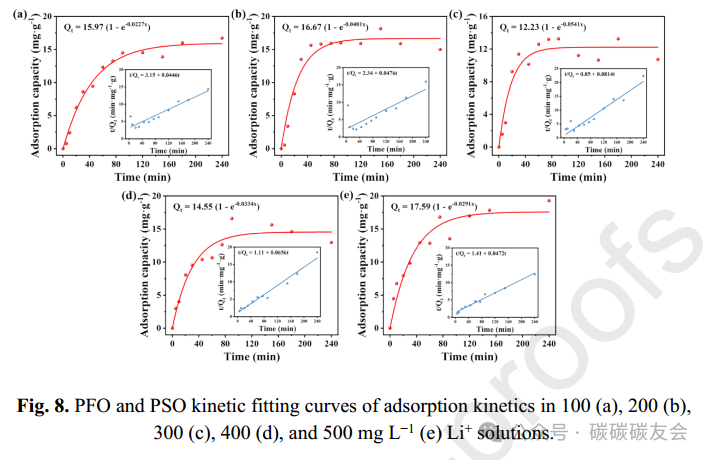
In this work, a thick electrode of LiMn2O4 with a “nano-micro-macro” multi-level porous structure was prepared using 3D printing technology, and its lithium extraction performance and stability were systematically studied. The unique multi-level porous structure and integrated 3D conductive network (composed of rGO and CNT) within 3DP-LMO facilitate excellent electrolyte penetration and rapid ion transport, enhancing cycling stability. CV analysis indicates that 3DP-LMO exhibits excellent Li+ selectivity and accelerated Li+ diffusion rate. This electrode has a high specific lithium extraction capacity and excellent stability, with a capacity retention rate and manganese dissolution loss rate of 87.6% and 0.0009% after 30 cycles, respectively, outperforming F-LMO (66.3% capacity retention rate and 0.014% manganese dissolution). The insertion mechanism of Li+ in 3DP-LMO was studied through quasi-in-situ XRD, and the adsorption kinetics of Li+ were analyzed. After optimizing the experimental parameters through RSM-CCD, 3DP-LMO can achieve high lithium capacity and low lithium energy consumption (Q=15.66 mg g−1, W=12.33 Wh mol−1). The thick electrode of multi-level porous LiMn2O4 prepared by 3D printing technology has broad application prospects and is expected to provide theoretical guidance for the industrialization of electrochemical lithium extraction technology.