Click the blue text to follow us
According to the International Jewelry Association’s 2021 report, global sales of 3D printed jewelry have reached approximately $1 billion, and this figure is expected to grow to $2 billion by 2025, with a growth rate exceeding 20%.
Current Status of Precious Metal Printing Abroad
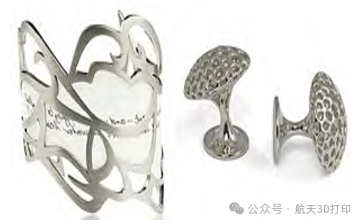
In countries such as Europe and the United States, the application of 3D printing technology in the jewelry and accessories industry is relatively mature and widespread. Some well-known jewelry brands, such as RADLAN and Cooksongold, have adopted this technology for jewelry production. The French jewelry brand RADIAN is known for its 3D printed sustainable jewelry and home goods, utilizing 3D printing technology, particularly Selective Laser Sintering (SLS) and binder jetting technology, to produce complex, avant-garde, and rapid jewelry art pieces. In 2016, the UK company Cooksongold developed platinum powder for 3D printing. The company collaborated with the Platinum Guild International (PGI) to create the world’s first 3D printed platinum jewelry, with one piece designed as a bracelet based on ancient Chinese vases and another inspired by skeletal structures, both using Selective Laser Melting (SLM) technology, as shown below.
Currently, new printing technologies and materials are continuously emerging, such as improvements in metal powders and multi-material printing, further driving innovation and design possibilities in precious metal jewelry. In 2017, the German Institute for Precious Metals and Metal Chemistry (FEM) announced a new 3D printing method for precious metal jewelry that significantly improves the quality of 3D printed gold jewelry using Selective Laser Melting (SLM) technology. Researchers mixed gold with iron and germanium, as both metals in the alloy are oxidized, reducing the reflectivity of the alloy and increasing the absorption of laser energy. This method is a feasible solution for 3D printing high reflectivity precious metal jewelry.
In summary, the application of 3D printing technology in precious metal jewelry abroad is relatively mature and widespread, generally using Selective Laser Sintering (SLS) and Selective Laser Melting (SLM) technologies for 3D printing precious metal jewelry. To address the challenges of 3D printing metals with high reflectivity, such as gold, silver, and copper, alloys are formed by adding other easily oxidizable metals (like iron and germanium) to enhance absorption rates, thus enabling the 3D printing of precious metal jewelry.
Current Status of Precious Metal Printing in China
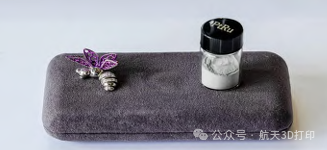
Although the market for 3D printed precious metal jewelry in China is relatively new, it is gradually gaining recognition and adoption with advancements in technology and an increase in application cases. Some large domestic enterprises (especially those processing gold and platinum) have begun research and trial production in the field of 3D printing technology for precious metal jewelry. Utilizing the advantages of 3D printing technology and combining the needs of jewelry production enterprises, they have developed MPSL series equipment and supporting consumables for mass production, particularly focusing on the development of precision casting processes for resin lost molds based on jewelry resin printed parts, providing a complete solution for jewelry design and production. The promotion and application in densely populated areas such as Shenzhen and Panyu in Guangdong have facilitated the integration of 3D printing thinking with design thinking, liberating designers from the constraints of production processes and making it easier to achieve fashionable personalized customization in jewelry design. ElementsLab in Taiwan utilizes 3D printing technology to design custom jewelry, capable of manufacturing silver and gold alloy jewelry and conducting mass production, providing customers with opportunities for custom jewelry design. The following image shows the Pt alloy 3D printing powder displayed by the British Platinum Group at the Shanghai Platinum Week conference in July 2024, along with a platinum jewelry piece named “Little Bee” made using 3D printing technology, which is exquisitely crafted and provides a new solution for the efficient and customized production of complex platinum jewelry.
Currently, the introduction of 3D printing technology for jewelry precious metals nationwide is slow. Some large jewelry enterprises and processing plants in China have begun using 3D printing technology to produce jewelry. However, many technologies remain at universities or research institutions, making it difficult to participate in large-scale production and expand application scope and depth in the market, which poses a development challenge.
Preparation of Precious Metal Powders
The raw materials for 3D printing are quite special; they must be able to liquefy, powder, and filament, and must recombine after printing while possessing qualified physical and chemical properties. 3D printing technology has stringent requirements for precious metal powders, requiring them to have good plasticity, small particle size, narrow particle size distribution, high sphericity, good flowability, and high bulk density. Common precious metal powders such as gold, silver, platinum, and rhodium have various preparation methods, and the powders produced differ in purity, oxygen content, particle size distribution, sphericity, and flowability. Below are several preparation methods suitable for 3D printing precious metal powders: metal gas atomization, plasma rotating electrode atomization, and crucible-free electrode induction melting gas atomization.
First, the precious metal is prepared through the metal gas atomization process, followed by vibration classification to select the precious metal powder, which can meet the requirements for 3D printing. The preparation process is as follows:
1) According to the alloy element ratio, the precious metal is placed in a high-temperature crucible and heated to 1200~1700 °C in an induction melting furnace to obtain a precious metal alloy melt;
2) The precious metal melt in the induction melting furnace crucible is transferred to the crucible of the metal gas atomization device and flows out from the lower nozzle, while a dual-flow high-speed inert gas stream atomizes the flowing metal melt. The cooled metal atomized particles are collected in a stainless steel container protected by sealed, negative pressure inert gas, forming precious metal powder;
3) The gas-atomized precious metal powder collected in the stainless steel container is screened to select spherical precious metal powder with a particle size between 20~40 μm, resulting in precious metal powder suitable for 3D printing.
A representative method for preparing copper powder is: copper powder prepared by water-gas combined atomization has good sphericity, no internal voids, satellite particles, a particle size range of 10~80 μm, high purity, and an oxygen content as low as 0.1%.
The powder prepared by the Plasma Rotating Electrode Atomization (PREP) method has high sphericity, smooth surface, few hollow and satellite particles, good flowability, and low oxygen content, making it suitable for producing silver or silver-copper alloy powders for 3D printing. The preparation process is as follows:
1) Pure silver and pure copper are proportioned;
2) The materials are prepared into metal electrode rods using melting and continuous casting processes;
3) The metal electrode rods are placed in the plasma rotating electrode atomization device to prepare primary powders containing silver or silver-copper;
4) The primary metal powder is screened to obtain secondary metal powder for 3D printing, with a particle size range of 15~53 μm.
The powder prepared by the crucible-free electrode induction melting gas atomization method has high sphericity, is not easily hollow, has uniform particle size, good flowability, and low oxygen content, making it suitable for the preparation of platinum or platinum-rhodium alloy powders, achieving high sphericity for platinum and platinum-rhodium alloy powders in 3D printing technology. The preparation process is as follows:
In an argon atmosphere, platinum-based metal rods are placed in the crucible-free electrode induction gas atomization device, and melting and atomization are performed under a melting current of 110~200 A and an atomization pressure of 4~8 MPa; subsequently, the powder is screened to obtain particle sizes ≤53 μm suitable for 3D printing platinum-based spherical powders.
The main CAD 3D modeling software used in the jewelry industry includes JewelCAD, Rhino, and 3Design.
JewelCAD software is a commercial software developed by Hong Kong Computer Jewelry Technology Co., Ltd. in 1990, specialized in jewelry design/manufacturing CAD/CAM software. It is highly specialized, efficient, easy to learn, has a large library of ready-made jewelry models, and many parameters, and can directly participate in mold making, making it the preferred CAD/CAM software system recognized in the jewelry industry. The updated JewelCAD-Pro can directly connect to 3D printers for printing, enhancing existing functions and adding new features. It allows for 3D model visualization, direct conversion from 2D to 3D effects, and intuitively simulates the final product’s effect. The simplified modeling tools reduce the time for drawing complex jewelry structures, and the software can calculate the theoretical gold usage, product surface area, and the number and size of stones based on the drawn model. JewelCAD-Pro can directly output to STL format recognizable by 3D printers.
Rhino is a commercial 3D modeling software developed by Robert McNeel & Assoc in the United States, excelling in line modeling, i.e., forming surfaces from lines and solids from surfaces. This allows it to be widely used in 3D animation production, industrial manufacturing, scientific research, and mechanical design. It can easily integrate the modeling functions of 3DS MAX and Softimage, and has a remarkable ability to create detailed, flexible, and complex 3D NURBS models. Rhino’s modeling capabilities are powerful, rendering effects are better, and it can directly connect to 3D printers.
French company Visionnumeric has been dedicated to developing modeling software, from industrial design to jewelry design, encapsulating years of research results into its 3Design jewelry modeling software. Today, this software has become a rising star. It features dynamic tools that can add CAD functions to jewelry design, providing realistic images for all jewelry designs, ensuring accuracy in 3D software for jewelry design. This software is very suitable for modifying design elements, handling the creative aspects of jewelry design, and applying special effects. After constructing models using the three mainstream modeling design software mentioned above, the 3D modeling output can be converted into STL file format recognizable by 3D printers using software like Catia, 3DMax, and Maya, allowing for printing on 3D printers.
Processes for Printing Precious Metals
Currently, 3D printing technology in jewelry manufacturing can be categorized into indirect and direct methods. The direct method refers to directly printing the finished jewelry from the CAD model using 3D printing technology (SLM/SLS, etc.), while the indirect method involves printing a lost mold from the CAD model using 3D printing technology (DLP/SLA, etc.), followed by casting and metal injection to produce jewelry. The metal materials used in direct 3D printing of jewelry are generally in powder form, primarily consisting of gold, pure silver, silver-copper, brass, etc., and the powders used must have high purity, good sphericity, narrow particle size distribution, and low oxygen content.
There are four methods for achieving metal using photopolymerization 3D printing technology: sintering, coating, mixed curing, and mold curing. Among them, the sintering method is the primary method for preparing metal products.
The preparation method for 3D printing precious metal jewelry using photopolymerization 3D printing is as follows: Add surface coating agents and surface promoters to the first mixture containing precious metal powder for the surface coating step; perform post-processing on the coated product to obtain organic-coated precious metal powder materials; where the precious metal powder can be pure precious metal powder or alloy powder; prepare a 3D printing slurry by mixing UV light diluents, UV light absorbers, UV light initiators, dispersants, and organic-coated precious metal powder materials; use a photopolymerization 3D printer to perform photopolymerization forming treatment on the 3D printing slurry to obtain a photopolymerized 3D printed blank; and under an argon protective atmosphere, perform low-temperature debinding and sintering treatment on the blank to obtain photopolymerized 3D printed precious metal jewelry. In this method, the mass ratio of precious metal powder, surface coating agents, and surface promoters in the organic-coated precious metal powder material is (80~90):(10~15):(1~5); the precious metal powder used is spherical or quasi-spherical powder with a particle size of 10~30 μm; the surface coating agents can be one or more of methacrylic acid, styrene, butyric acid, sorbic acid, or titanate; and the surface promoters can be one or more of tert-butyl perbenzoate, benzoyl peroxide, methyl ethyl ketone peroxide, or isopropylbenzene peroxide. This method can manufacture corresponding precious metal jewelry based on 3D modeling, but it also has certain defects, such as the potential presence of toxic reagents (methacrylic acid) in the surface coating agents and flammable and explosive reagents (tert-butyl perbenzoate, etc.) in the surface promoters; moreover, the process flow is somewhat complex. Therefore, this method is suitable for small batch production of precious metal jewelry.
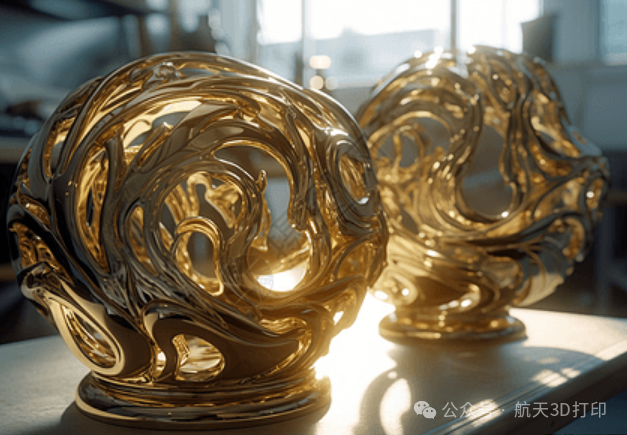
Selective Laser Sintering technology is suitable for the jewelry and watchmaking industries. The German company EOS is a leader in the use of laser sintering technology for producing gold jewelry both domestically and internationally, with products featuring smooth surfaces, no visible layer accumulation marks, and a seamless appearance. Below is the production process of precious metal jewelry in EOS’s Precious M 080 custom equipment, which can directly 3D print precious metals. This equipment uses a modular design for printing precious metal jewelry. On a construction platform with a diameter of 80 mm, similarly sized refractory materials are placed on the platform; the processing chamber module and pre-filled metal powder cartridge are secured. As the processing chamber module and powder cartridge move right along the guide rail, the powder cartridge releases a certain amount of precious metal powder onto the construction platform; at this time, the construction platform will lower a certain height, and the scraper below the powder cartridge will move right along the guide rail to evenly spread the precious metal powder on the construction platform; when the processing chamber module moves to the construction platform, it emits a laser beam to sinter the precious metal powder into the desired shape, after which the processing chamber and powder cartridge return to the left; the construction platform will lower a certain height to perform the next layer of powder spreading and laser sintering; as the processing chamber, powder cartridge, scraper, and construction platform work in coordination repeatedly, the layered printing and manufacturing of precious metal jewelry can be achieved. Once the jewelry printing is complete, the processing chamber module is replaced with an extraction cylinder, allowing the construction platform to rise to its original position; at this time, the printed jewelry and unsintered metal powder are enclosed in the extraction cylinder, and the unsintered metal powder can be poured out to retrieve the metal jewelry. The innovative design of this equipment meets the requirements for minimal use of precious metal powder, low powder loss, and easy recovery.
In common metal materials, the minimum particle size of 925 silver powder can reach 40 μm, gold powder can reach 30 μm, copper powder can reach 35 μm, and titanium alloy powder can reach 45 μm. With such high-precision metal powders, 3D metal powder selective melting jewelry can achieve minimum gaps of 0.4 mm for gold, silver, and titanium jewelry, and 0.2 mm for pure copper jewelry. The laser absorption rate of metals such as gold, silver, and copper is very low; currently, most printers use fiber lasers with a wavelength of around 1064 nm. At this wavelength, the reflectivity of metal materials is relatively high, especially for gold, silver, and copper, which have reflectivities exceeding 95%. Such high reflectivity prevents the metal powders from absorbing sufficient laser energy, leading to insufficient melting of the powders, poor wettability of the melt, and difficulty in spreading. This results in decreased density and performance of the printed materials; simultaneously, the reflected laser during printing may damage the printer’s optical system. Therefore, overcoming the high reflectivity of materials becomes crucial for laser printing of gold, silver, and copper. Based on the analysis of the light absorption rates of high reflectivity materials like gold, silver, and copper, the laser wavelength is a significant factor affecting the absorption rate of metals to lasers. To improve the light absorption rate of high reflectivity metal powders, shorter wavelength lasers can be used. For instance, replacing the commonly used fiber lasers with shorter wavelength blue or green lasers can significantly enhance the light absorption rates of high reflectivity metal powders like gold and silver. For high reflectivity precious metal powders like gold and silver, using laser melting 3D printing methods to produce jewelry requires the powder particle size to be between 5-30 μm; to reduce the porosity of the finished product, the laser scanning speed should be controlled within 200-450 mm/s; to lower the porosity of the finished product, preheating of the precious metal powder can be performed, followed by mixing with easily oxidizable metal powders like iron and germanium, and then conducting 3D printing laser melting and sintering.
Both SLM and SLS technologies using laser melting have the following advantages in precious metal jewelry manufacturing: 1) They can create complex geometries and details, suitable for high-end and fine precious metal jewelry manufacturing;
2) A wide selection of materials, allowing the use of various precious metal powders such as gold, platinum, and white gold, as well as their alloys;
3) Precise manufacturing based on digital models, making it very suitable for personalized custom production;
4) Rapid production completion, allowing for quick responses to market demands and changes. Despite the significant advantages of SLM and SLS in jewelry manufacturing, there are also some drawbacks that need to be fully considered and weighed:
1) The equipment costs for SLM and SLS are relatively high, and the precious metal powders used are also relatively expensive, with different laser wavelengths employed;
2) Although they can achieve high precision and complex geometries, post-processing is required, especially for precious metal jewelry, where fine surface treatment is particularly important;
3) The characteristics and printing parameters of different precious metal powders may vary, requiring adjustments and optimizations in practical applications;
4) For precious metal jewelry, maintaining the uniformity and quality of the metal powders during the printing process is crucial.
Electron Beam Melting (EBM) technology features high energy density, high production efficiency, low forming stress, and pollution-free in a vacuum environment, making it particularly suitable for rapid forming of titanium and titanium alloys, refractory metals, and high reflectivity materials like copper and gold. The core component of the equipment using electron beam 3D printing is the electron gun, which determines the forming size, printing precision, and quality and performance of the formed parts. The direct-heated electron gun using tungsten as the cathode is the first generation of commercial SEBM equipment, which has advantages of low cost and stable performance, but has drawbacks of short lifespan (<100 h) and large beam diameter (200~300 μm) at high power. Compared to tungsten cathodes, the second generation direct-heated electron gun using LaB6 as the cathode has advantages of long lifespan (>500 h), high power (6 kW), and small beam diameter (140 μm), but has high costs, easy contamination of the cathode, and high vacuum requirements (10-4 Pa). To avoid the issues of direct-heated electron guns, the Xi’an Sailong Technology team developed an indirect-heated electron gun using tungsten as the cathode, combining the requirements of SEBM technology. Compared to direct-heated electron guns, this electron gun has high thermal source power (3 kW or 6 kW), small beam diameter (<100 μm), long lifespan (>500 h), and high precision. The SEBM equipment equipped with the indirect-heated tungsten cathode electron gun can be used for high-precision, low-cost, and mass manufacturing of complex parts made of titanium alloys, copper, silver, etc. Compared to the two laser melting technologies, electron beam melting technology may be more suitable for 3D printing of high reflectivity, refractory precious metals like gold, silver, and copper. Due to the high energy of the electron beam, electron beam technology is usually faster than laser technology, thus improving productivity. Compared to laser technology, EBM typically has higher material utilization rates, reducing material waste. However, currently, this method has limited applications in the precious metal jewelry field, so as the technology develops, its potential applications in the jewelry industry will increase.
Comments on Aerospace 3D Printing
3D printing technology can achieve large-scale personalized customization, and with the increasing demand for personalized customization, more modeling service platforms for custom jewelry and suppliers of 3D printed products will emerge in the future. With the development and upgrading of modeling design software and printing equipment, the ideas of jewelry designers will become broader, thus promoting the diversification of jewelry styles. The 3D printing process for precious metal jewelry can reduce material waste and energy consumption, contributing to the jewelry industry moving towards a green and sustainable direction. In summary, the future of 3D printing technology in the manufacturing of precious metal jewelry will open a new chapter, combining design innovation, customized production, and sustainable development, bringing more choices to consumers, more business opportunities to manufacturers, and injecting new vitality and creativity into the entire jewelry industry.
References: Current Applications of 3D Printing Technology in Precious Metal Jewelry, Shen Chuan-Zhi1, Chen Song2, 3*, Wang Sai-Bei1, 2, Xu Ming-Yue2, 3, Ning De-Kui2, 3, Xie Ming2,
Note: If you need to reprint or quote this article, please indicate the source. Feel free to add the author’s WeChat for more industry updates.