New 3D Printing Material Compatible with the Human Immune System

New 3D Printing Material Compatible with the Human Immune System

A research team from the University of Virginia has pioneered a new type of 3D printing material.This material is compatible with the human immune system and is expected to promote the rapid and safe development of various medical technologies such as artificial organ transplantation and drug delivery.This groundbreaking achievement was published in the latest issue … Read more
Definition of Injectable Brain Chip Technology

Definition of Injectable Brain Chip Technology

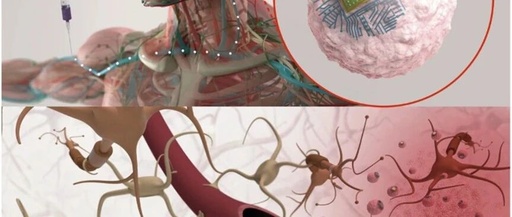
If clinicians could place a microelectronic chip inside the brain with a simple injection in the arm and apply electrical stimulation at specific target points, what would happen? This method may one day help treat fatal or debilitating brain diseases, while eliminating the risks and costs associated with surgery. Recently, a research team from the … Read more

Microrobots Operating in Blood Vessels

Microrobots Operating in Blood Vessels

There is an old Chinese saying that “all medicine is three parts poison.” Common drug delivery methods resemble indiscriminate rainfall; once the drug enters the body, it spreads throughout with the blood circulation. While it can act on the lesions, it inevitably affects healthy tissues as well. This “inflicting a thousand injuries to oneself while … Read more

Red Light Penetrates Cell Walls! A New Sensor for Real-Time Imaging of Nitric Oxide in Plant Tissues

πŸ“š Reference InformationTitle: Construction of a biocompatible supramolecular sensor for fluorescence imaging of Nitric oxide in plant tissuesAuthors: Shuang Cao, Chenglin Su, Qijun Sun et al. (2025)Journal: Biosensors and Bioelectronics πŸ” Core Issues Research Objective: To develop a red light fluorescence sensor with high biocompatibility for dynamic, in situ imaging of nitric oxide (NO) in … Read more

3D Printed Dentures: Risks and Strategies Behind Precision Customization

With the continuous advancement of technology, 3D printing has gradually entered the medical field, especially showing great potential in denture manufacturing. It enables personalized customization, improves precision, and shortens production cycles, providing patients with a more comfortable and convenient experience. However, this new technology also comes with risks related to materials, processes, inspection, and safety. … Read more

A Multifunctional Approach: New Hydrogel Sensor Achieves Dual Functionality for Detection and Adsorption of Hydrazine!

πŸ“š Reference InformationTitle: Novel barbituric acid-fused acridine-based hydrogel AIE fluorescent sensor for ultrasensitive on-site detection and efficient removal of hydrazine in gaseous and water environmentsAuthors: Yue Gu, Shuai Gong, Mengdi Zhao et al. (2025)Journal: Sensors and Actuators: B. Chemical πŸ” Core Issues Research Objective: To develop a fluorescent hydrogel sensor that integrates detection and adsorption … Read more

The ‘Magic Material’ of 3D Printing! Composite Resins Make Creativity Easy

3D printing can transform a “virtual model” into a “physical object,” and composite resins are the key materials in this “magic.” From general-purpose to specialized functional types, different kinds of 3D printing composite resins allow various creative ideas to come to life easily. Want to print everyday small ornaments? General-purpose light-curing 3D printing composite resins … Read more

Professor An Zesheng: Precise Synthesis of Ultrahigh Molecular Weight Polymers via Supramolecular Near-Infrared Photoenzyme Catalysis

Professor An Zesheng: Precise Synthesis of Ultrahigh Molecular Weight Polymers via Supramolecular Near-Infrared Photoenzyme Catalysis

The unique advantages of near-infrared light-controlled radical polymerization mainly stem from the deep tissue penetration capability, low scattering effect, and excellent biocompatibility of near-infrared light. However, its practical application has been limited by low polymerization efficiency and the difficulty in obtaining high molecular weight polymers. Although there has been progress in enzyme cascade catalysis and … Read more

Recent Advances in Flexible Composite Thermoelectric Temperature Sensors (Songshan Lake Materials Laboratory AFM)

Recent Advances in Flexible Composite Thermoelectric Temperature Sensors (Songshan Lake Materials Laboratory AFM)

Thermal energy is an indispensable form of energy in modern society, but its uncontrolled accumulation can easily lead to safety accidents, making intelligent temperature sensing and early warning technologies crucial. Among various temperature-sensitive materials, thermoelectric (TE) materials are considered ideal solutions due to their unique advantage of directly converting temperature differences into electrical signals without … Read more

Breakthrough in 3D Printed Soft Robots! Load Capacity 30 Times Their Weight, Precise Navigation in Slippery Environments

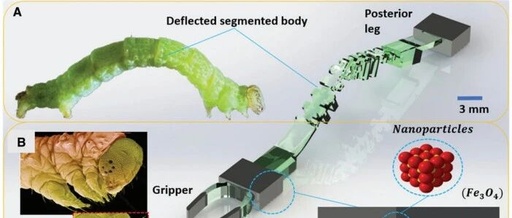
Breakthrough in 3D Printed Soft Robots! Load Capacity 30 Times Their Weight, Precise Navigation in Slippery Environments

DOI: <span><span>10.1021</span></span><span><span>/</span></span><span><span>acsami</span></span><span><span>.</span></span><span><span>9b1972</span></span> Published on: <span><span>2020</span></span><span><span>-</span></span><span><span>01</span></span><span><span>-</span></span><span><span>14</span></span> Journal: <span><span>ACS</span></span><span><span> Applied</span></span><span><span> Materials</span></span><span><span>&</span></span><span><span> Interfaces</span></span> Abstract Translation Soft robots can surpass traditional rigid robots in terms of structural compliance, safety, and motion efficiency. However, designing and efficiently manufacturing soft robots with multimodal motion capabilities and multifunctionality to navigate dynamic environments and perform diverse tasks remains a significant challenge. This study … Read more