
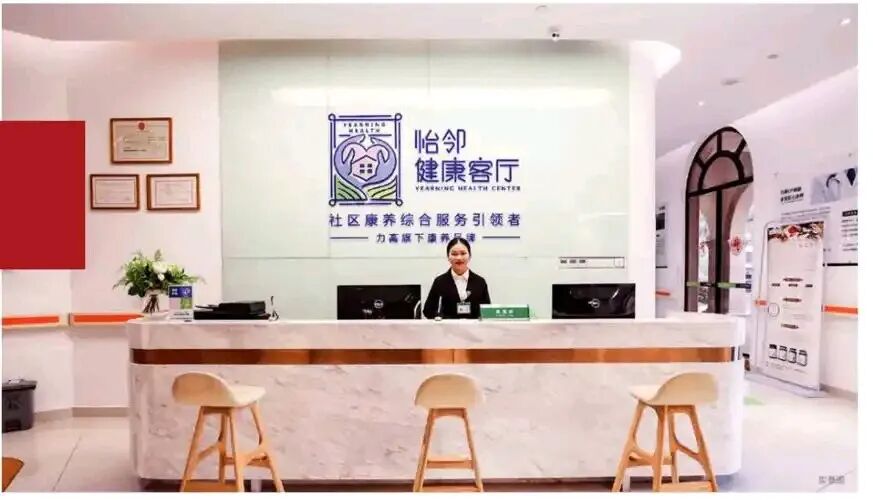
 On September 17, 2025, the National Development and Reform Commission issued the “Implementation Plan for Embedded Service Facility Construction in Urban Communities.” Embedded service facilities refer to functional facilities and adaptive service collections embedded in public spaces of communities (residential areas) through new construction or renovation, characterized by being small and flexible, publicly beneficial, and conveniently integrated. The core idea is to bring high-frequency demand services such as elderly care, community meal services, and health services within residents’ “walkable” range, forming the foundational support for a “15-minute living circle,” which is a livelihood project that precisely meets residents’ needs at the community level. 1. Functional Classification of Embedded Service Facilities 1. Basic Service Category: Includes community health service stations, elderly day care centers, and infant care points, meeting the rigid needs of “the elderly and the young.” For example, the embedded childcare center in the Wenxing Alley community of Xi’an provides inclusive childcare services by integrating community spaces and idle areas, with childcare fees only 50% of the market price.2. Convenience of Life Category: Covers convenient commercial outlets, community canteens, and housekeeping service centers, addressing residents’ daily shopping, dining, and repair needs. For instance, the community embedded service complex in Xiuzhou, Jiaxing integrates fresh supermarkets and family banquet centers to achieve “one-stop living services.”3. Cultural and Recreational Category: Includes community libraries, fitness centers, and children’s play areas, enriching residents’ spiritual and cultural lives. The Jiugong Xinyuan complex in Beijing Economic-Technological Development Area combines sports and childcare functions to create an all-age-friendly space.2. Policy Background: Multiple Social Demands and National Strategy Response1. Changes in Population Structure Create Service DemandIncreasing Aging Population: By 2025, over 25% of China’s population will be over 60 years old, but the coverage rate of community elderly care facilities is less than 40%, and the connection between home-based elderly care and community services is poor.Implementation of the Three-Child Policy: There is a significant gap in childcare services, with the actual utilization rate of childcare places nationwide at only 46.7%, highlighting issues of “dare not entrust, do not feel at ease.” Embedded childcare can reduce family pickup and drop-off costs; for example, Nanchang City has built 138 community childcare institutions by integrating idle public housing, providing 8,000 inclusive childcare places.2. Service Shortcomings in Urbanization ProcessInsufficient Facility Supply: Old communities generally have public service facility areas that do not meet standards, with only 60% of communities nationwide reaching the standard of 30 square meters per 100 households.Severe Resource Mismatch: Some newly built communities have idle supporting facilities, while old communities have strong demand. For example, Xi’an has revitalized idle factories and warehouses to build embedded facilities, achieving “precise supplementation.”3. Upgraded Resident Demand Post-PandemicHigher Requirements for Convenience and Safety: The pandemic has led residents to prefer obtaining services nearby. Embedded facilities enhance service accessibility through a layout that combines centralized and decentralized approaches (such as the “complex + scattered” model).4. National Strategic GuidanceThrough the construction of embedded service facilities, promote the equalization of public services and strengthen community governance capabilities. For example, Wuhan City has clearly included embedded services in the statistics of community comprehensive service facilities, requiring an area of no less than 50 square meters per 100 households.3. Operational Model: Collaborative Innovation of Government Guidance and Market Mechanisms1. Diverse Construction ModelsPublic Construction and Private Operation: Government invests in construction and provides venues, entrusting social forces to operate. For instance, the Yanta District of Xi’an has introduced professional institutions to operate childcare centers by providing community spaces for free, reducing childcare fees to 50% of the market price.Public-Private Partnership: Social entities invest in construction, and the government provides support such as rent reductions and construction subsidies. The Donghu District of Nanchang provides rent subsidies for community childcare institutions and coordinates with fire and housing departments to optimize approval processes.Public-Citizen Cooperation: Combining market-oriented operations with policy support. For example, the Beijing Economic-Technological Development Area supports the construction of the Jiugong Xinyuan complex through special bonds and introduces chain brands to provide inclusive services.2. Sustainable Development MechanismFunding Assurance: Multi-channel funding sources such as central budget investments, local finances, and special bonds (e.g., for aging response projects). Xi’an has included eligible projects in the scope of special bond support and encourages banks to provide inclusive financial services.Cost Control: Reducing operational costs by integrating spaces (e.g., compressing community office areas by 50% to free up childcare spaces) and sharing resources (e.g., co-using outdoor activity areas with hotels).Pricing Mechanism: Inclusive services implement government-guided pricing, while commercial services are priced in a market-oriented manner. For example, the inclusive childcare center in Yuexiu District, Guangzhou charges 2,280 yuan per month, which is 50% lower than the market price, while also providing value-added services for micro-profit operations.4. Implementation Effectiveness and Future Outlook As of 2025, 50 pilot cities have been selected nationwide, with each city constructing 100 pioneering pilot projects. For example, the Jiashan District of Jiaxing is building a comprehensive complex integrating elderly care, childcare, and cultural activities through future community construction, expected to be put into use in the second half of 2025. In the future, with the implementation of the “Guidelines for the Construction of Embedded Service Facilities in Urban Communities,” policies will be extended to small and medium-sized cities and more communities, aiming for widespread coverage of high-quality inclusive services by 2027. This project is not only a transformation of the physical space of communities but also an innovation in grassroots governance models, reconstructing the collaborative relationship between government, market, and residents through “embedded” services, ultimately achieving the beautiful vision of a “15-minute living circle.” -END-
 Ge Zhengting Construction Project Management Co., Ltd. focuses on full-process cost consulting and the construction and operation of intelligent cost platforms, covering Shandong, Sichuan, Jiangsu, and Hebei provinces. The company insists on being an active participant in project management with a business mindset, aiming to become a highly trusted cost management consultant for clients.Company Address:(Sichuan) No. 18, Dongsi South Road, High-tech Zone, Chengdu(Shandong) Room 408, Building C1, Donghe Innovation Valley Industrial Park, Zhifu District, YantaiContact Number: 19819288886 (same as WeChat)