Today, embedded systems are increasingly applied in various fields, including smart homes, smart healthcare, industrial automation, and intelligent transportation. In the development of embedded systems, data structures are an essential knowledge point. This article will introduce several common data structures in embedded programming, including arrays, stacks, queues, heaps, hash tables, and linked lists.

1. Array

An array is a linear data structure that uses a contiguous block of memory to store data of the same type. In an array, each element has a unique index for accessing and modifying them. The advantage of arrays is their ease of understanding and implementation, but the disadvantage is that insertion and deletion operations may require moving a large amount of data, leading to lower efficiency.
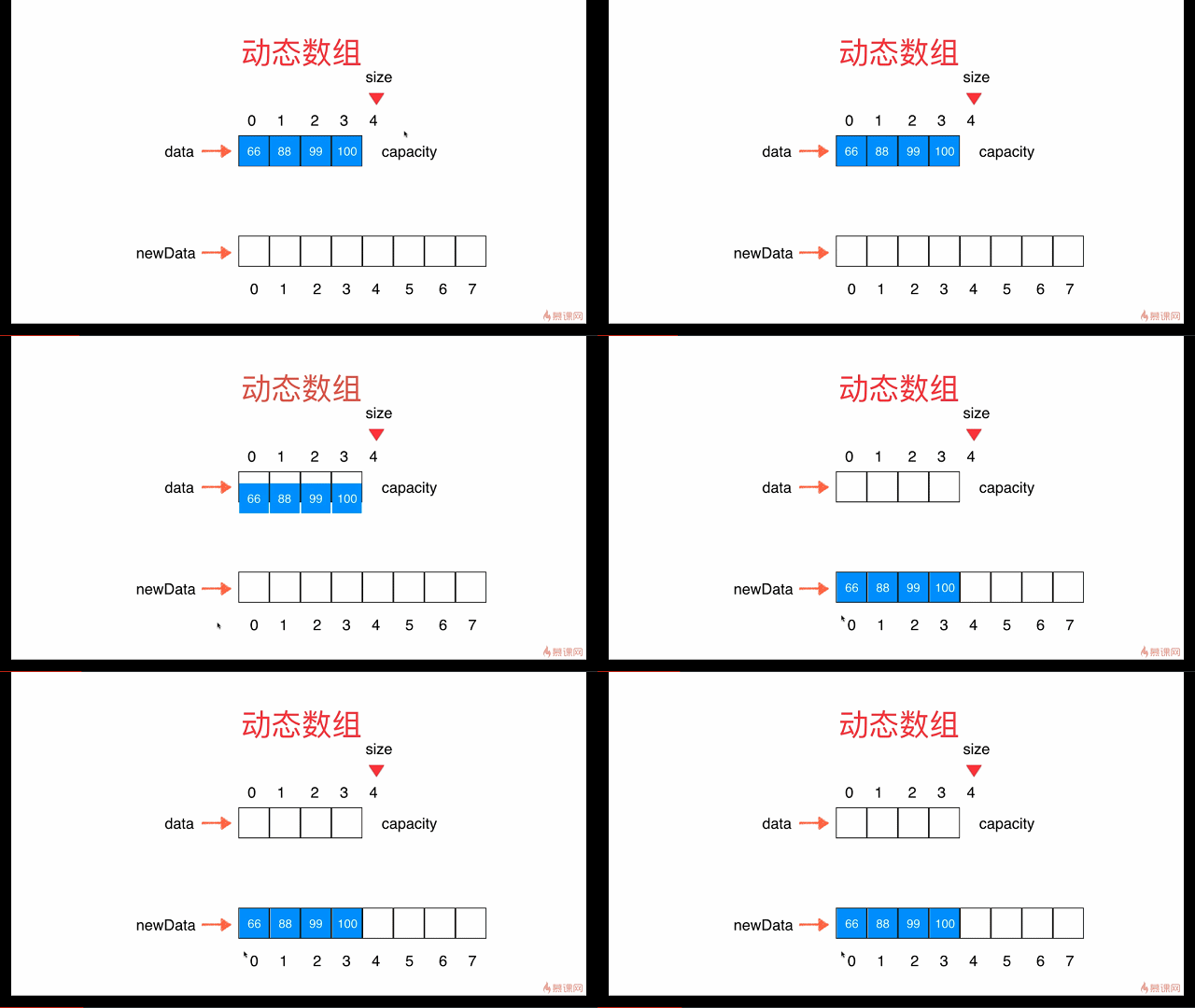
Arrays have the advantage of random access, but they are inefficient for insertion and deletion operations. In embedded systems, if frequent insertions and deletions are required, it is recommended to use other data structures.

2. Stack

A stack is a Last In First Out (LIFO) data structure that only allows insertion and deletion operations at one end (called the top of the stack). Common operations on a stack include push (adding an element), pop (removing an element), and peek (viewing the top element). Stacks are commonly used to handle problems with specific order requirements, such as function calls and puzzle games.
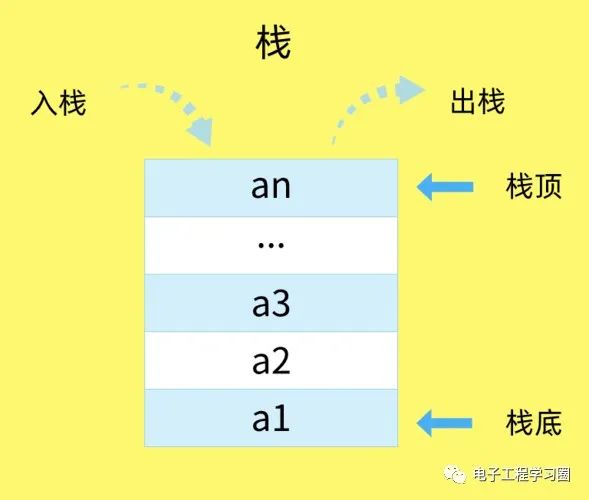
Stacks have efficient insertion and deletion operations, but random access is less efficient. In embedded systems, stack space is usually limited, so care must be taken in stack usage and management to avoid issues like stack overflow.

3. Queue

A queue is a linear list that only allows insertion at one end and deletion at the other end. The end where insertion occurs is called the rear, and the end where deletion occurs is called the front. The main characteristic of a queue is First In First Out (FIFO).
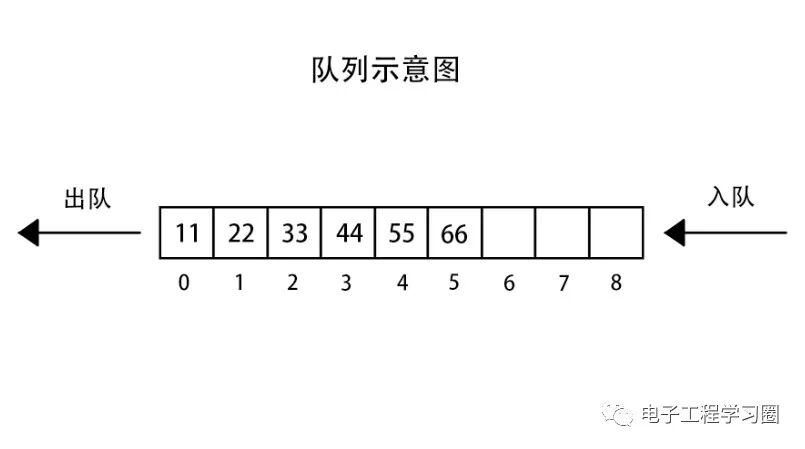
Queues have efficient insertion and deletion operations, but random access is less efficient. In embedded systems, queue space is usually limited, so care must be taken in queue usage and management to avoid issues like queue overflow.

4. Heap

A heap is a tree-based data structure that can quickly find the maximum or minimum value. In embedded systems, heaps are often used to implement dynamic memory allocation and priority queues. For example, in an embedded system, a heap can be used for dynamic memory allocation and to implement task priority scheduling.
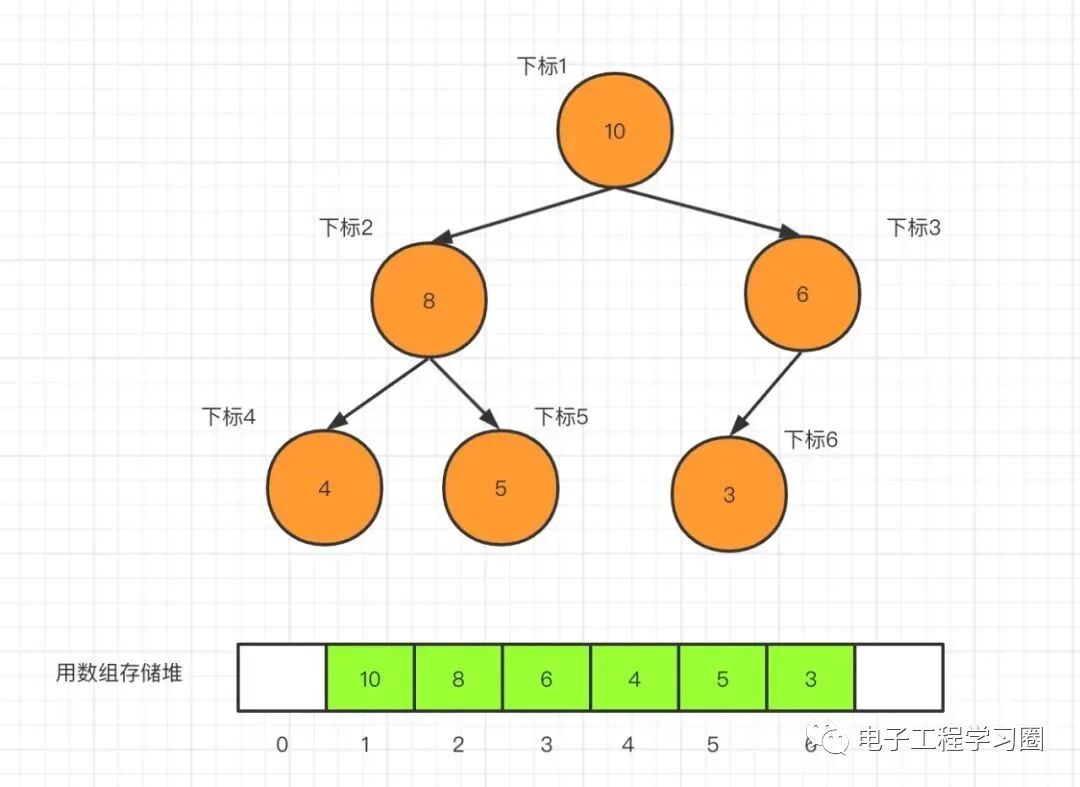
Heaps have efficient search and delete operations, but insertion operations are less efficient. In embedded systems, heap space is usually limited, so care must be taken in heap usage and management to avoid heap overflow issues.

5. Hash Table
 A hash table provides fast insertion and lookup operations. Regardless of how many entries are in the hash table, the time complexity for insertion and lookup is O(1). Because of the fast lookup speed of hash tables, they are used in many programs, such as spell checkers. The basic idea of a hash table is to transform a binary value of arbitrary length into a fixed-length string using a specific function, which serves as an index for an array. For example, we can use a short string to represent a long string and then use this short string as an index to store the long string. This allows for quick retrieval of the corresponding long string using the short string.
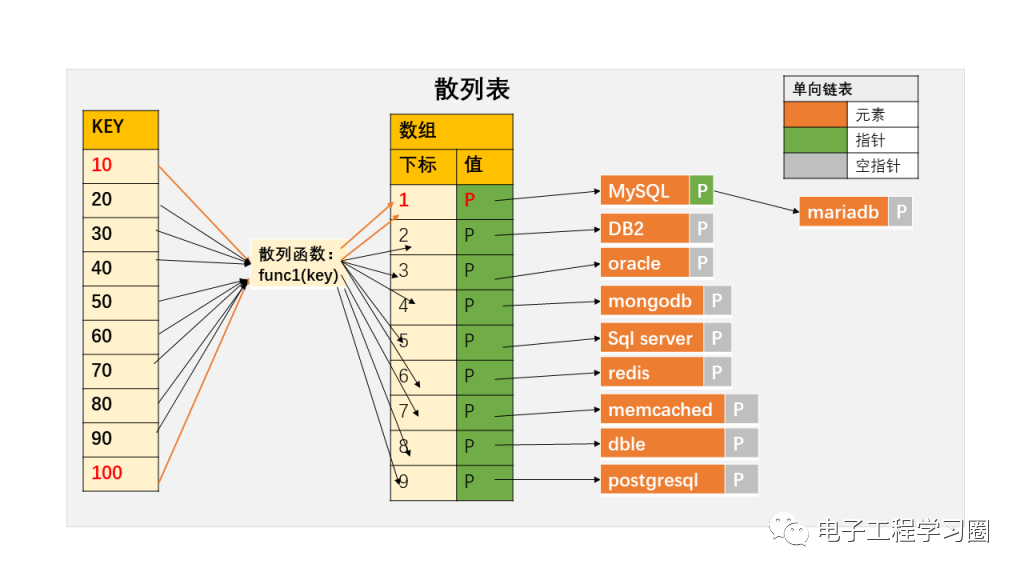
Hash tables have efficient lookup and delete operations, but they require a significant amount of memory space. In embedded systems, memory space is usually limited, so care must be taken in hash table usage and management to avoid memory overflow issues.

6. Linked List

A linked list is a non-linear data structure composed of a series of nodes, each containing a data element and a pointer to the next node. The advantage of linked lists is that insertion and deletion operations are relatively simple, as they only require modifying pointers. However, the disadvantage is that accessing individual elements is slower because it requires traversing from the head node.
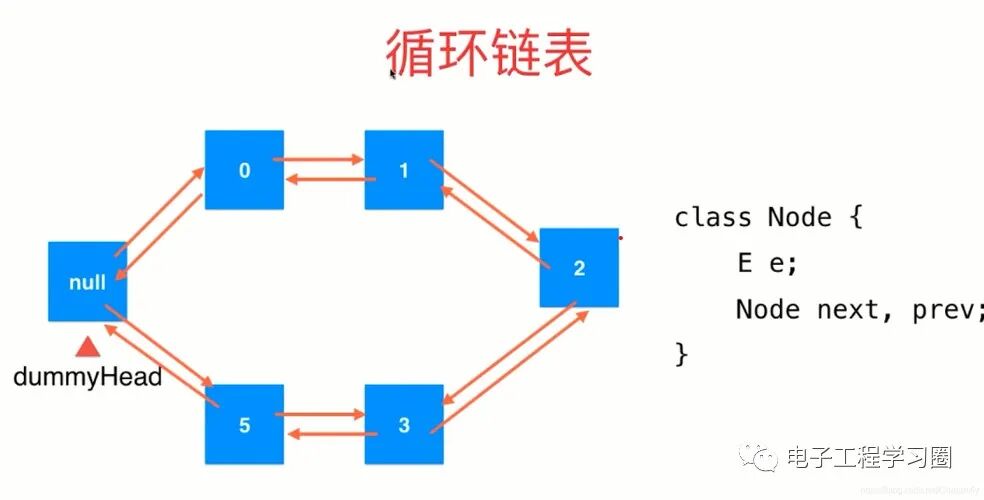
Linked lists have efficient insertion and deletion operations, but random access is less efficient. In embedded systems, memory management for linked lists can be complex, so care must be taken in their usage and management to avoid memory leaks.

Conclusion

In embedded programming, data structures are a very important knowledge point. This article introduced several common data structures in embedded programming, including arrays, stacks, queues, heaps, hash tables, and linked lists. These data structures have wide applications in embedded systems and can help developers implement various functionalities. However, when using these data structures, attention must be paid to space limitations, efficiency, and other issues to avoid unnecessary errors and problems.


400G Collection of Electronic Books Screenshot