
To deeply learn and implement the spirit of the 20th National Congress of the Communist Party and General Secretary Xi Jinping’s important instructions on party building in government agencies, further strengthen the grassroots foundation of the organization, and promote the implementation of organizational life systems, the Party Working Committee of the Autonomous Region has organized the “Party Flag Reflecting Tianshan” thematic party day case collection activity since June this year. The “Tianshan Pioneer” will successively publish selected cases.
It is hoped that party organizations at all levels in the region will regard the “Party Flag Reflecting Tianshan” thematic party day as an important measure to promote unit work and serve all ethnic groups, focusing on the overall goal of social stability and long-term peace, around the main line of forging a sense of community for the Chinese nation, and insisting on effectively improving people’s livelihood and gathering public sentiment. By emphasizing political, practical, targeted, and effective aspects, we will continuously push the thematic party day to deepen, solidify, and upgrade, laying a more solid organizational foundation for building grassroots party organizations into a “strong fortress for serving the masses, maintaining stability, and opposing division,” and promoting high-quality development of various reform, development, and stability tasks.
04
“Embedded” Thematic Party Day for Joint Development
—— Party Branch of the Xinjiang Aid Cadre Office of the Autonomous Region Party Committee
The Party Branch of the Xinjiang Aid Cadre Office has explored the integration practice of the “embedded” thematic party day in carrying out the “Party Flag Reflecting Tianshan” thematic party day activity, using organizational life as a link to build a “bridge of hearts” with the aid cadres and talents from central units. This has injected strong red energy into forging a team of aid cadres who are “dedicated to the country, loyal and responsible, united and dedicated, and innovative and progressive,” vividly interpreting the profound connotation of high-quality party building leading high-quality aid work.
 Background and Causes
The Party Branch of the Xinjiang Aid Cadre Office is responsible for the daily management and service of aid cadres and talents from central units. In practice, two prominent contradictions have been identified: first, management and service are like “looking through a window.” The aid cadres and talents from central units are scattered across more than 100 departments and units in the autonomous region and 14 prefectures and cities, with a large number of people, wide distribution, and diverse sources. Branch members mainly understand the situation through inspections, assessments, research training, and visits, leading to delayed information, shallow perception, and difficulty in accurately grasping their true thoughts, professional specialties, and daily needs, resulting in a “last mile” blind spot in service. Second, emotional recognition is like “two skins.” Under the traditional management model, branch members act as “managers” and “service providers,” while aid cadres and talents are seen as “managed” and “service objects.” The role positioning is clear, but the emotional connection is weak, lacking a deep interactive platform, which affects the sense of belonging, trust, and collaborative work.
How to break the physical distance and psychological barriers, achieving synchronization of thoughts, emotional resonance, and actions between branch members and aid cadres and talents? In response to the challenges posed by the high dispersion of aid cadres and talents from central units in the supported units, the branch took the initiative to promote the establishment of the 11th batch of self-management committees and temporary party organizations for aid cadres and talents from central units, and decided to innovate the form of organizational life, making regular and institutional participation in the thematic party day activities of the temporary party organization a breakthrough, transforming “one-way management” into “two-way engagement,” and changing “looking through a window” into “gathering around the stove to talk together.”
Main Practices and Achievements
All party members of the Xinjiang Aid Cadre Office deeply integrate into the organizational life of aid cadres and talents as sincere service providers and co-learners, empowering each other and promoting integration, forming an “embedded” thematic party day integration model. This has become a normalized platform and essential course for branch members to understand the situation, improve services, and refine their style, as well as a trusted channel for aid cadres and talents to feel organizational care, express demands, and contribute their wisdom.
Careful Design, Thematic Focus on “Common Needs and Empathy.” Branch members communicated fully in advance with the temporary party committee leaders and team members of the self-management committee, closely aligning with the latest spirit of the Party Central Committee, the overall goals of work in Xinjiang, the mission of aid work, and the common concerns and difficulties of aid cadres and talents, jointly planning the theme of the party day activities. For example, the “Emotional Silk Road: Visiting Urumqi” and “Unity and Integration: Visiting the Corps” activities conducted in the first half of this year precisely addressed the ideological concerns and practical needs of many aid cadres and talents, significantly enhancing attractiveness and participation, avoiding “self-talk,” and ensuring that the activity content is deep, warm, and resonant.
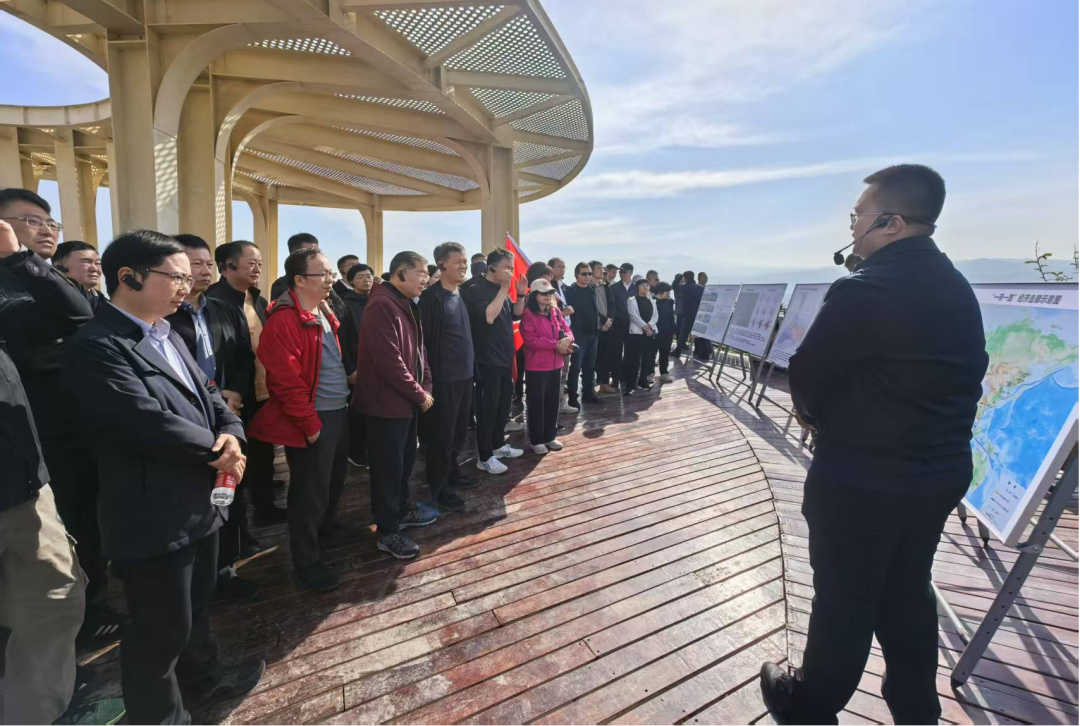
Deep Integration, Form Emphasizing “Interactive Sharing.” Branch members participated deeply in all aspects of activity planning and implementation, breaking down information barriers and gaining “zero-distance” understanding of the most vivid thoughts, urgent needs, and brightest wisdom of aid cadres and talents. Jointly discussing development around topics such as high-quality development in Xinjiang, grassroots governance, and improvement of people’s livelihood, combined with the professional backgrounds and frontline experiences of aid cadres and talents, brainstorming to seek good solutions. Branch members recorded valuable suggestions on-site, incorporating them into subsequent services or upward feedback. Jointly solving problems, establishing a dynamic demand list and request ledger, accurately matching resources, and encouraging aid cadres and talents to openly discuss difficulties, propose suggestions, and better optimize management service processes. Branch members provided immediate responses to questions they could answer on-site, clarified responsible persons for coordination with deadlines, and actively called for policy support when needed. For instance, this year, through thematic party day activities, it was learned that some aid cadres suddenly fell seriously ill, and the branch quickly coordinated various medical resources for timely treatment, ensuring the safety of aid cadres and talents. Jointly practicing the original intention, visiting red education bases with aid cadres and talents, learning about Xinjiang’s history and culture, experiencing the spirit of the Corps and the spirit of the Poplar, sharing activity insights, and refining the original intention of aid work and consolidating consensus through ideological baptism, enhancing understanding and deepening friendship through joint actions.
Standardized Operation, Mechanism Achieving “Normal and Long-term Effectiveness.” The Party Branch of the Xinjiang Aid Cadre Office took the lead in formulating the “Work Rules for the Self-Management Committee of Aid Cadres and Talents from Central Units (Trial),” clarifying the responsibilities and tasks for organizing activities. In guiding the operation of the temporary party organization of the self-management committee, the regular participation in thematic party day activities was institutionalized as a work system for both the Party Branch of the Xinjiang Aid Cadre Office and the temporary party organization of the self-management committee, specifying frequency, participation requirements, and establishing an activity effect evaluation feedback mechanism. After each activity, the branch conducts internal reviews and communicates with the temporary party committee for optimization. Issues discovered during activities and suggestions made are included in the branch’s key supervision matters, ensuring the sustainability, standardization, and effectiveness of activities.
Experience and Feedback
The “embedded” participation in the organizational life of the self-management committee of aid cadres and talents from central units and the diverse thematic party day activities not only serve as a training ground for all party members of the Xinjiang Aid Cadre Office to change their style and enhance services but also as a strong magnetic field for gathering the wisdom and strength of aid work and inspiring a sense of mission.
Through the “embedded” thematic party day activities, there are four main insights.First, precise positioning is a prerequisite. Clearly define branch members as “participants + service providers,” rather than managers or bystanders, creating an atmosphere of equality, openness, and trust.Second, joint discussion of themes is key. Activity content must closely align with common concerns and solve practical problems to attract, touch, and unite people.Third, deep interaction is core. Abandon formalism, encourage sincere communication, clash of ideas, and problem-solving, enhancing understanding through joint actions.Fourth, mechanism guarantee is fundamental. Institutional arrangements ensure the normal and long-term effectiveness of activities, and closed-loop management ensures that problems are addressed and suggestions are implemented.
A large number of aid cadres and talents from central units have expressed that this is the most considerate and fulfilling organizational life, innovating the way of organizational life, closely connecting management and service objects, and effectively stimulating the vitality of the aid team. First, the sense of belonging among aid cadres and talents has significantly increased, with many reflecting that “they have found the feeling of ‘home'” and that “the organization is right beside them, with difficulties managed, voices heard, and values recognized,” greatly enhancing the cohesion and centripetal force of the temporary party organization of the self-management committee. Second, the service effectiveness of the Party Branch of the Xinjiang Aid Cadre Office has achieved a qualitative leap, shifting from “passive response” to “active discovery and precise support,” and management has transitioned from “abstract and vague” to “concrete and clear,” while the frontline work capabilities and service awareness of branch members have been effectively honed. Third, the synergy of aid work continues to strengthen, with shared party organizational life deepening mutual understanding and trust, establishing a strong “comradeship” and “brotherhood” between party members of the Xinjiang Aid Cadre Office and aid cadres and talents, creating a more intense atmosphere of thinking and working together.
Expert Comments
This case has the following characteristics: First, it strictly follows party regulations to carry out thematic party days, highlighting the political nature of thematic party days. Second, it adheres to result orientation, avoiding a “one-size-fits-all” approach, and insists on “one place, one policy.” Third, it innovates methods, changing from “full classroom teaching” to immersive learning experiences for party members. Fourth, it has a clear problem orientation, establishing a normal and long-term mechanism to form a closed-loop work process. Fifth, the practices are practical, and the materials are well summarized and refined.
Source: Party Working Committee of the Autonomous Region