The key technologies of the Industrial Internet of Things mainly include sensing control technology, network communication technology, information processing technology, and security management technology. Sensing control technology mainly involves technologies such as sensors, radio frequency identification (RFID), and multimedia, which enable real-time monitoring and data collection of machine performance, environmental conditions, and product quality. Network communication technology ensures that this data can be transmitted efficiently and securely across networks, including but not limited to mobile communication and ubiquitous technology. Information processing technology involves big data analysis and cloud computing, which can process and analyze the collected data to optimize operations and enhance decision-making capabilities. Security management technology focuses on protecting Industrial Internet of Things systems from unauthorized access and other security threats, ensuring data security and privacy protection.
In addition, the Industrial Internet of Things also involves other key technologies such as automated robotics and simulation technology, which play an important role in improving production efficiency and optimizing production processes. Cyber-Physical Systems (CPS) are also one of the cores of Industry 4.0, which through wireless sensing and actuation can respond to changing environments and even predict changes in physical system processes.
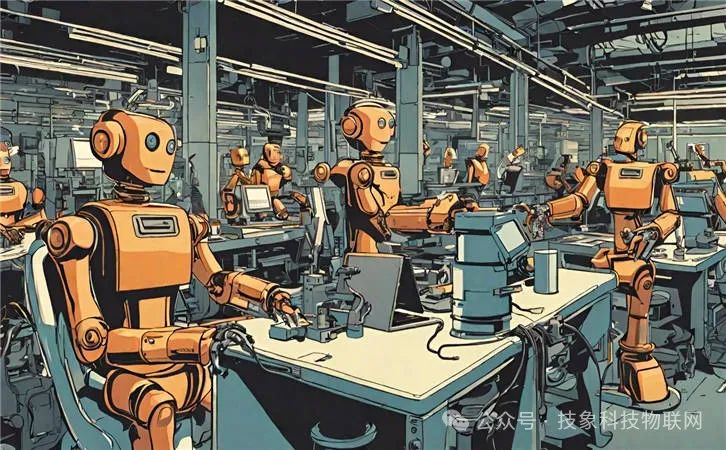
The key technologies of the Industrial Internet of Things cover multiple aspects from data collection, transmission to processing, analysis, and security protection. These technologies collectively form the foundation of the Industrial Internet of Things, enabling it to play a key role in smart manufacturing and improving production efficiency.
1. What Are the Latest Development Trends of Sensing Control Technology in the Industrial Internet of Things?
The latest development trends of sensing control technology in the Industrial Internet of Things mainly include the following aspects:
-
Improving the intelligence level of systems: With the development of artificial intelligence and machine learning technologies, Industrial Internet of Things systems can process data and make decisions more intelligently, thereby improving production efficiency and product quality.
-
Achieving integration of sensing, transmission, and control: Through technological innovations, such as advancements in IoT communication technology, seamless connections from data sensing to data transmission to data control have been achieved, enhancing system response speed and flexibility.
-
Enhancing system performance and adaptability through technological innovations: The application of new technologies enables Industrial Internet of Things systems to better adapt to different working environments and needs, enhancing system reliability and stability.
-
Continuous improvement of dynamic perception, risk warning, and scientific decision-making capabilities: With the development of IoT technologies, especially the application of near-field communication and wireless sensing technologies, Industrial Internet of Things systems can achieve real-time monitoring of environmental and equipment status, timely identifying potential risks, and making scientific decisions based on data analysis.
-
Integration of ubiquitous computing modes and mobile communication: The application of these technologies significantly improves manufacturing efficiency and optimizes production processes, allowing Industrial Internet of Things systems to operate in a wider range of scenarios.
-
Support for autonomous sensing, data collection, learning, analysis, and decision-making loops: This trend emphasizes the enhancement of autonomy in Industrial Internet of Things systems, meaning that systems can autonomously collect and process data, as well as learn and optimize based on data to support ubiquitous connections, flexible supply, and efficient allocation of resources.
The latest development trends of sensing control technology in the Industrial Internet of Things mainly focus on improving intelligence levels, achieving integrated operations, enhancing performance and adaptability through technological innovations, strengthening dynamic perception and scientific decision-making capabilities, and supporting autonomous data processing and optimization.
2. What Network Communication Technologies Have Proven to Be Most Effective and Secure in the Industrial Internet of Things?
The most effective and secure network communication technologies in the Industrial Internet of Things mainly include 5G, ZigBee, Wi-Fi, and Low Power Wide Area Network (LPWAN). Each of these technologies has its characteristics and application scenarios, collectively forming the communication network foundation of the Industrial Internet of Things.
5G technology plays an important role in the Industrial Internet of Things due to its high speed, low latency, and large number of connections. It can support machine-to-machine (M2M) communication, providing powerful data transmission capabilities for Industrial Internet of Things networks. The application of 5G technology helps achieve widespread connectivity of production units, forming efficient information flows on the production site.
ZigBee, as a short-range wireless local area network technology, is widely used in the Industrial Internet of Things due to its low power consumption and low cost. It is suitable for small-scale, low-power device connections and is appropriate for applications requiring long-distance transmission.
Wi-Fi, as a common wireless communication technology, plays an important role in the Industrial Internet of Things, even though it is mainly used for short-distance communication. It provides stable and high-speed network connections, which are particularly important for industrial applications that require high-speed data transmission.
LPWAN technology, which stands for Low Power Wide Area Network, is mainly used for long-distance, low-bandwidth communication scenarios. It is particularly suitable for industrial Internet of Things applications with wide coverage and a large number of devices, such as smart cities and remote monitoring systems.
5G, ZigBee, Wi-Fi, and LPWAN are the most effective and secure network communication technologies in the Industrial Internet of Things. Their respective advantages enable them to play key roles in different application scenarios, jointly promoting the development of the Industrial Internet of Things.

3. How Does Data Processing Technology in the Industrial Internet of Things Achieve the Integration of Big Data Analysis and Cloud Computing?
The integration of the Industrial Internet of Things (IIoT) with big data analysis and cloud computing is mainly achieved through the following aspects:
-
Data collection and storage: The Industrial Internet of Things collects large amounts of data through various sensors and devices. This data includes information data, IoT data, and cross-domain data, forming the core elements of industrial big data. This data is then stored in the cloud or edge computing nodes, providing a foundation for subsequent data analysis.
-
Integration of edge computing and cloud computing: Edge computing moves data processing tasks to the edge of devices, allowing for faster data processing and reducing network latency. Cloud computing utilizes distributed computing and virtual resource management technologies to form a shared resource pool, dynamically providing computing and storage resources as needed. The combination of the two, known as “edge cloud,” achieves preliminary processing and analysis of data at the device terminal, and then transmits the results to the cloud for in-depth analysis.
-
Intelligent data analysis: By applying artificial intelligence algorithms, large amounts of collected data can be analyzed to achieve goals such as predictive maintenance, production process optimization, and supply chain optimization. This step relies not only on powerful computing capabilities but also on efficient data processing and analysis technologies.
-
Security and privacy protection: Ensuring data security and privacy protection during data processing and analysis is very important. This includes technical measures such as data encryption, access control, and security auditing to prevent data leakage or unauthorized access.
The data processing technology of the Industrial Internet of Things achieves efficient collection, storage, and analysis of data through the integration of edge computing and cloud computing. At the same time, through intelligent data analysis and security measures, it brings benefits such as predictive maintenance and production process optimization, promoting the development of industrial intelligence.
4. How to Achieve Effective Security Management in Industrial Internet of Things Systems to Protect Data Security and Privacy?
To achieve effective security management in Industrial Internet of Things systems to protect data security and privacy, multiple measures and technologies need to be taken. First, the security of IoT devices can be enhanced by changing the default settings of routers, using strong passwords, regularly updating devices, enabling two-factor authentication, and disabling UPnP features. In addition, data encryption is an important means to prevent unauthorized access and tampering, effectively protecting data security through encryption algorithms.
Implementing access control policies to restrict access to system resources is another important protective measure. This helps ensure that only authorized users can access sensitive information or perform specific operations. Security auditing is also an indispensable part; regularly conducting security audits can help identify potential security threats and vulnerabilities and take timely remedial actions.
The comprehensive application of technical measures, management practices, and legal regulations is key to protecting data security and privacy in the Industrial Internet of Things. Strengthening data encryption, improving security policies and measures, applying privacy protection technologies, enhancing regulatory mechanisms, and increasing employee awareness are all necessary steps. Additionally, choosing appropriate granularity to manage IoT data and ensuring proper calibration of sensors are particularly important in harsh industrial environments.
Creating IoT data management strategies helps reduce network security risks and ensure data privacy. Effective strategies can not only improve data security but also enhance the overall stability and reliability of the system. Finally, considering the importance of information security and personal information protection, completing certification projects and compliance checks, such as PCI-DSS data security certification and ISO 27001 security certification, is crucial for establishing trust and protecting user information.
Through the comprehensive application of the above measures and technologies, effective security management can be achieved in Industrial Internet of Things systems to protect data security and privacy.
5. What Are the Application Cases of Cyber-Physical Systems (CPS) in Industry 4.0?
The application cases of Cyber-Physical Systems (CPS) in Industry 4.0 mainly include the following aspects:
-
Smart manufacturing: The “Made in China 2025” initiative emphasizes that intelligent manufacturing based on Cyber-Physical Systems, such as intelligent equipment and smart factories, is leading the transformation of manufacturing methods. This indicates that CPS technology plays an important role in promoting the intelligent and automated development of the manufacturing industry.
-
Industrial robots: There are cases showing that sensors with machine vision recognition have been installed on industrial robots, which can automatically identify the shape of workpieces and grasp them accurately. This application case reflects the potential of CPS technology in enhancing production efficiency and accuracy.
-
Innovations in complex network applications: The complex networks in CPS are at the forefront of application innovation, currently advancing into numerous application fields. This means that CPS technology is not limited to traditional manufacturing applications but has expanded into broader areas such as information technology and transportation systems.
-
Comparison and relationship between digital twins and Cyber-Physical Systems: Although CPS and digital twins (DT) are not entirely the same, they both encompass the fundamental concepts of information-physical connectivity, real-time interaction, organizational integration, and deep collaboration. This indicates that CPS technology has significant value in achieving high integration and intelligent management of devices and systems.
The application cases of Cyber-Physical Systems (CPS) in Industry 4.0 cover various aspects, including smart manufacturing, automation of industrial robots, innovations in complex network applications, and comparisons and relationships with digital twins, showcasing the extensive application and profound impact of CPS technology in promoting the intelligent upgrade of the manufacturing industry and related industries.