Huawei Mate 90 Chip Revolution: 3D Stacking Technology Revealed, Will It Compete with International Giants?
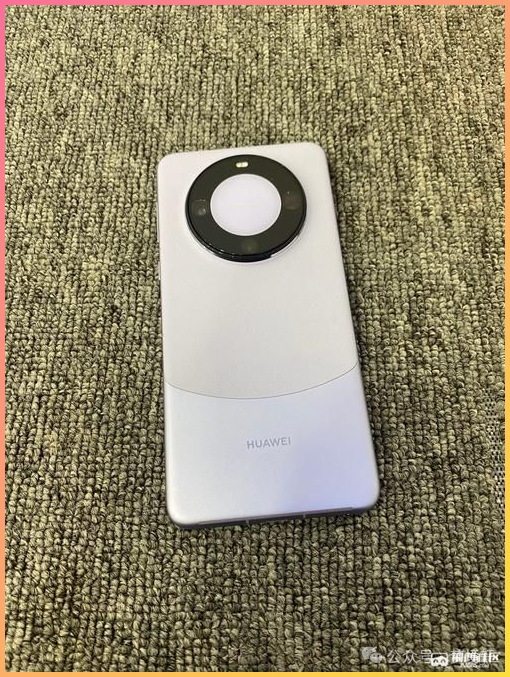
Recently, several long-time followers have messaged me asking about the rumors online regarding Huawei’s Mate 90 adopting “3D stacking technology.” Does this mean our chips can finally turn the tables and outperform Apple and Qualcomm? To be honest, seeing everyone so excited, I completely understand. After being suppressed for so long, we desperately need a resounding victory. However, as a digital blogger who has been in this field for over a decade, I believe we need to calm down and rationally analyze this situation. We shouldn’t set our expectations too high, only to feel disappointed when the actual product doesn’t meet our lofty hopes.
01
First, let me briefly explain to those who are not familiar with the technology what this so-called “3D stacking technology” is all about. Previously, when we manufactured chips, it was like building single-story houses on flat land. If you wanted to accommodate more people (transistors), you had to build the houses as densely as possible, which required extremely high precision in manufacturing, commonly referred to as a few nanometers. However, due to well-known reasons, the tools we have for building (lithography machines) are limited, and we can no longer build densely. So, what can we do? Clever engineers came up with a solution: instead of building wider, we build taller, like constructing skyscrapers!
This is 3D stacking. By stacking components like the CPU, GPU, and memory on top of each other like a hamburger, we create elevators (through-silicon vias) in between to transmit data.The benefits of this approach are obvious. Previously, two departments had to run across half the factory to deliver documents, but now they can just take an elevator up and down, speeding things up and reducing losses (power consumption) along the way. Therefore, if the Mate 90 truly employs this technique, it could theoretically boost performance significantly without relying on the most advanced lithography machines.
02
Now, some may ask, if this technology is so good, why wasn’t it used before? The truth is, it’s not that simple. Huawei’s choice to pursue this path is essentially a desperate counterattack after being forced into a corner. We currently cannot access the most advanced EUV lithography machines, and trying to compete with Apple’s 3nm process using planar technology would defy the laws of physics. However, 3D stacking technology gives us an opportunity to “overtake on a bend.”
This is akin to having an engine with less horsepower than others, but by optimizing the transmission and aerodynamics, we can still improve the lap time of the race car. If Huawei can master this technology and package several mature process chips together to achieve a 1+1 greater than 2 effect, then building on the Kirin 9000S to challenge Qualcomm’s Snapdragon 8 Gen 3 or even stronger competitors is definitely not a pipe dream. This would not only be a technological victory but also a significant demonstration of China’s semiconductor industry capabilities in packaging and testing.
03
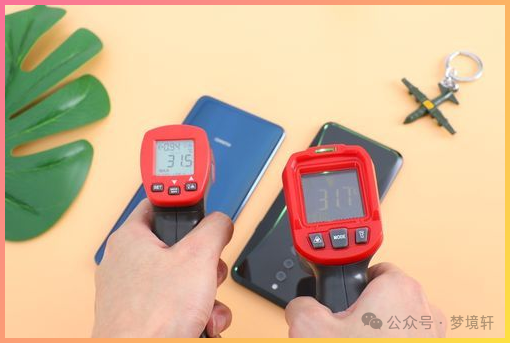
However, I must pour some cold water on the overly enthusiastic friends. We need to recognize the other side of the coin. While 3D stacking is powerful, it has a fatal weakness: heat dissipation. Think about it, previously everyone spread out for heat dissipation, but now they are stacked together; how does the heat from the middle layer dissipate? It’s like being crammed in a subway during summer, where people are pressed against each other and it gets unbearably hot.
If the Mate 90 truly adopts this technology, the heat dissipation design will undoubtedly be the biggest challenge. If not handled well, the phone could turn into a “hand warmer,” and to cool it down, it may have to throttle performance, making the performance boost merely theoretical. Moreover, this complex packaging technology raises significant yield issues. If one layer fails in a three-layer stack, the entire chip is rendered useless, which significantly increases costs. Therefore, I personally speculate that if the Mate 90 series indeed features this chip, the initial supply may be tight, and the price may not be very cheap.
04
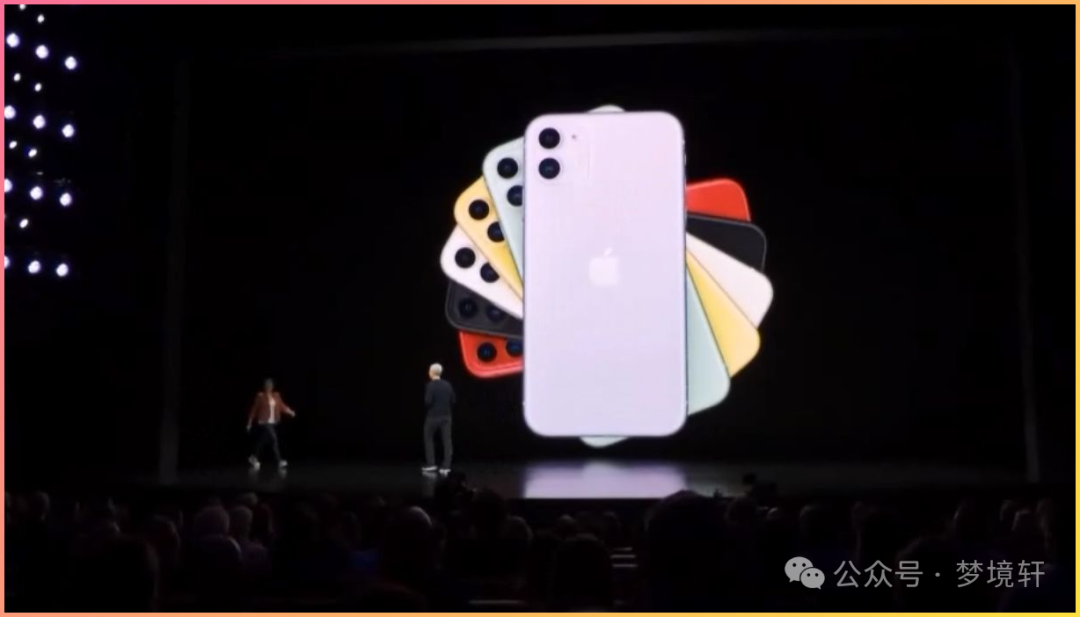
Next, let’s discuss whether we can truly “compete head-on” with international giants. We must acknowledge that Apple’s A-series chips and Qualcomm’s Snapdragon series indeed represent the current industry ceiling in terms of single-core performance and energy efficiency. Huawei’s use of 3D stacking is more about narrowing the gap and even potentially surpassing in specific scenarios like AI computing power and multi-tasking.
However, this does not mean we can simply knock them down with one punch.Commercial competition is not a simple game of chess; it’s not just about who has the higher parameters winning. Huawei’s advantage lies in the integration of hardware and software with the HarmonyOS and its foundational communication capabilities. If the Mate 90 can fully leverage the performance of this stacked chip, combined with optimizations from HarmonyOS Next, it can provide a user experience that is smooth enough to compete with the iPhone. After all, when we buy a phone, we are looking for usability, not just a score on a benchmarking software to display at home, right?
05
Finally, I want to say that regardless of whether the Mate 90 ultimately uses 3D stacking, Huawei’s spirit of pushing the boundaries of technology under extreme pressure is commendable. From the return of the Kirin 9000S to the current exploration of new technologies, every step has been exceptionally challenging yet resolute.
For us ordinary consumers, if you are a performance-driven gamer, you might want to wait and see the actual heat dissipation and energy efficiency performance; but if you are a long-time user of the Huawei ecosystem or simply want to support breakthroughs in domestic high-end manufacturing, then the Mate 90 is definitely the product to watch this year, without a doubt.
As for whether this technology will succeed, let’s allow the dust to settle a bit. I’m also curious about what other black technologies Huawei can pull out of its toolbox this time. Do you think the Mate 90 will be able to lower prices, or will it increase due to rising costs? Feel free to discuss in the comments section.