In the entire industrial production chain, scale acts like invisible ‘dilemmas’ that damage the precision packaging accuracy of smart thermos cup temperature control chip factories, reduce the efficiency of cooking equipment in pre-made dish factories, and degrade the performance of cooling systems in data center chillers… These issues caused by scale not only lower production efficiency but may also affect the core performance of products and market reputation. The Andeli water processor is breaking these ‘dilemmas’ one by one with its innovative technology, injecting new vitality into the production of various industries.
Smart Thermos Cup Temperature Control Chip Factory: Precision Packaging Cooling System ‘Nano-level Temperature Control’, Temperature Control Accuracy Improved by 35%
The core temperature control chip of the smart thermos cup has extremely strict requirements for packaging gaps. Scale can lead to uneven cooling, causing thermal deformation of the packaging colloid, which directly affects temperature detection and control accuracy. The cooling system of a certain chip factory’s high-precision flip-chip packaging equipment experienced a 35% decrease in cooling efficiency due to scale buildup in the pipes, resulting in a temperature rise of 5°C during packaging, with packaging gap errors expanding from ±0.001mm to ±0.008mm, and temperature control errors increasing from ±0.3°C to ±1.2°C. The failure rate of ‘temperature drift’ in thermos cups rose from 4% to 18%, and the qualification rate dropped from 99% to 80%. Approximately 1200 defective chips were scrapped each month, resulting in a loss of 36,000 yuan based on a cost of 30 yuan per chip. To maintain accuracy, the factory had to reduce packaging speed by 45%, decreasing daily output by 180 chips and incurring an average daily loss of 5400 yuan. Every week, ultra-pure water was required to clean the pipes, consuming 15 tons of ultra-pure water each time (costing 7500 yuan), with a 2.5-hour downtime resulting in a loss of 3375 yuan.
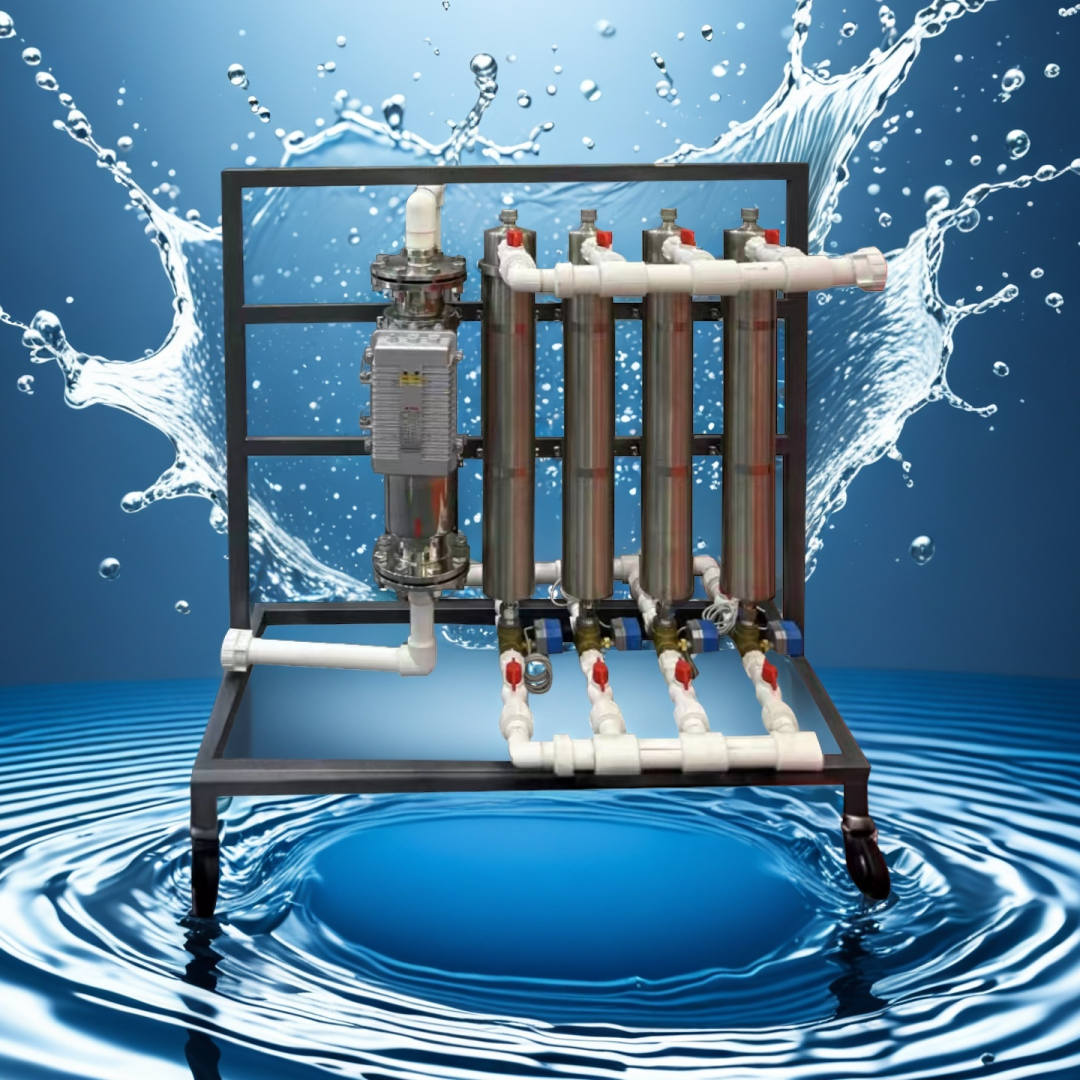
After installing the Andeli water processor, itssmart variable frequency electromagnetic anti-scaling technology began to take effect. By dynamically adjusting electromagnetic field parameters, it prevents calcium and magnesium ions from crystallizing on the inner walls of the pipes, gradually dissolving existing scale into nano-sized particles that are expelled. After one month of operation, the cooling system’s heat dissipation efficiency recovered to 95%, with the temperature rise during chip packaging controlled to within 1.2°C, packaging gap errors reduced to ±0.001mm, and temperature control errors decreased to ±0.2°C. The failure rate of ‘temperature drift’ dropped to 2%, and the qualification rate rebounded to 99%. Packaging speed returned to normal, increasing daily output by 180 chips, resulting in an annual profit increase of approximately 2.007 million yuan.
The cleaning cycle was extended to once every two months, saving 144,000 yuan in water costs annually and reducing downtime losses by 70,200 yuan. Due to the stable temperature control performance of the chips, products successfully matched with leading home brands, with order volume increasing by 60% and annual output value exceeding 15 million yuan.
Pre-made Dish Factory: Cooking Equipment ‘Efficient Heat Transfer’, Softness Qualification Rate of Mei Cai Increased by 40%
The core taste of pre-made Mei Cai Kou Rou relies on the uniform softness of Mei Cai. Scale can cause the heating pipes of the steam pot to become scaled, reducing heat transfer efficiency and leading to uneven heating of Mei Cai, resulting in an ‘outer soft, inner hard’ problem. A certain pre-made dish factory’s stainless steel steam pot experienced a 30% decrease in thermal efficiency due to scale buildup on the heating pipes, extending the cooking time of Mei Cai from 40 minutes to 65 minutes, with the softness qualification rate dropping from 92% to 58%. Approximately 3000 products were scrapped each month due to poor taste, resulting in a loss of 24,000 yuan based on a cost of 8 yuan per product. To ensure taste, the factory had to increase steam usage by 25%, leading to an annual increase in energy costs of 160,000 yuan. Every 15 days, citric acid was required to clean the heating pipes, costing 9000 yuan each time, with a one-day downtime resulting in a loss of 12,000 yuan.
After introducing the Andeli water processor, scale in the heating pipes was gradually removed, restoring thermal efficiency. The cooking time for Mei Cai was shortened to 42 minutes, and the softness qualification rate increased to 95%, with monthly scrap losses reduced to 240 products, saving approximately 276,000 yuan annually. Steam usage decreased by 20%, saving 128,000 yuan in energy costs annually.
The cleaning cycle was extended to once a month, saving 54,000 yuan in cleaning costs annually and reducing downtime losses by 108,000 yuan. Due to stable taste, the products passed quality certification in the pre-made dish industry, entering chain restaurants and community group buying channels, with sales growth of 55%, resulting in an annual profit increase of approximately 850,000 yuan, and monthly sales of gift boxes exceeding 80,000 boxes.
Data Center Chiller Factory: Cooling System ‘Efficient Cooling’, Energy Efficiency Ratio of Units Increased by 20%
The energy efficiency ratio (COP) of data center chillers directly affects operating costs. Scale can cause the heat exchange pipes of the condenser to become scaled, reducing heat exchange efficiency and increasing power consumption of the units. A certain chiller factory’s screw chiller experienced a 30% decrease in heat exchange efficiency due to scale buildup in the condenser, with the COP value dropping from 4.5 to 3.6, resulting in an average daily increase of 200 kWh in electricity consumption per unit. Based on an electricity cost of 0.6 yuan per kWh, the annual loss was approximately 43,200 yuan per unit (resulting in an annual loss of 2.16 million yuan for 50 units). Customer feedback indicated ‘slow cooling in the machine room and high electricity costs’, with the return rate increasing from 2% to 10%. Each month, approximately 12 condensers required acid cleaning on-site, with a repair cost of 4000 yuan per unit, resulting in a loss of 48,000 yuan. Every month, chemical cleaning agents were required to clean the units before leaving the factory, costing 42,000 yuan each time, with a one-day downtime resulting in a loss of 100,000 yuan.
After installing the Andeli water processor, scale in the condenser heat exchange pipes gradually dissolved, restoring heat exchange efficiency. The COP value increased to 4.8, saving 43,200 yuan in electricity costs annually per unit (resulting in an annual savings of 2.16 million yuan for 50 units). The customer return rate dropped to below 1.5%, with monthly repair frequency reduced to 2 units, saving 192,000 yuan in repair costs annually.
The cleaning cycle was extended to once every three months, saving 336,000 yuan in cleaning costs annually and reducing downtime losses by 900,000 yuan. Due to low energy consumption and strong stability, the product passed green certification for data centers and successfully won a large cloud computing data center project, resulting in a 75% increase in order volume and an annual sales increase of over 38 million yuan.
From the precision chip manufacturing of smart thermos cups to the quality upgrade of traditional pre-made dishes, and to the energy efficiency optimization of data center equipment, the Andeli water processor, with its ‘thorough anti-scaling and efficient descaling’ technological advantages, has successfully solved various ‘dilemmas’ caused by scale. It not only helps enterprises reduce losses and costs but also enhances production stability and core product quality, giving enterprises a competitive edge in the market. If your production process is constrained by scale issues, the Andeli water processor may be the key choice to break through the predicament.