
1. Jensen Huang’s “sorrow”: The dual pressure of export restrictions and market expectations
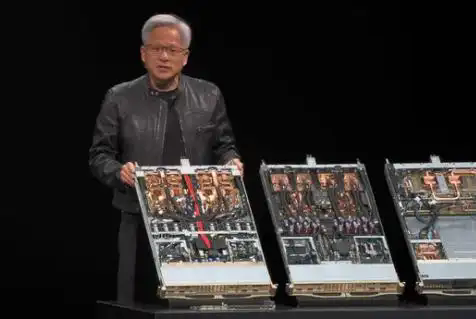
On November 20, Jensen Huang, founder and CEO of NVIDIA, appeared on Fox Business Channel. Despite presenting impressive third-quarter financial results, he still wore a worried expression. During the program, Huang candidly stated that the export restrictions imposed by the U.S. have caused NVIDIA’s chip sales to China to stagnate, predicting that sales in China will drop to zero in the next two quarters. “I predict NVIDIA’s sales in the Chinese market will be zero, next quarter zero, and the quarter after that still zero.” He also revealed that the current AI chip market in China is approximately $50 billion, which could soar to $200 billion by the end of 2030. Such enormous market potential is difficult to tap due to export restrictions, resulting in significant losses for NVIDIA.
On November 21, facing the awkward situation of a stock price drop despite releasing better-than-expected financial results, Huang vented his frustrations at an internal all-hands meeting. He stated, “The market has not fully recognized NVIDIA’s incredible quarterly performance.” At the all-hands meeting on Thursday, Huang expressed his helplessness, stating that the market’s expectations for NVIDIA are unrealistically high, and the company finds itself in a “no-win” situation where it is difficult to please the market no matter what it does. He lamented, “If we deliver poor performance, it’s irrefutable evidence of an AI bubble; if we deliver outstanding performance, it’s seen as us fueling the AI bubble.”
2.Third-quarter performance shines, yet stock price plummets
NVIDIA’s third-quarter performance was indeed impressive. On November 19, Eastern Time, NVIDIA announced its financial data for the third quarter of fiscal year 2026. During the reporting period, the company’s revenue reached $57.01 billion, a year-on-year increase of approximately 62%, exceeding market expectations of $54.92 billion; net profit was $31.91 billion, a year-on-year increase of 65%; adjusted earnings per share were $1.30, higher than the market expectation of $1.25.
However, such impressive results did not lead to a rise in stock price. On November 20, Eastern Time, NVIDIA’s stock price fell by 3.15%. On the 21st, during trading, its stock price experienced significant volatility, dropping over 4% at one point, before narrowing the decline to 0.33% by the time of publication. Huang admitted in the internal meeting that NVIDIA’s influence is growing, making it increasingly difficult to meet external expectations, and this sentiment is reflected in the market valuation.
3.Market value roller coaster: from peak to evaporating over $600 billion
On October 29, NVIDIA’s market value briefly exceeded $5 trillion, becoming the first company in history to surpass a market value of $5 trillion, basking in glory. However, the good times did not last long, as the stock price began to decline. Currently, its market value has evaporated by over $600 billion since the end of October. Huang humorously remarked, “Historically, there has never been a situation where one could lose $500 billion in just a few days. To lose $500 billion in a week indicates that your wealth is quite substantial.”
4. Multiple companies “retreat”: A wave of bearish sentiment emerges
Amid growing concerns about overheating and bubble risks in AI investments, several companies have recently reduced their holdings in NVIDIA. On November 14, Bridgewater, the world’s largest hedge fund, released its holdings report as of the end of the third quarter, showing that it held 2.51 million shares of NVIDIA, down from 7.23 million shares at the end of the second quarter, a reduction of 65.3%. It is worth noting that in the second quarter, Bridgewater had increased its holdings in NVIDIA by 154.37%.
SoftBank Group has also completely divested its NVIDIA shares. On November 11, SoftBank’s earnings report mentioned that it had sold its 32.1 million shares of NVIDIA for $5.83 billion by October 2025. Additionally, the prominent short-seller Michael Burry has been found to be heavily shorting NVIDIA, repeatedly posting that the company is at the core of the “AI financing cycle scam.”
5. Jensen Huang’s rebuttal: Upholding the “virtuous cycle of AI” argument
In response to market skepticism and concerns, Huang has countered by stating that the current state represents a “virtuous cycle of AI,” predicting that exponential growth will continue. He noted that as the ecosystem rapidly expands, AI is becoming ubiquitous and will be able to perform all tasks simultaneously. During the earnings call, he reiterated the consistent claim that “NVIDIA is different,” pointing out that the company has excelled at every stage of AI development and will continue to do so in the future. However, whether the market will accept this and whether NVIDIA can overcome its challenges remains to be seen.

Scan to add me, and I will pull you into the integrated circuit professional WeChat group——END——
Disclaimer: The content of this article is sourced from the internet. Except for original works, all articles, images, and related content used by this platform belong to their original rights holders. The Integrated Circuit Frontier reposts solely for industry information and news sharing, and does not represent the Integrated Circuit Frontier’s support or endorsement of the views expressed in this article. If there are any objections or infringements, please contact the Integrated Circuit Frontier, and we will handle it promptly. Thank you!
Twenty hot articles that integrated circuit professionals are most concerned about, you will definitely want to bookmark these articles. If you find them good, share them with your friends. Let’s progress together.
-
2021 Latest Global Semiconductor Company Directory
-
Comprehensive Comparison of the Strengths of the Semiconductor Industry Chain between China and the U.S. (with complete list of wafer fabs)
-
Understanding Compound Semiconductors: Where are the Opportunities?
-
Strongly recommended for bookmarking! Understanding Packaging Technology in Semiconductor Manufacturing Processes
-
Statistics on New Construction and Expansion Plans of Wafer Fabs in Mainland China
-
Trends in MEMS Development
-
2021 List of China’s Top 50 Emerging Chip Companies!
-
Summary of 104 Wafer Fabs!
-
The Story of Chips in China: The Tide of Chip Development
-
Wafer-Level Chip Packaging Technology
-
[Bookmark] Overview of the Silicon Carbide Industry Chain!
-
A History of Chips: The Case of TSMC
-
2020 Top 10 MEMS Companies in China, with a summary of 23 MEMS production lines!
-
41 Hard Technologies Where China Leads the U.S. and Europe
-
[Recommended for Bookmarking] Understanding the History, Applications, and Future of Semiconductors
-
Inverted Chip Device Packaging Technology
-
Valuable Insights on Advanced Packaging Technology
-
Summary of Global Semiconductor Packaging Material Suppliers
-
Comprehensive Summary of Chip Packaging Types
-
The First High-End Packaging Equipment from ZTE’s Jiangsu Company Has Been Launched
-
Significant Benefit: We recommend you join the Integrated Circuit Technology Exchange Group!
|
The Integrated Circuit Frontier delivers the latest industry news daily. Please scan the QR code below to follow us.
|