Risk Warning: This article is a financial report teaching article and does not contain any recommendations. Please do not act based on this, and pay attention to safety.
Recently, while studying financial reports, the financial officer discovered an unusual case: Blue Arrow Electronics reported a loss of 26.5 million yuan in the third quarter, but its net operating cash flow reached 144 million yuan, a year-on-year increase of 156.74%.
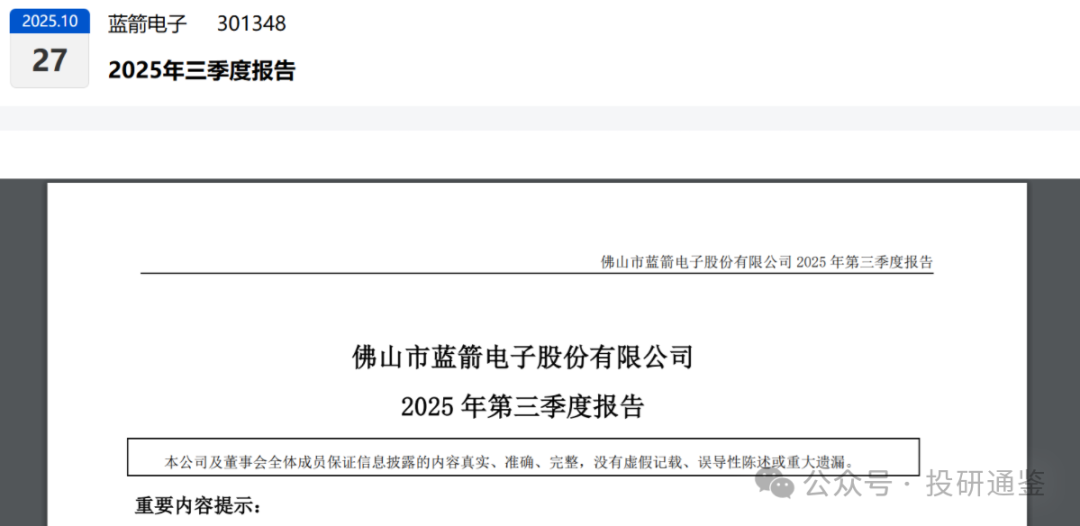
This financial phenomenon of “losing more but having more money” is like seeing someone say they lost money this year, yet their bank balance doubled, making one curious to investigate.
What is even more intriguing is that while the company is losing money, customer orders have increased by 63.31% year-on-year, reaching a historical high.
What kind of operational logic is hidden behind this “ice and fire” financial performance?
The Secret of Cash Flow
When looking at a company, one cannot only look at the profit and loss statement. Although the company shows a loss on paper, the net cash received from sales reached 144 million yuan, which is quite impressive.
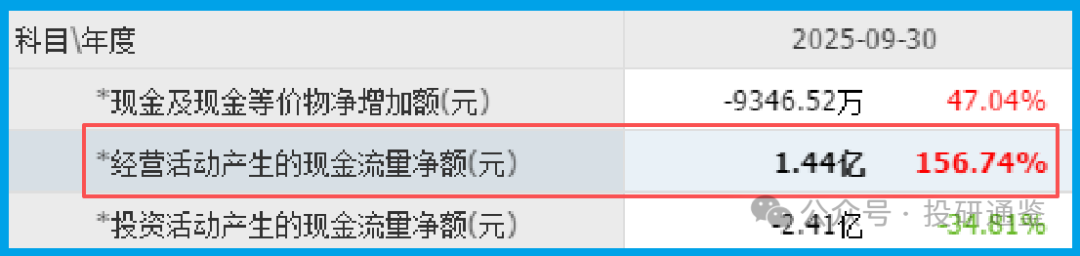
In the semiconductor industry, cash flow often reflects the true operational status better than profits.
The sales collection cycle is 115 days, which has accelerated by 9.07% year-on-year, and this improvement is crucial.
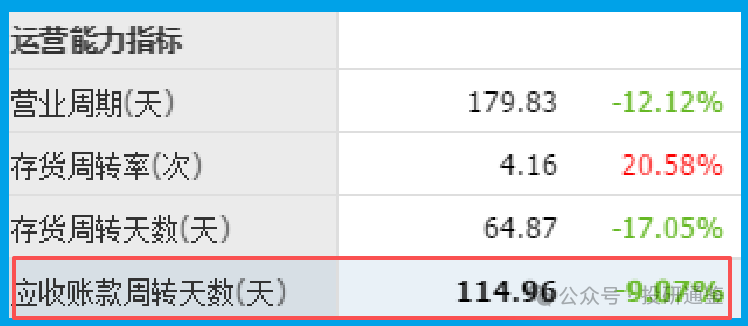
This indicates that the company’s bargaining power in the industry chain is increasing, the quality of customers is continuously improving, and the efficiency of capital turnover is significantly enhanced.
Signals of Order Growth
Customer orders reached 2.3459 million yuan, setting a historical high, and this growth rate is quite rare in the current storage chip industry.
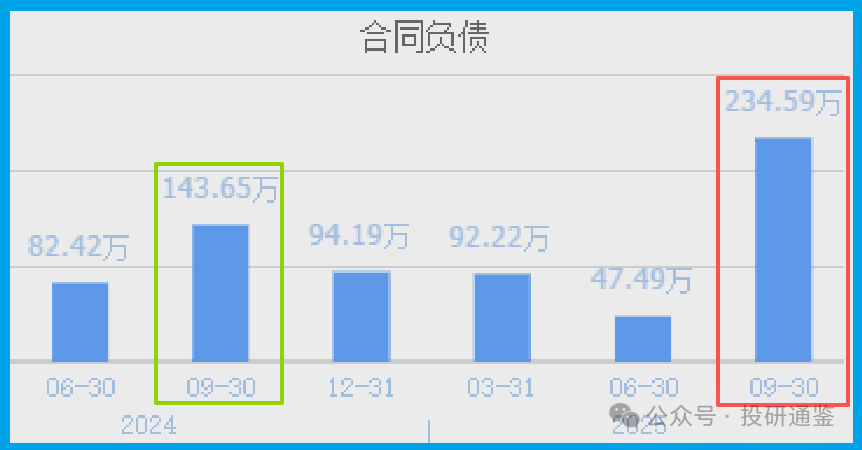
Especially against the backdrop of the explosive demand for AI computing power, the company’s layout in the enterprise-level SSD field is beginning to yield results.
The product sales cycle is 65 days, which has accelerated by 17.05% year-on-year, and this efficiency improvement is quite significant.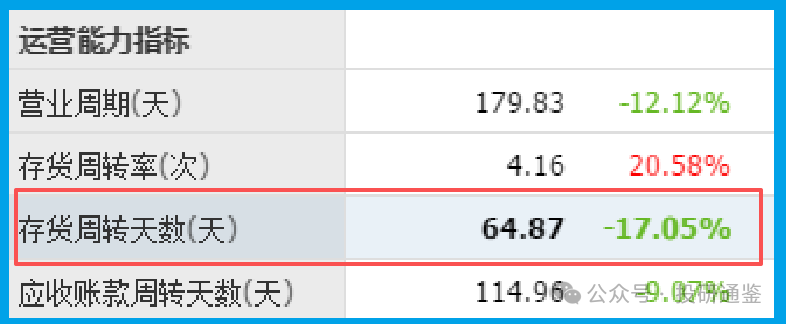
In the fiercely competitive field of semiconductor packaging and testing, operational efficiency often determines a company’s profitability.
Layout in the Computing Power Track
By investing in 5.55% equity of Chip Exhibition, the company is entering the AI computing power infrastructure field.
The target company focuses on the R&D of enterprise-level SSD products, providing a “full-stack solution from chip to disk,” which is the core demand for current AI data center construction.
Applications in computing servers and their peripheral products have allowed the company to catch the fast train of AI development.
This niche market has a high technical threshold, and once a foothold is established, the profitability can be quite considerable.
Third-Generation Semiconductor Technology
The company has mastered the packaging technology of third-generation semiconductor materials such as gallium nitride, which is a valuable technological reserve.
With the development of industries such as new energy vehicles and 5G communications, the market demand for third-generation semiconductors is rapidly being released.
The technological accumulation in advanced packaging has opened up broader market space for the company. Especially in high-performance computing and automotive electronics, advanced packaging technology is becoming increasingly important.
Trends of Northbound Funds
The Hong Kong Central Clearing Limited ranks as the fifth largest circulating shareholder, which is a signal worth noting.
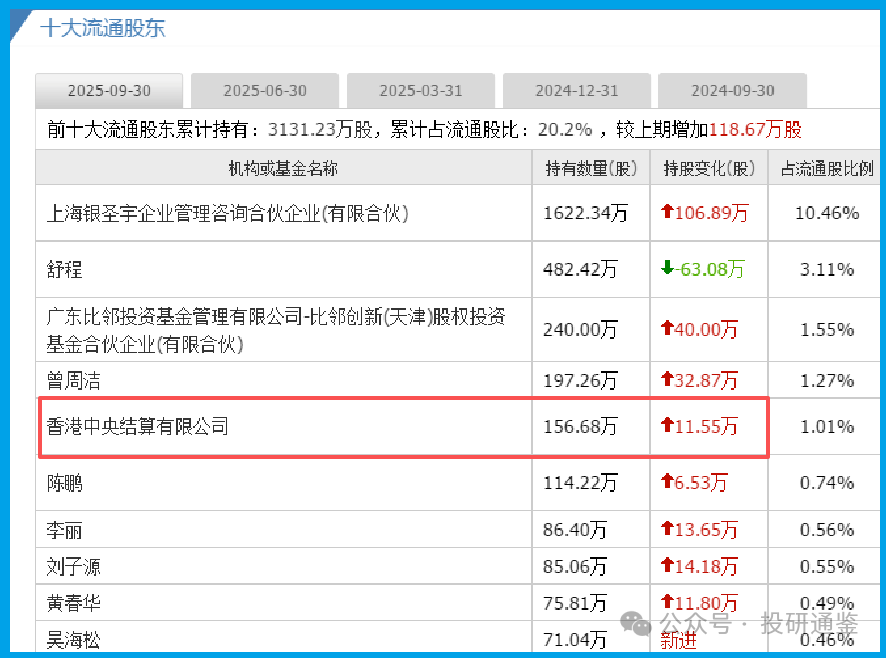
Northbound funds usually have a strong forward-looking judgment on technology companies, and their changes in holdings often reflect industry trends.
In the three popular tracks of storage chips, third-generation semiconductors, and advanced packaging, the company possesses corresponding technological reserves, and this rarity may be the main reason attracting smart funds.
Risk Warning Section
Inventory is 129 million yuan, a year-on-year decrease of 11.17%, and this change needs to be viewed dialectically.
A decrease in inventory may indicate that the company is optimizing inventory management, but it may also reflect a cautious attitude towards the subsequent market.
In the current context of the semiconductor industry’s recovery, moderate inventory reserves are necessary. A continuous decline in inventory may affect the company’s ability to deliver on time, thereby impacting future performance.
Summary by the Financial Officer
Through this financial report, we see a semiconductor company that is in a period of business transformation.
Although short-term performance is under pressure, there are positive signals in cash flow improvement, order growth, and technological layout.
The forward-looking layout in emerging fields such as AI computing power, third-generation semiconductors, and advanced packaging may be accumulating energy for a future performance reversal.
After all, in technology-intensive industries, R&D investment and technological reserves often predict a company’s development potential better than current profits.
This company’s case tells us: reading financial reports should be like a detective solving a case; one cannot only look at surface numbers but must analyze the essence of the business.
Sometimes, behind temporary losses, new growth momentum may be brewing.
If we were to rank the fundamentals of listed companies from A to E, I personally believe this company can maintain a C level.
Risk Warning: A company with a good financial report does not necessarily see its stock price rise, but those that can sustain significant increases will have outstanding financial reports. This article is purely a financial report teaching article and does not intend to make any recommendations. I hope everyone can refer to it cautiously.