In November 2025, the team led by Chen Sumin from Wuhan University published an article titled “Chemoselective Tagging of Protein Methacrylation” in the Journal of the American Chemical Society. They developed a chemoselective tagging technique based on photocatalytic thiol-Michael addition, achieving the specific tagging, enrichment, and identification of protein methacrylation (Kmea) modifications for the first time. This method addresses the interference caused by its structural isomer, crotonylation (Kcr), providing a new tool for the study of post-translational modifications of proteins.
Protein lysine methacrylation (Kmea) is a recently discovered post-translational modification with epigenetic regulatory functions. It is a structural isomer of crotonylation (Kcr) and is dynamically regulated by intracellular acyl-CoA metabolites. Kmea is widely present in core histones and may participate in gene activity regulation by hindering the binding of bromodomain factors to chromatin. Its formation is controlled by the HAT1 and SIRT2 enzyme systems and is associated with mitochondrial valine metabolism, providing new insights into the mechanisms of diseases such as Leigh syndrome. However, due to the lack of efficient selective tagging methods, the identification of Kmea proteins and their modification sites has been challenging. Existing techniques rely solely on pan-Kmea antibodies for enrichment, which cannot achieve chemical specificity. This study realized precise tagging of Kmea modifications through photocatalytic thiol-Michael addition, avoiding interference from Kcr. (Figure 1)
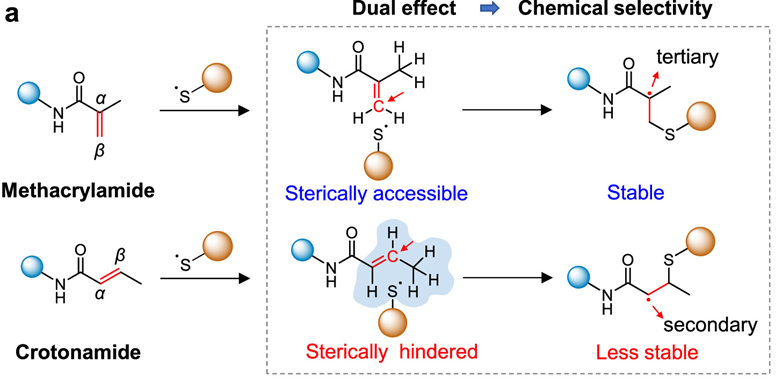
Figure 1 Dual effects of steric hindrance and radical stability achieve specific tagging of Kmea
The research team designed and synthesized a water-soluble phenyl thiol-azide probe, azDSH, which contains a phenyl thiol reactive group, a carboxyl group to enhance water solubility, and an azide handle for click chemistry. The probe precursor Pro-azDSH is reduced by TCEP to generate the active azDSH, avoiding the purification challenges of oxidized dimers. Under the action of the photocatalyst 2,4,6-triarylpyrylium salt (TPT), azDSH undergoes a thiol-Michael addition reaction with Kmea-modified lysine, specifically tagging the methacrylamide structure.
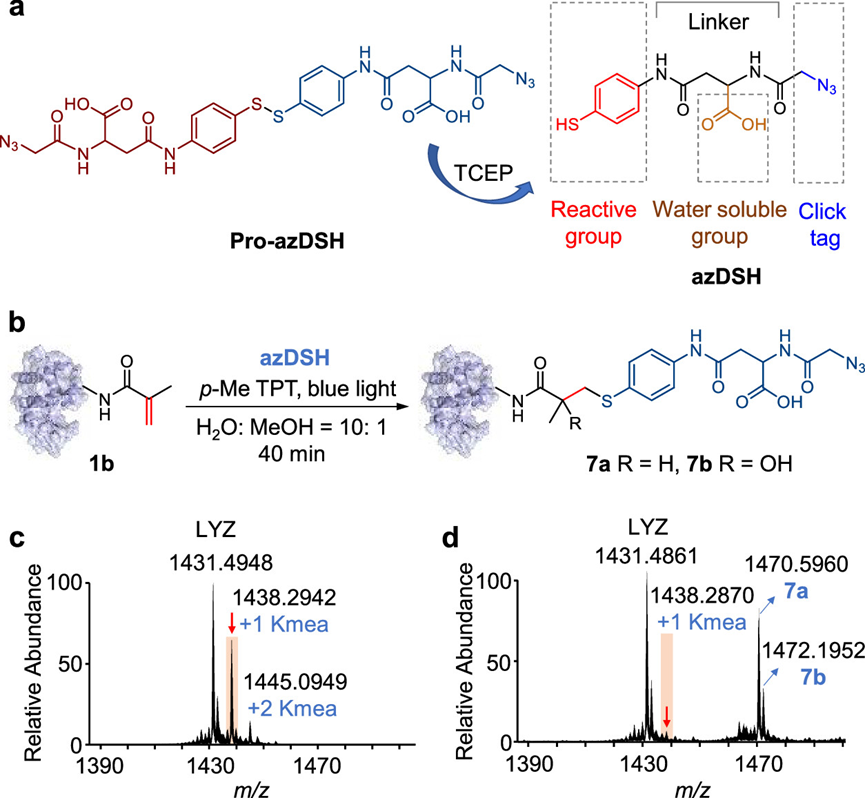
Figure 2 Design of Kmea probe and tagging of Kmea proteinsExperimental results with model compounds showed that the reaction yield of 4-methoxyphenyl thiol with methacrylamide derivatives (1a) could reach 90%, while the yield with crotonamide (4a) was less than 1%. DFT calculations confirmed that the reaction barrier for methacrylamide is lower (difference > 2 kcal/mol), and the stability of the intermediate is higher. In the complex matrix of HeLa cell lysate, this selectivity still maintained over 85% yield. Mechanistic studies indicated that the sulfur radical attacks the C=C bond to generate a radical intermediate, which forms hydroxyl-substituted byproducts through an oxygen-involved pathway, but does not affect subsequent identification.At the protein level, azDSH successfully tagged methacrylated lysozyme (Kmea-LYZ) and bovine serum albumin (Kmea-BSA). Mass spectrometry showed that the mass-to-charge ratios of the tagged products 7a/7b were 1470 and 1472, respectively, while crotonylated proteins (Kcr-LYZ/Kcr-BSA) showed almost no tagging signal. Gel fluorescence imaging further validated the specific tagging ability of azDSH for Kmea proteins. By connecting biotin-acid cleavable tags and streptavidin beads through CuAAC, the team established a process for identifying Kmea modification sites. In histone extracts, this method identified the K37/K38 sites of histone H3C and new Kmea sites in nuclear proteins such as HMGB1, TdIF2, and UHRF1. Further analysis of HeLa cell histones revealed Kmea modifications in core histones H1, H2A, H2B, H3, and H4, and discovered novel Kmea proteins such as BRWD1, TAF1, TACC1, and SETD3, some of which overlapped with antibody identification results, confirming the reliability of the method.
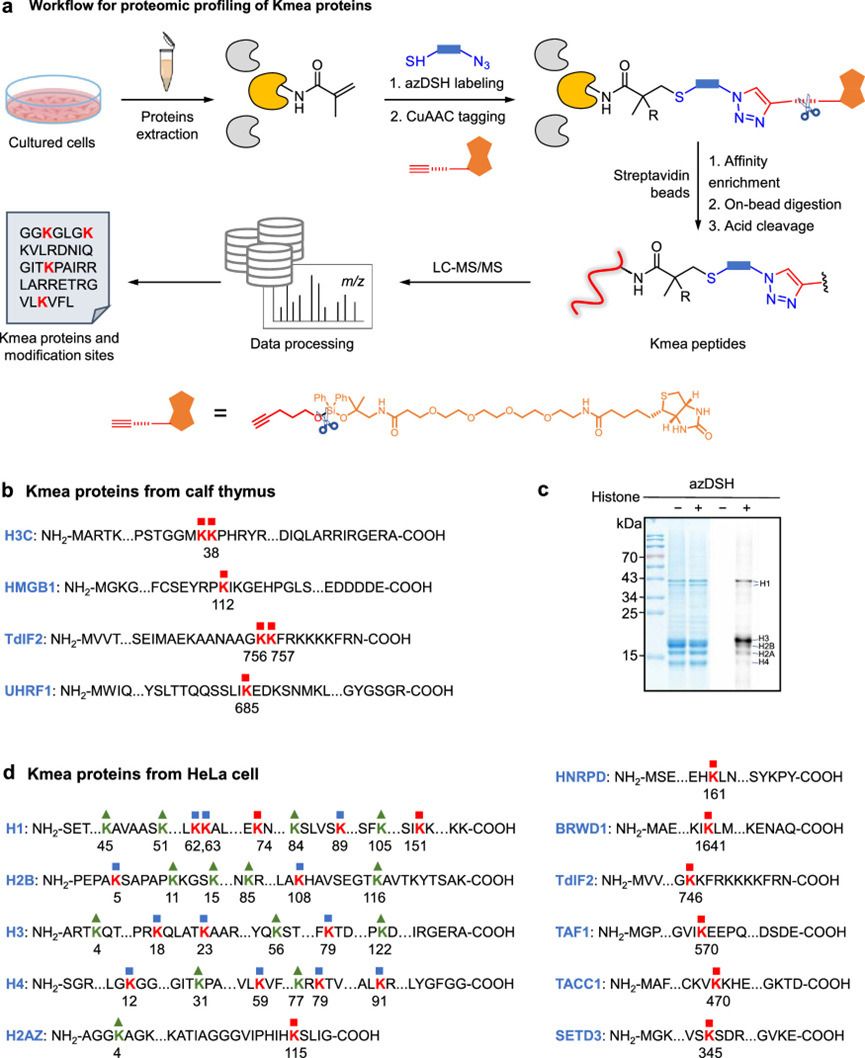
Figure 3 azDSH identifies methacrylation sites in histone groups
In summary, this study achieved the chemoselective tagging of protein methacrylation modifications for the first time. Through photocatalytic thiol-Michael addition and the azDSH probe, it overcame the limitations of traditional antibody methods, providing a high-specificity tool for the study of epigenetic regulatory mechanisms. The newly discovered Kmea proteins and their sites are expected to promote the development of the intersection between metabolism and epigenetics.
Editor: Qiao Lipeng
Reviewer: Zhou Keting
Please click the end of the push “Read the original text” to view the article
Author Information
Chen Sumin, Professor, Wuhan University Institute of Advanced Studies
Ph.D., Institute of Chemistry, Chinese Academy of Sciences, 2010Research Direction: Mass spectrometry analysis technology with deep structural resolution; in situ mass spectrometry analysis methods and instruments; biomolecular mass spectrometry and clinical disease research