Introduction: Intelligent sensor systems are at the core of information technology, integrating various technologies to provide perception capabilities for automation, the Internet of Things (IoT), and artificial intelligence (AI). Intelligent sensors include functions such as data acquisition and processing, adaptability, and self-correction, characterized by high precision, adaptability, data processing, communication capabilities, and low power consumption. They have wide applications in industrial automation, IoT, healthcare, environmental monitoring, and agriculture. Future development trends include miniaturization, multifunctionality, wireless capabilities, integration of deep learning, and enhanced security. Today, let’s discuss the construction and application of intelligent sensor systems with the editor from Wuhan Li You De.
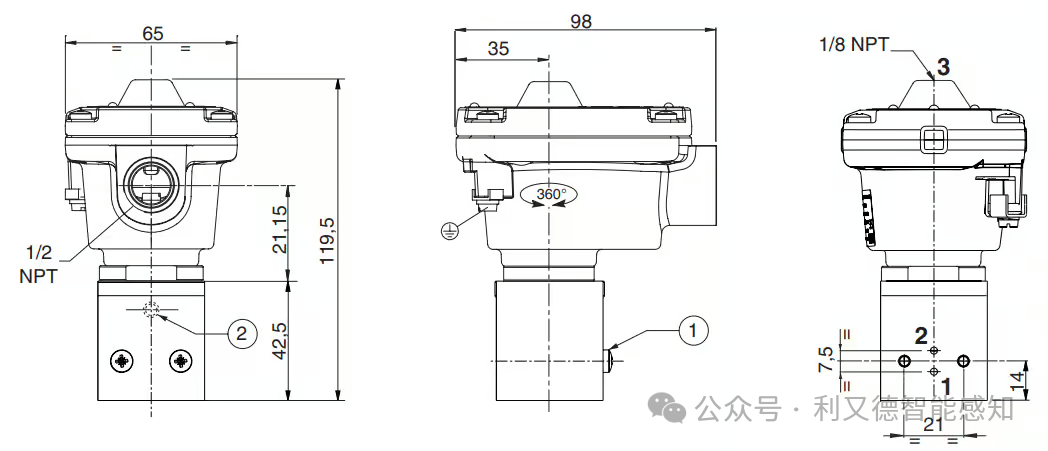
1. Components of Intelligent Sensor Systems
Intelligent sensor systems are a highly integrated collection of devices designed to acquire information from the physical world and convert it into electronic signals that can be processed by computers. The components of these systems typically include the following key parts:
-
Sensor Unit: Responsible for capturing data from the physical environment, such as temperature, pressure, light, etc. This data is then converted into electrical signals.
-
Data Processing Unit: Usually a microprocessor or microcontroller, responsible for converting electrical signals into digital signals, performing preliminary data processing, and executing operations such as signal amplification and filtering.
-
Communication Interface: Transmits processed data to other systems or networks. This can be a wired interface, such as RS232 or USB, or a wireless interface, such as Wi-Fi or Bluetooth.
-
Power Management Unit: Ensures stable power supply to the system and may include battery management functions, especially for portable or remote devices.
-
Auxiliary Function Unit: May include storage devices, user interfaces, etc., enabling the system to perform more complex functions and provide user interaction capabilities.
The design and integration of each part are crucial for the performance of intelligent sensor systems. For example, considerations must be made during design to minimize power consumption, enhance signal interference resistance, and ensure the reliability and security of data transmission. With technological advancements, intelligent sensor systems are becoming smarter and more multifunctional, better meeting the growing application demands.
2. Working Principles of Intelligent Sensors
2.1 Basic Concepts and Classification of National Sensors
2.1.1 Working Principles of National Sensors
National sensors are detection devices capable of sensing specific physical or chemical quantities and converting them into electrical signals for measurement, control, and processing. The basic working principle involves several main steps: First, national sensors capture specific physical signals, such as temperature, pressure, light, etc., through their built-in sensitive elements. Then, the internal conversion device of the sensor converts these physical quantities into corresponding electrical signals. Next, the electrical signals are processed through amplification, filtering, etc., and converted from analog signals to digital signals (if the original signal is analog) for subsequent computation, storage, and transmission. Finally, the digital signals are output through interfaces for further processing by computers or control systems.
To better understand the working principles of national sensors, they can be likened to human senses. Just as humans perceive light through their eyes and sound through their ears, national sensors respond to external stimuli through various forms of physical responses (such as changes in resistance, capacitance, etc.) and convert them into electrical signals for processing.
2.1.2 Types and Application Fields of National Sensors
National sensors come in various types and can be classified based on different measurement targets and application fields, including national temperature sensors, national pressure sensors, national humidity sensors, and national photoelectric sensors. Among them, national temperature sensors are used to measure temperature, such as thermocouples and resistance temperature detectors; national pressure sensors are used to detect the pressure of gases or liquids, such as national pressure transmitters; national photoelectric sensors utilize the properties of light to detect the presence or position of objects, commonly found in automated production lines.
Various national sensors are widely used in industrial control, aerospace, automotive electronics, environmental monitoring, medical devices, smart homes, and many other fields. For example, in the automotive industry, acceleration sensors are used for safety control in airbag systems; in environmental monitoring, temperature and humidity sensors are used to monitor meteorological changes; and in the medical field, heart rate sensors are crucial for monitoring heart health.
2.2 Technical Principles of Intelligent Sensors
2.2.1 Data Acquisition and Processing
Intelligent sensors are not just data acquisition devices; they also possess data processing capabilities. In terms of data acquisition, intelligent sensors typically integrate analog-to-digital converters (ADC) to directly convert analog signals into digital signals, avoiding the complexity of external signal processing and potential signal loss. In terms of data processing, intelligent sensors embed microprocessors or digital signal processors (DSP) to perform real-time analysis and preliminary processing of the acquired data.
For example, a temperature intelligent sensor converts temperature signals into digital signals through the built-in ADC, and the microprocessor can filter, calibrate, and even perform simple trend analysis on the signals. Additionally, the sensor can conduct fault detection through built-in algorithms, monitoring operational status in real-time to ensure data reliability and accuracy.
2.2.2 Sensor Fusion Technology
In many complex applications, a single sensor may not meet all requirements. Sensor fusion technology has emerged, focusing on integrating information from multiple sensors to obtain more accurate, reliable, and comprehensive data than a single sensor. Sensor fusion technology can be divided into data layer fusion, feature layer fusion, and decision layer fusion, with different fusion levels corresponding to different information processing methods and complexities.
Data layer fusion merges data at the raw data level, such as through weighted averaging or Kalman filtering algorithms. Feature layer fusion combines the feature information extracted from various sensors, typically using pattern recognition methods. Decision layer fusion makes final decisions based on local decisions made by each sensor through decision logic.
Implementing sensor fusion technology requires comprehensive consideration of signal processing, feature extraction, data association, fusion algorithms, and decision strategies, often involving knowledge from statistics, signal processing, computer vision, artificial intelligence, and other fields.
2.2.3 Programming and Control of Intelligent Sensors
Intelligent sensors are often equipped with one or more programmable interfaces, allowing developers to configure and control the sensors according to application requirements, including data acquisition frequency, data processing algorithms, output formats, etc. Control interfaces handle external control signals, enabling the sensors to respond to external commands for specific operations.
In practical applications, by writing and uploading corresponding control programs, intelligent sensors can achieve more complex functions. For example, programs can be written to implement periodic data acquisition and transmission, automatic reporting of abnormal states, and collaboration with other smart devices. To achieve these functions, control scripts are typically written in high-level languages and uploaded to the sensor’s internal memory using the sensor’s communication protocol.
Since programming and controlling intelligent sensors often involve embedded system development, a certain level of embedded programming knowledge is required, including understanding microcontroller architecture, programming languages (such as C/C++), and communication protocols. Through programming and control, the flexibility and adaptability of intelligent sensors are greatly enhanced, allowing them to better meet complex application needs.
To demonstrate the specific implementation of sensor programming and control, consider a simple example: programming a temperature intelligent sensor based on the Arduino platform, which collects temperature data every 10 seconds and uploads it to a computer for display via serial communication. Below is a simplified code example, including the basic process of sensor initialization, data acquisition, and communication:
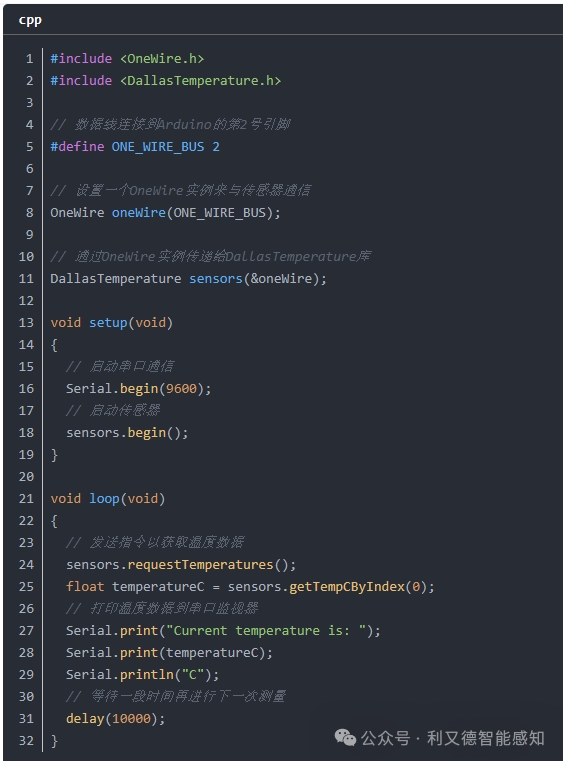
The above code snippet reads from the DS18B20 temperature sensor using the OneWire and DallasTemperature libraries. In the setup() function, the serial port and sensor are initialized, and in the loop() function, temperature data is periodically read and output via the serial port.
In practical applications, programming and controlling intelligent sensors not only require consideration of hardware configuration but also software optimization, setting up exception handling mechanisms, and coordinating communication with other systems. Through flexible programming, intelligent sensors can better adapt to different application environments and needs.
3. High-Precision Data Calibration and Adaptability
In intelligent sensor systems, data calibration and adaptability are crucial for ensuring data accuracy and enhancing system intelligence. They not only provide precise measurements but also enable the system to automatically adapt to environmental changes to optimize performance and response.
3.1 Importance of Data Calibration
Data calibration is an indispensable part of intelligent sensor systems. It refers to comparing the sensor’s output with known reference values to detect and correct system errors, ensuring data accuracy.
3.1.1 Basic Methods and Processes of Calibration
There are various basic methods for calibration, including zero-point calibration, full-scale calibration, and linear calibration. Zero-point calibration adjusts the sensor’s output to zero when there is no input; full-scale calibration ensures the sensor outputs full-scale values at maximum input; linear calibration involves adjusting the sensor’s linearity to ensure a linear relationship between output and input across the entire range.
Calibration processes typically include:
1. Preparing calibration equipment and tools, ensuring their accuracy and stability.
2. Executing corresponding operations based on the calibration type, such as zero-point adjustment and range correction.
3. Recording calibration data, including sensor output and actual input values.
4. Analyzing data to determine calibration coefficients or correction models.
5. Applying calibration coefficients to update the sensor’s output values.
3.1.2 Storage and Management of Calibration Data
The storage and management of calibration data are crucial for ensuring the long-term accuracy and reliability of sensor systems. Typically, this data is stored in databases or log files and undergoes version control and periodic checks. This helps track calibration history, identify long-term drift, and ensure data traceability.
Managing calibration data usually involves the following steps:
1. Designing a calibration data recording template that includes calibration date, equipment information, calibration values, etc.
2. Using database management systems (DBMS) such as MySQL or NoSQL databases for storage.
3. Implementing data backup and recovery mechanisms to prevent data loss.
4. Regularly checking calibration data to ensure its validity.
5. Setting access permissions for calibration data to ensure data security.
The management of calibration data must also consider the calibration cycles of calibration equipment and the validity of calibration certificates, as well as relevant regulations and industry standards.
3.2 Adaptability and Intelligent Processing
Adaptive technology enables intelligent sensors to maintain performance in changing environments. It relies on algorithms that can adjust the sensor’s behavior based on environmental conditions.
3.2.1 Principles and Applications of Adaptive Algorithms
Adaptive algorithms can automatically adjust parameters in response to changes in input signals. These algorithms are based on various principles, including statistical analysis, machine learning models, and fuzzy logic. Adaptive algorithms are commonly applied in noise cancellation, signal enhancement, and error detection.
Applications of adaptive algorithms include:
1. Noise Cancellation: Using adaptive filters, such as the Least Mean Squares (LMS) algorithm, to dynamically eliminate noise from signals.
2. Signal Enhancement: Dynamically adjusting filter parameters based on signal characteristics to enhance specific frequency components of the signal.
3. Error Detection and Diagnosis: Adaptive algorithms can predict normal operating ranges and issue alerts when deviations are detected.
A sample code block for an adaptive algorithm is as follows:
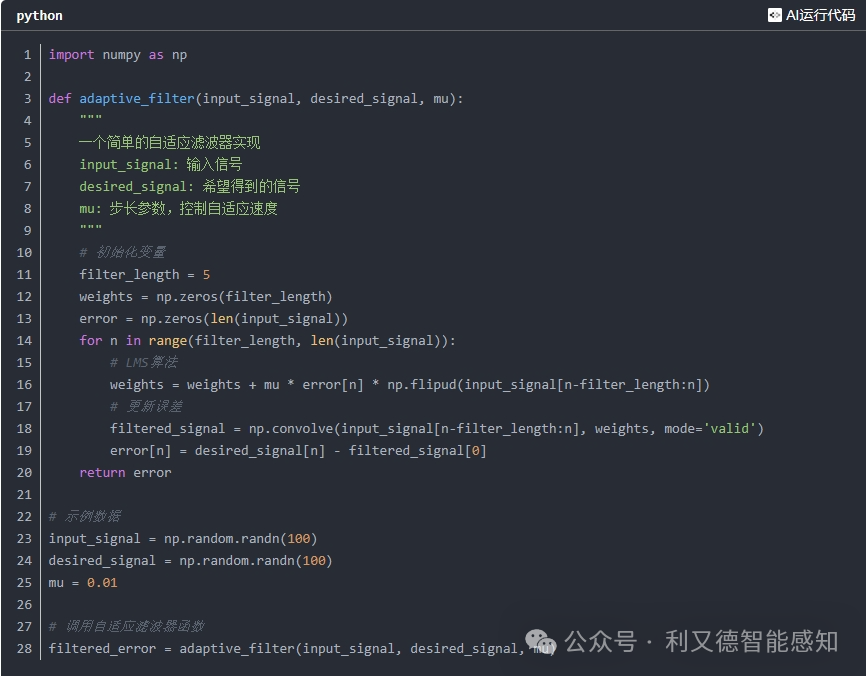
In this simple implementation of an LMS adaptive filter, mu is the step size parameter that controls the speed and stability of the algorithm’s adaptation. The parameter filter_length defines the length of the filter. The error signal filtered_error is calculated by adjusting the filter weights to minimize the error between the input signal and the desired signal.
3.2.2 Applications of Machine Learning in Data Processing
Machine learning techniques have been widely applied in the data processing of intelligent sensors, especially in pattern recognition and anomaly detection. By training models using historical data, machine learning algorithms can predict the normal behavior range of sensors and trigger alerts when anomalies are detected.
Common machine learning algorithms include Support Vector Machines (SVM), Random Forests, and Neural Networks. Neural networks are particularly suited for handling nonlinear problems and can learn complex patterns in high-dimensional data spaces.
A simple pseudocode implementation of a neural network is as follows:
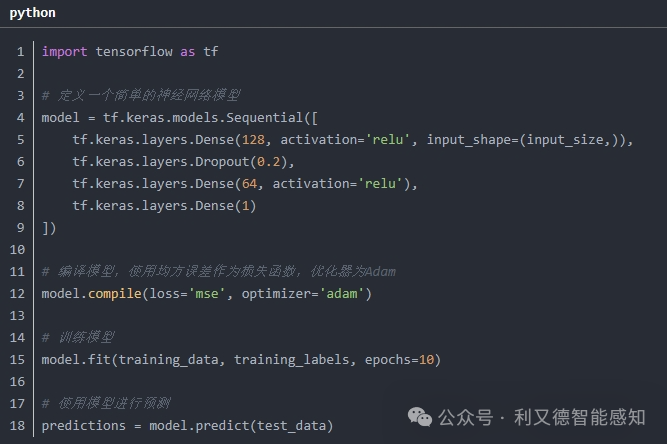
In the above code, input_size is the number of features in the input data, training_data and training_labels represent the training data and labels, and test_data is the test data. This model adjusts its internal parameters to minimize the loss function for prediction purposes.
The application of adaptive algorithms and machine learning significantly enhances the ability of intelligent sensors to process complex data. Their integration allows intelligent sensors not only to adapt to environmental changes but also to predict and respond to complex scenarios, providing strong support for precise control and decision-making in intelligent systems.
In this chapter, we explored the importance of high-precision data calibration and adaptability, including the basic methods and processes of data calibration, as well as the applications of adaptive algorithms and machine learning in data processing. Through an in-depth analysis of these key elements, we can better understand the complexity and precision behind intelligent sensor systems, thereby promoting technological advancement and innovation in applications.
4. Communication Protocols and Remote Applications of Intelligent Sensors
The communication protocols and remote applications of intelligent sensors are key technologies that enable efficient data transmission and remote control. This chapter will detail the communication protocols supported by intelligent sensors and how to achieve low power consumption and remote applications.
4.1 Support for Multiple Communication Protocols
Connecting intelligent sensors to various devices typically requires specific communication protocols. From wired to wireless, each protocol has its characteristics and applicable scenarios.
4.1.1 Comparison of Wired and Wireless Communication Protocols
Wired communication protocols such as RS-232, RS-485, and USB are characterized by stability and high transmission rates but are limited by wiring constraints and flexibility. In contrast, wireless communication protocols such as Wi-Fi, Bluetooth, LoRaWAN, and ZigBee are widely used due to their ease of installation, scalability, and device mobility.
Taking Bluetooth and LoRaWAN as examples:
-
Bluetooth: In short-range communication, Bluetooth technology is widely used in smart wearable devices and short-range wireless communication due to its low power consumption characteristics. Since the release of Bluetooth 5.0, its communication distance and transmission rate have significantly improved.
-
mermaid graph LR A[Bluetooth Device] –>|Communication| B[Central Control Unit] B –>|Commands| C[Other Bluetooth Devices]
-
LoRaWAN: Suitable for long-distance and low-power IoT applications, it employs spread spectrum modulation technology to achieve long-distance communication while maintaining low power consumption. This makes LoRaWAN very useful in scenarios requiring remote data collection, such as agricultural irrigation monitoring.
4.1.2 Introduction and Applications of Typical Communication Protocols
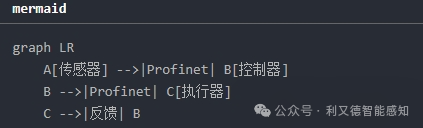
The choice of different communication protocols depends on the application scenario. In industrial automation, Ethernet and industrial Ethernet protocols (such as Profinet, EtherCAT) are widely used due to their high speed and reliability. In home and building automation, ZigBee and Z-Wave are preferred for their low power consumption and ease of networking.
Taking Profinet as an example, it is a complete industrial communication solution that integrates various technologies such as Ethernet, TCP/IP, and real-time Ethernet technology. Profinet supports real-time data transmission and allows seamless communication between devices.
4.2 Low Power Consumption and Remote Applications
Intelligent sensors are widely used in many remote monitoring and control scenarios, and achieving low power consumption while maintaining good remote communication capabilities is key.
4.2.1 Principles and Implementation of Low Power Consumption Technologies
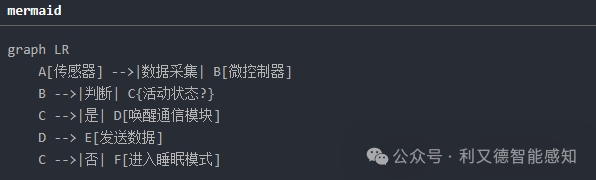
The implementation of low power consumption technologies typically relies on hardware and software optimization. On the hardware side, low power design can be reflected in the selection of low power sensors, optimization of power management units, etc. On the software side, it involves the choice of operating systems, power consumption optimization of communication protocols, and the application of sleep modes.
For example, by adopting Bluetooth Low Energy (BLE) technology, devices can enter deep sleep mode during inactive periods, significantly reducing energy consumption.
4.2.2 Case Study of Remote Monitoring and Control Systems
Taking a remote environmental monitoring system as an example, this system consists of multiple nodes, each equipped with various sensors, transmitting data to a central monitoring platform via wireless communication protocols. The system uses solar energy as its primary power source and periodically wakes sensor nodes for data acquisition, keeping the nodes in sleep mode the rest of the time to minimize power consumption.
On the software side, the microcontroller of the nodes is periodically awakened to perform data acquisition and processing, then sends the data to the cloud platform via LoRaWAN or other wireless protocols. This data can then be viewed by users through mobile or web interfaces, enabling real-time remote monitoring.
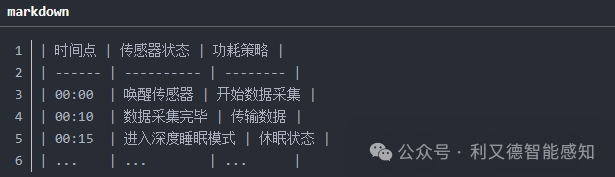
The above table shows a typical working cycle of intelligent sensor nodes in a remote monitoring system, including working and sleep states, as well as corresponding power management strategies.
5. Applications of Intelligent Sensors in Industrial Automation
In modern industrial automation, intelligent sensors play an increasingly important role. They not only enhance production efficiency and accuracy but also reduce maintenance costs and error rates. This chapter delves into the applications of intelligent sensors in industrial automation, covering basic knowledge, sensor integration in automated production lines, and the importance of real-time monitoring and data analysis.
5.1 Basic Knowledge of Industrial Automation
5.1.1 Overview of Industrial Automation Systems
Industrial automation refers to the process of utilizing electronic computer technology, automatic control technology, instrumentation, power electronics technology, communication technology, and other information technologies to achieve automation in industrial production processes. It includes elements such as automation equipment, control systems, and communication networks. Automation systems can be divided into three basic levels: device level, control level, and management level. The device level includes various machines and sensors directly used for processing and transmission on the production line, the control level is responsible for monitoring and directing the actions of the device level, and the management level is responsible for planning and decision-making for the entire production process.
5.1.2 Demand Analysis for Industrial Sensors
In industrial automation, the demand for sensors is quite complex. They need to operate stably in harsh industrial environments while requiring fast response times and high measurement accuracy. For example, in metal processing, temperature and pressure sensors must reliably operate in high-temperature and high-pressure environments. In packaging and sorting processes, high-precision photoelectric sensors are needed to ensure correct product classification. Additionally, sensors should have certain networking capabilities to facilitate remote data transmission and analysis.
5.2 Role of Intelligent Sensors in Automation
5.2.1 Real-Time Monitoring and Data Analysis
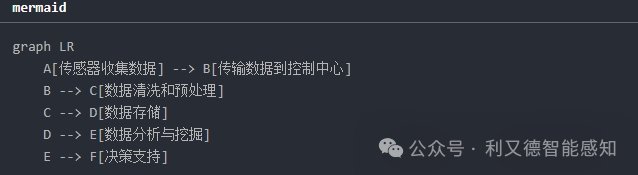
The real-time monitoring function of intelligent sensors is crucial for industrial automation. They can monitor key parameters in the production process, such as temperature, pressure, flow, and speed, in real-time and analyze the collected data. This not only allows for timely detection of potential problems and defects but also predicts maintenance needs for equipment. The data analysis capability enables intelligent sensors to extract valuable information from large amounts of data, providing a scientific basis for production decision-making.
5.2.2 Sensor Integration in Automated Production Lines
In automated production lines, the integration of sensors is key to achieving efficient and flexible production. Intelligent sensors can work in conjunction with actuators such as motors and servo systems to form closed-loop control circuits. This integration allows production lines to be smarter, adjusting various production parameters in real-time to meet the demands for customized and personalized products. For example, in automated assembly lines, intelligent sensors can ensure the precise assembly of product components and immediately stop production upon detecting anomalies, thereby reducing waste rates.
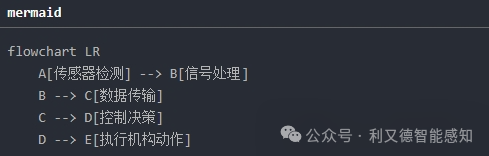
The application of intelligent sensors in industrial automation not only enhances production flexibility and efficiency but also provides a technological foundation for the digital transformation of manufacturing. With the continuous development of IoT, big data, and AI technologies, the role of intelligent sensors in automation will become increasingly significant, and their application prospects are very broad.
6. Applications of Intelligent Sensors in Specific Fields
6.1 Medical Health Monitoring
Innovative Applications of Intelligent Sensors in Healthcare
With advancements in medical technology, intelligent sensors play an increasingly important role in medical health monitoring. Intelligent sensor technology provides more precise data support for disease prevention, diagnosis, treatment, and rehabilitation, thereby improving the quality of healthcare and the patient experience.
Intelligent sensors can monitor patients’ physiological parameters in real-time, such as heart rate, blood pressure, blood oxygen saturation, and body temperature, transmitting data to monitoring centers or medical devices via wireless technology. This data provides doctors with real-time feedback, helping them make more timely and accurate medical decisions. For example, smartwatches and health trackers have brought this technology into the daily lives of ordinary consumers, making personal health management more convenient.
Special Requirements for Medical Sensors
In the medical field, the accuracy, reliability, and safety of sensors are crucial. Medical sensors typically require strict clinical validation to ensure they provide accurate data under various conditions. Due to the involvement of patient health and life safety, medical sensors must also comply with specific international standards, such as the IEC 60601 series standards, which have clear requirements for product electrical safety and electromagnetic compatibility.
Due to the sensitivity of patients’ bodies, medical sensors must possess high biocompatibility to prevent allergic reactions or other biological effects. Additionally, medical devices should be designed to withstand disinfection and durability, resisting various disinfectants and operating under high temperatures and pressures.
Examples of Intelligent Sensor Applications in Healthcare
The applications of intelligent sensors in healthcare cover multiple aspects, from long-term monitoring of chronic diseases to real-time monitoring during surgical procedures. For example, implantable sensors can continuously monitor blood glucose levels in diabetic patients, providing personalized insulin dosage adjustments. In intensive care units, intelligent sensors can provide continuous monitoring of respiratory and cardiac functions, helping healthcare personnel promptly detect any abnormalities in patients.
Another application is remote health monitoring, where vital sign data collected by intelligent sensors can be transmitted in real-time to healthcare providers, enabling home health monitoring or remote diagnosis. This greatly improves the efficiency of healthcare resource utilization, especially for patients living in remote areas, becoming a key means for them to access professional medical consultations.
Table: Common Types of Sensors Used in Healthcare

The table lists common types of sensors used in the medical field, showcasing the parameters they can detect, application scenarios, as well as their advantages and considerations for use.
Code Block: Example Code for Heart Rate Monitoring Intelligent Sensor
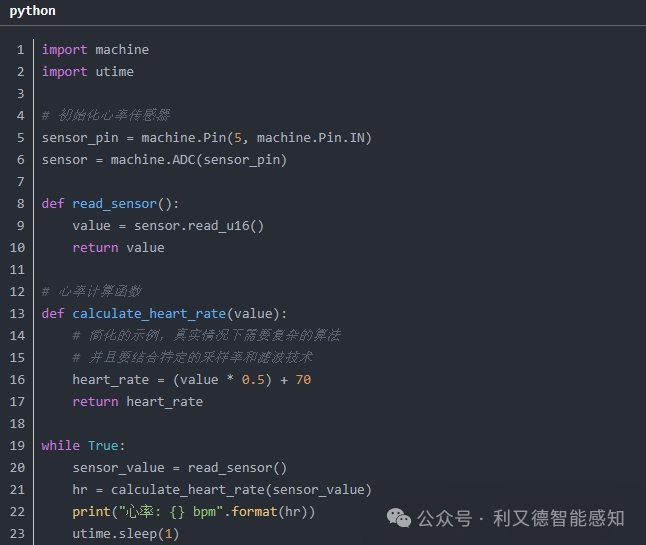
This code demonstrates how to utilize a simplified sensor reading and heart rate calculation logic, simulating the operation of a heart rate monitoring sensor. It uses the microcontroller’s analog-to-digital converter (ADC) to read sensor values and performs a basic heart rate calculation. In real applications, heart rate calculations would be more complex, requiring specific sampling rates and signal processing techniques to filter out noise and accurately detect heartbeat signals.
7. Development Trends and Security of Intelligent Sensors
With the rapid development of technology, intelligent sensors are playing an increasingly important role in various fields. To meet the growing demand, the technology and applications of intelligent sensors are undergoing rapid changes, while the security and privacy protection of intelligent sensors have become particularly important as applications deepen.
7.1 Development Trends in Intelligent Sensor Technology
With the booming development of the Internet of Things (IoT) and artificial intelligence (AI), intelligent sensor technology is also continuously advancing.
7.1.1 Integration and Impact of Deep Learning Technology
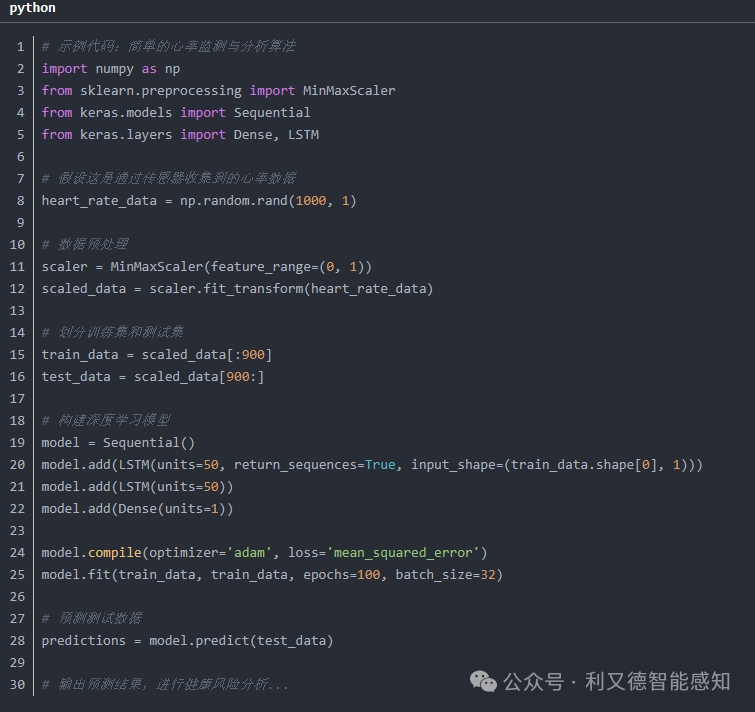
The integration of deep learning technology with intelligent sensors is leading a new revolution in sensor technology. Through deep learning algorithms, sensors can process complex signals more efficiently, perform pattern recognition and predictive analysis, thereby achieving higher levels of automation and intelligence.
To illustrate with a specific case, smart health monitoring wristbands can use deep learning algorithms to analyze heart rate data in real-time, identifying potential health risks such as arrhythmias and promptly alerting users.
7.1.2 Future Prospects of Intelligent Sensors
Future intelligent sensors will be more miniaturized, networked, intelligent, and have longer lifespans and lower power consumption. Integrated sensors will be able to combine multiple sensing functions in a single device, such as environmental monitoring and health monitoring, becoming more common.
Additionally, intelligent sensors will place greater emphasis on integration with cloud computing and edge computing, achieving real-time data processing and decision support. Continuous technological innovation will provide intelligent sensors with broader application prospects, bringing more convenience to people’s lives and industrial production.
7.2 Security and Privacy Protection
Intelligent sensors are widely used in various fields, especially in critical areas involving personal privacy and security, making security and privacy protection issues that cannot be ignored.
7.2.1 Identification and Resolution of Security Issues
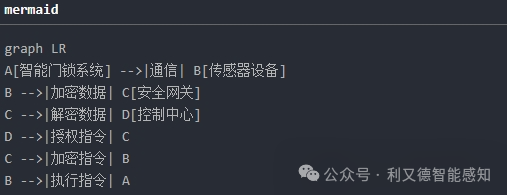
Security issues mainly include unauthorized access to devices, data leakage, and malicious attacks. To address these issues, intelligent sensors need to consider security factors during design, adopting measures such as encrypted communication, secure authentication, and intrusion detection systems to protect data security.
For example, in smart lock systems, sensors must communicate between devices using secure keys to prevent hacking. By using strong encryption algorithms, such as AES (Advanced Encryption Standard), the data communication of intelligent sensors becomes more secure.
7.2.2 Implementation of Privacy Protection in Intelligent Sensors
Privacy protection requires intelligent sensors to comply with relevant laws and regulations when collecting, storing, and transmitting data. Intelligent sensor devices need to anonymize data and implement user permission controls to ensure that only authorized users can access sensitive data.
For example, in smart health monitoring devices, the device should ensure the anonymization of user health data, using data desensitization techniques to prevent personal identification, while providing corresponding privacy settings options that allow users to have more control over their data.
With the development of technology and the improvement of regulations, the security and privacy protection of intelligent sensors will continue to enhance. This will not only increase user trust but also pave the way for the widespread application of intelligent sensors in various fields.
In the future development of intelligent sensors, we look forward to seeing safer, smarter, and more reliable devices, as well as their profound impact on society.

Wuhan Li You De Technology Co., Ltd.
TEL:027-83621617
13296589910