Recently
The Orthopedics Department of Zhejiang Provincial Hospital of Traditional Chinese Medicine
collaborated with the Vascular Intervention Department, Urology Department, Gastrointestinal Surgery Department
and 9 other departments
to successfully perform a complex joint surgery on a patient with Hemophilia A
and a massive pelvic pseudotumor
The entire surgery lasted approximately 12 hours
with four core departments taking turns
marking a new height in the hospital’s surgical treatment of complex hemophilia cases
Mr. Ying, 50, was diagnosed with Hemophilia A at a young age and underwent surgery for a right hip pseudotumor 9 years ago. Six months ago, he experienced increased swelling and pain in his right hip and lower limb, making it difficult to walk normally. Imaging examinations indicated that his right iliac bone had been severely damaged, and the pseudotumor had invaded the pelvic cavity, tightly adhering to important structures such as the iliac vessels and ureters, posing a significant surgical risk.
Upon a friend’s recommendation, he learned about the advantages of Zhejiang Provincial Hospital of Traditional Chinese Medicine in the treatment of blood diseases and orthopedic conditions, and sought treatment there. “Imaging is just the tip of the iceberg; the actual situation is more complicated than it appears,”said Dr. Liu Xun, Chief Physician of the Orthopedics Department. “This pseudotumor is like a ‘time bomb’; if it ruptures, it could cause massive bleeding and pose a life-threatening risk.”
Over 20 experts joined forces
to discuss the surgical plan
Faced with this challenging condition, the multidisciplinary treatment (MDT) mechanism for hemophilia was quickly initiated under the medical organization. The Orthopedics Department took the lead, collaborating with the Vascular Intervention Department, Urology Department, Gastrointestinal Surgery Department, Anesthesiology Department, Intensive Care Unit, Hematology Department, Laboratory Department, Clinical Blood Transfusion Department, Nursing Department, and over 20 experts to conduct two offline discussions on difficult cases, comprehensively assessing the surgical challenges and risks, and formulating a detailed surgical plan with dynamic online tracking.
“The biggest challenge in surgery for hemophilia patients is bleeding,”said Dr. Sun Zhichao, Chief of the Vascular Intervention Department. “We performed vascular embolization and abdominal aortic balloon occlusion before the surgery, effectively ‘clearing the field’ to ensure safety for the subsequent surgery.”
12-Hour Relay Surgery:
Seamless collaboration among multiple departments
Winning the ‘Life Protection Battle’
On the morning of the surgery, the Orthopedics nursing team was fully prepared, administering medication according to the patient’s factor VIII concentration with precise timing, dosage, and speed.
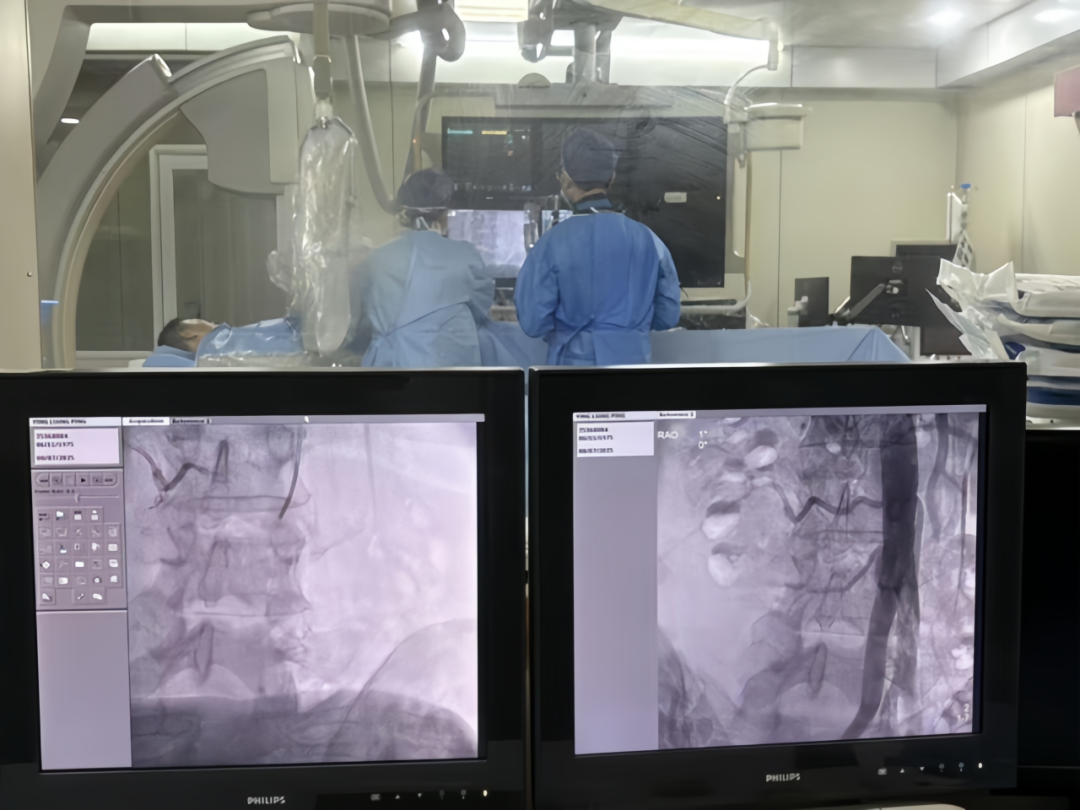
At 8 AM,Dr. Sun Zhichao’s team from the Vascular Intervention Departmenttook the lead, completing the embolization of the internal iliac artery and lumbar artery, as well as the pre-positioning of the abdominal aortic balloon, effectively controlling the risk of bleeding during the surgery.
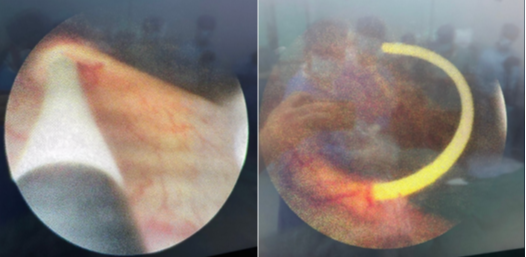
Next,Dr. Yan Jiasheng from the Urology Departmentperformed ureteral stenting to protect the urethra from damage.
Following that,Dr. Chen Guiping from the Gastrointestinal Surgery Departmentconducted intra-abdominal procedures to clear the final obstacles for the pseudotumor removal, creating safe conditions for the subsequent surgery.
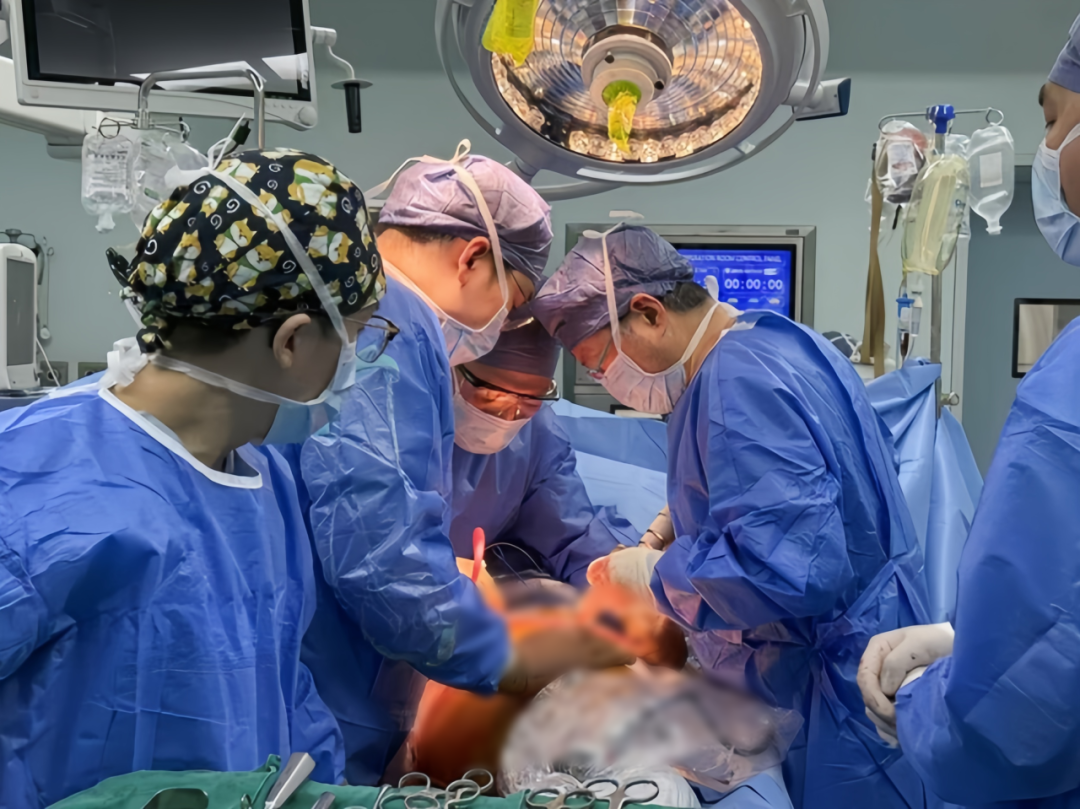
Finally,Dr. Tong Peijian’s team from the Orthopedics Departmenttook over, using a combined abdominal and iliac groin approach to gradually separate the adhered tissues, completely excising the massive pseudotumor, clearing the hematoma and bone fragments, and implanting a 3D-printed personalized pelvic prosthesis, successfully completing the pelvic reconstruction.
“The entire process was like defusing a bomb; every step had to be precise and careful,”said Dr. Lü Shuaijie, Deputy Chief of the Orthopedics Department. “The close cooperation among multiple disciplines was key to the success of this surgery.”
3D Printing Assistance:
Personalized prosthesis for precise reconstruction,
achieving ‘perfect matching’
It is worth mentioning that the pelvic prosthesis used in this surgery was customized usingfully 3D printing technology, perfectly matching the patient’s skeletal defect area, significantly enhancing the surgical precision and postoperative functional recovery.
Professor Tong Peijian pointed out: “3D printing technology has obvious advantages in the reconstruction of complex bone defects, especially suitable for difficult cases like hemophilia pseudotumors, truly achieving ‘tailored solutions.'”
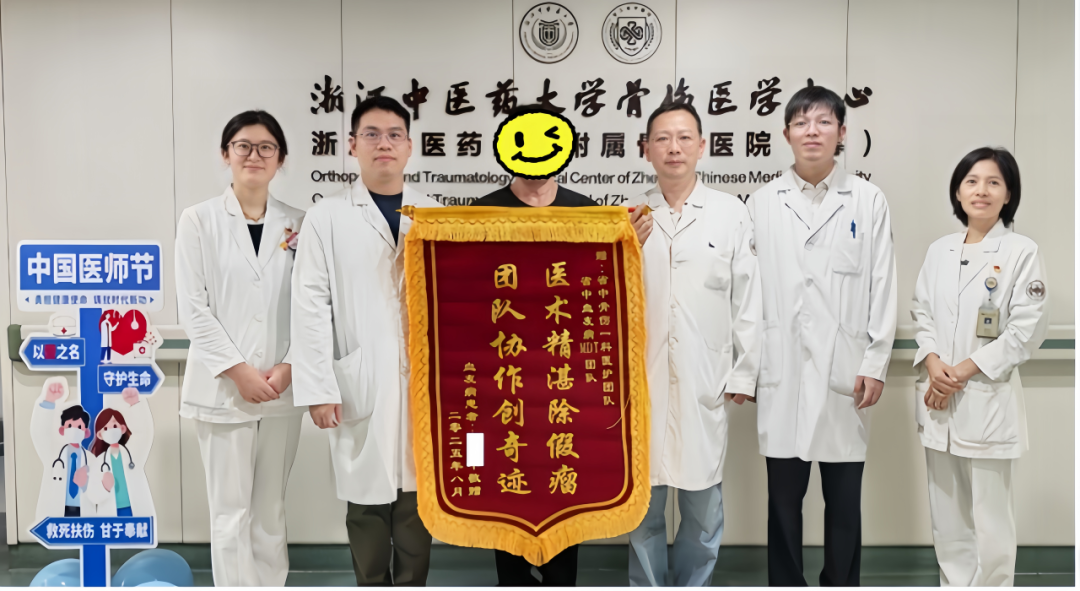
Post-surgery, with professional rehabilitation guidance and individualized comprehensive management, Mr. Ying has shown good recovery, with gradual improvement in limb function; his family specially presented a banner to thank the medical team for their superb skills and warm companionship, and Mr. Ying is currently on the path to returning to normal life.
Source: Orthopedics Department
Editor: Wu Yu
Reviewers: Chen Yanming, Lü Shuaijie
Final Review: Li Ju