Bosch Advanced Ceramics (BAC) has become a significant manufacturer in the ceramic additive manufacturing market, which is still a niche but increasingly mature field, thanks to over a decade of experience in technical ceramics. The company has advanced production facilities in Germany and has successfully collaborated with clients in industries such as semiconductors, medical, and aerospace, not only producing high-quality ceramic additive manufacturing parts but also providing consulting services. This comprehensive contract manufacturing approach means it can help clients maximize the advantages of ceramic additive manufacturing and push the technology to new limits.
Recently, the company’s Chief Technology Officer, Nikolai Sauer, shared Bosch’s extensive experience in technical ceramics and additive technologies, detailing the current capabilities and activities in the field of ceramic additive manufacturing, the market challenges faced by the company and the industry as a whole, and his outlook on the future of ceramic additive manufacturing.
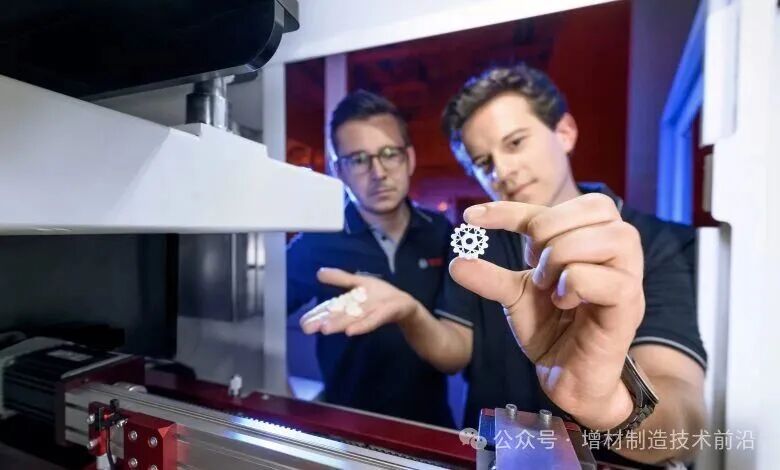
Nikolai Sauer has been with Bosch since 2008, when he joined as an apprentice in mechatronics. Later, Sauer pursued a degree in industrial engineering with a major in mechanical engineering, remaining at Bosch through a series of internships. It was during his internship that he first encountered technical ceramics.
“At that time, I had the opportunity to work with the first 3D printer for ceramic applications, and I spent a lot of time understanding this technology and contributing to the development of its foundational processes. After graduation, I secured a position as the company’s first development engineer focused on ceramic 3D printing. In this role, I managed initial customer projects and helped us achieve the industrialization of the process. As customer demand grew, I had the opportunity to expand our equipment, integrate new technologies, and build a team focused on ceramic additive manufacturing.”
In recent years, Sauer and his team at BAC have been dedicated to advancing the industrialization of ceramic additive manufacturing processes and expanding the company’s material and technology portfolio. Since 2023, Sauer has served as Chief Technology Officer, overseeing all technical aspects of contract manufacturing, including production, development, quality assurance, and project management.
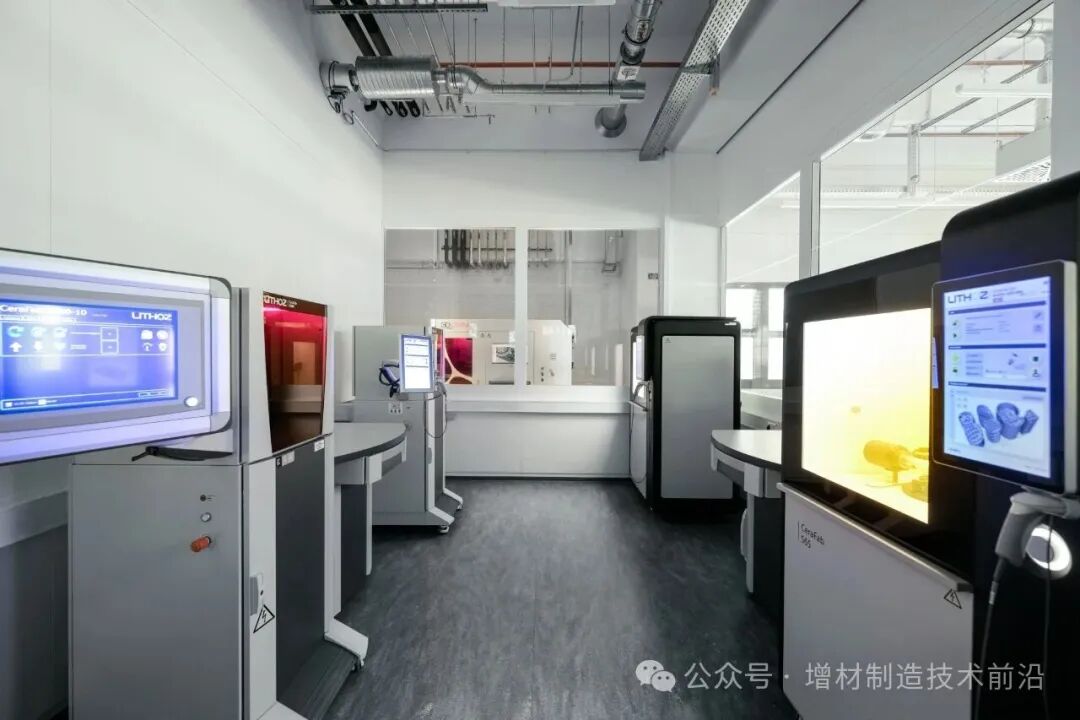
This scope encompasses BAC’s advanced production facilities, where the team employs two ceramic additive manufacturing processes: Lithoz’s light-activated ceramic manufacturing (LCM) and 3DCeram’s SLA. “Our current equipment fleet includes multiple 3D printers and post-processing equipment such as high-temperature furnaces for ceramic sintering,” he explained. “This comprehensive equipment allows us to focus on reliably mass-producing technical ceramic parts according to customer specifications.”
Sauer also noted that BAC has two additional technologies in development: “Our technical team continuously monitors new developments and emerging technologies in the field of ceramic additive manufacturing. We assess which technologies may be suitable for future mass production and are always looking for the most efficient solutions for our customers.”
Large Application Volume
Currently, Bosch Advanced Ceramics produces a variety of components for its customers, including miniature components for medical devices and large parts for the semiconductor industry. This indicates the company’s deep understanding of the versatility of ceramic additive manufacturing, especially in terms of scalable production.
Sauer explained: “To give you an idea of our current capabilities: to date, the smallest part we have produced is an insulating sleeve with an outer diameter of just 1.3 mm and a wall thickness of only 90 microns. On the other hand, we also produce larger components, such as annular blades for wafer processing, with diameters of up to 250 mm. The maximum size ultimately depends on the machine, but the market is developing rapidly, and we continuously monitor new developments to expand our possibilities. For us, size is not the main differentiating factor; it is about the application challenges.”
In fact, BAC is more interested in helping customers understand when ceramic additive manufacturing technology is truly the right choice when collaborating with them. Typically, the manufacturing of a component depends on three factors:
Extreme environmental adaptability: thanks to the inherent properties of technical ceramics (high temperature resistance, chemical corrosion resistance, wear resistance).
Complex geometries: enabling optimized designs or integrating multiple functions into a single part, which is not achievable with traditional manufacturing processes.
Rapid prototyping or small to medium batch production: suitable for situations where traditional mold costs are too high.
He added: “We are always committed to supporting customers from the early stages of projects. We work together to maximize the advantages of additive manufacturing, such as integrating entire components into a complex printed part. This tremendous design freedom, combined with the excellent performance of technical ceramics, brings significant advantages for parts of various sizes.”
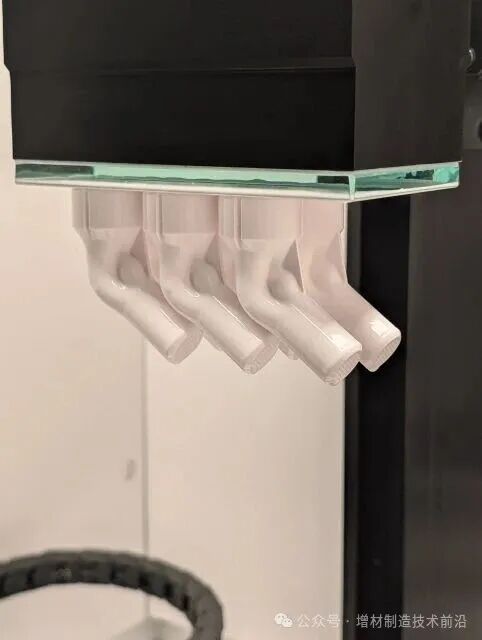
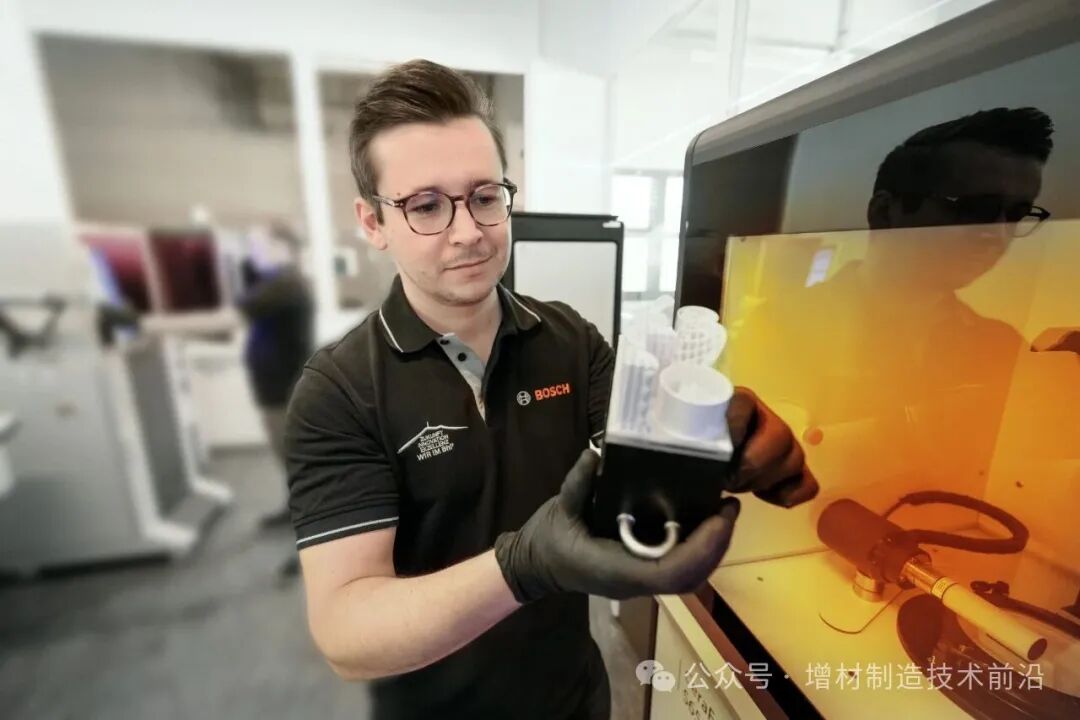
Sauer highlighted a use case that demonstrates how these factors perfectly align with ceramic additive manufacturing. “Among the various applications we manufacture, gas injectors stand out as a prime example of the innovative potential of ceramic additive manufacturing,” he said. “This component truly pushes the limits of design and performance. Its specifications are highly challenging: it combines two traditionally separate components into a streamlined design; it features a flange with a diameter of 12 mm and three channels with a diameter of 6 mm; most notably, it is equipped with a honeycomb nozzle with a diameter of 9 mm and a wall thickness reduced to 0.2 mm, all made of alumina, with a height of 42 mm.”
This case study perfectly illustrates how ceramic additive manufacturing technology can create highly complex geometries with internal structures and thin walls better than any other ceramic manufacturing process. Currently, BAC is in the process of medium batch production of this component.
“The development process of this gas injector was also highly collaborative,” Sauer emphasized. “From the initial design phase to production, we maintained very close cooperation with the customer. This close collaboration is crucial for meeting the stringent requirements of high-demand industries such as semiconductors, aerospace, or energy regarding performance, cleanliness, and material properties.”
Trends in the Ceramic Additive Manufacturing Industry
Bosch Advanced Ceramics’ experience in manufacturing ceramic additive manufacturing parts gives Sauer and his team unique insights into the broader ceramic additive manufacturing market, including trends and challenges. Considering that ceramic additive manufacturing is still viewed by many as an emerging technology, we were curious about where the strongest application interest lies and which industries could benefit the most from the capabilities of ceramic additive manufacturing.
“We see significant attention and rapid adoption of ceramic additive manufacturing parts in industries that already heavily rely on the unique properties of advanced ceramics,” Sauer explained. “For example, in the semiconductor industry, the demand for extremely high precision, high purity, and temperature stability is critical. Ceramic additive manufacturing can achieve complex geometries, such as intricate fluid channels or specialized wafer processing tools, which are often impossible to produce through traditional means or are prohibitively expensive.”
“Similarly, the medical device industry also shows strong acceptance, primarily due to the demand for biocompatibility, wear resistance, and the ability to create highly customized or complex designs for implants or surgical instruments.” In this regard, Bosch Advanced Ceramics recently revealed that it is producing 1,400 ceramic insulating sleeves for laparoscopic tools in a single batch, showcasing the potential for scalable production in the medical industry.
In addition, industries traditionally focused on metals, such as aerospace, are increasingly turning to ceramic additive manufacturing. This shift stems from their pursuit of lightweight, high-temperature resistance, and enhanced performance in harsh environments, making ceramic parts ideal for sensors, nozzles, or thermal protection. The automotive industry, especially in high-performance and electric vehicle applications, also benefits from ceramics’ electrical insulation, thermal management, and wear resistance in sensors, batteries, or specialized engine components.
Sauer believes that the greatest untapped potential lies in industries with a growing demand for parts that can withstand extreme operating conditions and those exploring new product designs that are difficult (or even impossible) to achieve with more traditional materials and manufacturing methods.
He explained: “This often involves some areas with growing demands, such as higher temperatures, more corrosive chemicals, or stricter performance requirements, which force a reevaluation of materials. We are actively involved in fields such as renewable energy, focusing on hydrogen production components and next-generation battery systems, where traditional materials have reached their limits.”
There is significant potential in the chemical processing of pumps, valves, or reactors in highly corrosive or abrasive environments, as well as in advanced metrology or precision instruments where dimensional stability and extremely low thermal expansion are crucial. BAC’s mission is to inspire these industries to explore how ceramic additive manufacturing can unlock new design possibilities and performance levels, ultimately replacing traditional, often less ideal solutions.
Challenges to Overcome
This contract manufacturer’s position in the market also gives it a unique perspective on the challenges currently facing ceramic additive manufacturing technology. Sauer believes that awareness is one of the main barriers to overcome: “Many decision-makers and engineers do not fully understand its capabilities or know how to leverage them in their specific applications. This lack of awareness directly impacts customers’ trust in ceramic additive manufacturing technology as a reliable, high-quality manufacturing method for critical applications.”
Cost is another important consideration—this challenge is closely related to the lack of awareness challenge. “While ceramic additive manufacturing has unique advantages, the direct cost per piece can sometimes become an initial barrier,” he continued. “This is often related to the broader challenge of competing with mature manufacturing processes that benefit from long-term optimization of supply chains.”
However, we always encourage customers to take a comprehensive view of the total cost of ownership (TCO) of their projects. Even if the direct cost per part may be higher, the inherent advantages of components produced through additive manufacturing (AM) can lead to significant long-term cost savings. For example, lightweight designs can significantly reduce energy consumption, and more durable parts can extend product lifetimes, ultimately lowering TCO.
Fortunately,Sauer and his team are actively taking steps to overcome these challenges. For instance, Bosch Advanced Ceramics invests heavily in partnerships and education, consistently encouraging collaborative projects and knowledge sharing.
“We provide proof-of-concept demonstrations and support functional testing to enhance customer confidence in the technology and its product quality,” he said. “In terms of cost and competition, our strategic focus is on automating the entire process to reduce customers’ direct costs. Crucially, we also actively help customers find suitable projects where the unique advantages of ceramic additive manufacturing clearly outweigh traditional methods, thereby highlighting its true value proposition.”
BAC is also committed to enhancing the robustness of the ceramic additive manufacturing process to achieve reliable, repeatable mass production. In this regard, Sauer stated: “To achieve process stability and scalability, we strive to understand and control every aspect of the production process, from material preparation to complex post-processing, to ensure consistent quality and repeatability.”
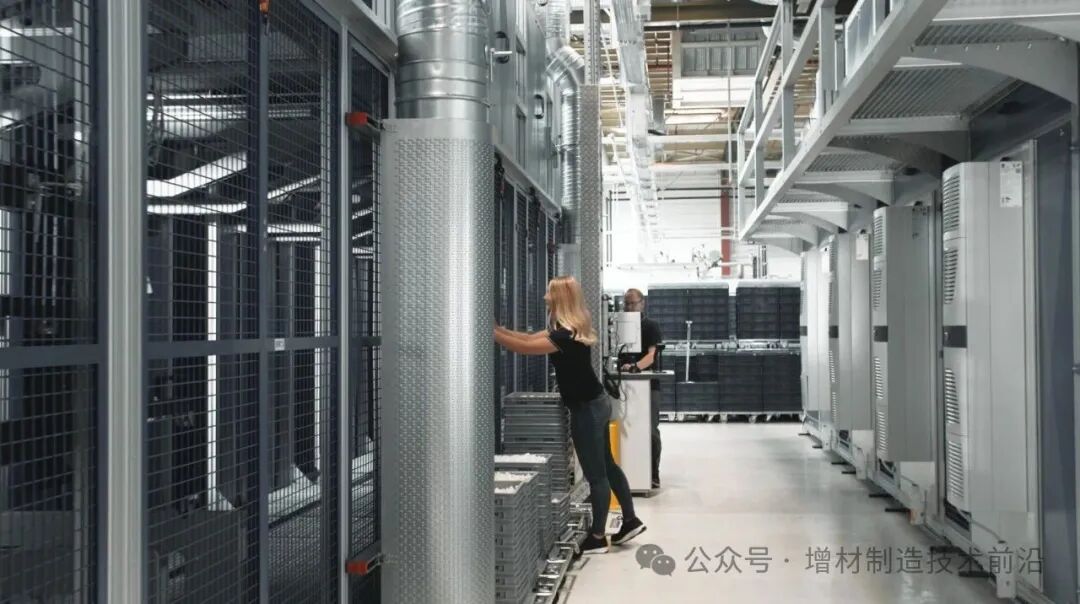
Looking ahead, BAC plans to further develop several key areas, from higher levels of automation and a richer selection of materials to larger components and traceability in the process chain. Currently, one of BAC’s key focus areas is scalability, which encompasses some of the challenges and development directions mentioned above.
“At BAC, our current main development focus is on ‘scalability.’ To achieve this, we are actively exploring opportunities to reduce costs, both through independent exploration and collaboration with partners, aiming to expand the application of additive manufacturing in ceramics. An important lever in this process is the automation of various steps in production. Additionally, our suppliers play a crucial role in this process, as they must strive to reduce the costs of materials and printers, which is essential for bringing the entire industry closer to mass production in broader application areas.”
Regarding traceability, he added: “Additive manufacturing offers us a unique advantage in this regard, allowing us to provide traceability down to individual components or even raw materials. This was very difficult and costly when using traditional technologies.”
BAC’s goal of advancing the industrialization of ceramic additive manufacturing aligns perfectly with the goals of the entire industry. Unsurprisingly, the company shares our optimism about the future of ceramic additive manufacturing and views this technology as a solution to emerging manufacturing problems posed by traditional materials and processes.
“The future prospects of ceramic additive manufacturing are bright,”Sauer said. “As the demand for various applications continues to grow, the technical requirements for materials are becoming increasingly stringent. Traditional materials may no longer meet these evolving demands, and thus, technical ceramics will be the key materials to help our customers push the limits.”
He concluded: “The core advantage of additive manufacturing lies in its ability to achieve designs that traditional methods cannot. This opens up new possibilities for various industries. As engineers and designers increasingly embrace additive thinking, we expect innovative ideas and applications to flourish, fundamentally transforming various sectors. In summary, while the road ahead may be challenging, the potential for ceramic additive manufacturing applications is immense, and we look forward to exploring future possibilities.”
Note: You are welcome to join the PhD and Master’s exchange QQ group (248112776). This article is translated from voxelmatters.