 The patient is a 6-year-old girl who has been coughing for 2 weeks without fever. After worsening for 2 days, she visited the outpatient clinic. The blood test results are as follows:
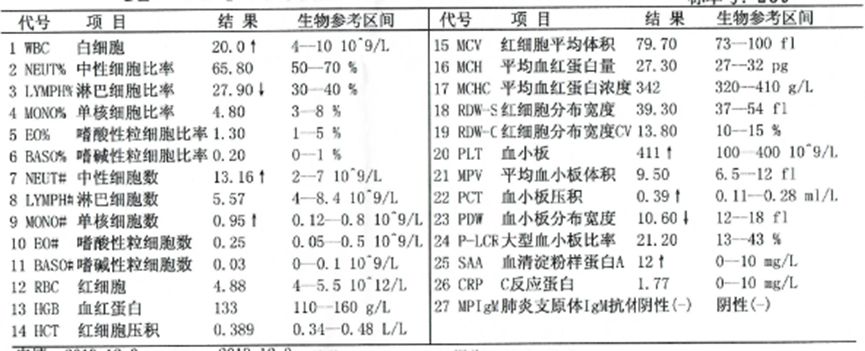 White blood cell count: 20×109/L (elevated), neutrophil ratio: 65.8% (normal), neutrophil count: 13.16×10⁹/L (elevated), C-reactive protein: 1.77mg/L (normal).Although the white blood cell count is very high, the C-reactive protein is normal. What is the relationship between white blood cells and C-reactive protein? Is this an indication for the use of antibiotics?Understanding the clinical significance of C-reactive protein and white blood cells, as well as their relationship, is very helpful for our clinical practice.C-Reactive Protein (CRP)CRP is a protein that can bind to the capsular C polysaccharide of Streptococcus pneumoniae, formed by five identical subunits (23KD) aggregated by non-covalent bonds into a cyclic pentamer protein, with a molecular weight of 115KD and a half-life of 19 hours, mainly synthesized by liver cells stimulated by inflammatory molecules such as interleukin-6 (IL-6). The normal serum CRP level is extremely low.CRP is a protein that sharply increases in plasma when the body is infected or tissues are damaged. CRP typically starts to rise 6-8 hours after the onset of disease, peaks at 24-48 hours, and the degree of elevation is positively correlated with the severity of infection or inflammation. The normal range for CRP is <10mg/L.
- Viral Infection
Serum CRP levels are often normal or mildly elevated.
- Bacterial Infection
In cases of bacterial infection, 88%-94% of patients have CRP levels exceeding 50mg/L, and 80% exceed 100mg/L. When CRP levels are between 10-99mg/L, it often indicates localized or superficial infections; when ≥100mg/L, it often indicates sepsis or invasive infections. Dynamic monitoring of CRP levels during anti-infective treatment can assist in evaluating efficacy; a decrease in CRP to normal can be one of the indicators for stopping medication.
- Disadvantages
Although CRP changes are more specific than white blood cell counts, CRP specificity is not high; it can also significantly increase in many non-infectious diseases, such as trauma, surgery, myocardial infarction, malignant tumors, especially autoimmune diseases.Clinical Significance of White Blood Cells (WBC)WBCs are a type of cell with phagocytic function and are an important part of the body’s immune defense system. When an infection occurs, the most abundant neutrophils among white blood cells rapidly increase (indicated by an increase in white blood cell count), phagocytizing invading bacteria, parasites, and other pathogens.Moreover, the increase in white blood cell count is often proportional to the severity of bacterial infections. However, when a virus invades the body, white blood cells often do not rise or only slightly increase.Additionally, various tissue injuries, trauma, post-surgery, acute blood loss, poisoning, malignant tumors, and acute poisoning can also lead to significant increases in white blood cells, but this must be judged and analyzed based on the patient’s condition and other examination methods.Clinical Significance of WBC and CRP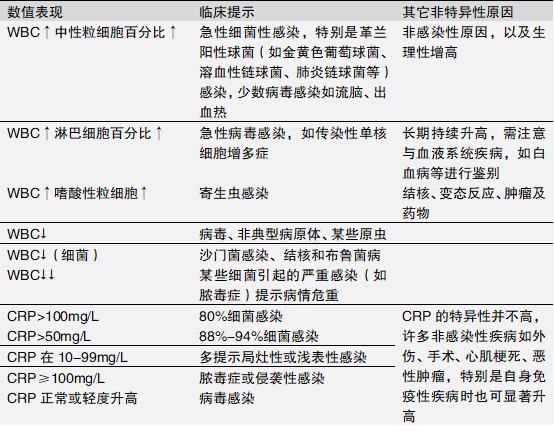 Relationship Between WBC and CRPAlthough an increase in white blood cells can indicate infection, it is not sensitive in cases of localized infections and aseptic inflammation. In patients with low white blood cell counts and infections, the white blood cell count has no value, and there are many influencing factors for elevated white blood cell counts, such as intense physical activity.CRP is an acute-phase response protein related to tissue damage and the degree of infection; severe infections caused by Gram-negative bacteria show the most significant elevation in CRP, while CRP elevation due to viral infections is the least, but other inflammation and tissue damage can also cause CRP elevation, which needs to be considered comprehensively.
- Viral Infection
WBCs are slightly elevated, CRP does not rise.
- Influencing Factors
WBCs are easily affected by factors such as age, diurnal variation, pregnancy and childbirth, and drug treatment; while CRP is not affected by physiological, immune status, or drug treatment.In the normal population, due to physiological changes in WBCs, especially in young children, WBCs can vary greatly, with counts greater than 10×109/L, while CRP is negative, which is within the healthy range.Older adults have a poor response to disease, and the total white blood cell count may not increase correspondingly after infection, while CRP may exceed the normal range and be positive, assisting in clinical diagnosis.
- Baseline Level of WBC
Some patients originally have low baseline white blood cell counts, typically (4-5)×109/L, and rise to 10×109/L during infection, which is still within the normal range, while CRP rises above the normal range (positive), aiding in diagnosis.
- Response Speed During Infection
WBC rises slowly, and changes after treatment are slow; whereas CRP changes rapidly, showing elevation within hours and returning to normal within a week as healing occurs.
- Activity of Related Diseases
Changes in WBC levels do not reflect the activity of diseases; while dynamic changes in CRP levels can reflect disease activity. Medication use can be adjusted based on these changes.AnalysisThe white blood cell and neutrophil counts of this patient are both high, but the percentage of neutrophils is not high. Upon inquiry, it was learned that she had practiced dancing for more than an hour that day, and the intensity was high, which may have caused the elevation of these two indicators, as mild exercise can lead to elevated white blood cell counts beyond the normal range.Based on the test results and clinical symptoms, a diagnosis of upper respiratory tract infection was made, with symptomatic treatment for cough, and no anti-infective treatment was given. Three days later, the following tests were conducted: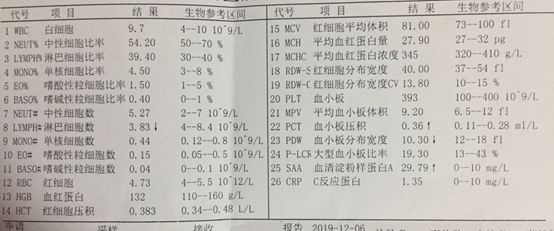 In summary, when WBC and CRP show inconsistency, it should be considered comprehensively in conjunction with clinical findings to analyze the reasons.Both play a synergistic diagnostic role in the diagnosis of bacterial infectious diseases, but CRP is more sensitive than WBC and serves as a clear and sensitive indicator for inflammation and tissue damage in diagnosis, prognosis, efficacy observation, and part of screening.[Reference][1] Chinese Medical Education Association Infection Disease Professional Committee. Expert Consensus on the Clinical Significance Interpretation of Infection-Related Biomarkers[J]. Chinese Journal of Tuberculosis and Respiratory Diseases, 2017, 40(4):243-257.Source: Clinical Pharmacy Channel of Medical CommunityEditor: Xiaoran Reviewed: yeah