3D printing of elastic lattice structures represents a cutting-edge breakthrough at the intersection of materials science and additive manufacturing technology. By utilizing programmable geometric topology and anisotropic design, it achieves a continuous variation in mechanical properties from 1 kPa to 300 kPa in different regions of a single material, providing revolutionary solutions for innovative products such as lightweight and highly adaptable robots.
The core value of this technology lies in the deep integration of material properties and structural design, breaking through the limitations of traditional separation between materials and structures, enabling engineers to precisely control the softness and hardness of lattice modules in different directions, achieving an innovative design of “one structure, multiple stiffnesses”..
Currently, this technology has been applied in various fields such as humanoid robots, medical implants, and sports equipment. With process optimization and material innovation, it is expected to achieve greater breakthroughs in high-end manufacturing fields such as embodied intelligence and aerospace over the next decade.
1. Technical Principles and Design Methods of Elastic Lattice Structures~
Elastic lattice structures are essentially a type of architected material, constructed from periodically repeating unit cells, which can be categorized into stochastic and non-stochastic types. Their revolutionary aspect lies in the use of a single material to achieve continuous mechanical property variations from “muscle-like softness” (1 kPa) to “bone-like hardness” (300 kPa) through innovative methods such as topological control (TR) and superimposed programming (SP). The lattice structure generation technology developed by Professor Qinhua Guan’s team at the École Polytechnique Fédérale de Lausanne (EPFL) supports over a million discrete configurations and infinite geometric variations, allowing materials to exhibit distinctly different softness and hardness in different regions.
From a microscopic structural perspective, the mechanical properties of elastic lattice structures are primarily determined by the geometric parameters of the unit cells (such as relative density, rod thickness, and unit cell size) and material properties. For example, face-centered cubic (FCC) lattices exhibit stronger compressive strength due to a higher effective filling rate (0.74 vs. 0.68 for body-centered cubic (BCC)). According to first-principles calculations, the stiffness matrices of different crystal systems (such as cubic and hexagonal) contain different numbers of independent matrix elements (C₁₁, C₁₂, C₄₄, etc.), from which Young’s modulus (E) and Poisson’s ratio (v) can be calculated.
Topology optimization algorithms play a key role in the design of elastic lattices. The Solid Isotropic Material with Penalization (SIMP) method is widely used in lattice design, adjusting material distribution through penalty factors to optimize structural compliance and stiffness. In finite element analysis (FEA), the volume fraction α (the ratio of the optimized volume of the region to the original volume) serves as a constraint to obtain a topology structure that maximizes stiffness. As the volume fraction α increases, more material is retained in the optimization results, but if the α value is too large, it loses topological significance, and if too small, it increases iteration difficulty. The topology adjustment technology developed by the EPFL team enables a continuous transition between BCC (body-centered cubic) and XCube (highly anisotropic) base lattices, controlling the mixing ratio through a “topological index” (TI) for seamless adjustment of stiffness and anisotropy.
2. Materials and Manufacturing Processes for Elastic Lattice Structures~
The key to realizing elastic lattice structures lies in the combination of specialized elastomer materials and advanced 3D printing processes. Thermoplastic polyurethane elastomers (TPU) and photopolymer elastomer resins (EPU) have become the preferred materials, combining the high elasticity of rubber with the strength of plastics, maintaining structural integrity even after tens of thousands of cycles of testing. The SUV elastomer material developed by the Singapore University of Technology and Design has a tear elongation rate of up to 1100%, more than five times that of known commercial elastomer materials, making it possible to manufacture complex lattice structures.
In terms of manufacturing processes, digital light processing (DLP) and digital light synthesis (DLS) technologies have become the preferred methods for manufacturing micro lattice structures due to their high precision and speed advantages. These technologies can construct complex lattices with feature sizes as small as 50 microns by curing photopolymer resins layer by layer. Boli Technology’s HALS ultra-fast 3D printing technology has increased printing speeds to 100 times that of traditional processes, although parameters such as layer thickness have not been explicitly disclosed, it has been successfully applied in large-scale mattress printing, proving its feasibility in the manufacturing of large products.
Inkjet printing (MJ) technology offers the possibility of multi-material printing, allowing for the simultaneous printing of materials with different physical and mechanical properties, achieving mixed printing of rigid and flexible, multi-colored, or transparent components. This technology can also create “digital materials” (DM), “multi-material composites” (MMC), or “functionally graded materials” (FGM), meeting the stiffness requirements of elastic lattices through different Shore hardness regions.
In terms of process challenges, the support issues for suspended structures are particularly prominent. Traditional Fused Deposition Modeling (FDM) processes require the removal of water-soluble support materials, while DLP/DLS processes achieve a distinction in strength between support structures and main materials by adjusting exposure time differences, making support materials easier to remove without damaging the main surface. Additionally, material shrinkage rates are a key factor affecting lattice accuracy, and Boli Technology has addressed the balance between material performance and 3D printing speed through the HALS process, enabling rapid formation of elastic lattice structures.
3. Application Cases in Humanoid Robotics~
The Xiaopeng IRON humanoid robot is a typical application of elastic lattice structures in the robotics field. The 3D printed lattice material showcased in the latest generation of the humanoid robot IRON achieves the high elasticity, high strength, and excellent cyclic durability required for biomimetic muscles, allowing the robot to simulate the fine control and flexible characteristics of human muscles. In-depth analysis suggests that Xiaopeng may have used thermoplastic polyurethane (TPU) elastomers or honeycomb composite materials as the base material, employing advanced 3D printing technologies such as digital light processing (DLP) to manufacture lightweight, high-energy-absorbing lattice structures with a durability of up to one million cycles. This material not only addresses the limitations of traditional rigid robots in dynamic movements but also provides crucial support for the future commercialization of humanoid robots. The robot features 28 flexible joints and 3D printed lattice muscles, simulating the contraction characteristics of human muscles through a honeycomb lattice structure, achieving a natural cushioning effect similar to tendon stretching. According to Xiaopeng’s official technical white paper, the IRON robot is equipped with 42 sets of 3D printed lattice actuators, combined with the XNG-OS intelligent operating system and E-Skin flexible composite material skin, achieving near-human movement performance.
The EPFL team’s developed elephant robot demonstrates the potential of elastic lattice structures in biomimetic design. This robot combines a flexible trunk with rigid legs through elastic lattice structures, requiring only four motors to perform complex actions such as spirally wrapping around flower stems and carrying loads of 500g (three times its own weight). The legs can support a load of 4kg (100% of its own weight), enabling forward/sideways walking and dynamic kicking actions. Experimental data shows that the bending module with a radial gradient design achieves a maximum bending angle of 69.6 degrees, an improvement of 30% over uniform materials; the twisting module achieves a twist of 78.1 degrees through a reverse gradient design, while the same uniform material can only produce -2.6 degrees of reverse twist.
In the Unitree G1 humanoid robot, although the official documentation does not explicitly mention elastic lattice structures, its “biomimetic spine” design and high torque density joints (120N.m) may be related to elastic lattice technology. This robot stands approximately 132 cm tall, weighs 35 kg, and is equipped with 23 to 43 joints, achieving a sprint speed of over 2m/s and supporting dynamic standing and folding actions, demonstrating the potential of elastic structures in enhancing the agility of robots.
4. Other Applications of Elastic Lattice Structures~
Beyond the robotics field, elastic lattice structures have achieved commercial applications in multiple industries.
In the sports equipment sector, the S-Works Power Saddle bicycle saddle developed by Carbon in collaboration with Specialized features a lattice structure composed of over 14,000 individual pillars, capable of dissipating the high pressure applied by the rider when seated, providing better rebound and breathability. This product uses Carbon EPU 41 resin, with a tear strength of 20kN/m and a break elongation rate of up to 130%, offering a longer lifespan and stronger support compared to traditional foam technologies.
In the medical field, 3D printed PLCL biodegradable scaffolds are used to enhance the effectiveness of fat grafting. These scaffolds are mechanically characterized using high-resolution X-ray computed tomography technology, allowing precise control over the porosity and mechanical properties of the scaffolds, providing an ideal growth environment for fat cells. Additionally, 3D printed cervical pillows utilize automated parametric design to achieve precise adaptation to individual cervical curvatures, effectively correcting abnormal cervical curvatures and improving sleep quality.
In the consumer electronics sector, Adidas’ Futurecraft 4D running shoes utilize 3D printed lattice structures to achieve lightweight and personalized customization. The midsole of these shoes is printed using Carbon’s DLS technology, allowing for adjustments to lattice parameters based on user gait data, providing optimal cushioning and support.
5. Current Industrialization Status and Market Prospects~
The technology of elastic lattice structures has transitioned from the laboratory to industrialization, with leading companies such as Boli Technology, Carbon, and Qingfeng achieving significant breakthroughs in the commercialization process.
Boli Technology has achieved mass production at the million-level through HALS ultra-fast 3D printing technology, providing intelligent cloud factory services to well-known domestic and international brands such as Li Ning, Cabbeen, and COLEHAAN, covering various fields including sports shoes, casual shoes, functional slippers, and AI-customized shoes. In March 2025, Boli Technology will globally launch a 2-meter large-size 3D printed elastomer mattress, using bio-based elastomer ELASTO 1000 BIO, with a bio-based ratio of up to 53%, achieving a perfect combination of breathability, intelligent cushioning support, and personalized customization.
Carbon focuses on the development of high-end elastomer materials and lattice design software. Its EPU 41 resin has been widely used in sports shoes, bicycle saddles, and other fields. Meanwhile, the Carbon Design Engine, as a lattice design generator, can automatically create conformal and multi-region lattices, saving engineers a significant amount of time and effort. This software, combined with DLS technology, has been successfully applied in products such as Adidas Futurecraft 4D midsoles and Specialized bicycle saddles, achieving rapid conversion from prototype to mass production.
In terms of market prospects, IDC predicts that the global robotics market will reach $400 billion by 2029, with embodied intelligent robots playing a significant role in this market, expected to account for over 30% of the market share. Elastic lattice structures, as the core technology for biomimetic muscles, will directly benefit from this growth. Additionally, the global 3D printing market is expected to continue expanding, growing from $7 billion in 2017 to approximately $35 billion by 2024, providing ample application space for elastic lattice structure technology.
In terms of policy support, China’s “14th Five-Year Plan” for the development of the robotics industry has set clear requirements for the localization rate of core components in humanoid robots, creating a favorable environment for the development of elastic lattice structure technology. The Wujiang new materials industry, as an important part of the Suzhou industrial system, achieved a scale output value of 124.8 billion yuan in 2023, a year-on-year increase of 5%, providing industrial chain support for the industrialization of elastic lattice structure technology.
6. Future Development Trends and Technical Challenges~
The future development trends of elastic lattice structure technology are mainly reflected in the following aspects:
First, AI-driven lattice design will significantly improve design efficiency and performance optimization. A team from a Canadian university has used a “multi-objective Bayesian optimization” algorithm to design disruptive ultra-lightweight nanomaterials with a density of only 215 kg/m³ (equivalent to foam plastic) but with a strength of up to 360 MPa (comparable to carbon steel), achieving a performance improvement of 118%. This AI design method can break through the experiential limitations of human designers, discovering better lattice geometries.
Second, multi-material printing technology will enable more refined performance partitioning. Inkjet printing (MJ) technology has been able to simultaneously print materials with different physical and mechanical properties, achieving mixed printing of rigid and flexible, multi-colored, or transparent components. This technology can also create “functionally graded materials” (FGM), meeting the stiffness requirements of elastic lattices through different Shore hardness regions.
Third, elastic lattice structures will achieve greater breakthroughs in the aerospace field. NASA has applied lattice structures to satellite brackets, rocket combustion chambers, and other components, achieving significant weight reduction (50%-67%). Through software optimization (such as HyDesign), complex designs can be achieved without supports, indicating broad application prospects for lattice structures in space missions.
In terms of technical challenges, the industrialization of elastic lattice structures still faces multiple bottlenecks. First is the issue of material costs; high-performance elastomer materials such as Carbon EPU 41 resin are expensive, limiting large-scale applications. Second is the balance between printing precision and speed; high-precision lattices require slower printing speeds, affecting mass production efficiency. Third is the issue of support structure removal; complex lattice structures require a large amount of support material, increasing costs and post-processing difficulties. Finally, the issue of deformation caused by material shrinkage rates needs to be addressed through process optimization and material formulation adjustments.
7. Conclusion and Outlook~
3D printing of elastic lattice structure technology represents the forefront direction of the integration of materials science and additive manufacturing, achieving distinctly different mechanical properties in different regions of a single material through programmable geometric topology and anisotropic design. The core value of this technology lies in the deep integration of material properties and structural design, providing revolutionary solutions for lightweight and adaptable products. From laboratory to industrialization, significant breakthroughs have been made in elastic lattice structure technology, with companies like Boli Technology and Carbon achieving rapid conversion from prototype to mass production through ultra-fast printing technologies and high-performance materials.
In the future, with the continuous development of AI design, multi-material printing, and process optimization technologies, elastic lattice structures are expected to achieve application breakthroughs in more fields. Particularly in embodied intelligent robots, lightweight components for aerospace, and medical implants, elastic lattice structures are likely to become mainstream manufacturing technologies, driving comprehensive improvements in product performance and functionality.
However, the industrialization of elastic lattice structure technology still faces multiple challenges, including high material costs, the balance between printing precision and speed, support structure removal, and deformation caused by material shrinkage rates. Addressing these challenges requires close collaboration among materials scientists, structural engineers, and manufacturing experts, promoting the transition of elastic lattice structure technology from the laboratory to large-scale applications through technological innovation and process optimization.
The future development of elastic lattice structure technology will focus on the integrated design of “material-structure-function,” achieving more complex and refined performance partitioning through AI-driven lattice optimization and multi-material printing technologies, providing unprecedented freedom in product design. At the same time, with the development of bio-based elastomers and sustainable materials, elastic lattice structure technology will play an important role in environmental protection and sustainable manufacturing.
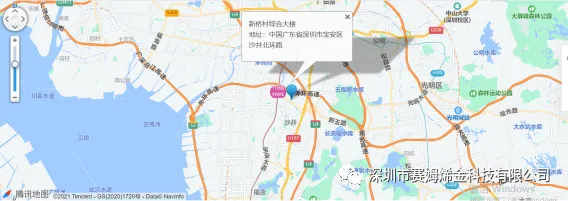
Company Profile: Shenzhen Saimeijin Technology Co., Ltd. (referred to as Saimeijin Technology) is located in the XinQiao Comprehensive Building, Bao’an District, Shenzhen. The company’s R&D team has successfully developed graphene metallization technology for circuit boards and large-scale preparation technology for graphene industrialization. In April 2018, the company established a production line for soft board graphene metallization in Shenzhen, and in October 2019, its subsidiary Dongguan Saimeijin Technology Co., Ltd. established a production line with an annual output of 50 tons of graphene slurry, which has been successfully put into production. The company is gradually promoting the application of graphene metallization technology in circuit boards, electronic shielding, plastic plating metallization, pp film metallization, composite materials, and other fields, striving to become a technological new star in the new energy and new materials industry within 3-5 years, using new technologies and new materials to change the relevant electronics and surface treatment industries, promoting environmentally friendly green technologies, reducing environmental pollution, and continuously advancing the technological progress and development of related industries.
Business Consultation Phone:
Mr. Chen:13823133110
Mr. Yang:13714337073
Company Landline:0755-23593156
Company Address:New North Ring Road, XinQiao Street, Bao’an District, Shenzhen