In photocurable 3D printing applications, the equipment determines whether it “can be done“, while the material determines “to what extent it can be done“. The correct choice of resin often directly determines whether the printed parts can truly meet core requirements such as strength, precision, and temperature resistance.
However, faced with the wide variety of resins available on the market, engineers and researchers often encounter the following questions:
-
Which resin should be chosen for temperature-resistant parts?
-
What are the differences between transparent display parts and high-resolution models?
-
How do functional resins such as flexible and anti-static materials perform in industrial applications?
To address these concerns, Raise3D has released the “Raise3D Material Handbook | Resin Edition”, which provides a systematic and practical solution.
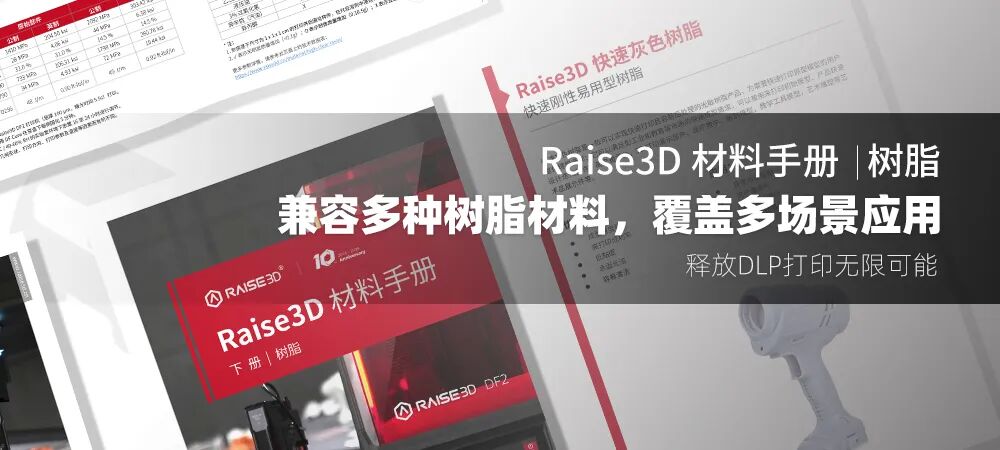

Scan to download the complete electronic version

Layered Logic of Resins from Prototypes to End Products
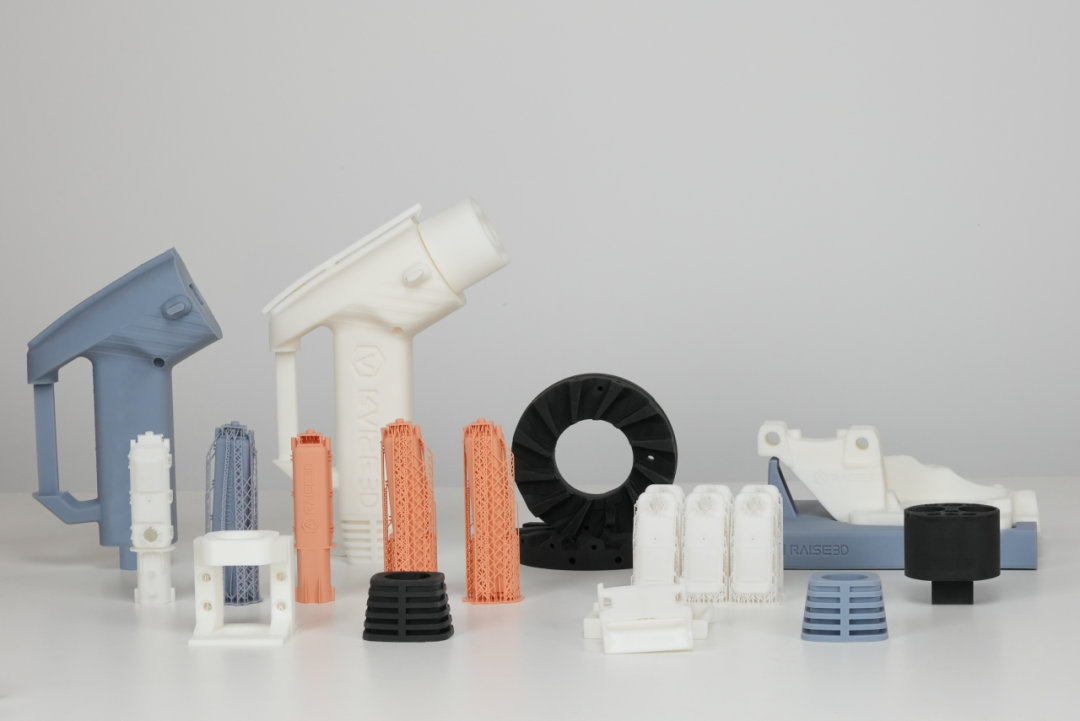
Photocurable resins can be roughly divided into three categories:
-
General Prototype Resins: Suitable for rapid modeling and appearance verification, with high precision and easy post-processing;
-
High-Performance Resins: Designed for functional parts, tooling fixtures, and small batch final components, exhibiting excellent strength, temperature resistance, and toughness, with performance close to engineering plastics;
-
Special Application Resins: Designed for specific application scenarios, such as anti-static, flame-retardant, and flexible materials, balancing high performance and reliability.
This classification method helps users quickly identify materials based on application goals, without relying on repeated trial and error.
Source: 3D Printing Technology Reference