1. Basic Working Principle of Optical Fiber Sensors
The national standard GB 7665-1987 defines a sensor (Transducer/Sensor) as a device or apparatus that can sense a specified measurement and convert it into a usable output signal according to certain rules. The basic working principle of an Optical Fiber Sensor (OFS) is illustrated in the figure below. Light from a light source is transmitted through an optical fiber to a modulator, where the measurement interacts with the light entering the modulator, causing changes in certain properties of the light (such as intensity, wavelength, frequency, phase, and polarization state). This results in modulated light, which is then sent through the optical fiber to a light detector, and after demodulation by the demodulator, the measurement is obtained.
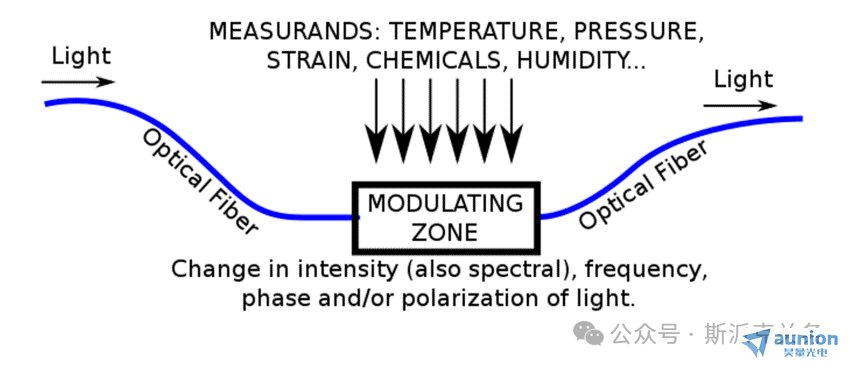
Figure 1. Basic Working Principle of Optical Fiber Sensors
Optical fiber sensing includes two functions: perception and transmission of the measured quantity. Perception (or sensitivity) refers to the changes in the characteristics of the light wave transmitted through the optical fiber, such as intensity (amplitude), wavelength, frequency, phase, and polarization state, in accordance with the variation of the measured quantity. Measuring the changes in these optical parameters allows for the “perception” of changes in the measured quantity. This “perception” is essentially the modulation of the light wave propagating through the optical fiber by the measured quantity. Transmission refers to the optical fiber transmitting the modulated light wave to the detector for measurement. Extracting the measured quantity from the light wave and processing the data as needed is known as demodulation. Therefore, optical fiber sensing technology encompasses both modulation and demodulation techniques, which include how the measured quantity modulates the optical wave parameters in the fiber (modulation technology or loading technology) and how to extract the measured quantity from the modulated light wave (demodulation technology or detection technology).
2. Requirements for Optical Fibers in Optical Fiber Sensing
Due to the wide variety of optical fiber sensors and their differing performances, various requirements are placed on the optical fibers used. Compared to optical fiber communication, the types of optical fibers used in optical fiber sensor systems are numerous and complex.
Generally, in non-functional optical intensity-modulated optical fiber sensors, since the optical fiber only serves to transmit the light wave and the required length of the optical fiber is relatively short, the requirements for dispersion and loss characteristics are not high. Therefore, standard single-mode fibers or multi-mode fibers can meet the requirements. Sometimes, to enhance the sensitivity of the sensor and increase the optical power transmitted through the fiber, large core or high numerical aperture fibers may be used, or even optical fibers that transmit light beams or plastic optical fibers to improve coupling efficiency with the light source. In phase-modulated optical fiber sensors, to achieve high coherence between the test light signal and the reference light signal, polarization-maintaining fibers are used to ensure that the vibration directions of the output light signals from the test and reference fibers are consistent. In polarization-modulated optical fiber sensors, the polarization state of the light signal must be sensitive to changes in the external measured quantity, which requires minimizing the fiber’s linear birefringence, such as using low-birefringence liquid-core fibers. In distributed optical fiber sensors, to measure parameters at different points, doped fibers (such as those containing certain rare earth elements or transition metal ions) or grating fibers may be used.
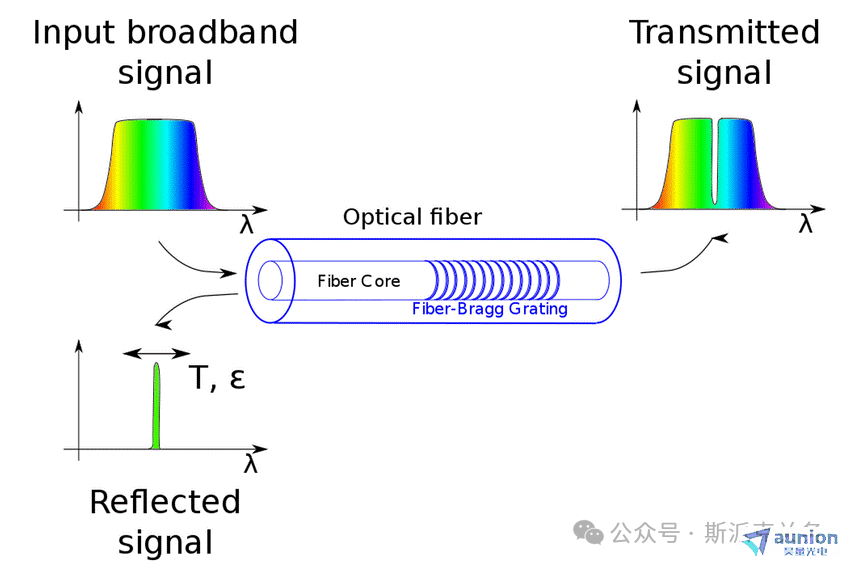
Figure 2. Changes in Internal Signals of Optical Fiber Sensors
Conclusion:Based on the working principle of optical fiber sensing, the optical fiber sensor system mainly consists of a light source, optical fiber, modulator (sensor head), light detector, and signal conditioning circuit. The main focus of optical fiber sensor research is how to achieve modulation and demodulation of the measured quantity. However, when designing an optical fiber sensor system, it is essential to understand the relevant knowledge of the light source, light detector, and the optical fiber used in the sensor, to realize the basic characteristics of the light source, light detector, and optical fiber for optical fiber sensors.
In product classification, it is necessary to understand the functions of the sensing elements of optical fiber sensors. Their physical properties (such as intensity, phase, wavelength, and polarization state) change with variations in the external environment (such as temperature, pressure, strain, and vibration), allowing for precise measurement of external parameters by detecting these changes in optical characteristics.Transforming the “measured physical quantity” into “changes in optical signals” for perception and transmission is crucial. The author believes that the measurement function takes precedence,optical fiber temperature sensors fall under9025,optical fiber displacement sensors fall under9031,optical fiber current sensors fall under9030,optical fiber flow velocity sensors fall under9026, etc.