Discussing the Toxicity Issues of ADCs
Discussing the Toxicity Issues of ADCs

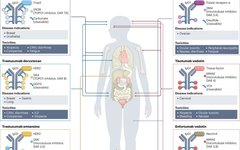
As of now, the toxicity and prevention measures of ADC in solid tumors are known as follows: ① The indications for ADCs are rapidly expanding, gradually shifting from late-stage to early-stage, and from single therapy to combination strategies. ② The toxicity characteristics of most ADCs are similar to the cytotoxicity of their payloads. ③ Certain … Read more
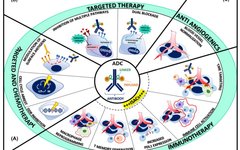
Combination Therapy of Antibody-Drug Conjugates (ADCs)

Combination Therapy of Antibody-Drug Conjugates (ADCs)

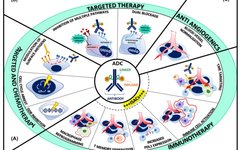
Introduction Antibody-drug conjugates (ADCs) are formed by linking monoclonal antibodies that target specific antigens with small molecule cytotoxic drugs through linkers, combining the powerful killing effect of traditional small molecule chemotherapy with the tumor targeting ability of antibody drugs.ADCs consist of three main components: the antibody responsible for selectively recognizing cancer cell surface antigens, the … Read more

Research on ADC Combination Therapy

Research on ADC Combination Therapy

Introduction Antibody-drug conjugates(ADC) are formed by linking monoclonal antibodies targeting specific antigens with small molecule cytotoxic drugs through linkers, combining the powerful killing effect of traditional small molecule chemotherapy with the tumor targeting ability of antibody drugs. ADC consists of three main components: the antibody responsible for selectively recognizing cancer cell surface antigens, the drug … Read more

Transforming Cancer-Associated Fibroblast Barriers for Tumor Treatment

Transforming Cancer-Associated Fibroblast Barriers for Tumor Treatment

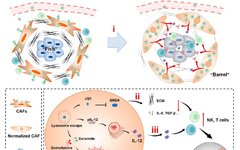
The cancer-associated fibroblast (CAF) barrier in pancreatic ductal adenocarcinoma (PDAC) significantly restricts clinical prognosis. The main obstacles in PDAC treatment include limited immune cell and drug penetration, as well as an immunosuppressive microenvironment. Based on this, Yongjun Liu and Na Zhang from Shandong University reported a “shooting fish in a barrel” strategy by preparing a … Read more

ADC Case Study: Overcoming Metastatic Breast Cancer

ADC Case Study: Overcoming Metastatic Breast Cancer

Expert Commentary Professor Yuan Zhongyu Department of Internal Medicine, Sun Yat-sen University Cancer Prevention and Treatment Center Chief Physician, MD, Doctoral Supervisor Engaged in clinical and research work on breast cancer for many years, has presided over and participated in over 20 clinical studies, involved in several research projects such as the National 863 Program … Read more

ADC Drug Combination: How to Achieve 1+1>2

ADC Drug Combination: How to Achieve 1+1>2

Antibody-drug conjugates (ADC) are a novel type of medication that couples monoclonal antibodies, which specifically recognize cancer cell surface antigens, with cytotoxic chemotherapy drugs through specific linkers, exerting a significant tumor-killing effect. Currently, 15 ADC drugs, represented by trastuzumab emtansine (T-DM1) and trastuzumab deruxtecan (T-DXd, DS-8201), have been approved globally, significantly changing the treatment landscape … Read more

Cascade-Activatable Nanoprodrug System Enhances Bladder Cancer Treatment

Cascade-Activatable Nanoprodrug System Enhances Bladder Cancer Treatment

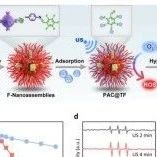
iNature Sonochemotherapy (SCT) triggers an excessive production of reactive oxygen species (ROS) and controlled release of chemotherapeutic drugs through ultrasound, becoming a powerful cancer treatment method. However, achieving spatiotemporal controlled release of chemotherapeutic drugs during ROS generation remains a significant challenge. On December 17, 2024, a collaborative research paper titled“Cascade-Activatable Nanoprodrug System Augments Sonochemotherapy of … Read more

Challenging Intrahepatic Cholangiocarcinoma: Irreversible Electroporation Assists in Breaking the Deadlock

Challenging Intrahepatic Cholangiocarcinoma: Irreversible Electroporation Assists in Breaking the Deadlock

Intrahepatic cholangiocarcinoma (ICC) is the second most common primary liver cancer after hepatocellular carcinoma, accounting for approximately 10%-15% of primary liver cancer cases, and is rightly termed the “second-in-command” killer within the liver. Over the past 40 years, the incidence of ICC has been on the rise globally, particularly pronounced in Asia. ▲ Image source: … Read more