How to Solve the Plating Adhesion Issues in PCBs?
How to Solve the Plating Adhesion Issues in PCBs?

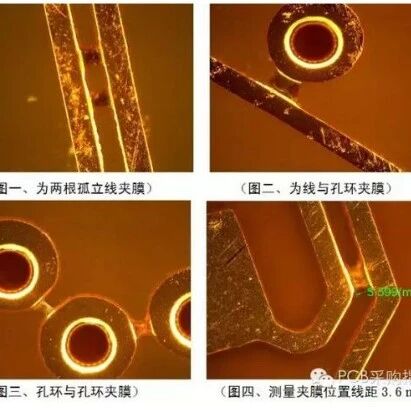
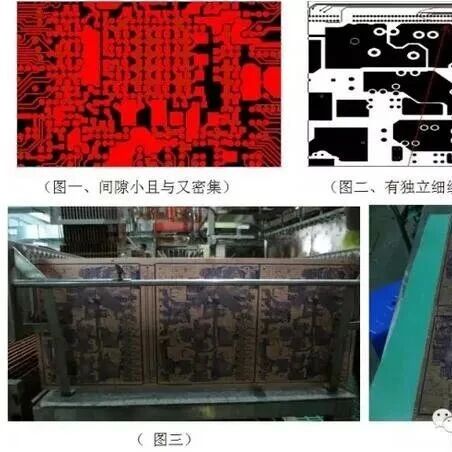
With the rapid development of the PCB industry, PCBs are gradually moving towards high-precision fine lines, small apertures, and high aspect ratios (6:1-10:1). The copper requirement for holes is 20-25μm, and for boards with a D/F line spacing of ≤4 mil, most PCB manufacturers face plating adhesion issues. Adhesion can cause direct short circuits, affecting … Read more
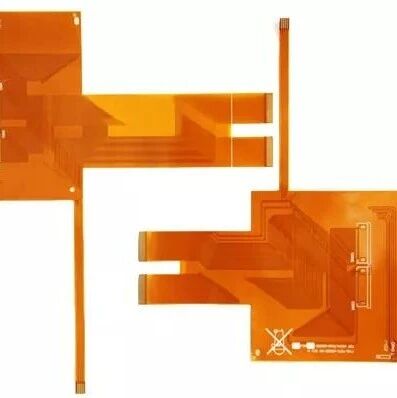
Understanding FPC Flexible Circuit Boards

Understanding FPC Flexible Circuit Boards

1. Introduction to FPC FPC stands for Flexible Printed Circuit, which translates to 柔性印制线路板 in Chinese, commonly referred to as soft boards. It is made by transferring and etching conductor circuit patterns onto a flexible substrate using photolithography techniques. The outer and inner layers of double-sided and multilayer circuit boards are electrically connected through metallized … Read more

Considerations for the Production and Design of PCB Back Drilling

Considerations for the Production and Design of PCB Back Drilling

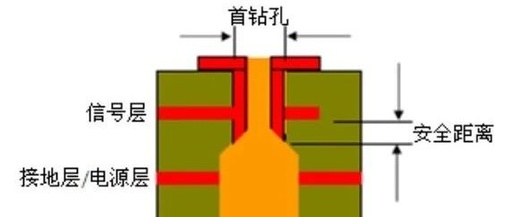
Back drilling is a special controlled-depth drilling process used in the production of multilayer boards to connect different layers, primarily applied in fields such as communication equipment, large servers, medical electronics, military, and aerospace. ★ Special Considerations for Back Drilling Design ✒︎ Determine the layers that require back drilling Identify the specific layers that need … Read more

Philosophical Insights on Circuit Boards

Philosophical Insights on Circuit Boards

On Circuit Boards Philosophical Insights —— Roaming Classroom —— On the production line, circuit boards are neatly arranged, waiting to be assembled, tested, and sent to the next process. Standing in the workshop, looking at these precise green boards, I suddenly feel that they bear some resemblance to life. The manufacturing of circuit boards requires … Read more

The Birth of a Circuit Board: Analyzing the PCB Development Process

The Birth of a Circuit Board: Analyzing the PCB Development Process

——A Six-Step Journey from “Drawing” to “Physical Product”Step 1: Requirement Planning → Draw the “Design Sketch”· Goal: Clarify what the circuit board is intended to do (e.g., control a motor / transmit data).· Key Decisions:· Board size and shape (square / round / irregular)· How many layers of “sandwich” (single-layer board? double-layer board? multi-layer board?)· … Read more

SPI Tolerance Setting Range

SPI Tolerance Setting Range

In the SPI tolerance settings, different volume and area tolerances are established for various component types (such as R/C, IC, BGA, Chip, etc.), primarily based on the following core principles: 1. Component Structure and Soldering Characteristics ● R/C Components (Resistors/Capacitors): ○ Simple structure, small pad size, high precision requirement for solder volume. ○ Volume tolerance … Read more

Understanding PET Protective Films on TFT-LCD Fully Bonded Display Modules

Understanding PET Protective Films on TFT-LCD Fully Bonded Display Modules

Warm reminder: The article is about 3700 words long and will take about 10 minutes to read. You will definitely gain something after reading it. If you want to learn more professional and in-depth knowledge, you can join my Flat Panel Display Technology Learning Circle. The details link is as follows:Welcome to join the Flat … Read more

American Experts Criticize Chinese Companies: Chips Were Invented in the U.S., How Can China Be Better?

American Experts Criticize Chinese Companies: Chips Were Invented in the U.S., How Can China Be Better?

American Experts Are Upset: Chips Were Invented by Us, How Can China Be Better? Hello everyone, I am Lao Chen. Recently, I came across a rather amusing news story where an American expert was jumping up and down on a program, accusing Chinese companies by saying: “Chip technology was invented in the U.S., how can … Read more

How to Solve the Plating Adhesion Issues in PCBs?

How to Solve the Plating Adhesion Issues in PCBs?

With the rapid development of the PCB industry, PCBs are gradually moving towards high-precision fine lines, small apertures, and high aspect ratios (6:1-10:1). The copper requirement for holes is 20-25μm, and for boards with DF line spacing ≤ 4 mil, most PCB manufacturers face plating adhesion issues. Adhesion can cause direct short circuits, affecting the … Read more