Common Laboratory Animal Mouse – BALB/c Mouse

Common Laboratory Animal Mouse - BALB/c Mouse

In 1913, H.J. Bagg from the National Cancer Institute in the United States bred the “Bagg albino” from a white original strain; in 1923, Mac Dowell conducted inbreeding; and in 1932, the 26th generation was obtained and named the BALB/c strain.The BALB/c mouse is difficult to distinguish from the “ICR” and “NIH” mice, all having … Read more

Unveiling the Potential of Antibody-Drug Conjugates

Unveiling the Potential of Antibody-Drug Conjugates

This article, “Unveiling the Potential of Antibody-Drug Conjugates,” is an excellent industry review that provides a panoramic view of the hot field of Antibody-Drug Conjugates (ADCs). Next, we will journey from history to the future, delving into molecular mechanisms and clinical practices, connecting textbook knowledge to cutting-edge research. A Precision Guided “Trojan Horse”: An In-Depth … Read more

Extracellular Vesicles: Biological Functions and Clinical Applications

Extracellular Vesicles: Biological Functions and Clinical Applications

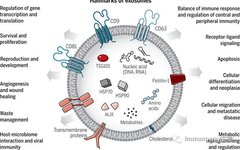
Introduction All cells, both eukaryotic and prokaryotic, secrete extracellular vesicles, and exosomes are a type of extracellular vesicle, ranging in size from 40 – 160 nm (average 100 nm). Depending on their cellular origin, they contain various components, including DNA, RNA, lipids, metabolites, and cytoplasmic and cell surface proteins. Their physiological purpose is not yet … Read more

Comprehensive Breakdown of Business Lines for 31 Publicly Listed Companies

Source: IVD Sales Practical Class Since the first IVD company was listed on the Shenzhen Stock Exchange in 2004, the in vitro diagnostics industry has seen nearly 40 publicly listed companies in just 16 years. It must be said that the era has given entrepreneurs in the industry the opportunity to grow and provided early … Read more

Understanding Diffuse Large B-Cell Lymphoma

Diffuse Large B-Cell Lymphoma: Composed of centroblastic (non-cleaved), B immunoblastic, and anaplastic large B-cell lymphomas classified by Kiel. Under the microscope: a relatively uniform morphology of large cells arranged diffusely can be seen. The cell morphology is diverse, resembling centroblasts, immunoblasts, and may also include multinucleated tumor cells with anaplastic features. Incidence Rate Diffuse large … Read more

Progress in Myositis-Specific Antibody Research

Progress in Myositis-Specific Antibody Research

Progress in Myositis-Specific Antibody Research 1. Clinical Significance of Myositis Antibodies: Helps in IIM classification; predicts IIM progression; aids in predicting complications of IIM; assists in determining treatment plans for IIM. Myositis antibody spectrum 10-year survival rate observation: anti-SRP > anti-HMGCR > anti-Mi-2 > anti-NXP-2 > anti-SAE > anti-TIF1-Υ > anti-MDA5. 2. NXP-2 Antibody: ① … Read more

Clinical Significance of Myositis Antibody Spectrum Detection

Clinical Significance of Myositis Antibody Spectrum Detection

Detection Items Myositis Antibody Spectrum 19 items (Mi-2, Ku, PM-Scl100, PM-Scl75, Jo-1, SRP, PL-7, PL-12, EJ, Ro-52, TIF1γ, MDA5, NXP2, HMGCR, SAE, OJ, KS, ZO, HA) Why Detect Myositis Antibody Spectrum? Idiopathic inflammatory myopathy (IIM) is a T cell-mediated autoimmune disease primarily attacking muscle fibers expressing major histocompatibility complex I (MHCI). The clinical manifestations are … Read more

Introduction to New Projects in Medical Laboratory – Myositis Antibody Spectrum Testing

Introduction to New Projects in Medical Laboratory - Myositis Antibody Spectrum Testing

Follow us Click on the blue text above to follow us Testing Project Information Testing Item: Myositis Antibody Spectrum Testing for 19 Items (Mi-2, Ku, PM-Scl100, PM-Scl75, Jo-1, SRP, PL-7, PL-12, EJ, Ro-52, TIF1γ, MDA5, NXP2, HMGCR, SAE, OJ, KS, ZO, HA) Medical Advice Information Advice Code: JYJYK4055, Advice Name: Myositis Antibody Spectrum Testing Advice … Read more