 Author:Bio-four
Introduction
On March 26, 2025, the TROP2 dual payload ADC drug KH815 developed by Kanghong Biotech received clinical trial approval from the Australian HREC and obtained clinical approval in China on April 16, 2025, making it the world’s first dual payload ADC approved for clinical use.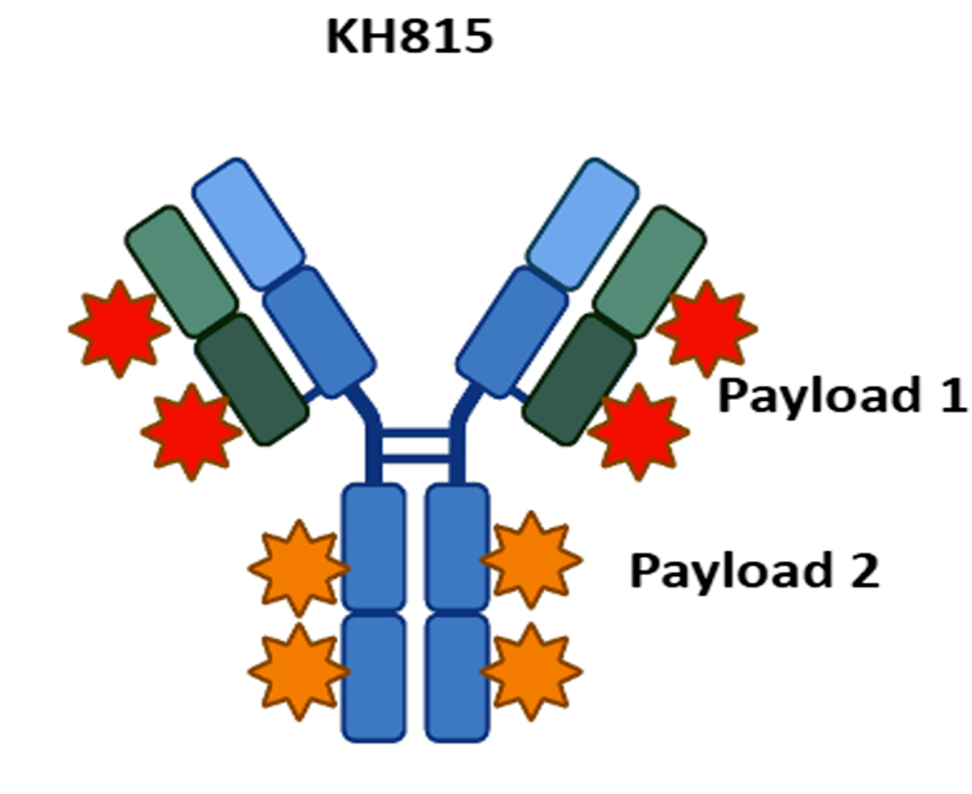 During this year’s AACR conference and related patents made public, a considerable amount of preclinical data has been disclosed, and the recent issue of Molecular Cancer Therapeutics further published the preclinical technical details of KH815.
TROP2 Dual Payload ADC
The TROP2 dual payload ADC drug KH815 delivers two cytotoxic agents with different mechanisms: Exatecan (EXA), a topoisomerase I inhibitor that disrupts DNA replication, and Triptolide (TPL), an RNA polymerase II inhibitor that suppresses gene transcription, downregulating drug resistance-related proteins such as HSP70 and P-gp, thereby enhancing antitumor effects and overcoming resistance.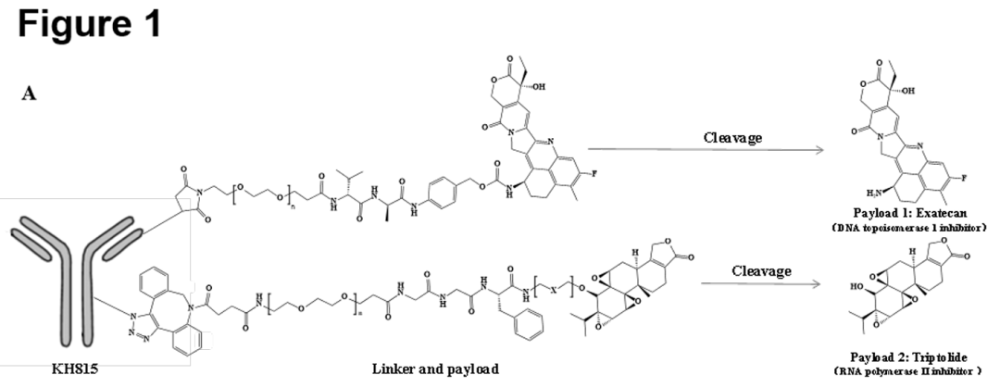 Specifically, the Exatecan toxin is linked via VA and PEGylated, using a Michael addition with cysteine for conjugation, MC-PEG2-VA-PAB-Exatecan. The Triptolide is linked via GGFG, also PEGylated, and conjugated using a DBCO click chemistry method based on glycosylation, DBCO-PEG4-GGFG-Triptolide, with DAR values of DAR4 and DAR3.5 respectively.
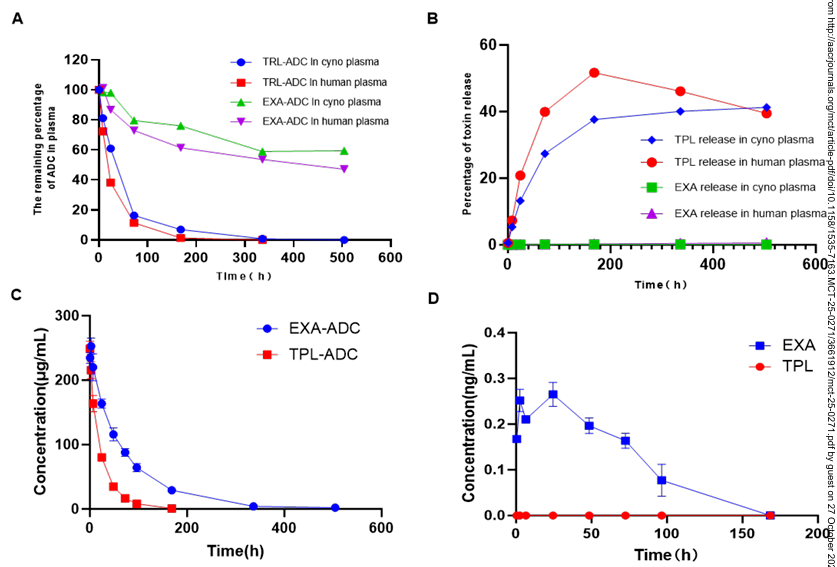 Mechanistically, the two drugs target DNA and RNA respectively, forming a dual attack to overcome single-agent resistance. TPL is released first, inhibiting HSP70 and P-gp expression, enhancing tumor cell sensitivity to EXA. EXA is then released, continuously killing tumor cells.
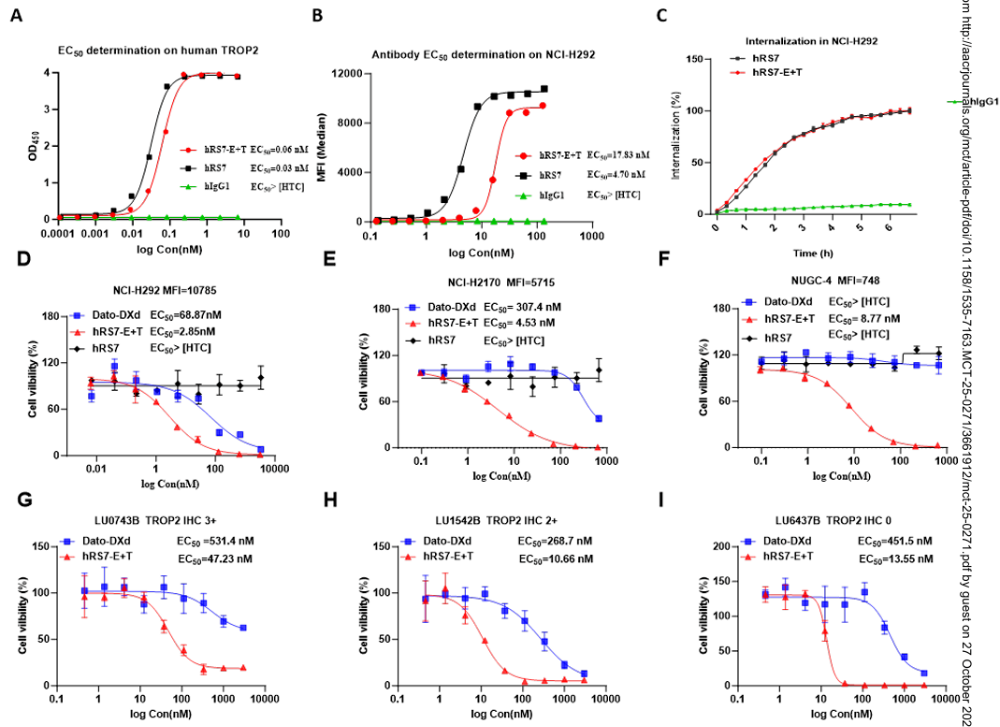
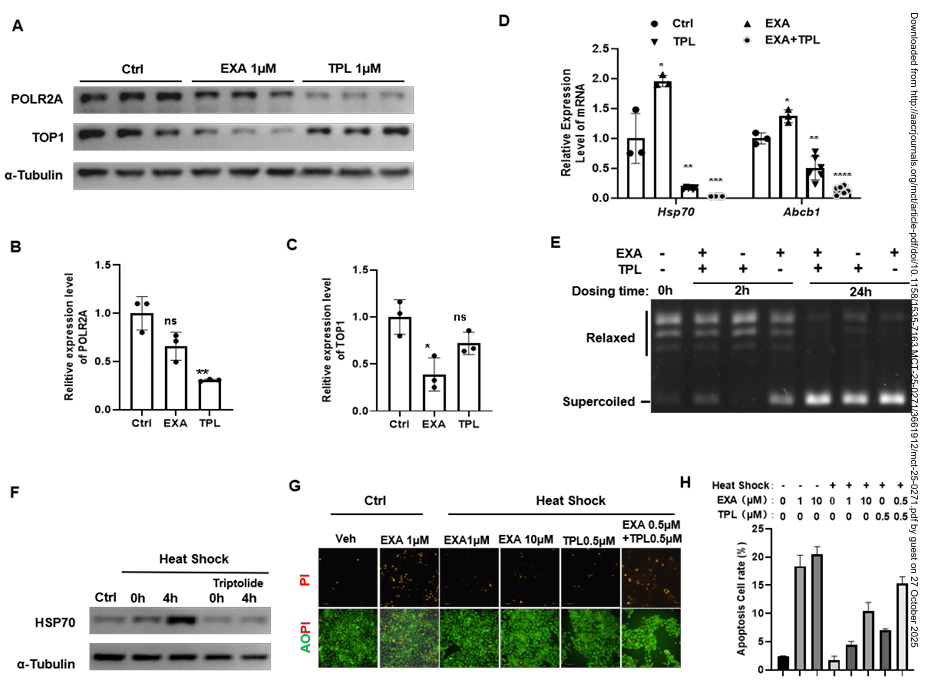 In vitro, in various tumor cell lines (such as NCI-H292, NUGC-4, HCT-15), hRS7-E+T demonstrated superior cytotoxic effects compared to single payload ADCs (such as Dato-DXd), effectively inhibiting TOP1 and POLR2A expression, reducing HSP70 and ABCB1 drug resistance gene expression.
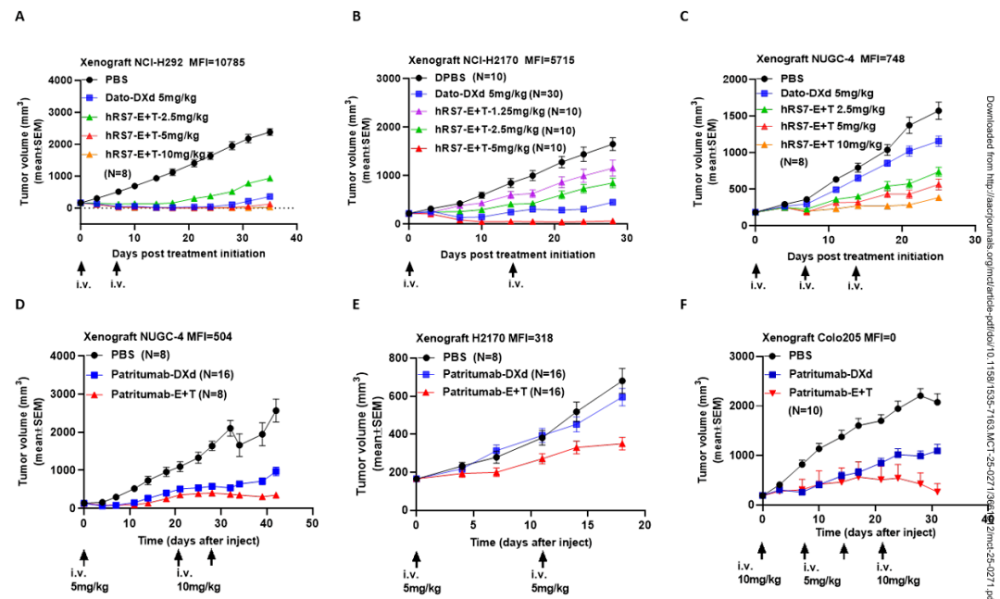
 In CDX models, in TROP2 high expression, low expression, and resistant models, hRS7-E+T exhibited stronger tumor suppression effects.
 In PDX models, in lung cancer, colorectal cancer, and breast cancer PDX models, hRS7-E+T showed more durable antitumor responses.
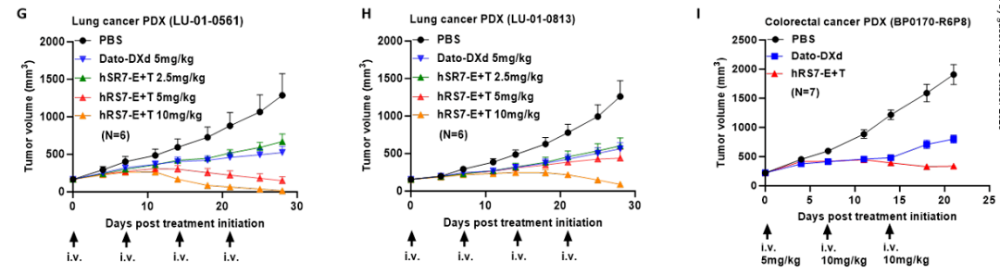 In resistant models, in Dato-DXd or Trodelvy resistant models, hRS7-E+T still achieved significant tumor shrinkage.
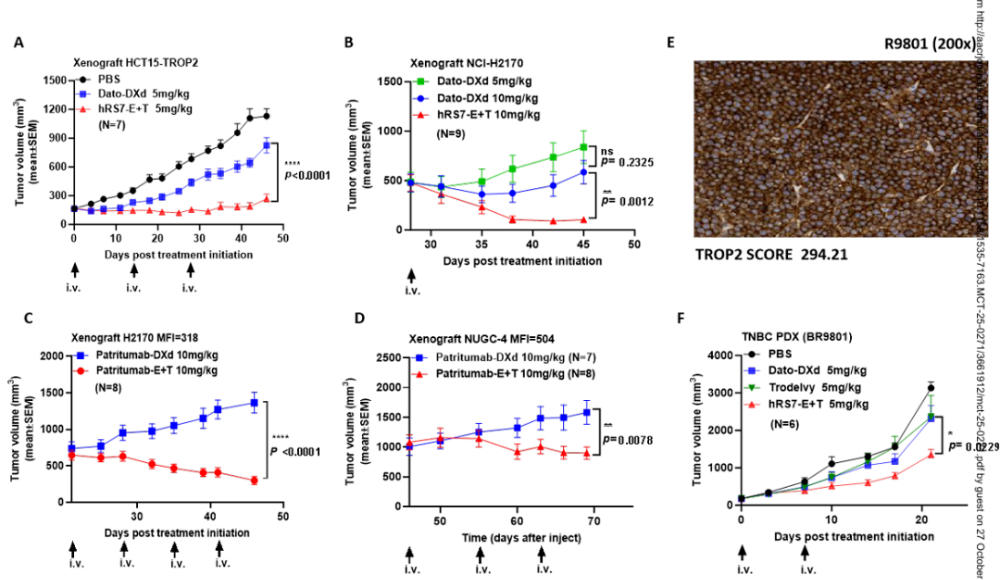 In non-GLP toxicity studies (in crab-eating macaques), the highest non-severe toxicity dose (HNSTD) was 50 mg/kg, with adverse effects primarily being reversible skin reactions (hair loss, pigmentation) and mild blood/liver function changes, with no significant immunotoxicity or bone marrow suppression.KH815 is the first to combine EXA and TPL into an ADC, achieving sequential release and synergistic killing, with the potential to effectively overcome tumor resistance to TOP1 inhibitors, applicable to tumors with varying levels of TROP2 expression, demonstrating good safety and further clinical development value. This provides a new strategy for ADC drug development, expected to address the current limitations of single payload ADC efficacy and resistance issues.
We welcome everyone to join the BioPlus Partners WeChat group & LinkedIn to discuss together.
BioPlus Partners LinkedIn
 https://www.linkedin.com/company/bioplus-partners/
Contact for group entry application :Lisa
Email: [email protected]
Phone: 18662346610 (same as WeChat)
To apply for group entry, please add Lisa on WeChat and share your business card
Group entry profile :Biotech/pharmaceutical R&D/BD, investment institutions, clinical doctors, etc.
Group entry benefits: Irregular sharing of industry data packages
 References:1.A Novel Dual-Payload ADC Platform Integrating Exatecan and Triptolide to Enhance Antitumor Efficacy and Overcome Resistance2.WO2025103474
Further Reading
BioPlus – Overseas Asset Search Series:1.AACR Review: Comparison of Data from 9 CDH17-ADC2.Self-immune niche target APRIL is quietly gaining traction!3. Will STEAP1 become the next blockbuster target for ADCs and TCEs?BioPlus International Conference Tracking Series:1. 2025 ASCO: What are the highlights of ADCs, bispecifics/multispecifics? (with a summary table))2. 2025 AACR What are the highlights of bispecifics and ADCs?3. In the field of small cell lung cancer, how will the next steps “break the deadlock”, ADC or TCE?4. ELCC Discussion: Latest Progress of ADCs in NSCLC5. Future Directions of ADC Development: New Targets, New Payloads, Dual Targets/Dual Epitopes…6. Key Clinical Data from 2025 ASCO: What are the highlights?7. 2025 ASCO Key Clinical Data8.2025 ESMO Clinical Data: What are the highlights?BioPlus Target/Line Research Series:1. “To be Exploded”: CDH17 ADC Project Competition, Who Will Stand Out?2. Data Review of PD-1 Agonists in Autoimmune Disease Projects: The “Pits” and Insights from Failed Projects3. Can DLL3 ADC be sold just by going to clinical trials?4. Three Hot Targets in Pancreatic Cancer: CLDN18.2, EGFR, RAS5. TSLP/SCF Bispecifics, the Next Autoimmune Target Combination to Explode?6. Can TCE rewrite the pattern of GPC3 target clinical failures?7. Debuting at AACR, can the ADC target Ly6E, which was previously terminated in clinical trials, make a comeback?8. Why did Sanofi spend $1.845 billion to acquire two TL1A bispecifics?9. Q1 2025: What projects were cut in the pipeline adjustments of BMS, Sanofi, and Roche?10. On-site! 2025 AACR: The Blooming of KRAS Inhibitors11. Can IL-17 small molecule inhibitors break through?12.The World’s First: East China Pharmaceutical Files for MUC17 ADC Drug13.Urticaria first-in-class bispecific submits clinical trial application14.Not “the lower the better”: The trade-off of CD3 affinity15.Breaking! Roche Discloses Latest Clinical Data on BBB Penetrating Aβ Drug (with detailed information)16.AstraZeneca C5 Nano Bispecific: Phase III Clinical Achieves Primary Endpoint17.From Oral to Inhalation and Topical Formulations, What Other Possibilities Does PDE4 Have?BioPlus Technology Platform In-Depth Analysis Series:1. TCE Immune Co-stimulation Signal Selection: CD2, a Rising Star2. On the Eve of BD Explosion! In-depth Review of 6 TCE Probody Technology Platforms3. TCE Probody: Amgen’s Heavyweight Technology“Breaking the Deadlock”, Can It Rewrite the Industry Pattern??4. Some Give Up, Some Move Forward! Global Overview of Autoimmune TCE Pipeline5. Immunocore Brings TCR Therapy to Reality, Moving Towards Autoimmune Diseases6. B Cell Clearance Immune Reset: Long-term Relief of Diseases like SLE Becomes Reality!7. Summary of Sequence Sources of 50 CD3 Platforms in China8. Final Chapter of CD28 Co-stimulation? ZW209 DLL3/CD3/CD28 Tri-antibody Aiming at Amgen9. TCE Structural Dispute Concludes: The Industry Provides a “Standard Answer” through Action10. Is CD3 VHH Monkey Cross-Reactive Important?11.Genentech’s Innovative Frontier: Oral VHH Antibodies Targeting IL-23R12.AbbVie Patent Disclosure: Targeting PSMA/STEAP1 Bispecific ADCBioPlus Interviews Series:1. Interview with Xiao Liang: Selling seedlings is not necessarily a bad thing; this is a necessary path for Chinese Biotech to grow into a towering tree2. Interview with Wang Gang, what has been the “overseas” journey of KaiKa Bio in recent years? 3.Interview with Professor Xiong Anwen: NSCLC, after PD-1/VEGF, will PD-1/IL2 be the next bispecific king?