On November 28, the Ministry of Industry and Information Technology (MIIT) released Announcement No. 52 of 2019, further regulating various aspects of low-power short-range radio transmission equipment.

After the announcement, some industry insiders believe that due to certain restrictions in the new regulations, the low-power, long-range local area network wireless standard LoRa may face significant challenges. Conversely, others argue that the new regulations actually affirm the use of LoRa for wireless networking, which is a positive development for LoRa.
So what is the reality?
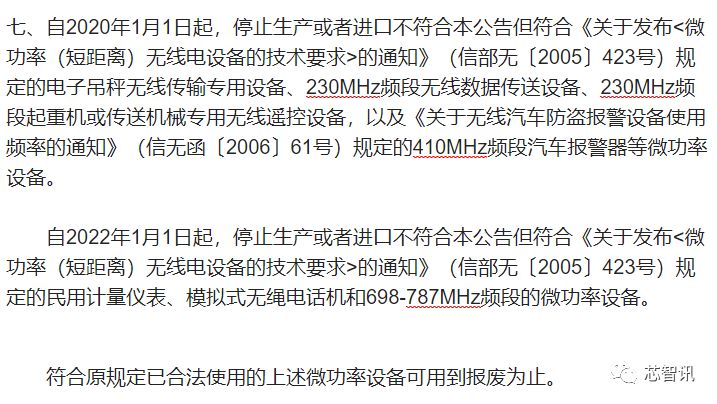
Firstly, Article 7 of the new MIIT regulations states:
The Radio Management Bureau has provided a detailed interpretation of this:
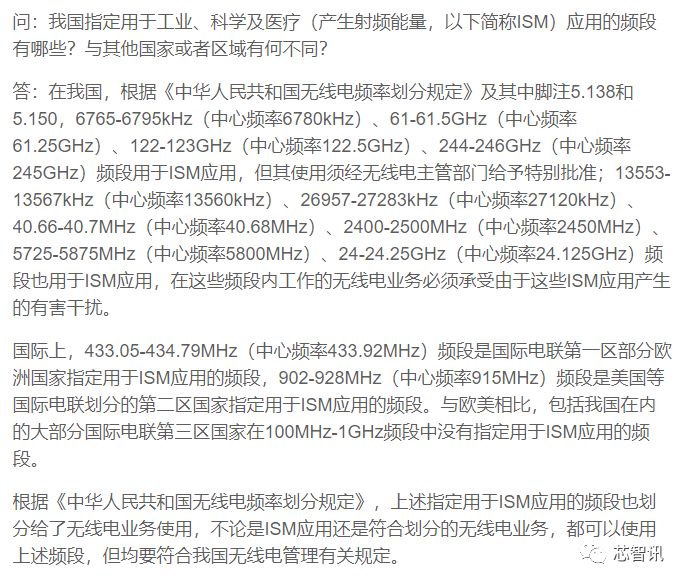
What is the relationship between this regulation and LoRa? LoRa is a low-power, long-range local area network wireless standard created by the American company Semtech. LoRa operates in the unlicensed ISM frequency band, but the usage of ISM bands varies by country or region. The following table lists some of the frequency bands mentioned in the LoRa Alliance specifications:
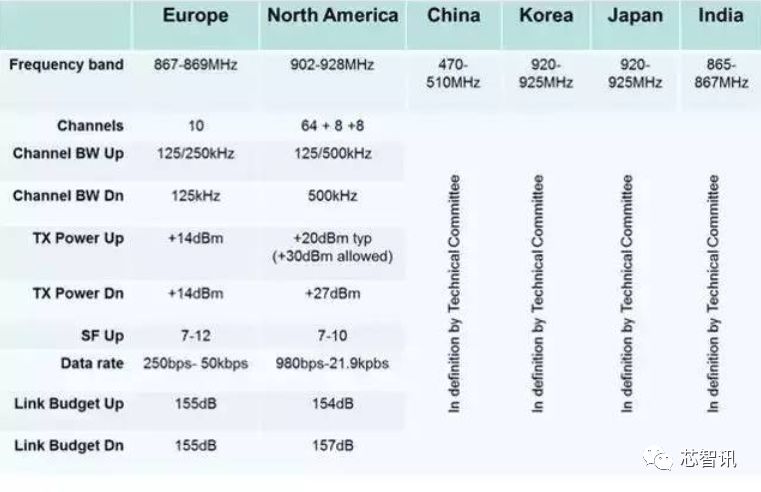 As can be seen, the ISM frequency bands for LoRa include 470-510MHz, 865-867MHz, 867-869MHz, 902-928MHz, and 920-925MHz. Among these, the operational frequency band in China is 470-510MHz. The main application field for this technology is “metering devices”.
The earlier MIIT announcement clearly states that starting from January 1, 2022, the production or import of civil metering instruments that do not comply with this announcement but comply with the “Notice on the Release of ” (MIIT No. 423 [2005]) will be stopped, along with analog cordless telephones and low-power devices in the 698-787MHz frequency band.
Note the highlighted text above: civil metering instruments that do not comply with this announcement but comply with the “Notice on the Release of ” will have their production or import stopped. This means that, aside from the prohibited devices not specified in this announcement, civil metering instruments that are regulated by the “Notice on the Release of ” must also cease production and import.
Let’s take a look at the regulations regarding metering devices in the “Notice on the Release of ” (MIIT No. 423 [2005]):
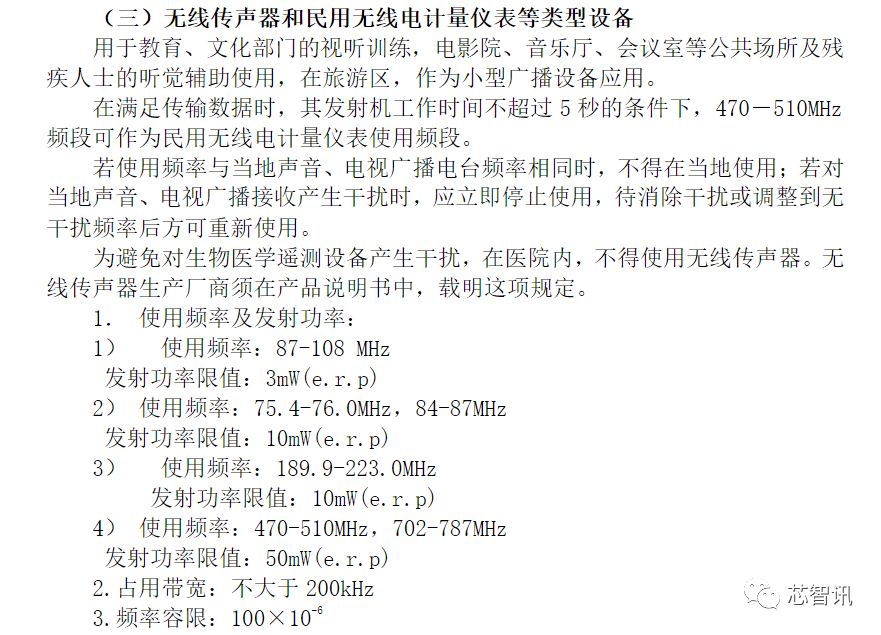
This means that devices that previously complied with the above requirements, including LoRa devices operating in the 470-510MHz band, will cease production and import. This may be one reason why many believe LoRa is facing challenges.
However, in MIIT Announcement No. 57, it is clearly stated in the first article that “the production or import of radio transmission equipment that is listed and complies with the ‘Catalog and Technical Requirements for Low-Power Short-Range Radio Transmission Equipment’ (see attachment) for domestic sales and use does not require a radio frequency usage license, radio station license, or radio transmission equipment model approval, but must comply with product quality laws and regulations, national standards, and relevant national radio management regulations.”
Next, let’s examine the regulations regarding metering devices in the ‘Catalog and Technical Requirements for Low-Power Short-Range Radio Transmission Equipment’ concerning the operational frequency band of 470-510MHz (which means domestic LoRa must operate within this frequency):
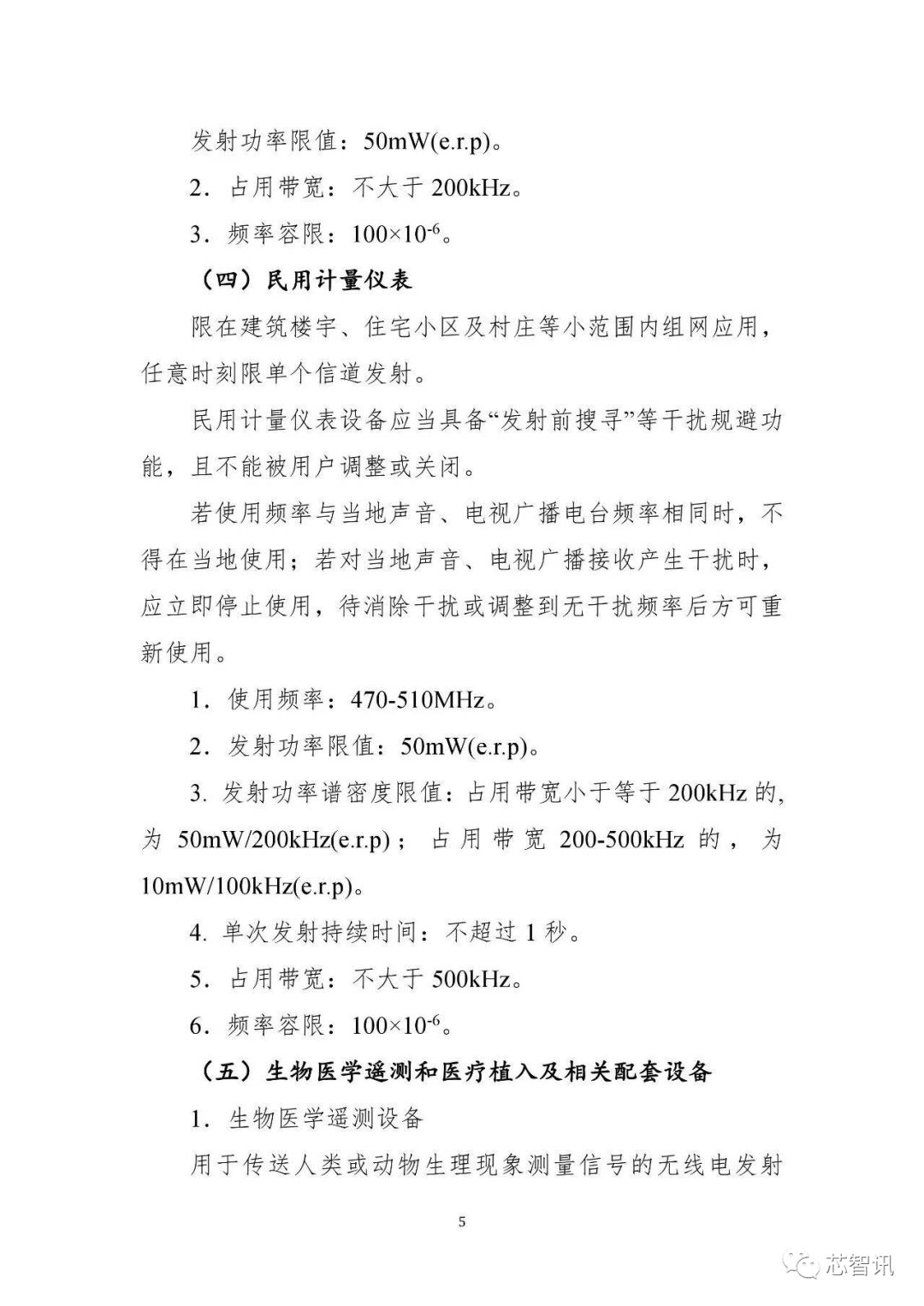
It can be seen that the specified requirements include:
1. Limited to networking applications within small areas such as buildings, residential communities, and villages, with a limit of one channel transmission at any given time. This restriction limits the use cases for LoRa in China. This also means that the previous prospects for smart city applications using LoRa in China are bleak.
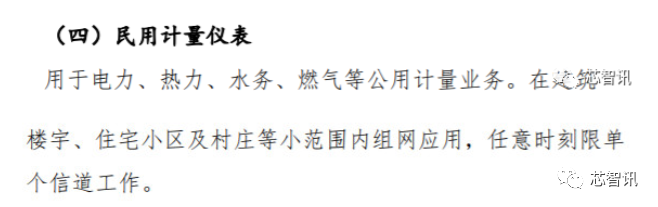
Comparing with the 2018 version of the ‘Technical Requirements for Low-Power Short-Range Radio Transmission Equipment (Draft for Comments)’, we can see a significant change, mainly the removal of the statement “for public metering services such as electricity, heating, water, and gas.” Additionally, the phrase “limited to networking applications within small areas such as buildings, residential communities, and villages, with a limit of one channel operation at any given time” has been prefixed with the word “limited”.
One of LoRa’s greatest advantages is the LoRaWAN protocol established by the LoRa Alliance, along with the core base station gateway 1301 chip. The development path of the LoRaWAN protocol from 1.0 to 1.01 to 1.03 to 1.1, including new features such as roaming network switching added in version 1.1, is evolving towards smart cities and large operator networks. However, under the current policies in China, these have been restricted!
2. Transmission power limit: 50mW (e.r.p); transmission power spectral density limit: for bandwidth less than or equal to 200kHz, it is 50mW/200kHz (e.r.p); for bandwidth of 200-500kHz, it is 10mW/100kHz (e.r.p). “Single continuous transmission time < 1 second,” “transmission power spectral density limit for bandwidth less than or equal to 200kHz.”
What impact will these restrictions have on LoRa?
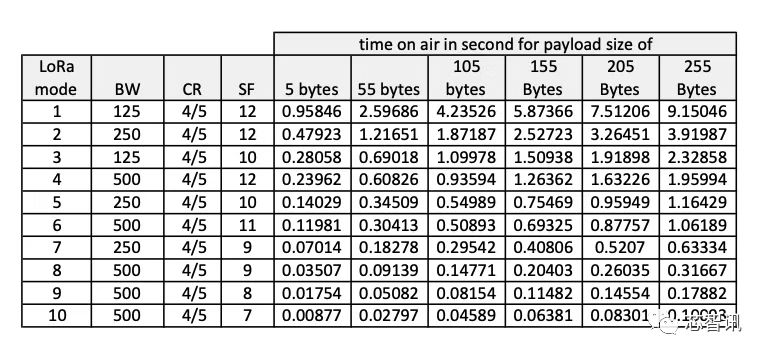
▲The air transmission time of LoRa is affected by bandwidth (BW), coding rate, spreading factor, and packet size. The combination of these parameters also determines the requirements for various application scenarios. Generally, the smaller the spreading factor, the larger the bandwidth, and the shorter the time taken. It can be seen that if the limit is < 1 second, taking a data size of 105 bytes as an example, if the bandwidth is also limited to below 200kHz, only BW125, SF7-9 can be selected, which means losing the advantages of LoRa’s spreading technology.
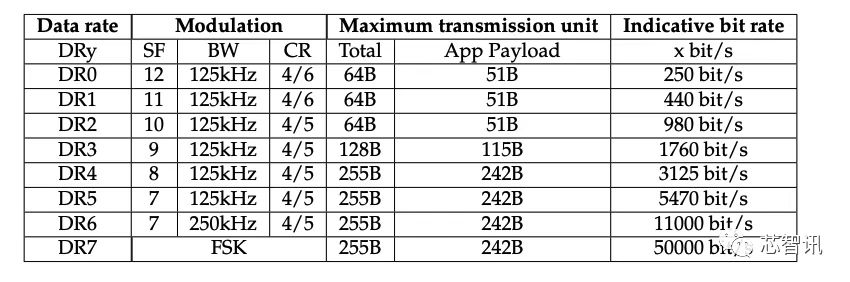
▲According to the LoRa Alliance’s LoRaWAN protocol, the larger the spreading factor, the smaller the size of the effective data packets that can be transmitted. For example, at SF10-12, the maximum data packet size is only 51 bytes. If a data packet of 100 bytes needs to be transmitted over a distance of more than 1 kilometer, the previous method was to use a non-LoRaWAN protocol to achieve this. However, the transmission time would exceed 1 second, and now with the new regulations, it must be less than 1 second, which means that this method using a private protocol is also blocked!
Typically, in unobstructed environments, the larger the spreading factor, the farther the transmission distance, even with low spreading factors, stable communication distances of over 3KM can be easily achieved. However, in obstructed environments, to ensure a transmission success rate of over 90%, the lower the spreading factor, the shorter the distance.
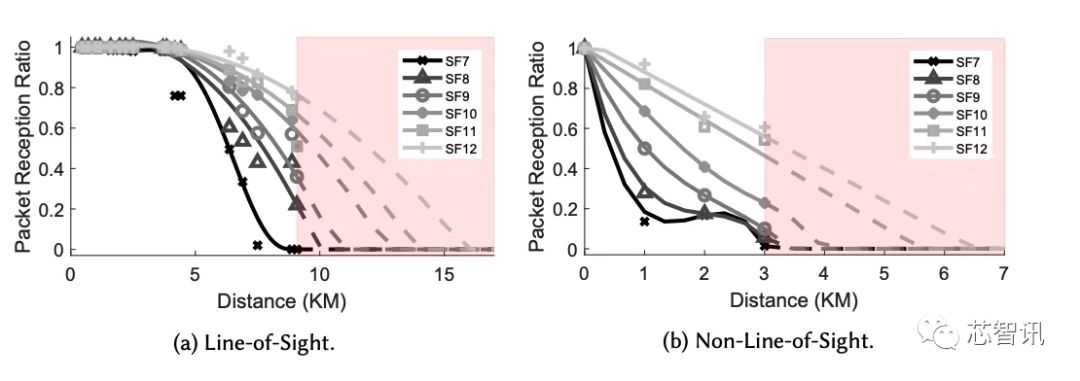
▲The relationship between effective transmission distance and spreading factor for LoRa
According to experimental data from abroad, if the spreading factor is limited to the range of SF7-9, to ensure a transmission success rate of over 90%, the transmission distance may only be 100-200 meters or even worse! Due to the 1-second limit, to ensure a certain data packet size, only low spreading factors can be used, which will inevitably lead to a significant reduction in effective distance, completely losing the long-distance communication advantage that LoRa previously prided itself on!
LoRa’s advantage was originally in long-distance, low-power transmission in remote areas, complementing operators. If it is now restricted to small-scale use, it is tantamount to self-sabotage, competing with various wireless technologies like Wi-Fi, BLE, and Zigbee, where LoRa does not have an advantage in bandwidth, real-time performance, or bidirectional control, and is ultimately constrained. The likely outcome is that the domestic market will abandon the LoRaWAN standard protocol and revert to a state where each company uses its own private protocols.
The evolution of the LoRaWAN protocol established by the LoRa Alliance was intended to support the development of large operator networks. Therefore, many restrictions that comply with local national regulations, such as a duty cycle of less than 1%, LBT (listen before talk), etc., have been added. Now that large networks are restricted in China, many of the previous limitations of LoRaWAN have completely lost their significance. The final result may be that developers abandon it, leading to even more severe consequences! For example, issues of security, stability, and compatibility, as well as the standardization and low barriers to entry pioneered by the LoRa Alliance, will be completely lost in China.
It can be said that the new regulations from the MIIT have indeed not led to the misunderstanding that “LoRa is doomed,” but they are certainly not a “boon!”
It is worth mentioning that in the field of the Internet of Things, LoRa and NB-IoT have always been direct competitors. However, compared to NB-IoT, LoRa’s advantage lies in the fact that users can deploy LoRa networks without relying on operators, which not only allows for faster deployment but also lower costs. In contrast, NB-IoT has higher costs and energy consumption, and operators also charge fees. This makes LoRa technology particularly advantageous in closed areas such as residential communities, farms, and industrial parks, especially in indoor and underground environments where NB-IoT signals are weak.
However, it should be noted that LoRa chips occupy a core position in the entire industry chain, and currently, the American company Semtech is the core supplier of LoRa chips, holding the core patents of LoRa’s underlying technology. Semtech’s customers mainly fall into two categories: semiconductor companies that have obtained IP licensing for Semtech’s LoRa chips, and manufacturers that directly use Semtech chips as SIP-level chips, including Microchip Technology. This also means that if an event similar to the U.S. actions against ZTE or Huawei occurs, domestic LoRa will inevitably be constrained.
It is noteworthy that after years of development, the LoRa Alliance currently has over 500 members globally and has deployed LoRa networks in over 100 countries, including the United States, Canada, Brazil, China, Russia, India, Malaysia, Singapore, and others. In China, companies such as Alibaba, Tencent, ZTE, China Unicom, the Tower Company, and Guizhou Broadcasting are all active promoters of LoRa technology.
Editor: Xinzhi News – Langke Jian
Note: The technical analysis and image materials related to LoRa in this article come from an anonymous expert in LoRa technology.