Introduction
Breast cancer is one of the most common malignant tumors among women worldwide and is also a leading cause of cancer-related deaths. According to the data released in the “2022 Global Cancer Statistics Report”, there were approximately 20 million new cancer cases globally, with women accounting for 9.7 million, and breast cancer accounting for 2.31 million cases[1]. Additionally, in 2024, breast cancer is expected to account for 32% of all new cancer diagnoses among women, ranking first among all female malignancies[2-3]. Despite significant advancements in treatment methods such as surgery, chemotherapy, radiotherapy, endocrine therapy, immunotherapy, and targeted therapy, advanced breast cancer remains incurable, and early-stage breast cancer faces risks of recurrence and metastasis.
In this context, the emergence of antibody-drug conjugates (ADC) has brought new hope for breast cancer treatment. ADCs are composed of monoclonal antibodies linked to cytotoxic payloads via linkers, offering precise targeting and highly effective tumor cell killing as dual advantages. In recent years, as ADCs have demonstrated exceptional efficacy in key clinical trials, their research scope has expanded from advanced breast cancer to neoadjuvant and adjuvant therapy for early breast cancer, profoundly changing the treatment landscape for breast cancer[4].
Based on this, Dingxiangyuan Oncology Time has conducted a comprehensive review and in-depth summary of the application status of ADCs in the field of breast cancer, aiming to learn and progress together with readers!
PART 01
Principles and Mechanisms of Third-Generation ADCs
The design and mechanism of third-generation ADCs have significantly improved compared to the first two generations, demonstrating superior efficacy and safety in treating cancers such as breast cancer. The following are the main principles and mechanisms of third-generation ADCs[4].
Table 1. Main Principles and Mechanisms of Third-Generation ADCs.
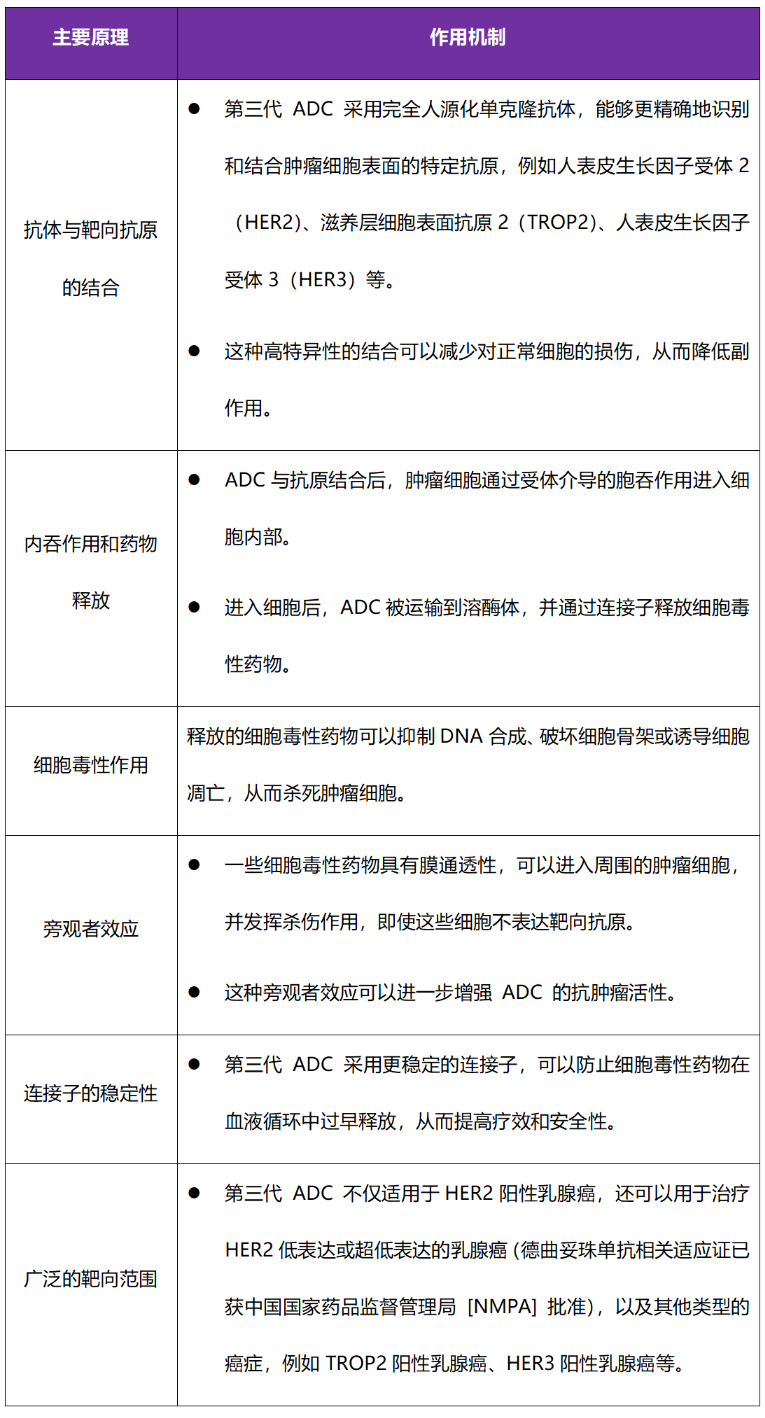
In summary, third-generation ADCs exhibit tremendous potential in treating cancers such as breast cancer through mechanisms like precise targeting, effective drug release, and bystander effect. The following diagram illustrates the principles and mechanisms of third-generation ADCs.[4].
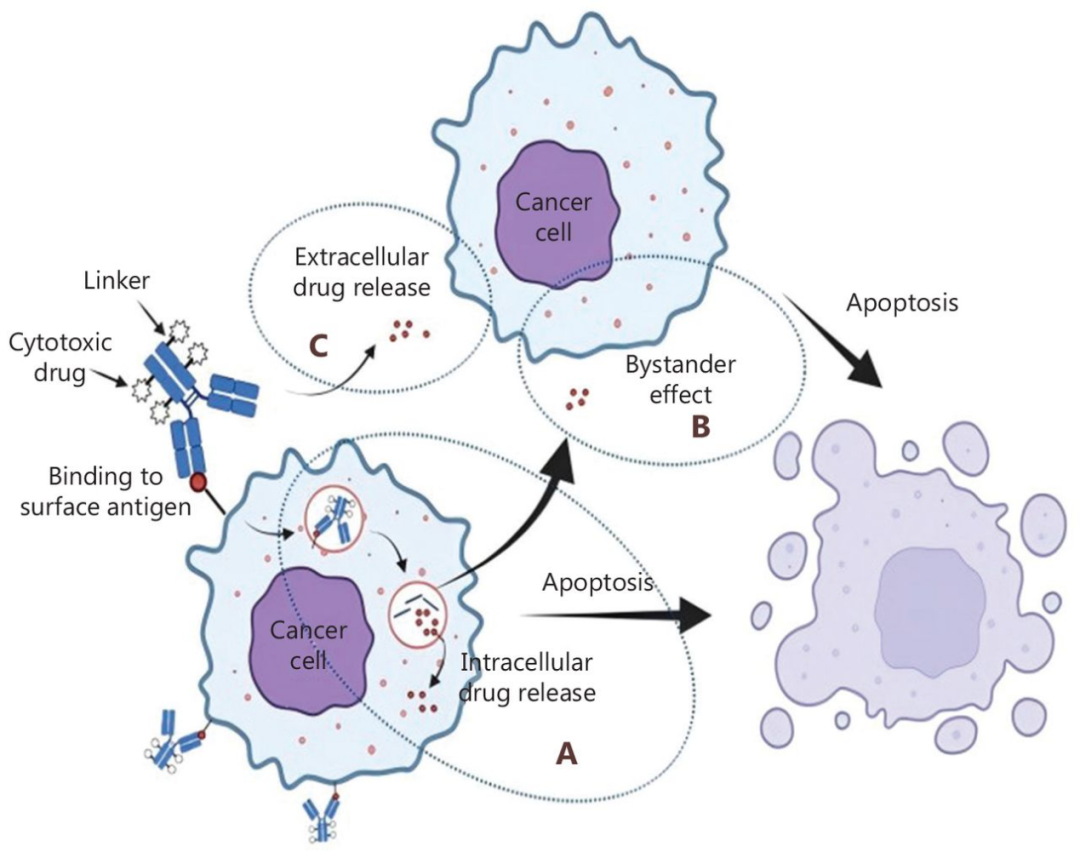
Figure 1. Schematic Diagram of the Principles and Mechanisms of Third-Generation ADCs. (A) After entering the bloodstream, the antibody component of the ADC binds to antigens on the surface of target cells. Subsequently, the ADC enters the cell via receptor-mediated endocytosis and releases the cytotoxic payload through the endosomal-lysosomal pathway, thereby killing tumor cells. (B) Membrane-permeable payloads can also produce a “bystander effect,” leading to the death of surrounding antigen-negative cells. (C) In the acidic environment generated by the high metabolism of tumors, the linker toxin of the ADC breaks down, releasing the toxic payload to kill tumor cells.
PART 02
Targeting HER2 ADC Trastuzumab emtansine (T-DM1))
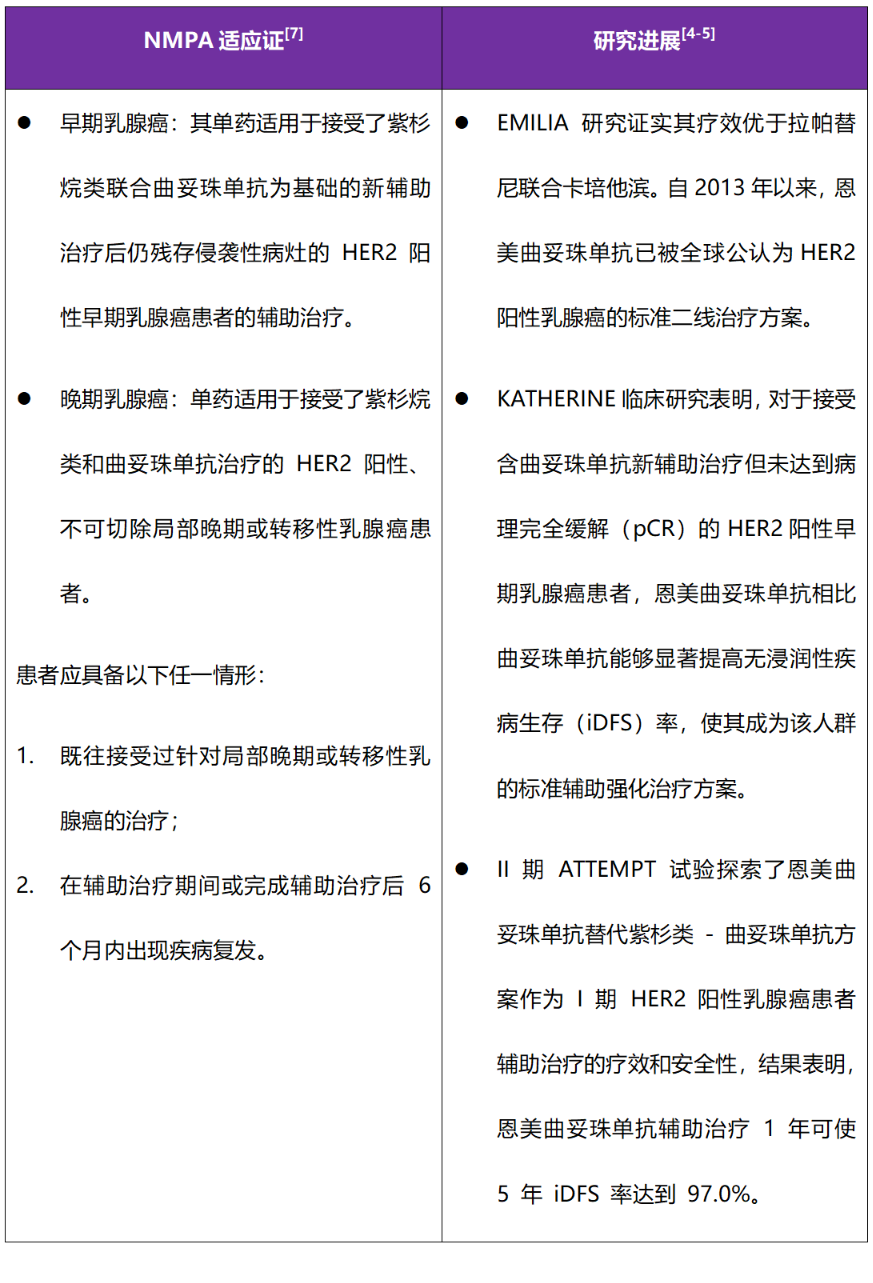
Trastuzumab emtansine is thefirst approved HER2-targeted ADC for breast cancer, composed of trastuzumab and the active payload maitansine (DM1) linked via a linker, with a drug-antibody ratio (DAR of 3.5[4-5]. Based on the EMILIA study, on January 21, 2020, T-DM1 was officially approved by the NMPA for marketing in China for patients with HER2-positive, unresectable locally advanced or metastatic breast cancer after treatment with taxanes and trastuzumab. Despite the emergence of numerous ADC drugs, trastuzumab emtansine, as the first ADC used in solid tumor treatment, still plays an irreplaceable role in the treatment landscape of HER2-positive breast cancer[5].
Table 2. Clinical Applications of Trastuzumab Emtansine and Research Progress (Breast Cancer)
 Deruxtecan (T-DXd))
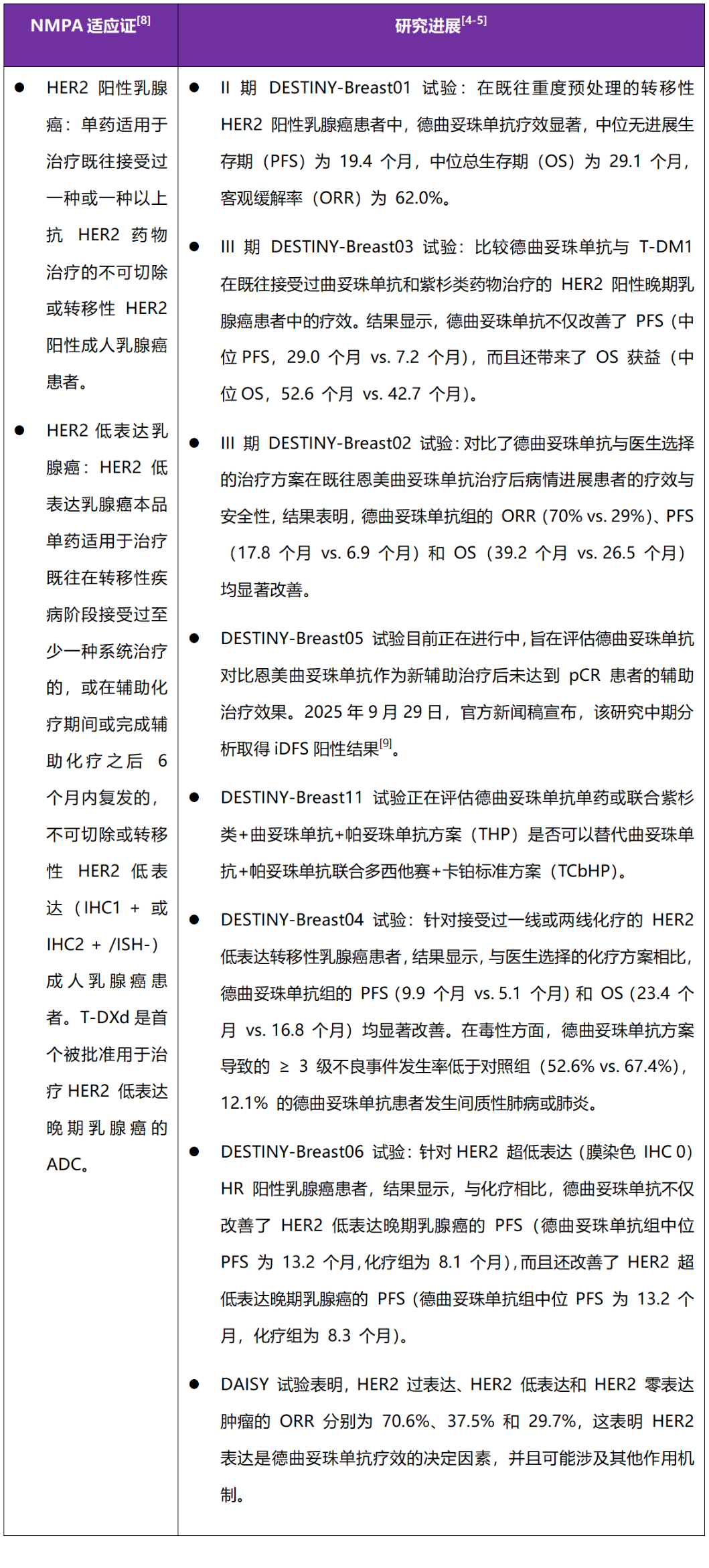
Deruxtecan (T-DXd) is a novel HER2-targeted ADC, composed of trastuzumab and the topoisomerase I inhibitor deruxtecan (DXd). The main innovation of T-DXd lies in its cleavable peptide-based linker, which can be selectively cleaved by tumor-upregulated tissue proteases, increasing the concentration of DXd in cancer cells while limiting systemic exposure, thereby enhancing efficacy. T-DXd has a DAR of up to 8. In addition, the cleavable linker and the cell permeability of DXd allow DXd to penetrate the tumor microenvironment and exert a bystander effect, which is an important characteristic of T-DXd in killing heterogeneous HER2-expressing tumors[4-5].
T-DXd has shown tremendous potential in the field of breast cancer treatment, having been approved for the first time in China in February 2023 for monotherapy in patients with unresectable or metastatic HER2-positive breast cancer who have previously received one or more anti-HER2 therapies.
Table 3. Clinical Applications of Deruxtecan and Research Progress (Breast Cancer)
 Disitamab vedotin (RC48))
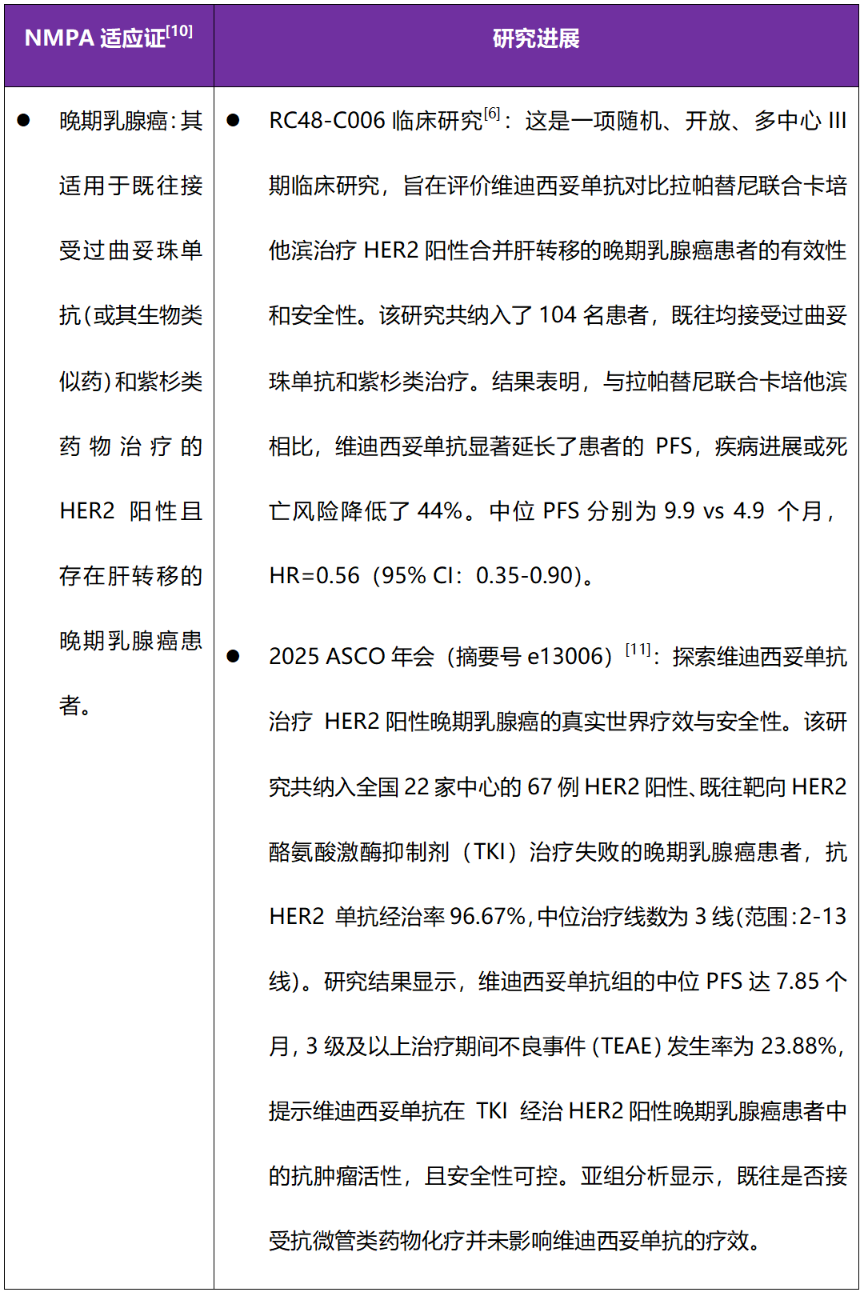
Disitamab vedotin is a HER2-targeted ADC, utilizing a humanized HER2 antibody and the toxic payload monomethyl auristatin E (MMAE) linked via a cleavable linker, with a DAR of 4[6]. On April 30, 2025, Disitamab vedotin was approved by the NMPA for the treatment of HER2-positive (HER2 IHC3+ or FISH+) advanced breast cancer patients who have previously received treatment with trastuzumab or its biosimilars and taxanes.
Table 4. Clinical Applications of Disitamab Vedotin and Research Progress (Breast Cancer)
PART 03
Targeting TROP2 ADC
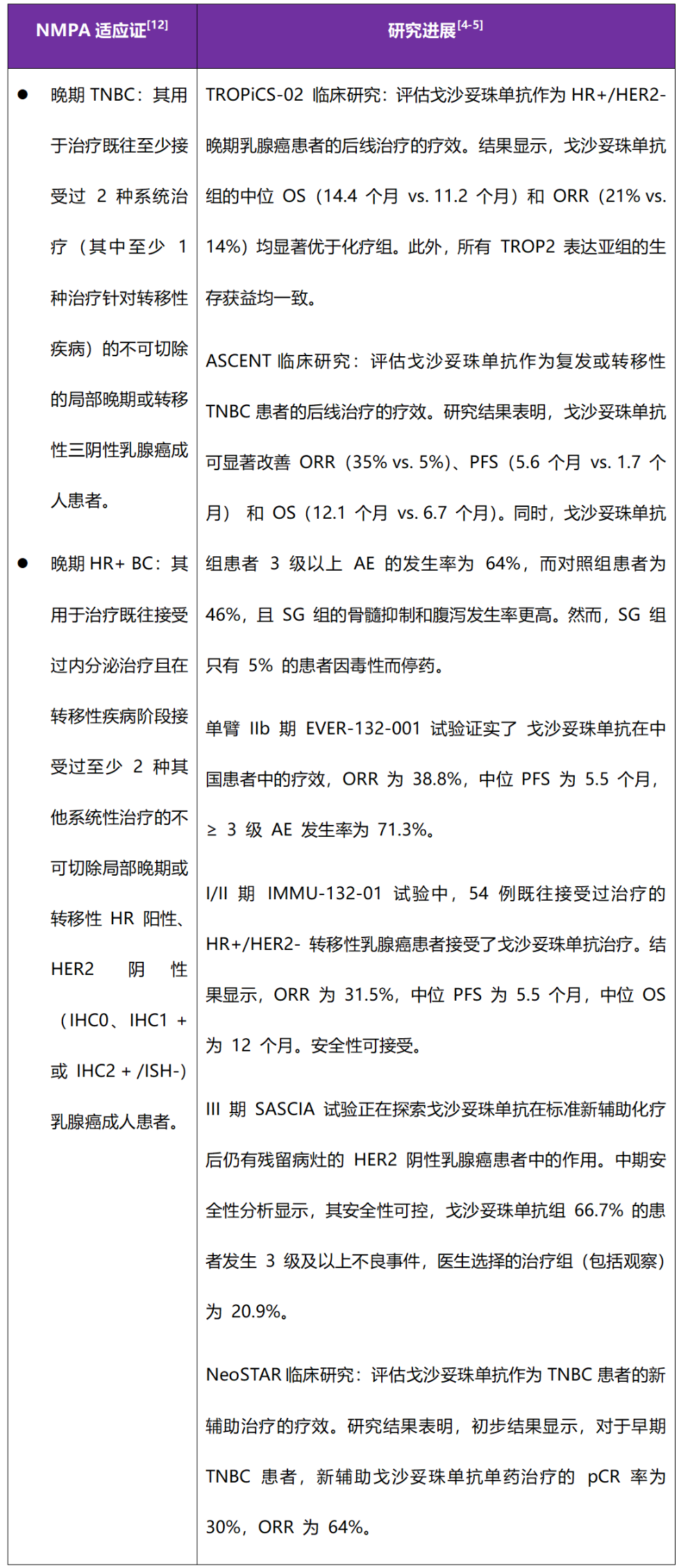
Gosatuzumab (SG)Gosatuzumab is the first-in-class TROP2 ADC, composed of a humanized IgG1κ antibody against Trop2 antibody hRS7 linked via a cleavable CL2A linker to the topoisomerase I inhibitor SN-38 (the active metabolite of irinotecan), with a DAR of up to 7.6[5]. On June 7, 2022, Gosatuzumab was approved by the NMPA for the treatment of adult patients with unresectable locally advanced or metastatic TNBC who have previously received at least two systemic treatments (with at least one treatment targeting metastatic disease). On March 18, 2025, Gosatuzumab received a new indication approval from the NMPA for the treatment of adult patients with unresectable locally advanced or metastatic hormone receptor (HR)-positive, HER2-negative (IHC 0, IHC 1+, or IHC 2+/ISH-) breast cancer who have previously received endocrine therapy and at least two other systemic treatments during the metastatic disease stage.
Table 5. Clinical Applications of Gosatuzumab and Research Progress (Breast Cancer)
 Sacituzumab govitecan (sac-TMT)
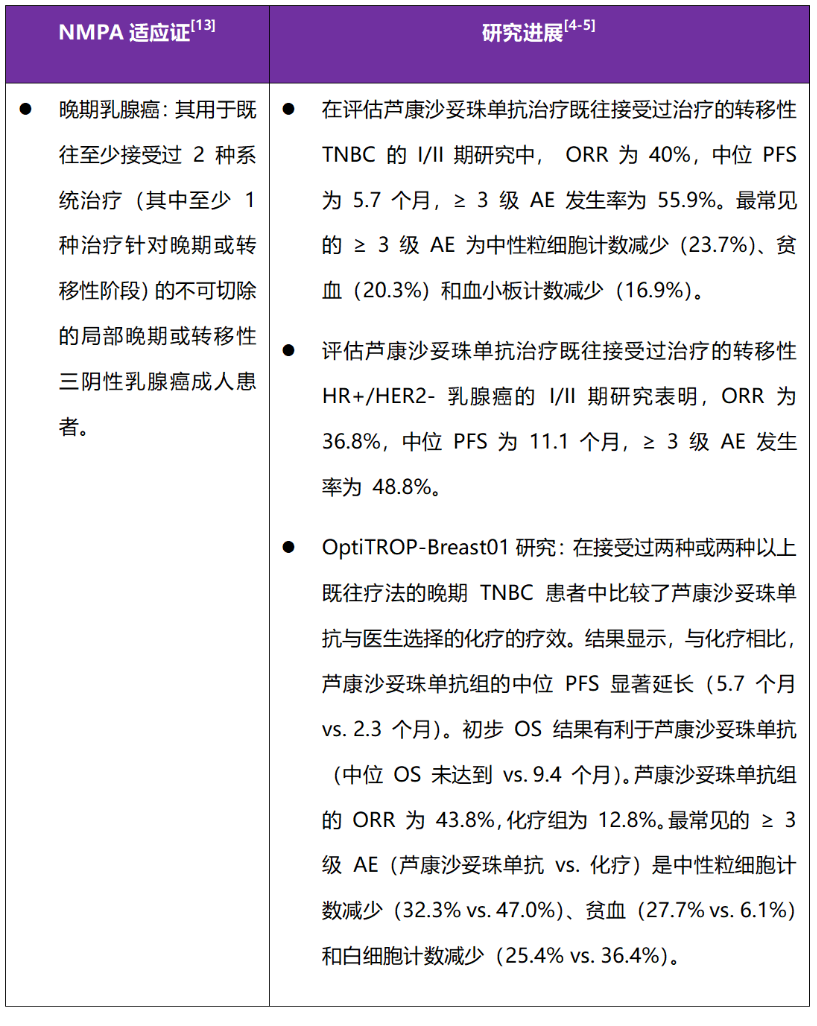
Sacituzumab govitecan is a TROP2-targeted ADC, composed of an anti-TROP2 monoclonal antibody and the topoisomerase I inhibitor DM4, with a DAR of 7.4 [5]. Sacituzumab govitecan has shown significant therapeutic potential in breast cancer treatment, especially in triple-negative breast cancer (TNBC). On November 27, 2024, sacituzumab govitecan was approved by the NMPA for the treatment of adult patients with unresectable locally advanced or metastatic TNBC who have previously received at least two systemic treatments (with at least one treatment targeting advanced or metastatic stages). Notably, this is also the first domestically approved TROP2 ADC.
Table 6. Clinical Applications of Sacituzumab Govitecan and Research Progress (Breast Cancer)
 Datopotamab deruxtecan (Dato-DXd)
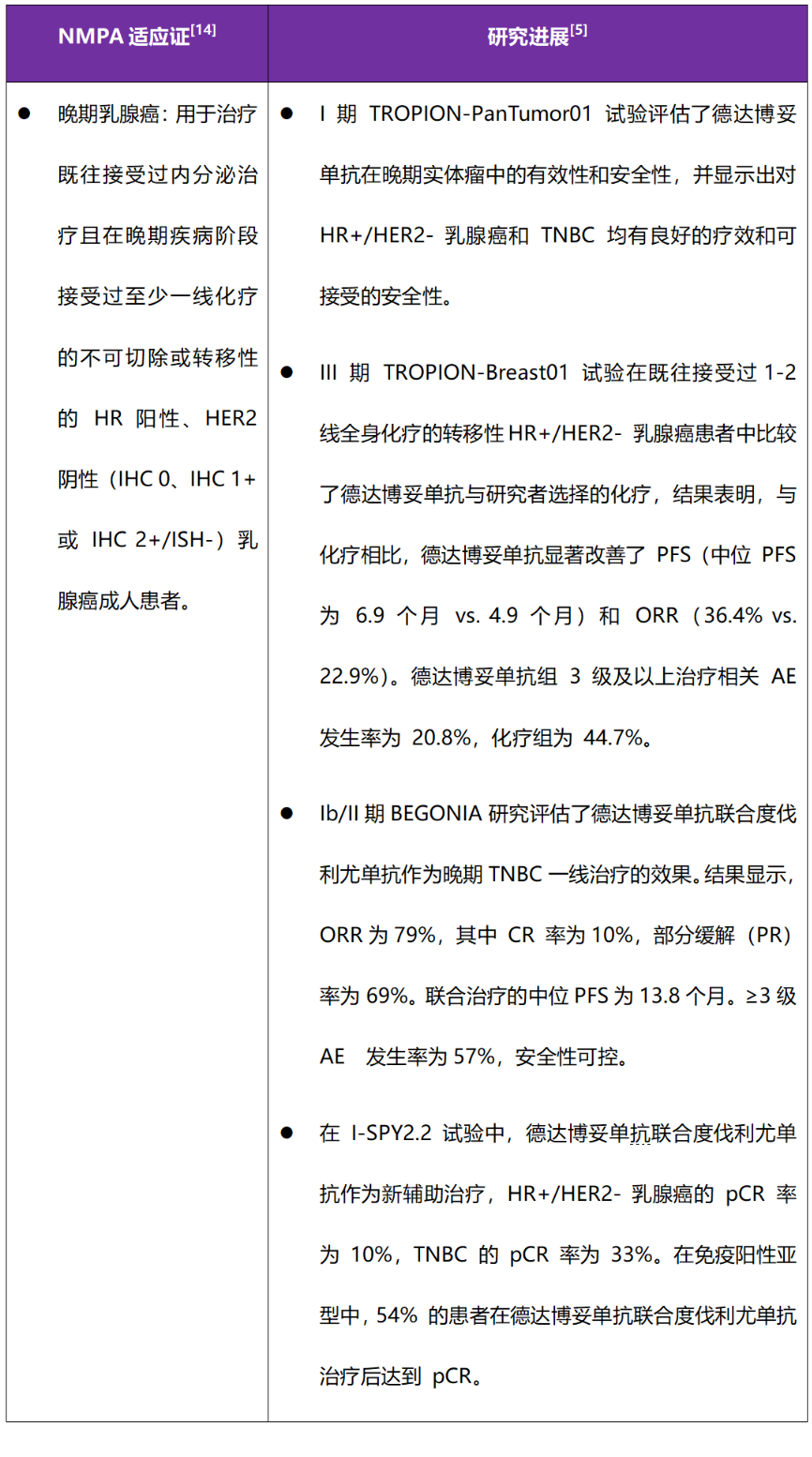
Datopotamab deruxtecan is a TROP2-targeted ADC, composed of a humanized anti-TROP2 IgG1 monoclonal antibody linked via a cleavable peptide linker to multiple topoisomerase I inhibitor effective payloads (DXd), with a DAR of 4 [5]. On August 22, 2025, datopotamab deruxtecan was approved by the NMPA for the treatment of adult patients with unresectable or metastatic HR-positive, HER2-negative (IHC 0, IHC 1+, or IHC 2+/ISH-) breast cancer who have previously received endocrine therapy and at least one line of chemotherapy during the advanced disease stage.
Table 7. Clinical Applications of Datopotamab Deruxtecan and Research Progress (Breast Cancer)
PART 04
Conclusion
In summary, ADC drugs, with their dual advantages of precise targeting and effective killing, are profoundly impacting the treatment landscape of breast cancer. From HER2 to TROP2, from advanced to early stages, ADCs not only expand the boundaries of treatment but also bring potential therapeutic hope to difficult-to-treat patients, locally advanced, and even early-stage patients. Looking ahead, with the iterative upgrades of third-generation ADCs and the continuous accumulation of clinical evidence, the future of breast cancer treatment is expected to move towards a more precise and personalized era, promising longer survival and better quality of life for patients.
 References[1] Bray F, Laversanne M, Sung H, Ferlay J, Siegel RL, Soerjomataram I, Jemal A. Global cancer statistics 2022: GLOBOCAN estimates of incidence and mortality worldwide for 36 cancers in 185 countries. CA Cancer J Clin. 2024 May-Jun;74(3):229-263. doi: 10.3322/caac.21834.
[2] Huang Danqi,,Yang Min,,Xiong Wei,,et al. Analysis of the disease burden and attributable risk factors of early-onset female breast cancer in China and globally from 1990 to 2021. [J].Xiehe Medical Journal,2025,16(3):777-784.
[3] Siegel RL, Giaquinto AN, Jemal A. Cancer statistics, 2024. CA Cancer J Clin. 2024 Jan-Feb;74(1):12-49. doi: 10.3322/caac.21820.
[4] Shi Z, Lu Y, Zhao Q, Wang Y, Qiu P. Antibody-drug conjugates in breast cancer: advances and prospects. Cancer Biol Med. 2025 Feb 17;22(2):83–92. doi: 10.20892/j.issn.2095-3941.2024.0486.
[5] Li, N., Yang, L., Zhao, Z. et al. Antibody-drug conjugates in breast cancer: current evidence and future directions. Exp Hematol Oncol 14, 41 (2025). https://doi.org/10.1186/s40164-025-00632-9.
[6] Wang JY. A randomized, open-label phase III study comparing disitamab vedotin (an anti-HER2 monoclonal antibody-MMAE conjugate) with lapatinib plus capecitabine in patients with HER2-positive, advanced breast cancer with liver metastasis). 2024 SABCS.
[7] Injectable Trastuzumab Emtansine Chinese Instructions.2022YearApril11Day. Roche Pharma (Schweiz) AG.https://drugs.dxy.cn/pc/drug/ya7qHOJJJyEozoTyMOcI9xg?ky=%E6%81%A9%E7%BE%8E%E6%9B%B2%E5%A6%A5%E7%8F%A0%E5%8D%95%E6%8A%97.
[8] Injectable Deruxtecan.Chinese Instructions.2024YearOctober9Day. Daiichi Sankyo Europe GmbH.https://drugs.dxy.cn/pc/drug/ynXr6mbupClhYzydNBIfz4A?ky=%E5%BE%B7%E6%9B%B2%E5%A6%A5%E7%8F%A0%E5%8D%95%E6%8A%97.
[9] Enhertu demonstrated highly statistically significant and clinically meaningful improvement in invasive disease-free survival vs. T-DM1 in DESTINY-Breast05 Phase III trial in patients with high-risk early breast cancer following neoadjuvant therapy. https://www.astrazeneca.com/media-centre/press-releases/2025/enhertu-improved-idfs-in-early-bc-in-db-05.html.
[10] Injectable Disitamab Vedotin.Chinese Instructions. 2025YearApril30Day. Rongchang Biopharmaceutical (Yantai) Co., Ltd.https://drugs.dxy.cn/pc/drug/yARmQcq84fgzUfBAggIeQeQ?ky=%E7%BB%B4%E8%BF%AA%E8%A5%BF%E5%A6%A5%E5%8D%94%E6%8A%97.
[11] Yiqun Li et al. Effectiveness and safety of disitamab vedotin (RC48) in pretreated HER2-positive advanced breast cancer: A real-world experience in China.. J Clin Oncol 43, e13006-e13006(2025).DOI:10.1200/JCO.2025.43.16_suppl.e13006.
[12] Injectable Gosatuzumab.Chinese Instructions.2025YearMarch8Day.Gilead Sciences, Inc.https://drugs.dxy.cn/pc/drug/yYvw7P0kxJ3GxbbcN2yrXXA?ky=%E6%88%88%E6%B2%99%E5%A6%A5%E7%8F%A0%E5%8D%94%E6%8A%97.
[13] Injectable Sacituzumab Govitecan.Chinese Instructions.2025YearMarch25Day.. Sichuan Kelun Botai Biopharmaceutical Co., Ltd..
https://drugs.dxy.cn/pc/drug/yrio4PLl4ogNiA03YxaBMmQ?ky=%E8%8A%A6%E5%BA%B7%E6%B2%99%E5%A6%A5%E7%8F%A0%E5%8D%94%E6%8A%97.
[14] National Medical Products Administration Official Website.https://www.nmpa.gov.cn/datasearch/search-info.html?nmpa=aWQ9YTU3YzE2OGI2ZDFmNTMzYjAxMGRiYmNhMDdmYjgxY2YmaXRlbUlkPWZmODA4MDgxODNjYWQ3NTAwMTg0MDg4NjY1NzExODAw.
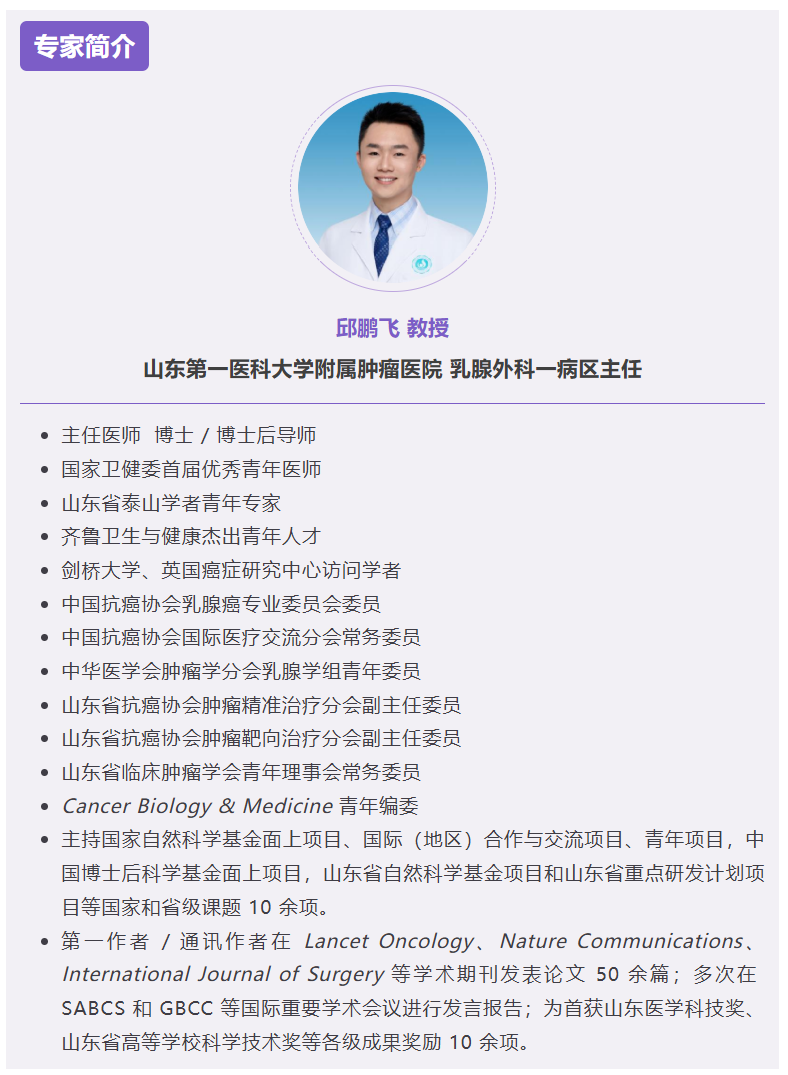
Reviewed by: Professor Qiu PengfeiCompiled by: Dingxiangyuan TeamSubmission: [email protected]; [email protected]