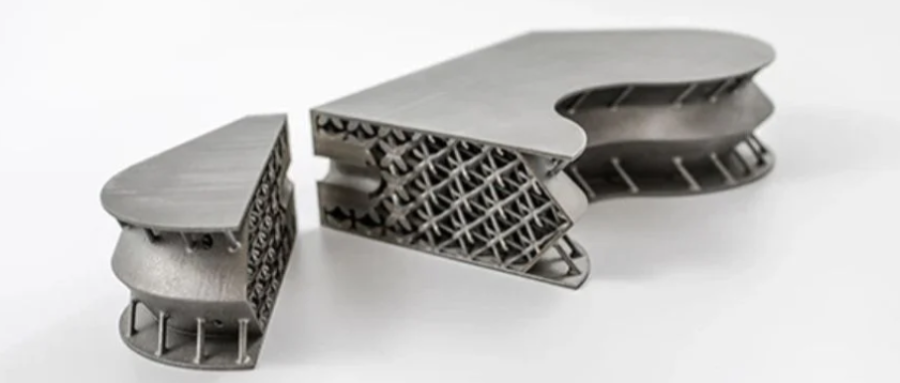
Titanium 3D printing, despite its high cost and complex technology, is the key to achieving complex structures, lightweight designs, and customized manufacturing. With the maturation of technology and reduction in costs, its industrial application is accelerating.
[Qiming Additive Manufacturing]Titanium is known for its lightweight, high strength, low toxicity, and high corrosion resistance, making it suitable for numerous applications. Its strength is comparable to that of steel, yet it is approximately40% lighter, making it particularly suitable for manufacturing components that require both lightweight and durability. Titanium also has advantages such as resistance to saltwater, chemical corrosion, and wear, making it an ideal material for extreme environmental applications. In addition to its mechanical properties, it also possesses good thermal characteristics, capable of withstanding temperatures up to600℃, while maintaining stability even in extremely cold conditions.
The machining of titanium is quite challenging, primarily due to its low thermal conductivity. During processing with CNC machines, most of the heat generated accumulates within the workpiece, leading to rapid tool wear. Furthermore, traditional cutting processes often produce a large amount of waste material. In response to these challenges, many companies are turning to more efficient titanium component manufacturing solutions, with metal3D printing technology becoming a highly regarded alternative solution.
01
Types of Titanium Alloys Suitable for 3D Printing
Although pure titanium can be used in specific fields such as medical applications due to its biocompatibility,alloy forms are more commonly used in 3D printing. The mainstream titanium alloys include the most commonly usedTi6Al-4V Grade 5 (Ti64), which is known for its heat and corrosion resistance; suitable for medical prosthetics and implants;Ti6Al-4V Grade 23; and the stronger, more oxidation-resistantBeta 21S titanium alloy, which is commonly used in orthopedic implants and aerospace engines. Pure titanium (Cp-Ti) has a place in the medical field due to its biocompatibility. Additionally, theTA15 alloy, composed of titanium, aluminum, and zirconium, is widely used in the manufacturing of aerospace engine components due to its high-temperature resistance.
Titanium alloys are preferred over pure titanium in the field of 3D printing due to their adaptability to complex application scenarios. While pure titanium is known for its lightweight, corrosion resistance, and biocompatibility, its toughness, hardness, and fatigue resistance are relatively weak, posing limitations in scenarios that require high load-bearing and repeated stress.
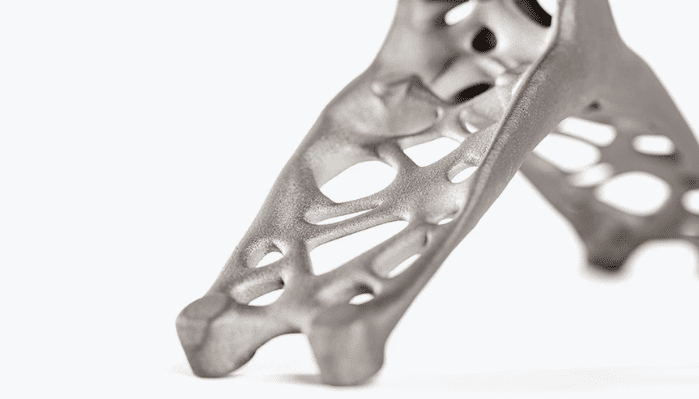
Source:Materialise
02
Analysis and Challenges of Titanium Metal 3D Printing Technology
In the field of 3D printing, titanium materials are typically used in the form of metal powders or filaments, depending on the chosen technology. Currently, the mainstream titanium metal printing technologies include the following types: Directed Energy Deposition (DED) technology, which uses energy sources such as lasers to melt titanium powder or wire; Laser Powder Bed Fusion (L-PBF) technology, which uses lasers to melt metal powder layer by layer, capable of producing high-precision parts such asTi6Al4V alloys; Electron Beam Melting (EBM) technology, which uses electron beams in a vacuum environment, particularly suitable for high-strength titanium components in the aerospace field; and binder jetting technology, which combines titanium powder with a binder and sinters it to form a solid structure.
Despite its promising prospects, titanium metal 3D printing still faces multiple challenges: First, the cost of titanium alloy raw materials is significantly higher than that of other additive manufacturing materials, coupled with the complexity of the process and post-processing requirements, leading to high production costs; second, the types of titanium alloys suitable for 3D printing are limited, increasing procurement difficulties and costs; finally, printed parts often require support removal, heat treatment, surface polishing, and other fine post-processing to meet usage standards, which both prolongs production cycles and increases overall costs.
03
Application Fields and Cases of Titanium Metal 3D Printing
–Aerospace Field–
In the aerospace field, titanium metal 3D printing technology has been maturely applied in the manufacturing of turbine blades, support structures, and key load-bearing components. This material is favored for its unique combination of lightweight, high strength, and resistance to extreme temperatures.
· GE Aviation LEAP Engine Fuel Nozzle is manufactured using Ti6Al4V titanium alloy through laser powder bed fusion technology, consolidating 20 traditional parts into a single lightweight component, reducing weight by 25% and improving fuel efficiency. This component has been certified by the FAA and is in mass production.
· SpaceX Dragon spacecraft titanium thruster is made using high-strength titanium alloy propulsion system components manufactured with electron beam melting technology, capable of withstanding extreme temperature differences and high-pressure environments, successfully executing multiple resupply missions to the International Space Station.
–Consumer Electronics Field–
· Apple Watch: Titanium Metal Case Fully Realized through 3D Printing
Apple Watch Ultra 3 and Series 11 have fully adopted 3D printed titanium metal cases, with Apple stating that this manufacturing method reduces raw material consumption by approximately50% compared to traditional subtractive processes such as CNC, significantly improving material utilization.
· iPhone Air:3D printed titanium metal interface
The iPhone Air is the first to feature a USB-C interface made from 3D printed titanium metal, which ensures strength while being thinner, reducing material usage by approximately33% compared to traditional forging processes, perfectly aligning with its ultra-lightweight design goals.
· Samsung Foldable Phone Titanium Alloy Hinge
Manufactured using multi-laser SLM equipment, achieving a daily output of3000 parts, reducing weight by 43% compared to the stainless steel version, with a thickness reduction of
0.3mm, maintaining a precision deviation of <0.1mm after 200,000 folding tests.
· Garmin High-End Sports Watch Titanium Alloy Case
Using Ti6Al4V ELI medical-grade titanium powder, manufactured through SLM technology, integrating the lugs and button structure into a single piece, reducing12 assembly parts, with a surface treated by micro-arc oxidation, achieving a hardness ofHV800, enhancing wear resistance by3 times.
· Samash 3D Printed Titanium Alloy Meter Holder
Samash, leveraging Plitite’s metal additive manufacturing technology, uses aerospace-grade titanium alloy material (BLT-Ti64 material), successfully achieving a lightweight design. The weight of a single meter holder is only about 12 grams, equivalent to the total weight of two one-yuan coins, strictly controlling the overall weight to below 20 grams, significantly ahead of traditional aluminum or steel brackets.
–Medical Field–
The medical field has long utilized titanium materials for their biocompatibility and corrosion resistance, from prosthetics to customized implants, enhancing treatment outcomes and reducing surgical times..
· Customized Mandibular Implant for PatientsBelgium’s Amnovis company produces titanium alloy implants for maxillofacial trauma patients using L-PBF technology, precisely matching bone structures, reducing the traditional treatment cycle from 6 months to 3 weeks.
(Figure 4 Amnovis manufactured titanium metal implants Source:Amnovis)
· 3D Printed Titanium Alloy Intervertebral Fusion Device A German medical implant company uses a porous structure design, with porosity precisely controlled at65%-80%, promoting bone ingrowth, with clinical data showing a fusion success rate of 96%.
–Automotive Manufacturing Innovation–
The automotive industry is also accelerating the adoption of titanium metal 3D printing technology to achieve vehicle lightweighting and improve fuel efficiency. This technology has been applied in the manufacturing of engine components, exhaust systems, suspension parts, and even chassis components.
· Bugatti Chiron Titanium Alloy Brake Caliper is formed using 4 laser SLM equipment, with a weight of 2.9kg, reducing weight by 40% compared to the aluminum version, capable of withstanding brake temperatures of 1200℃.
· Porsche Classic Model Titanium Alloy Transmission Gear is repaired using directed energy deposition technology for damaged gears of discontinued models, achieving fatigue strength equivalent to forged parts, with a single manufacturing cost reduced by57%.
–Industrial Tool Upgrades–
In the industrial field, such as tooling fixtures and fasteners, titanium metal printing technology is gradually becoming popular due to its ability to produce complex tools and structures according to specific needs.
· Airbus Aircraft Assembly Line Titanium Alloy Fixture is a large positioning tool manufactured using binder jetting technology, reducing weight by70%, while possessing the low thermal expansion coefficient required for carbon fiber composite assembly.
· Titanium Alloy Impeller for Nuclear Power Valves is repaired using DED technology for cooling pump impellers, enhancing seawater corrosion resistance by 3 times, extending service life to 15 years.
To provide precise demand matching and services, Qiming Additive Manufacturing has officially launched aerospace and shoe mold WeChat groups, welcoming everyone to join the group for more communication. Scan the QR code below to add the group owner as a friend and invite you to join the group ↓↓↓
 Recommended Reading
Maritime 3D Printing Full Industry Chain Strength Enterprise Rankings
AI+3D Track Dark Horse: Established 3 Years with Annual Revenue Exceeding $12 Million, Partnering with 40,000 Companies
Capital Concentration Intensifies in 3D Printing: Five Companies Secured Financing in Ten Days, September Welcomes Explosive Growth!
Global Giants Compete for New Battlefield of Copper-Nickel Alloys, 3D Printing + Maritime Field Becomes Focus of Layout
Report | From $408 Million to $3.62 Billion, Maritime Additive Manufacturing Has Vast Prospects
EOS Copper-Nickel Alloy CuNi30 Leads 3D Printing Revolution in Maritime Field
Thermal Management + Metal 3D Printing, These Companies Are Making Moves
Another Disruptive 3D Printed Seat Is Born
Apple Officially Announces Apple Watch Uses 3D Printing, Opening the Era of Consumer Electronics 3D Printing
Content InformationCover: MaterialiseSource:3Dnatives, Online NewsThis content is for industry information transmission and sharing only; users should carefully consider and independently judge any viewpoints, opinions, and conclusions in the text.Welcome to participate in submissions and sharing! If you have any questions, please contact us:18067519625(WeChat), [email protected].