3D printing is an emerging technology in the manufacturing sector, often referred to as a “manufacturing technology with industrial revolution significance.” In recent years, with advancements in industrial technology, 3D printing has rapidly developed and gained widespread media attention, with various 3D printing technologies being reported extensively.
Below, we will share the principles of 3D printing focusing on polymers and metals, primarily introducing five major polymer technologies: SLA, CLIP, 3DP, PolyJet, and FDM, as well as five major metal 3D printing principles: NPJ, SLM, SLS, LMD, and EBM.
1. SLA (StereoLithography)
SLA refers to the stereolithography technology, which utilizes ultraviolet light to irradiate liquid photosensitive resin, causing a polymerization reaction that cures layer by layer to create a three-dimensional solid. The dimensional accuracy of parts produced by SLA is high, making it one of the earliest commercialized 3D printing technologies.Below is the SLA process engineering: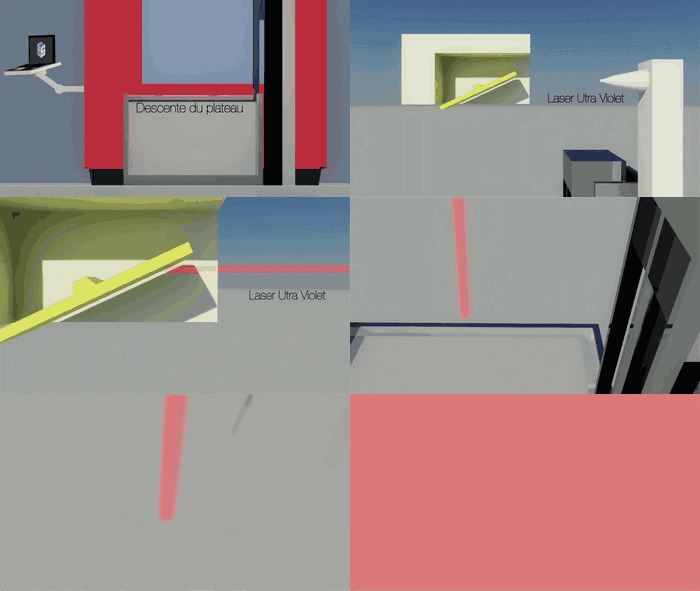 Ultraviolet Laser Source
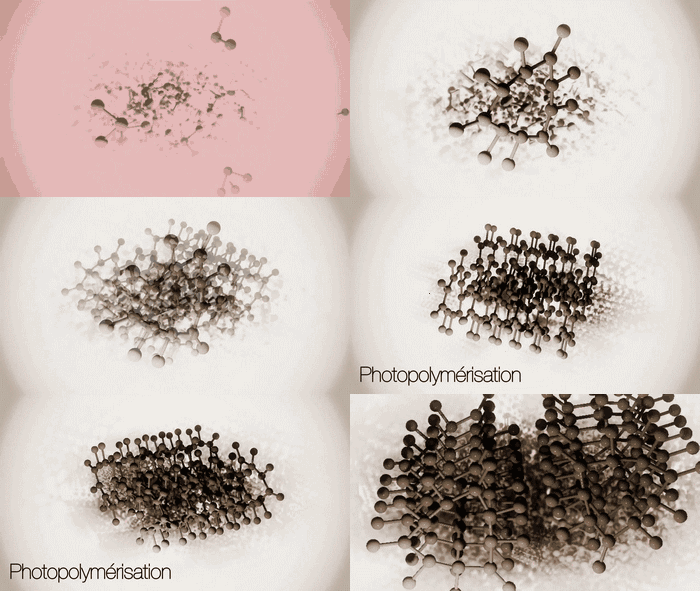 Photo-Curing Reaction
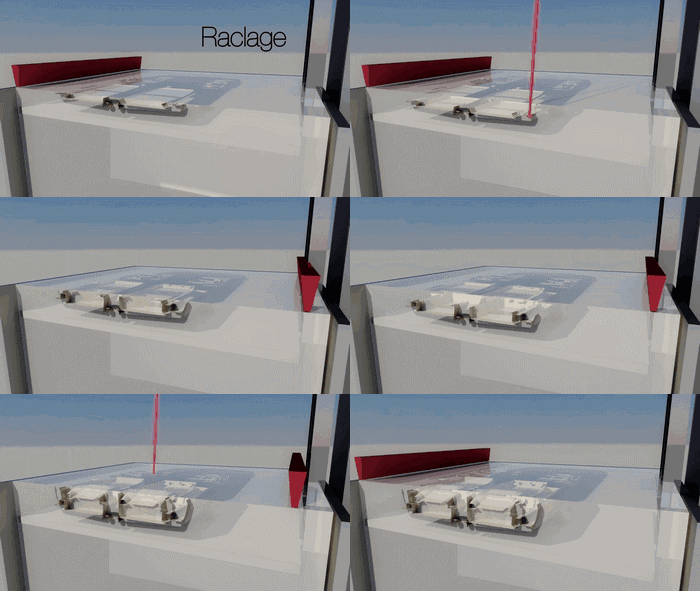 Layer Scanning Forming
2. CLIP (Continuous Liquid Interface Production Technology)
CLIP is a revolutionary 3D printing technology developed by Carbon 3D based on SLA technology, which increases the speed of 3D printing by 100 times!CLIP projects from the bottom, curing the photosensitive resin, while the uncured portion is controlled by oxygen to create a dead zone that inhibits the photo-curing reaction, thereby maintaining a stable liquid area, ensuring continuous curing.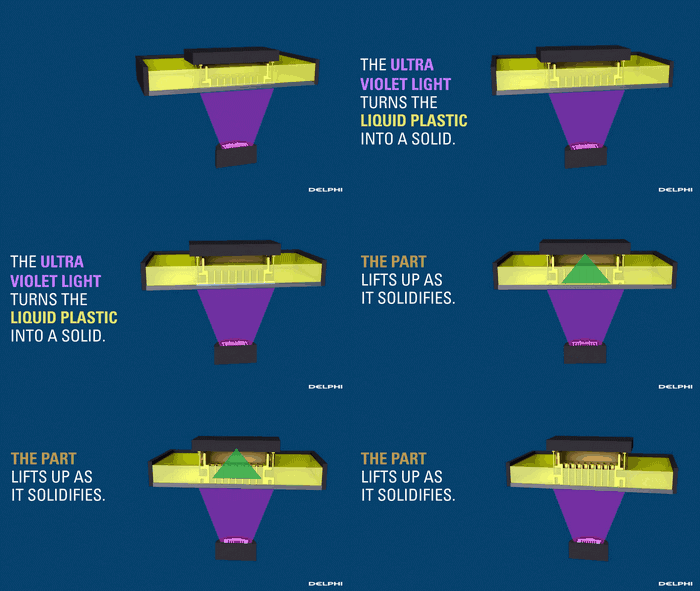 Photo-Curing Reaction
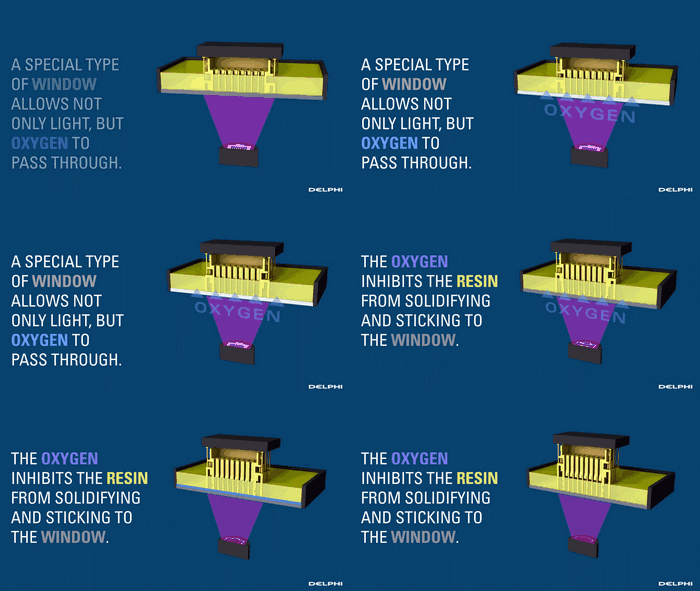 Oxygen Inhibition of Photo-Curing Process
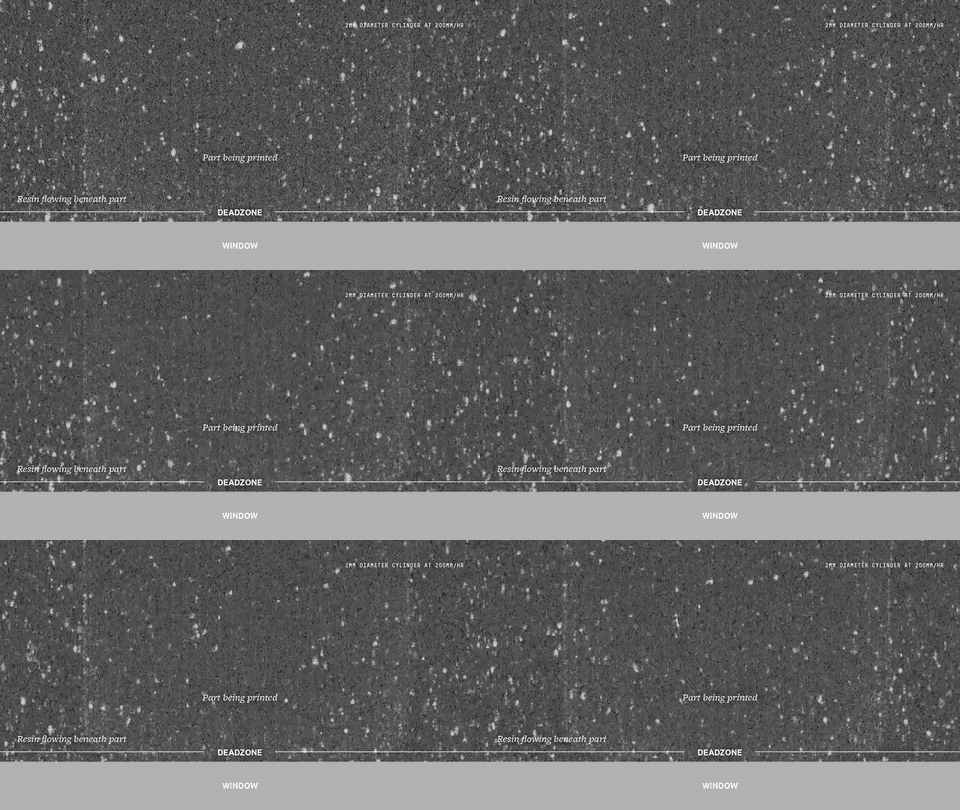 Demonstration of Photo-Curing Dead Zone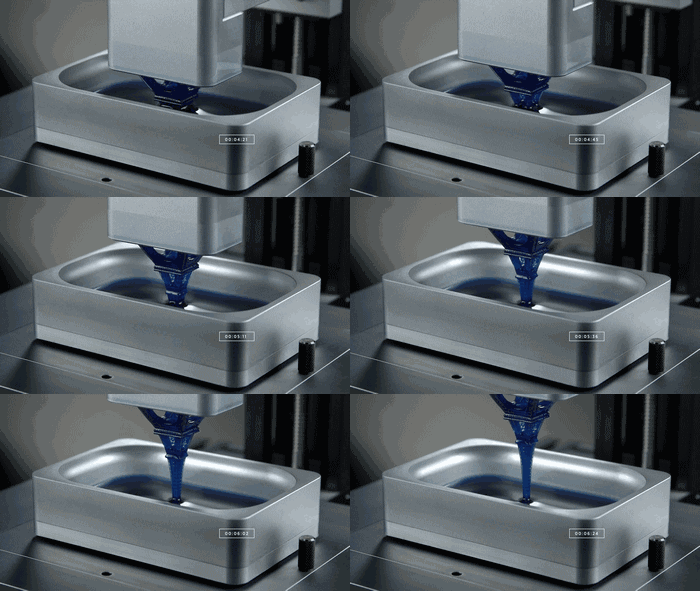
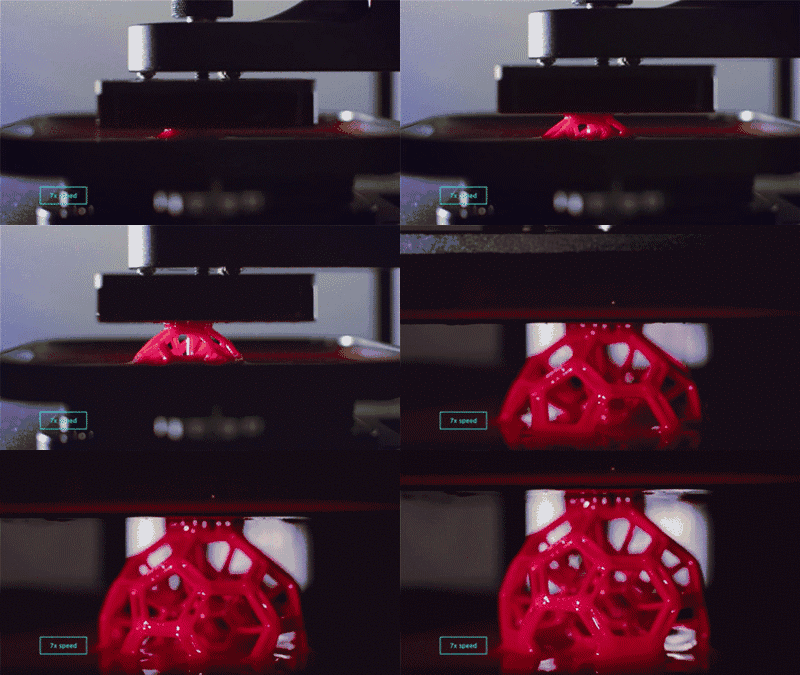 CLIP Forming Process
3. 3DP (Three-Dimensional Printing)
3DP is a rapid prototyping technology similar to traditional two-dimensional inkjet printing, where a binder (colored binder can print out colored parts) is ejected from the nozzle to bond the powder on the platform into shape, typically using gypsum powder as the forming material. The main applications of 3DP technology are full-color 3D printing and sand mold casting.Below is the process of sand mold casting using 3DP technology by Exone: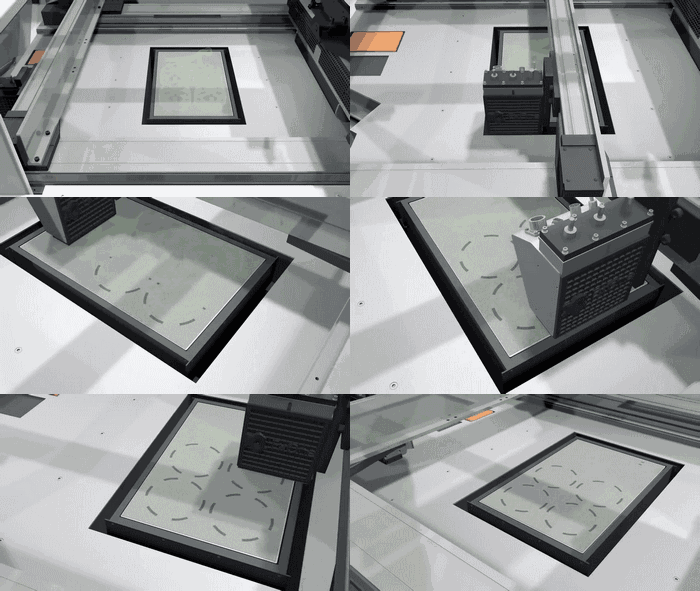 Binder Jetting
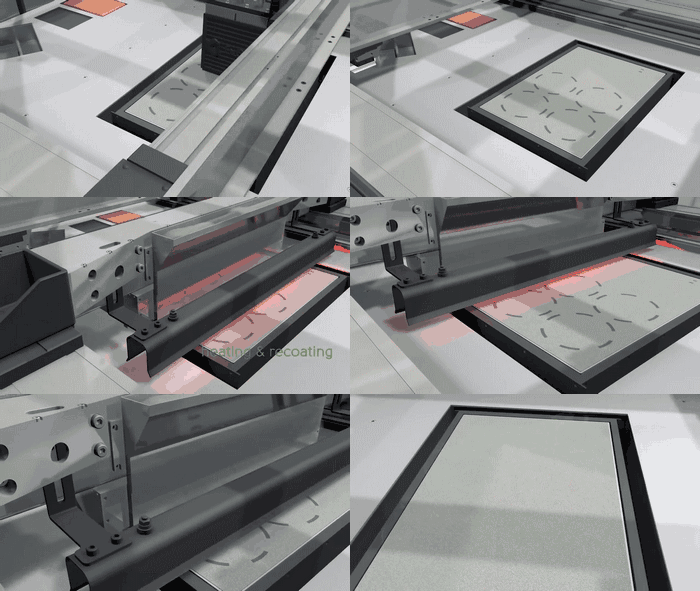 Heating and Curing
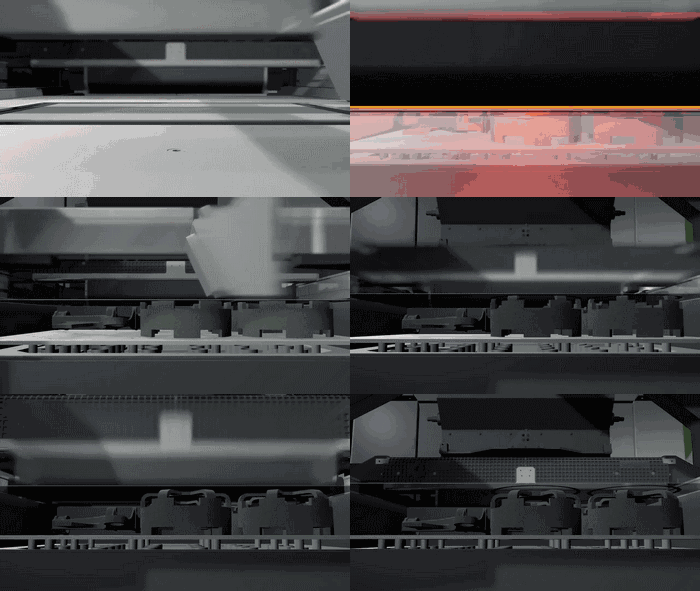 Printing and Forming
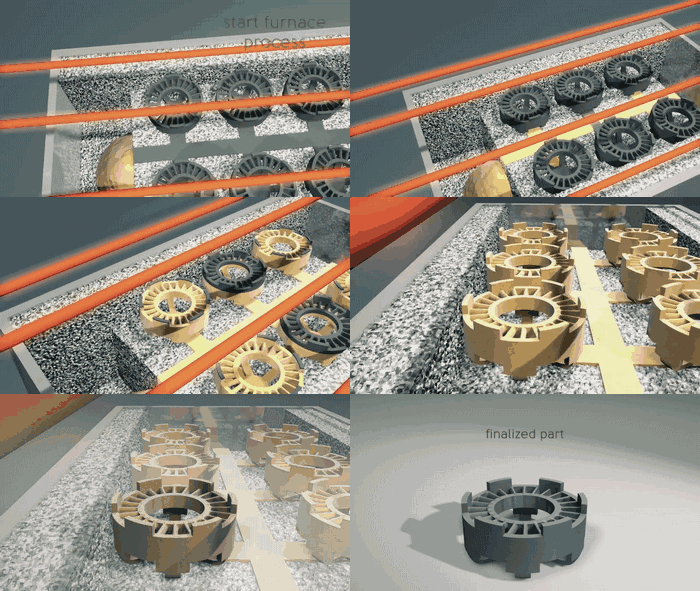 Casting and Forming
4. PolyJet
PolyJet is a polymer jetting technology whose forming principle is similar to 3DP technology, but instead of a binder, it jets light-curable resin, which is cured after spraying by ultraviolet light.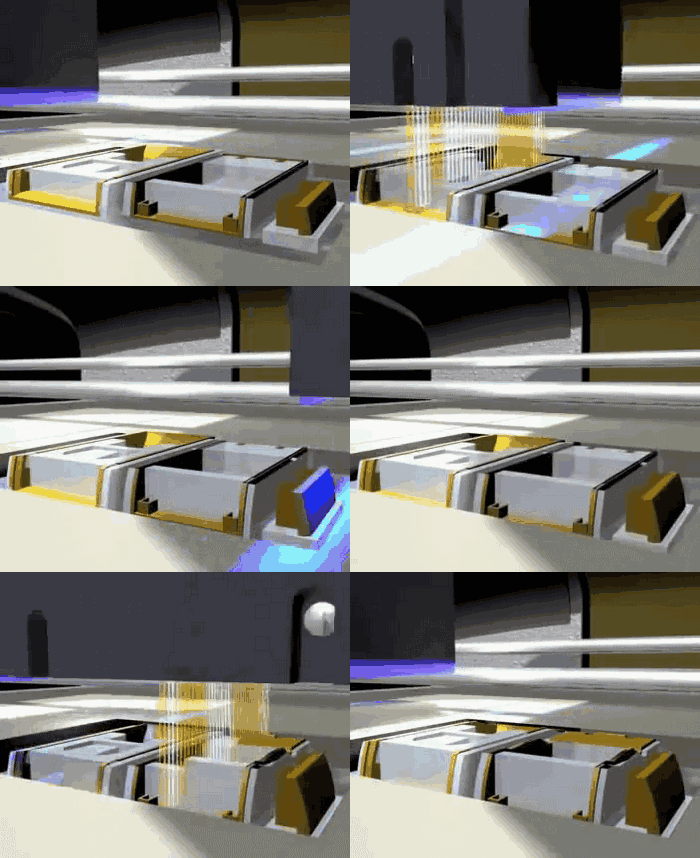 PolyJet Forming PrinciplePolyJet uses an array of nozzles, allowing it to simultaneously jet different materials, achieving multi-material and multi-color printing.
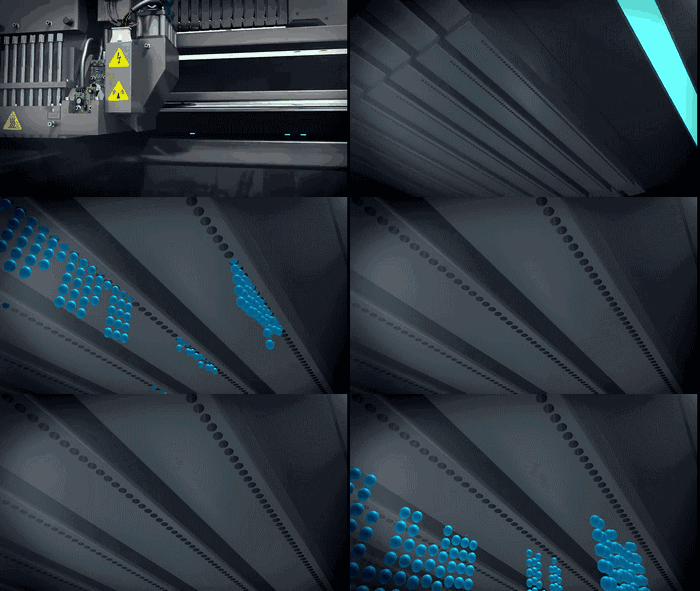 Array Nozzle Working Process
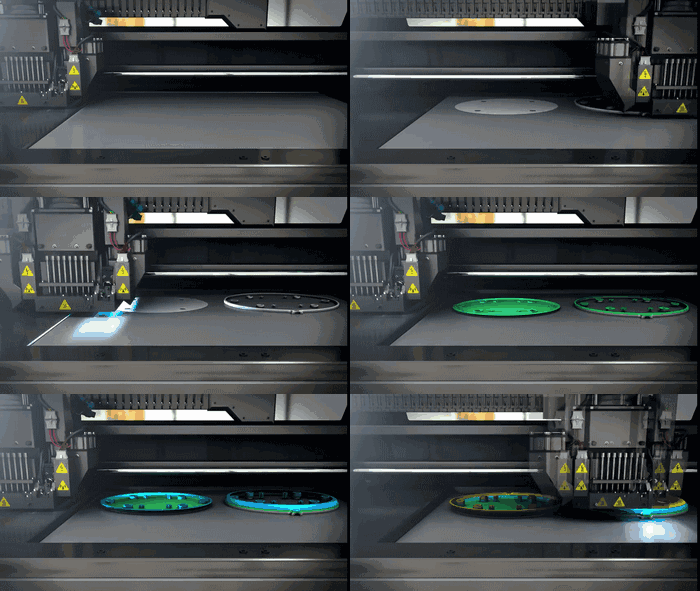 PolyJet Printing Process
5. FDM (Fused Deposition Modeling)
FDM is a fused deposition technology that melts material at high temperatures and extrudes it through a nozzle to form filaments that accumulate on the component platform. FDM is the simplest and most common 3D printing technology, typically used in desktop 3D printing devices.Below is the working principle of FDM technology: Model Processing
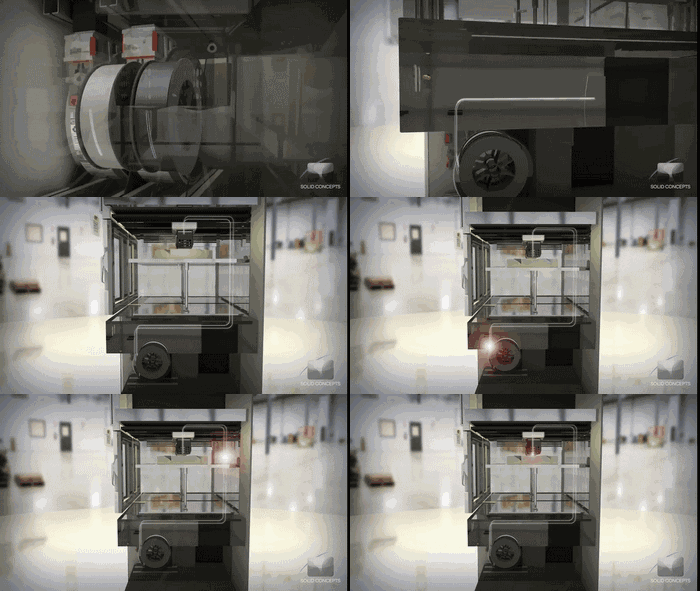 Material Extrusion and Forming
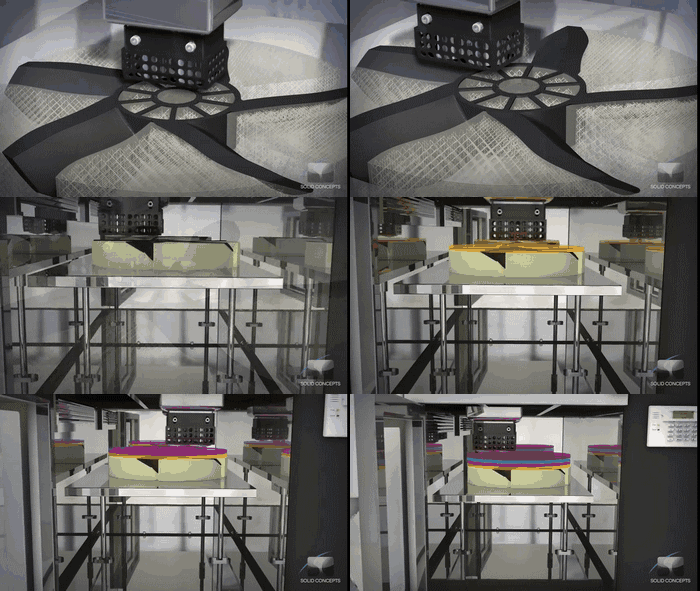 Layer Printing Process
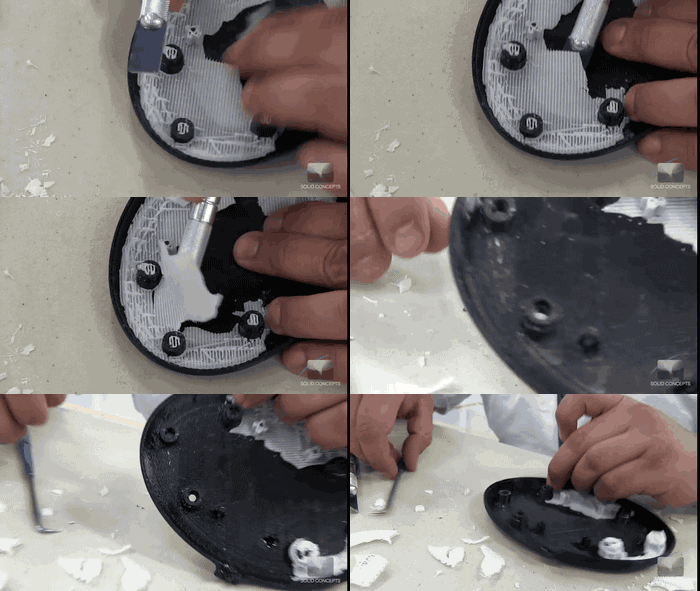 Support Removal
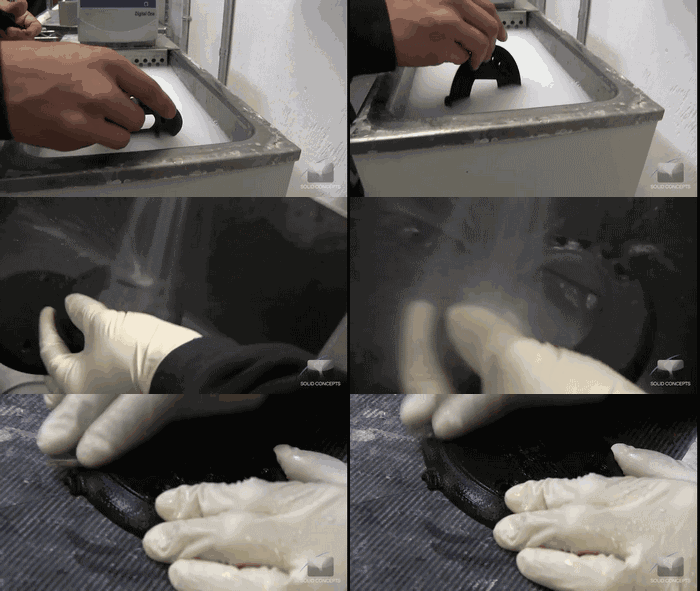 Surface TreatmentMetal 3D printing technology can be directly used for the rapid prototyping of metal parts, with broad industrial application prospects, and is a key development area for 3D printing technology both domestically and internationally. Below, we will share the principles of five metal 3D printing technologies: NPJ, SLM, SLS, LMD, and EBM.
6. NPJ (Nano Particle Jetting)
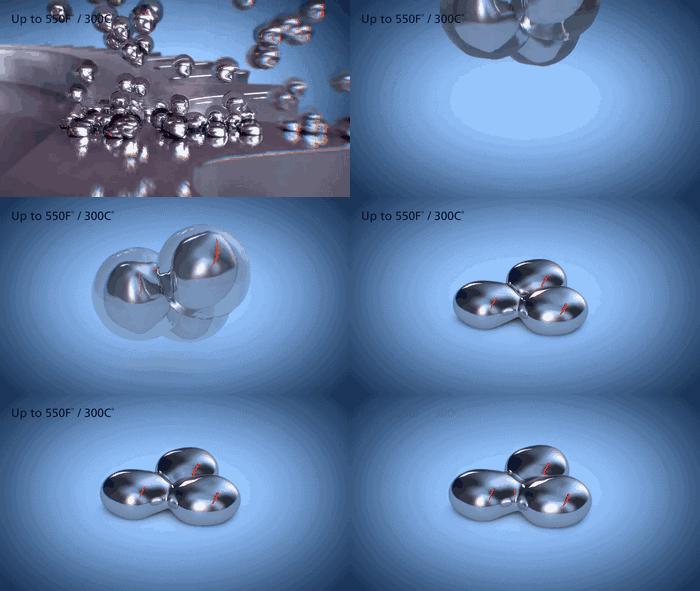
NPJ technology is a newly developed metal 3D printing technology by the Israeli company Xjet. Compared to ordinary laser 3D printing, it uses nano liquid metal, deposited in a jetting manner, achieving a printing speed five times faster than ordinary laser printing, with excellent precision and surface roughness.Below is the working process of Xjet equipment:Metal Particle Refinement 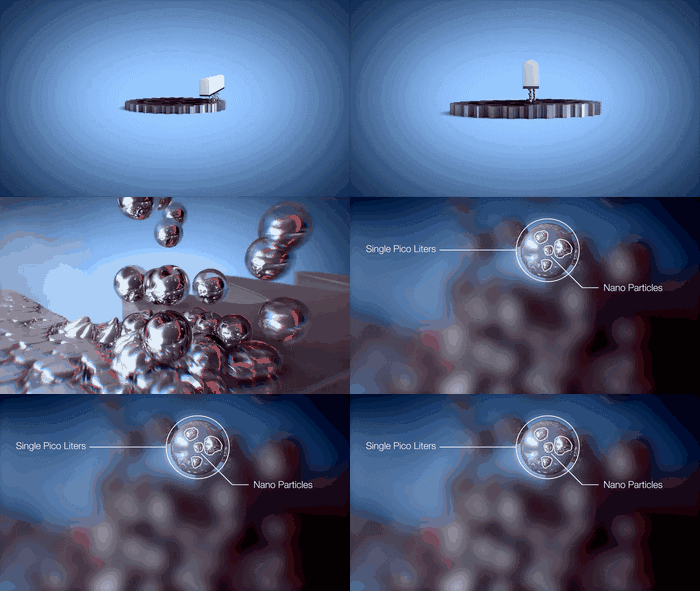 Metal Particles Distributed in Droplets
  Droplet Jetting Forming Process
  Liquid Phase Discharge Process
 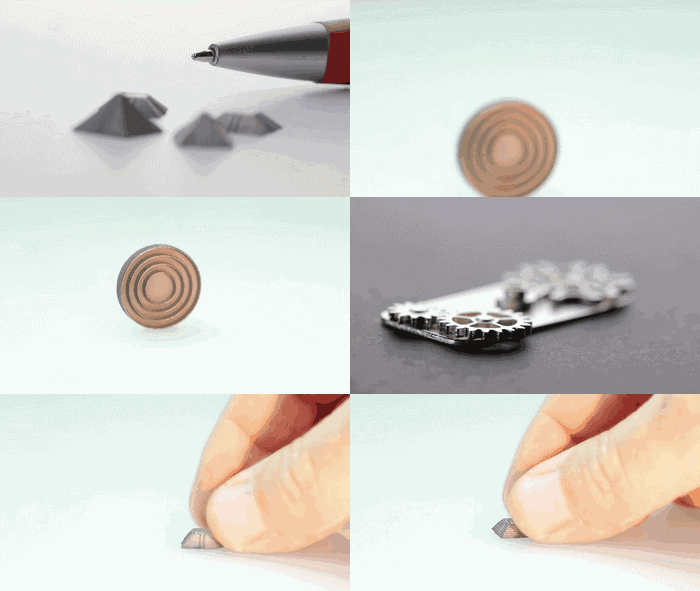 Sintered Parts
2. SLM (Selective Laser Melting)
SLM is the most common metal 3D printing technology, which uses finely focused laser beams to rapidly melt pre-placed metal powder, directly obtaining parts of any shape with complete metallurgical bonding, achieving a density greater than 99%.The laser scanning system is one of the key technologies in SLM; below is the working diagram of the scanning system from SLM Solution: Laser Emission
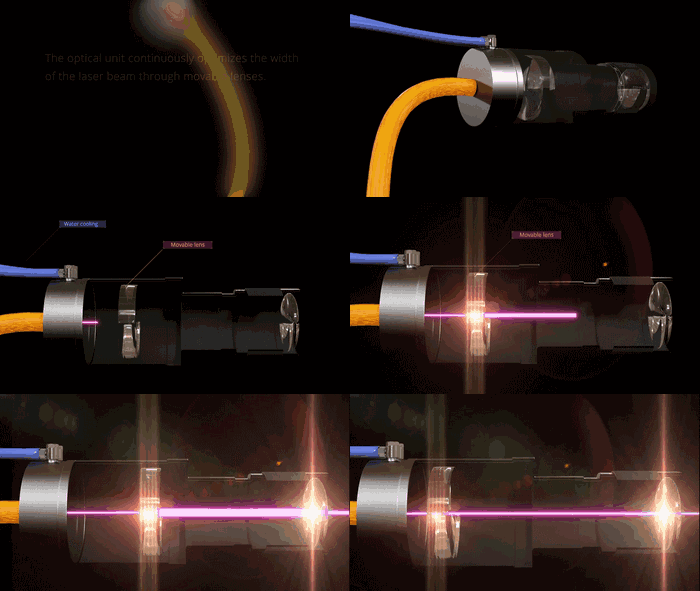 Laser Transmission
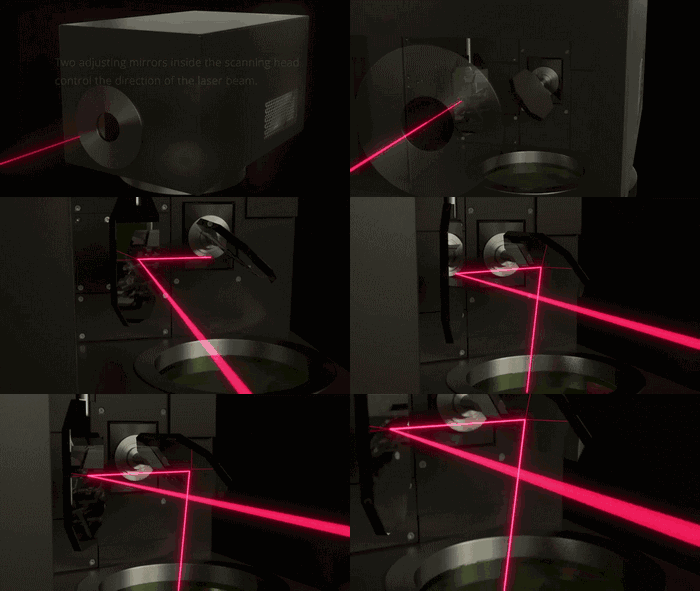 Scanning Mirror
 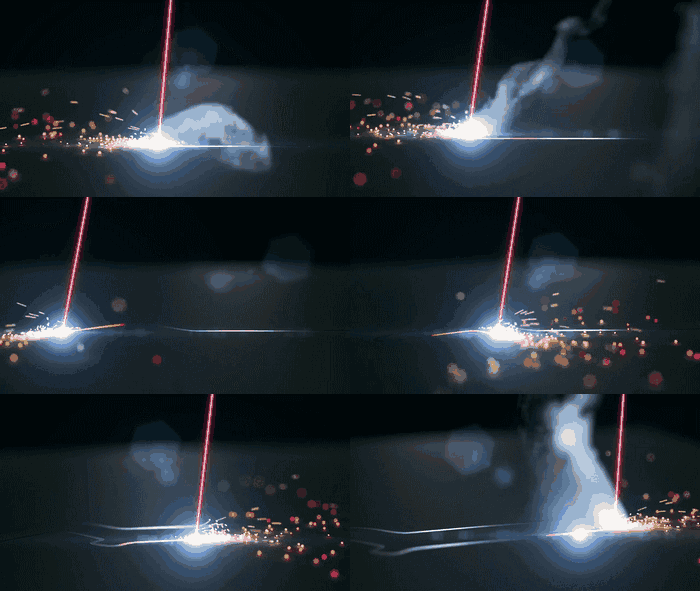 Laser Scanning and Melting
 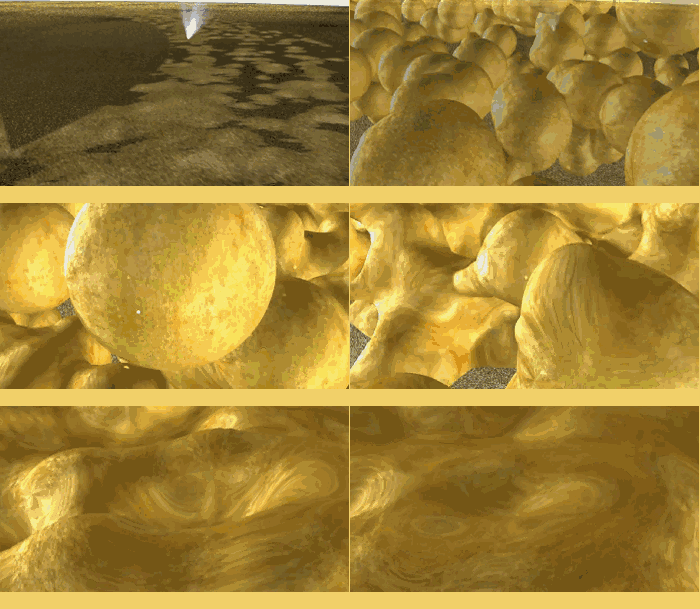 Metal Powder Melting ProcessDuring the metal 3D printing process, since the parts are usually complex, support materials are needed for printing. After the parts are completed, supports need to be removed, and the surface of the parts needs to be treated.
  Removal of Parts
 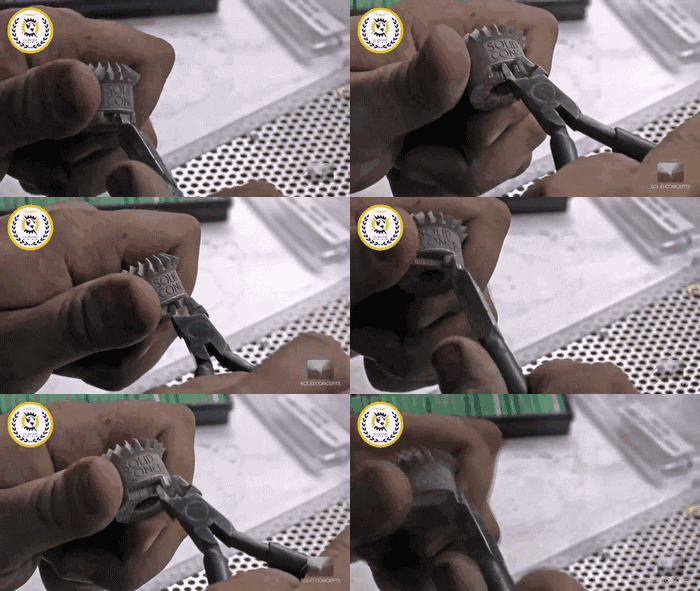 Support Removal
 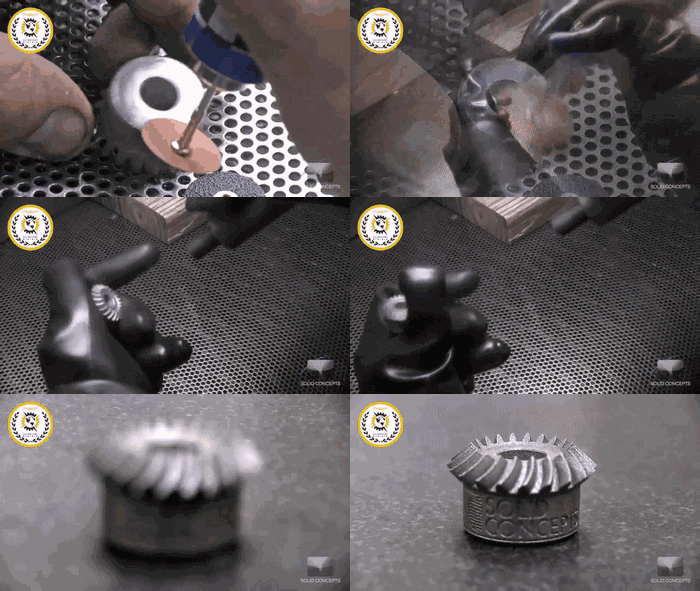 Post-Processing
3. SLS (Selective Laser Sintering)
SLS is a selective laser sintering technology similar to SLM technology, differing primarily in laser power, and is commonly used for 3D printing of polymer materials.Below is the process of preparing plastic parts using SLS: 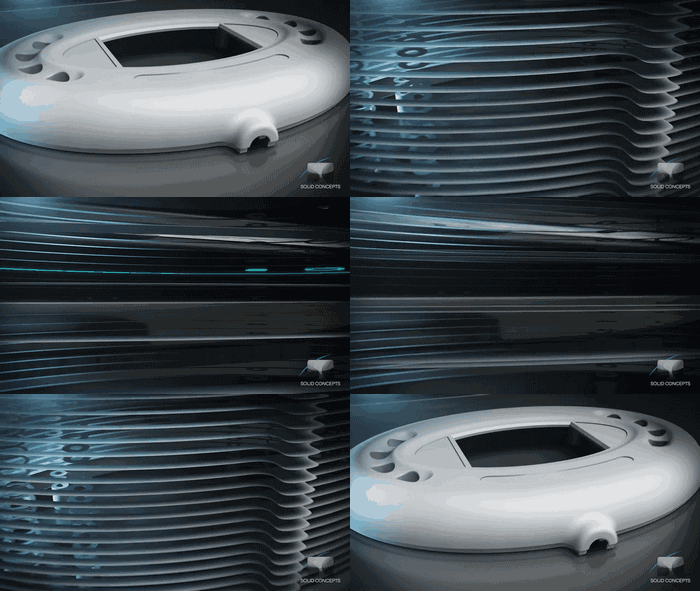 Model Layer Slicing
  Laser Sintering Process
 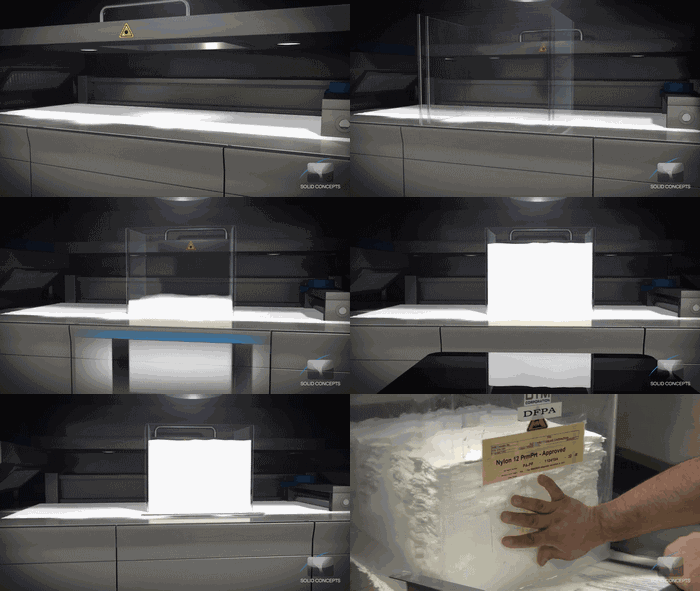 Removal of Parts
  Post-ProcessingSLS can also be used to manufacture metal or ceramic parts, but the density of the obtained parts is low and requires subsequent densification treatment before use.
  SLS Manufacturing of Metal Parts
4. LMD (Laser Metal Deposition)
LMD is a laser cladding technology that has various names, as different research institutions have independently studied and named it. Common names include: LENS, DMD, DLF, LRF, etc. The main difference from SLM is that the powder is gathered to the work surface through a nozzle, converging with the laser at a point, and the powder melts and cools to form an accumulated cladding entity.Below is the working process of LENS technology: 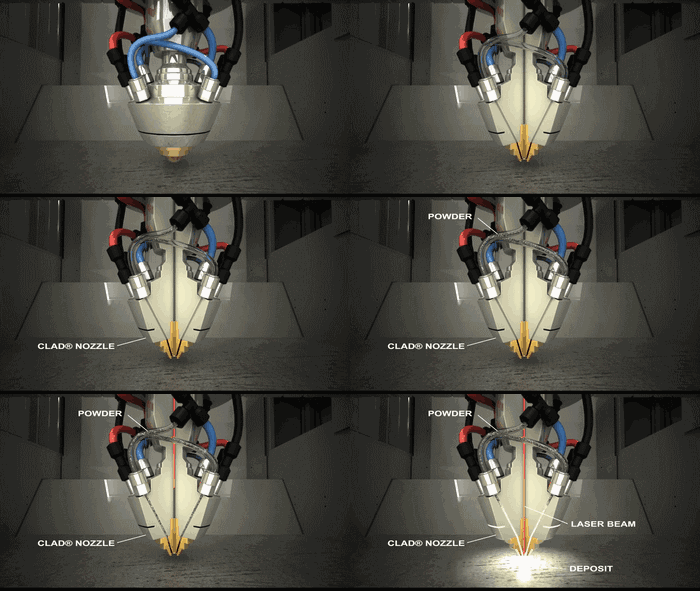 Coaxial Powder Feed
 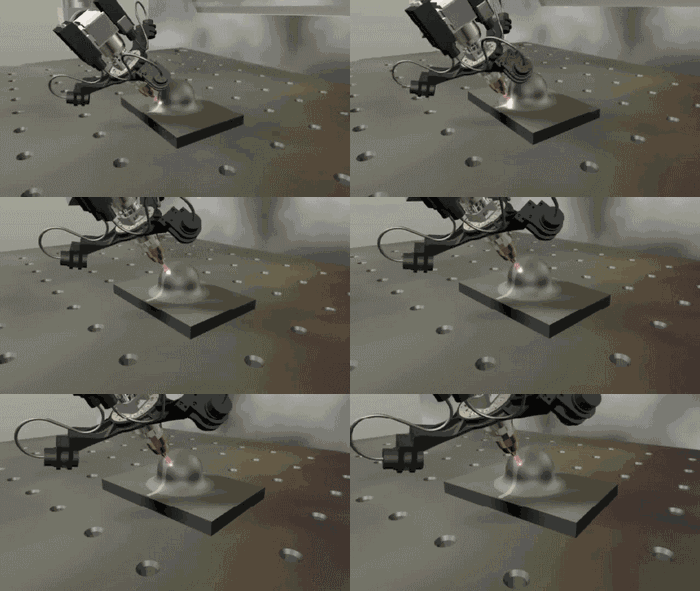 Building Process
5. EBM (Electron Beam Melting)
EBM is an electron beam melting technology whose process is very similar to SLM, with the difference being that the energy source used in EBM is an electron beam. The output energy of the electron beam in EBM is usually an order of magnitude greater than the laser output power in SLM, and the scanning speed is also much higher than that in SLM. Therefore, during the construction process, EBM requires preheating of the entire build platform to prevent excessive temperature during the forming process, which could lead to significant residual stress.Below is the working process of EBM: 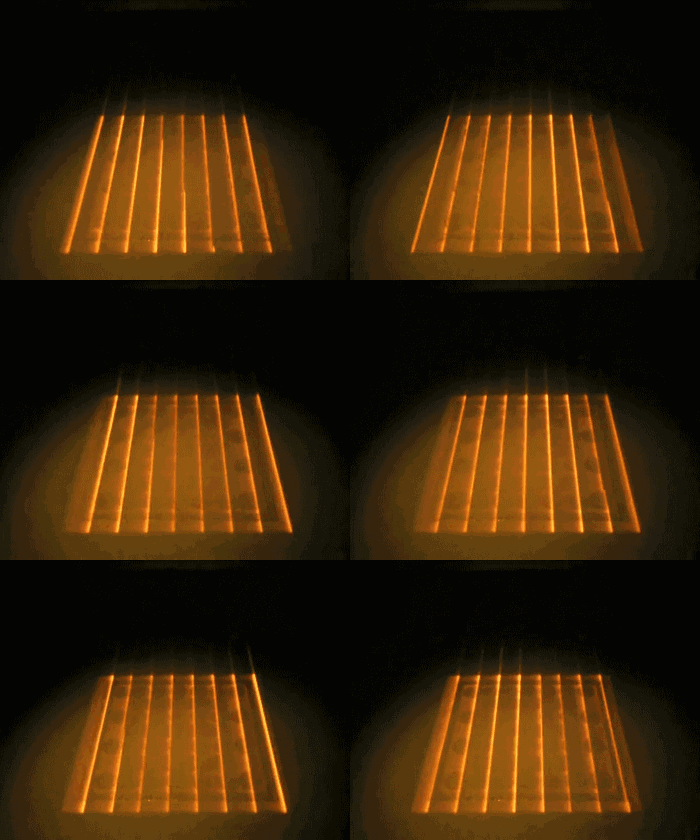 Overall Preheating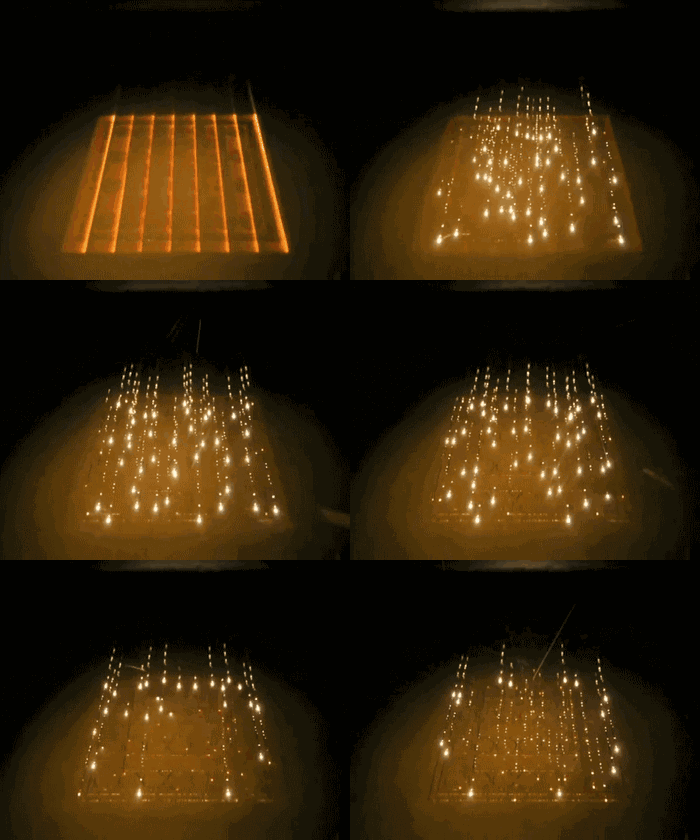
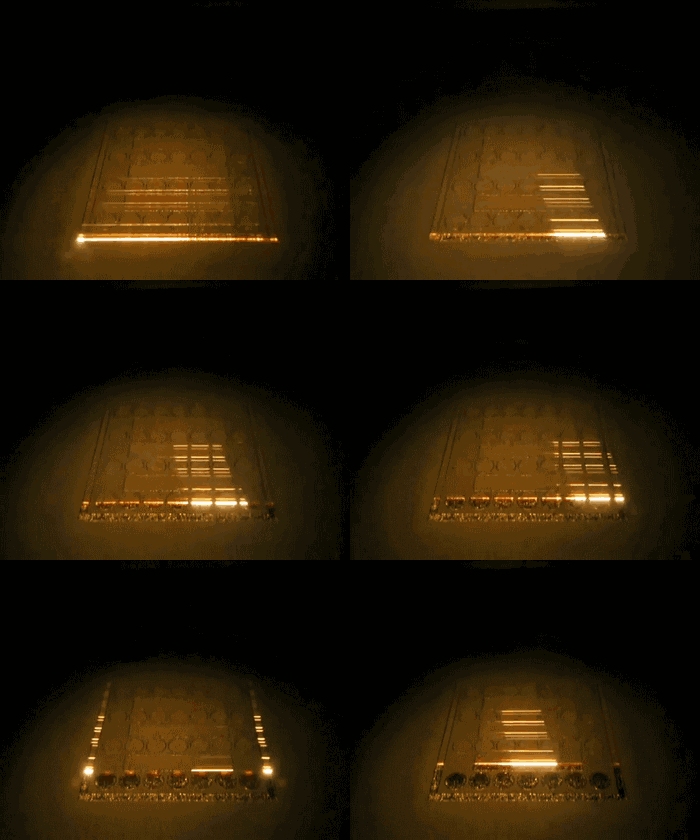 Forming Process
 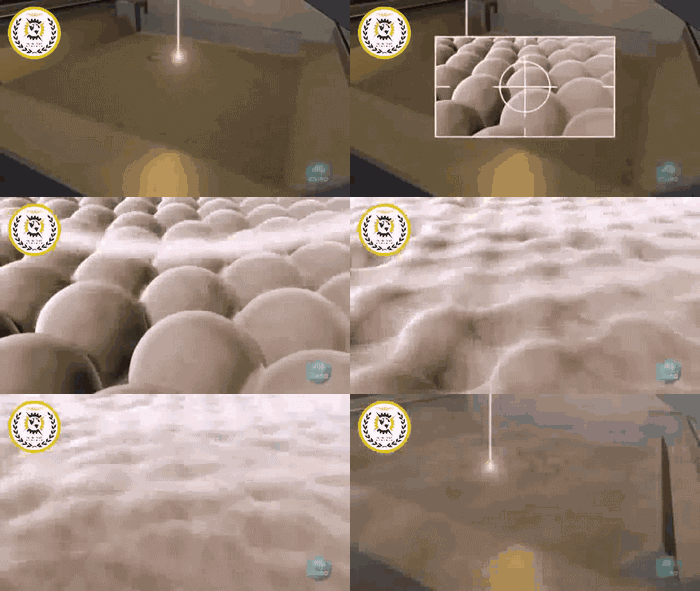 Changes in Powder During Melting Process Source: Industrial Design. If there is any infringement, please contact for deletion.
Disclaimer:The content provided by the media is sourced from various platforms, and the copyright belongs to the original author. Please contact the original author for permission to reprint.The views expressed in the article are solely those of the author and do not represent the position of Global Physics.
Click the link to view:“Global Physics Efficient Score Improvement Plan” targeting high school entrance examinations, physics competitions, and perfect physics, aiming for a short-term score increase of 40-60 points.
Global Physics
ID: huanqiuwuli
Global Physics is dedicated to the theme of physics learning and the dissemination of physics culture. We specialize in physics and are committed to physics! Our goal is to inspire learners’ interest in physics, share the wisdom of physics, and help everyone learn to think using physics concepts, showcasing a fascinating, colorful, and magical world of physics!
Consultation phone: 010-56143955 010-56143855
For submissions, please contact [email protected]
Address: Room 1101, Ming Shang Building, Suzhou Street, Haidian District, Beijing, Global Physics

Call the consultation phone for participation in the physics training camp for a short-term effective improvement in physics!Welcome to call the consultation phone:13581994719