Introduction: Boeing has made a groundbreaking announcement with the launch of its 3D printed solar array, which is expected to halve the production time for satellites, potentially reshaping the future of space exploration and satellite deployment.
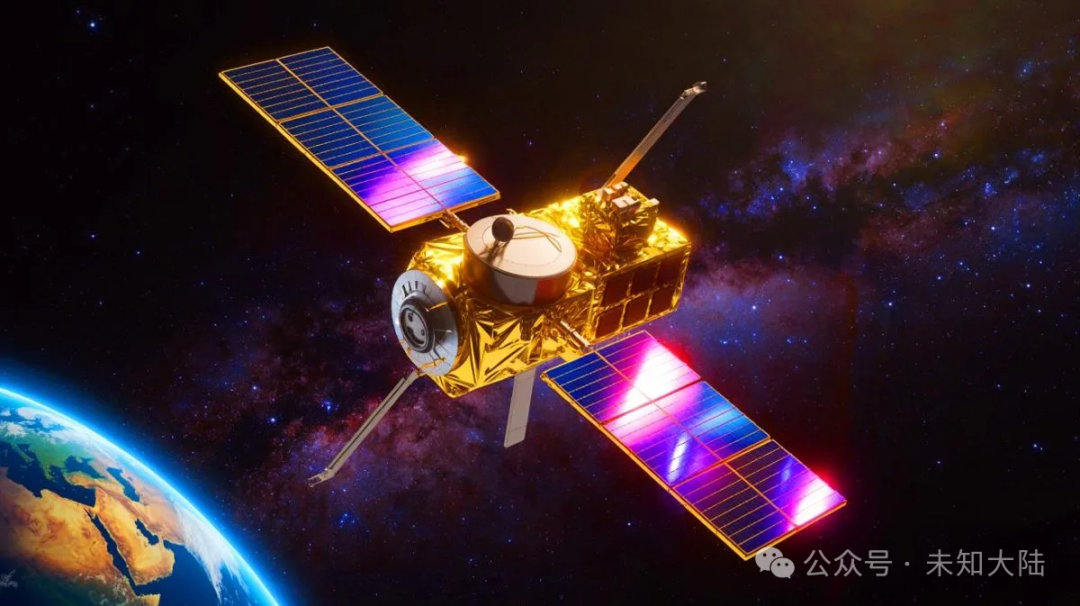
Illustration of Boeing’s 3D printed solar array, aimed at improving satellite production efficiency
In Brief
🚀 Boeing has launched a 3D printed solar array that can reduce satellite production time by 50%.
🛰️ The new design integrates components directly, reducing the need for separate parts and tools.
🔧 Boeing plans to expand this technology to larger platforms to enhance efficiency and performance.
🌌 This innovation could reshape the future of space exploration and satellite deployment.
Boeing’s introduction of the 3D printed solar array marks a significant leap in the aerospace industry. This innovative approach aims to cut the production cycle of these critical satellite components in half. Such a short production cycle could fundamentally change how satellites are built and deployed, with hopes of operational missions by 2026. The deployment of these 3D printed solar arrays signifies a notable shift in satellite manufacturing, promising increased efficiency and speed. As Boeing continues to push the boundaries of aerospace technology, the impact of this development could ripple across the industry, affecting the pace and cost of space exploration.
A Revolution in Satellite Production
Boeing’s entry into the 3D printing of solar arrays is a significant step towards modernizing satellite production. The aerospace giant claims that by integrating 3D printing technology into its manufacturing process, it can reduce the typical manufacturing time for solar array wings by up to six months. Compared to traditional methods, this means a 50% increase in production speed. These advancements in additive manufacturing will have a substantial impact on satellite constellations and provide a competitive edge in the rapidly evolving aerospace sector.
The first generation of 3D printed solar arrays will utilize Spectrolab solar cells and will be installed on small satellites developed by Millennium Space Systems, both of which are part of Boeing’s Space and Launch Systems division. The integration of robotic-assisted assembly and automated inspection further enhances the efficiency of this process, minimizing human error and ensuring consistency.
Michelle Parker, Vice President of Boeing’s Space and Launch Systems, emphasized the significance of this development, stating, “Momentum dictates the pace of the mission.” Boeing’s new approach not only aims to accelerate production but also sets a new benchmark for future satellite missions.
Innovative Design Features
Boeing’s innovative design for the 3D printed solar panels allows for the direct integration of various components into the substrate. This design eliminates the need for dozens of separate parts, long-cycle molds, and intricate bonding steps. Instead, each panel is crafted as a robust single piece, precisely integrating wiring paths and connection points. This streamlined production significantly saves time and enhances structural integrity.
Boeing’s comprehensive collaboration with Millennium Technologies leverages its expertise in additive manufacturing, Spectrolab’s efficient solar technology, and Millennium’s production capabilities. Ultimately, both parties achieved a parallel construction process, synchronizing the production of solar arrays with the manufacturing of solar cells, further shortening production time and supporting more efficient manufacturing.
By transforming production speed into strategic capability, Boeing aims to assist its customers in deploying resilient satellite constellations more quickly. This advancement will redefine the landscape of satellite technology, providing enhanced capabilities and efficiency.
Expansion to Larger Platforms
While the initial focus of Boeing’s 3D printed solar arrays is on small satellites, the company also plans to extend this technology to larger platforms. The design is adaptable and can be applied to Boeing’s 702 series and future spacecraft. The company aims to commercialize these solar arrays by 2026, demonstrating its commitment to driving innovation across its product line.
Boeing has integrated over 150,000 3D printed parts into its product portfolio, including more than 1,000 RF components on each of the broadband global satellite communications (WGS) satellites currently in production. Several small satellite product lines also feature fully 3D printed structures, highlighting Boeing’s emphasis on additive manufacturing.
Melissa Orme, Vice President of Materials and Structures at Boeing’s Technology Innovation, emphasized the potential of 3D printing: “As we scale additive manufacturing across Boeing, we are not only saving time and costs but also enhancing performance.”
This approach is expected to improve performance while reducing production time and costs, providing compelling value propositions for Boeing’s customers.
Impact on the Aerospace Industry
Boeing’s launch of the 3D printed solar array could have profound implications for the aerospace industry. By shortening production times and reducing costs, Boeing is setting a new standard for satellite manufacturing. This innovation not only enhances the competitiveness of Boeing’s products but also lays the groundwork for a new era of faster and more efficient satellite deployment.
Boeing’s strategic integration of additive manufacturing into its production processes reflects a broader trend within the industry. As aerospace manufacturers strive to improve efficiency and reduce costs, 3D printing is becoming an increasingly attractive option. The future development potential in this field is immense, promising lighter structures, more innovative designs, and enhanced performance.
These developments could shape the future of satellite technology, providing new opportunities for exploration and innovation. As Boeing continues to push the limits of aerospace manufacturing, one question remains: how will these advancements impact the next generation of space exploration?
With Boeing’s 3D printed solar array set to hit the market, the aerospace industry is watching closely. It promises to shorten production times, reduce costs, and enhance performance, all of which provide strong reasons for the widespread adoption of this technology. However, as the industry evolves, questions remain about its broader impact on satellite manufacturing and future space exploration. How will other aerospace companies respond to this technological leap? What new innovations will emerge as a result?