The projection photopolymerization 3D printing technology features high manufacturing precision, fast forming speed, and the ability for mass production, making it particularly advantageous in manufacturing high-precision structures. The microneedles, microspheres, and microfluidic chips manufactured using projection photopolymerization technology have significant application prospects in wound healing, drug delivery, and tissue engineering.
To help everyone understand the research progress of projection photopolymerization technology in the manufacturing of microneedles, microspheres, and microfluidic chips, EFL has compiled some recent related research for reference.
1. Microneedle Manufacturing
Microneedles consist of multiple micron-sized tips connected in an array to a base. The projection photopolymerization printing technology allows for the personalized design of microneedle models based on treatment needs, including adjustments to their length, size, and shape. Microneedles can penetrate the stratum corneum to create micron-sized mechanical channels, delivering drugs directly to the epidermis or upper dermis without needing to pass through the stratum corneum, thus participating in microcirculation and exerting pharmacological effects.
1. “Advanced Functional Materials”: Projection Photopolymerization Manufacturing of Biomimetic Microneedles with High Tissue Adhesion (2020)
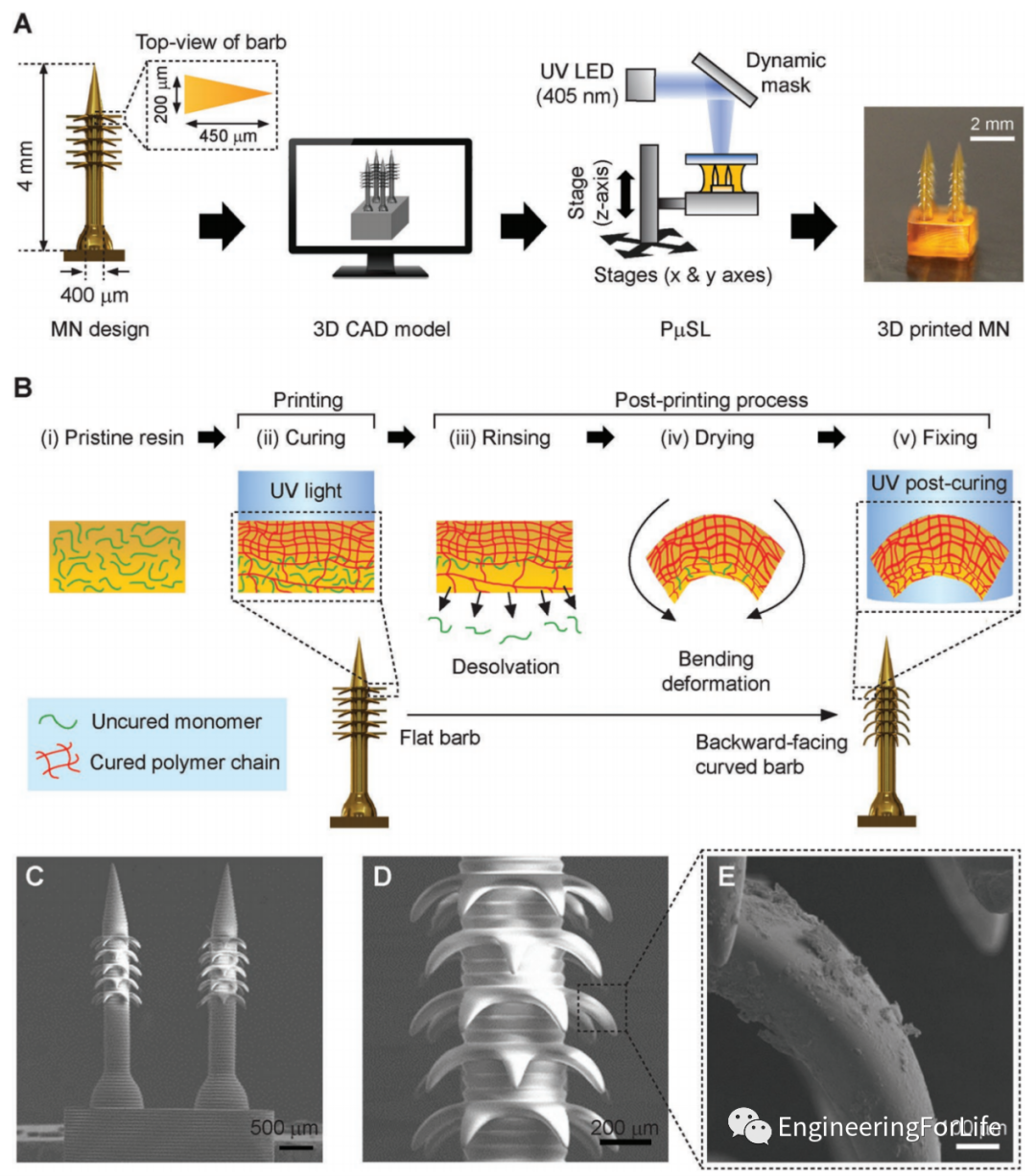
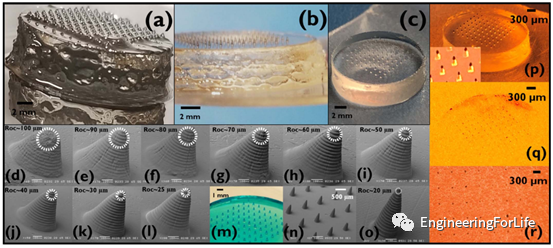
Introduction:The team led by Howon Lee at Rutgers University collaborated with Giuseppe Barillaro’s team at the University of Pisa to design a microneedle with a biomimetic backward-facing barb structure using projection photopolymerization technology. The barbs on the microneedle are manufactured by utilizing the desolvation-induced deformation of crosslink density gradients in the photopolymer. The thickness and curvature of the barbs are controlled by adjusting printing parameters and material composition. The related paper “4D Printing of a Bioinspired Microneedle Array with Backward-Facing Barbs for Enhanced Tissue Adhesion” was published in Advanced Functional Materials.
— Click the image View Details —
2. “Journal of Industrial and Engineering Chemistry”: Manufacturing Silk Fibroin Microneedles Using Projection Photopolymerization 3D Printing Technology (2020)
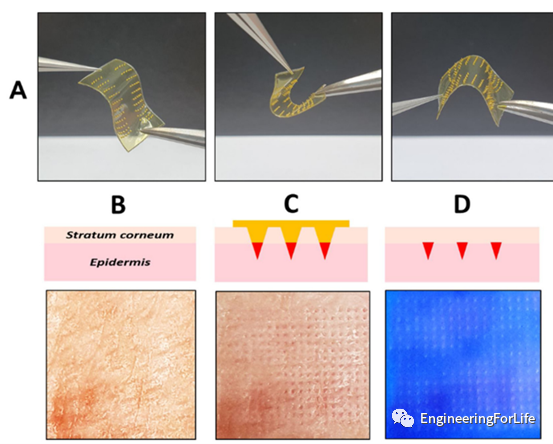
Introduction:Jinho Hyun and Donghyeok Shin from Seoul National University used projection photopolymerization 3D printing technology to manufacture hydrogel microneedles based on silk fibroin. This technology facilitates the direct construction of low-concentration silk fibroin 3D structures, and the researchers enhanced printing accuracy by dehydrating the printed hydrogel structures. Subsequent studies investigated the flexibility of the silk fibroin microneedles and validated the molecular delivery performance to the skin using rhodamine B fluorescent dye. The related research “Silk fibroin microneedles fabricated by digital light processing 3D printing” was published in the Journal of Industrial and Engineering Chemistry.
Original link:
https://doi.org/10.1016/j.jiec.2020.12.011
3. “Journal of Controlled Release”: Personalized Microneedles for Transdermal Delivery of Anti-Wrinkle Peptides Using Projection Photopolymerization 3D Printing (2020)
Introduction:Acetyl-hexapeptide 3 (AHP-3) is an effective anti-wrinkle peptide with good efficacy and safety; however, its hydrophilicity and large molecular weight result in poor skin permeability. The 3D printed personalized microneedles (MN) conform to the skin surface, providing an effective alternative for AHP-3 delivery. However, the existing commercial photopolymer resins are unsuitable for manufacturing drug delivery systems. Seng Han Lim from the National University of Singapore and Lifeng Kang from the University of Sydney utilized polyethylene glycol diacrylate (PEGDA) and vinylpyrrolidone (VP) in different ratios to calculate key parameters such as the mechanical strength, polymerization rate, and swelling rate of the final polymer, ensuring both 3D printing resolution and safety. In vitro characterization of the MN patches manufactured by projection photopolymerization indicated they could penetrate human cadaver skin and maintained integrity after compression. The final polymer showed low cytotoxicity to human dermal fibroblasts. Therefore, personalized MN patches made using photopolymers may offer a new method for enhancing AHP-3 transdermal delivery for effective wrinkle management. The related study “High resolution photopolymer for 3D printing of personalised microneedle for transdermal delivery of anti-wrinkle small peptide” was published in the Journal of Controlled Release.
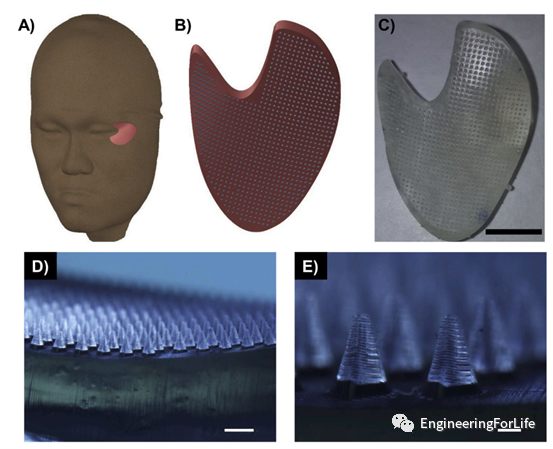
Original link:
https://doi.org/10.1016/j.jconrel.2020.10.021
4. “International Journal of Pharmaceutics”: Recent Advances in 3D Printed Microneedles for Transdermal Drug Delivery (2020)
Introduction: Compared to traditional non-oral drug delivery methods (such as intravenous, intramuscular, and subcutaneous injections), microneedles have attracted significant attention as a novel transdermal delivery system. However, the immense difficulty in precisely manufacturing these microneedles and patches at the microscale has greatly hindered their commercialization and clinical application, especially in personalized medicine. Recently, many studies have reported methods for manufacturing transdermal delivery systems using 3D printing techniques, employing various printing methods and formulation strategies to create substance delivery systems and biomimetic microneedles with complex structures. Professor Yang Gensheng from Zhejiang University of Technology reviewed recent research on 3D printed microneedles, outlining their advantages and limitations, and discussing promising potential applications as novel drug delivery systems. The related paper “Recent progress of 3D-printed microneedles for transdermal drug delivery” was published in the International Journal of Pharmaceutics.
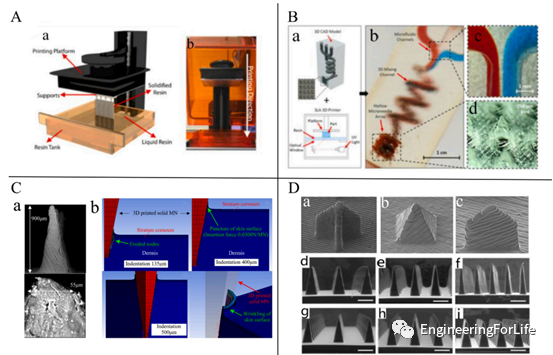
Original link:
https://doi.org/10.1016/j.ijpharm.2020.120106
5. “Journal of Microelectromechanical Systems”: Projection Photopolymerization 3D Printed “Smart” Microneedle Arrays (iµNA) for Stimuli Responsive Drug Release and Its In Vitro and Ex Vivo Characterization (2020)
Introduction: Avra Kundu, Nilab Azim, and Swaminathan Rajaraman from the University of Central Florida utilized projection photopolymerization 3D printing technology to crosslink hydrogels and polyethylene glycol diacrylate (PEGDA) to manufacture “smart”, transdermal, minimally invasive microneedle arrays (iµNA). The researchers optimized printing conditions to ensure excellent mechanical strength while maintaining the characteristics of PEGDA hydrogels, allowing for the diffusion swelling/delivery of therapeutic drugs like diclofenac sodium. In vitro drug release studies indicated that the PEGDA-based iµNA could serve as a stimuli-responsive device, exhibiting different release characteristics in response to external stimuli such as temperature and pH. The related research “Projection Photopolymerization 3D Printed ‘Intelligent’ Microneedle Array (iµNA) for Stimuli Responsive Release of Drugs and Its in Vitro and ex Vivo Characterization” was published in the Journal of Microelectromechanical Systems.
Original link:
https://ieeexplore.ieee.org/document/9126784
6. “Micromachines”: Multifunctional Hydrogel Microneedles Based on High-Precision Projection Photopolymerization 3D Printing (2019)
Introduction: In recent years, polymer microneedles (MNs) have become a novel tool in clinical medicine. However, customizing the 3D construction of MNs remains a challenge. Professor Yang Runhuai’s team from Anhui Medical University proposed a method for manufacturing hydrogel microneedles using a high-precision projection photopolymerization 3D printing system. Thanks to the sharp protrusions and micropores of the hydrogel microneedles, they can execute multifunctional tasks such as drug delivery and detection with minimal invasion. The research results indicate that stiffness and precision are significantly affected by the exposure time for each layer, and optimized printing parameters provide a balance between precision and stiffness. This study offers a low-cost, rapid 3D construction method for MNs, verifying the mechanical properties, drug injection, and drug detection capabilities of MNs, which may assist in potential clinical applications.
Original link:
https://doi.org/10.3390/mi11010017
7. “Pharmaceutics”: Optimization of Printing Parameters in the Manufacturing of Hollow Microneedle Arrays Using Projection Photopolymerization (2021)
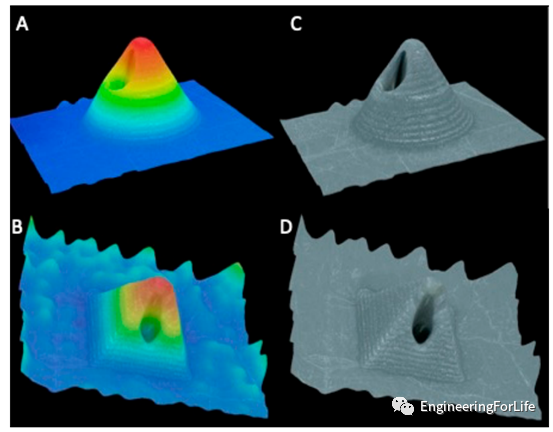
Introduction:Dimitrios A. Lamprou’s team from Queen’s University Belfast proposed a projection photopolymerization 3D printing method for manufacturing hollow microneedle (MN) arrays using commercial UV-curable resins. By evaluating the impact of printing angles on the geometry of the microneedles, they optimized print quality, using texture analyzers for mechanical testing of the MN arrays. It was found that angled printing structures could produce geometries closer to the designed 3D models, and the curing time affected the mechanical strength of the MNs. The printed microneedle structures deformed under a force of 300 N, but the microneedle arrays did not break. This study provides a feasible, rapid, and effective method for manufacturing hollow MN arrays using projection photopolymerization technology.
Original link:
https://doi.org/10.3390/pharmaceutics13111837
2. Microsphere Manufacturing
Microspheres can serve as individual cell culture units or be assembled into porous scaffolds or biomimetic microenvironments, featuring a high specific surface area that provides more proliferation and differentiation space for cells. On the other hand, microspheres can be widely used as carriers for cells and drugs, and due to their controllability and injectability, they can achieve minimally invasive treatment for irregular wounds. The advantages of high-precision manufacturing using projection photopolymerization technology enable the mass production of microspheres with extremely small dimensions, which can be widely applied in cell culture, tissue engineering, and regenerative medicine.
1. “Biomaterials”: Constructing Cell Microstructures for Subconjunctival Ocular Injection Using Projection Photopolymerization Bioprinting Technology (2020)
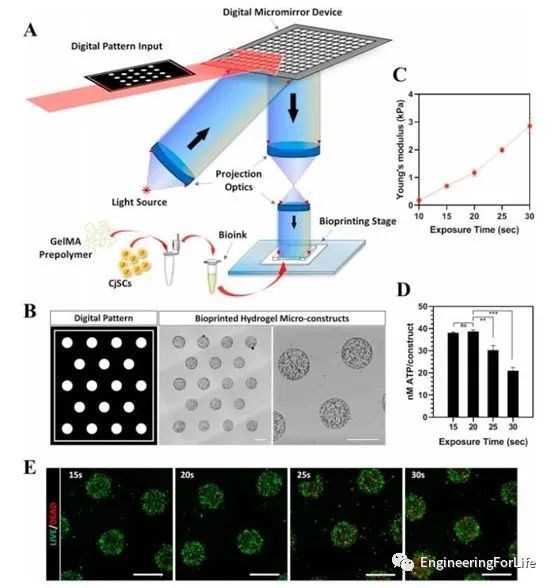
Introduction:The team led by Professor Chen Shaochen from the University of California constructed hydrogel microstructures loaded with conjunctival stem cells (CjSCs) using digital light processing (projection photopolymerization) bioprinting technology. The encapsulated cells can maintain cell viability, stem cell phenotype, and differentiation potential towards conjunctival cup cells. The printed hydrogel microstructures are suitable for dynamic suspension culture of CjSCs and can be delivered to the conjunctival epithelium through minimally invasive subconjunctival injection. The related paper “Rapid bioprinting of conjunctival stem cell micro-constructs for subconjunctival ocular injection” was published in Biomaterials.
— Click the imageView Details —
2. “ACS Applied Materials & Interfaces”: Projection Photopolymerization 3D Printing for Customized Functional Microgels (2019)
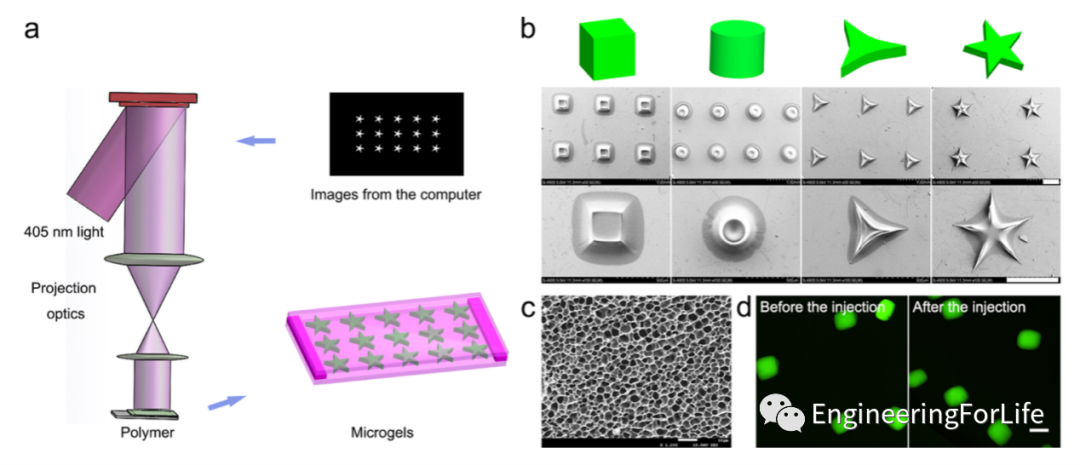
Introduction: Injectable microgels are widely used in various fields such as gene therapy, tissue engineering, and cell therapy; however, the existing techniques for preparing customized microgels are too complex and time-consuming. The research team led by Professor Gou Maling from Sichuan University published a paper titled “3D Printing Enabled Customization of Functional Microgels” in “ACS Applied Materials & Interfaces”, where they used projection photopolymerization 3D printing technology to manufacture microgel structures with customized shapes and sizes. These microgel structures, due to their encapsulation of nanoparticles with drugs, possess sustained drug release functions. Similarly, the researchers verified that the encapsulated cells within the microgel structures have survival and proliferation capabilities.
— Click the imageView Details —
3. Microfluidic Chip Manufacturing
1. “Biofabrication”: Customizable Multi-Material Hydrogel Microfluidic Chips Fabricated by Projection Photopolymerization (2021)
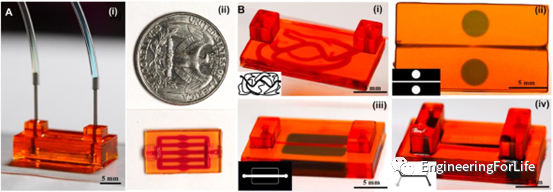
Introduction:The team led by Amir K. Miri from Rowan University developed a projection photopolymerization bioprinter that can rapidly and in one step produce multi-material composite hydrogel microfluidic chips based on polyethylene glycol diacrylate (PEGDA) and methacrylated gelatin (GelMA). These microfluidic chips exhibit good mechanical properties and biocompatibility, effectively promoting microtissue vascularization. This biomanufacturing method can greatly assist in the rapid integration of microtissue models into organ-on-chip and high-throughput drug screening platforms. The related paper “Multi-Material Digital Light Processing Bioprinting of Hydrogel-Based Microfluidic Chips” was published in the journal Biofabrication.
— Click the imageView Details —
2. “Bio-Design and Manufacturing”: 3D Printed Concentration Gradient Microfluidic Chips for Rapid Antibiotic Susceptibility Testing (2022)
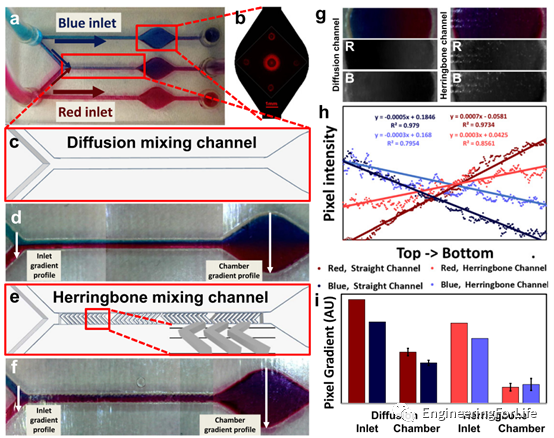
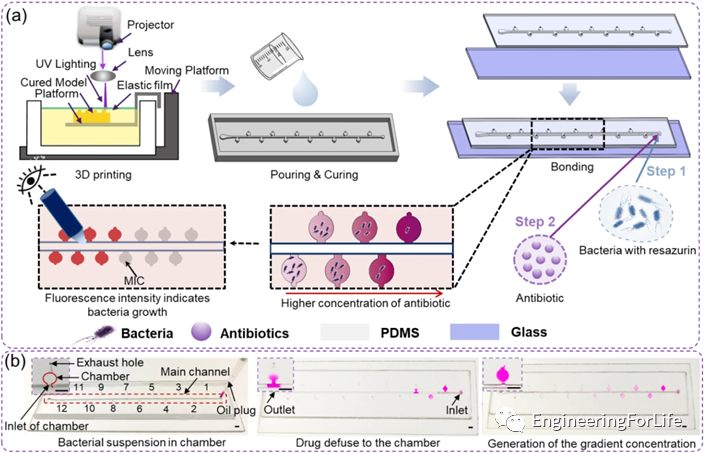
Introduction:Jiu Feng and Zhou Nanjia from Westlake University designed a microdroplet chip based on flow resistance, combined with the application of the blue-green biological indicator to indicate microbial growth under different concentrations of antibiotics within 5 hours. This chip features several independent retention chambers that can automatically generate antibiotic concentration gradients and form independent microdroplets for detecting bacterial susceptibility. The chip simplifies control operations and equipment integration, significantly shortening the antibiotic susceptibility testing time compared to traditional methods, and shows good application prospects. The related research “A 3D-printed microfluidic gradient concentration chip for rapid antibiotic-susceptibility testing” was published in Bio-Design and Manufacturing.
— Click the imageView Details —
3. “Nature Communications”: Transparent Microfluidic Devices Manufactured by In-Situ Transfer Photopolymerization Technology (2022)
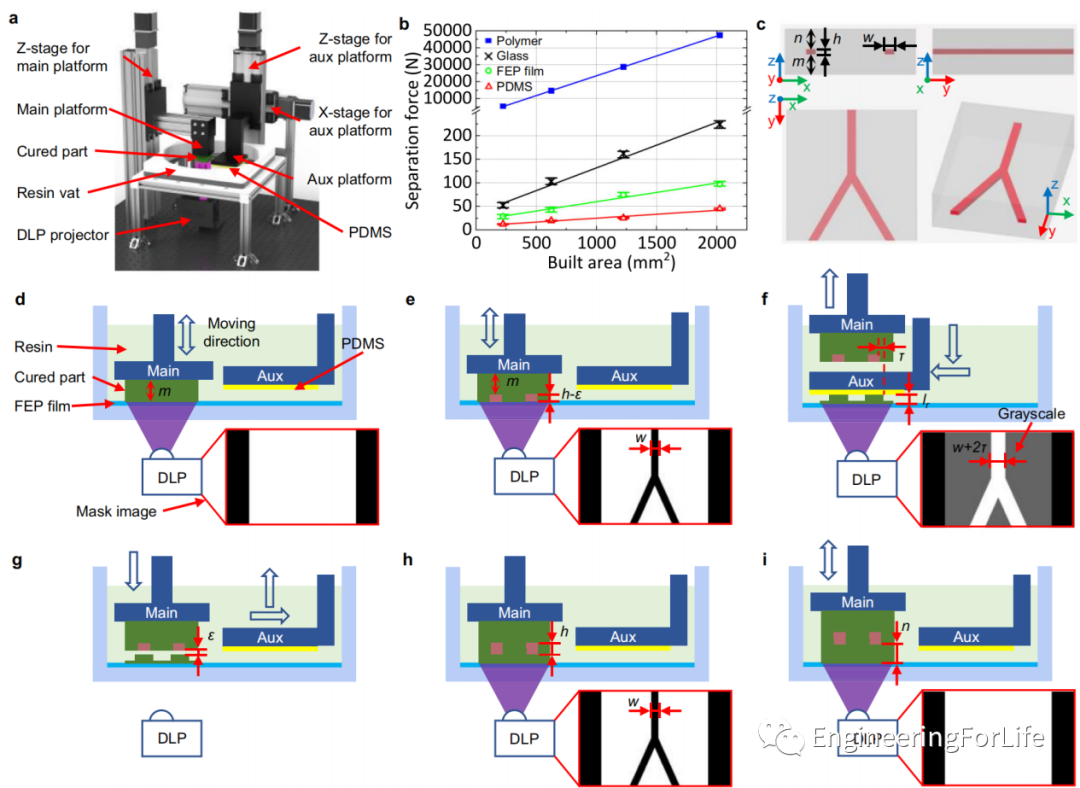
Introduction: The team from the University of Southern California, led by Yong Chen, proposed a 3D printing technology – in-situ transfer vat photopolymerization (IsT-VPP), which can accurately fabricate microfluidic channels with high resolution (within 10μm) and precision (±1μm) in the Z-axis direction, breaking the limitation of light penetration depth on the height of printed channels. The related paper “In-situ transfer vat photopolymerization for transparent microfluidic device fabrication” was published in Nature Communications.
— Click the imageView Details —
4. “PLoS One”: Microfluidic Chips for Nucleic Acid Amplification Manufactured Using Projection Photopolymerization (2020)
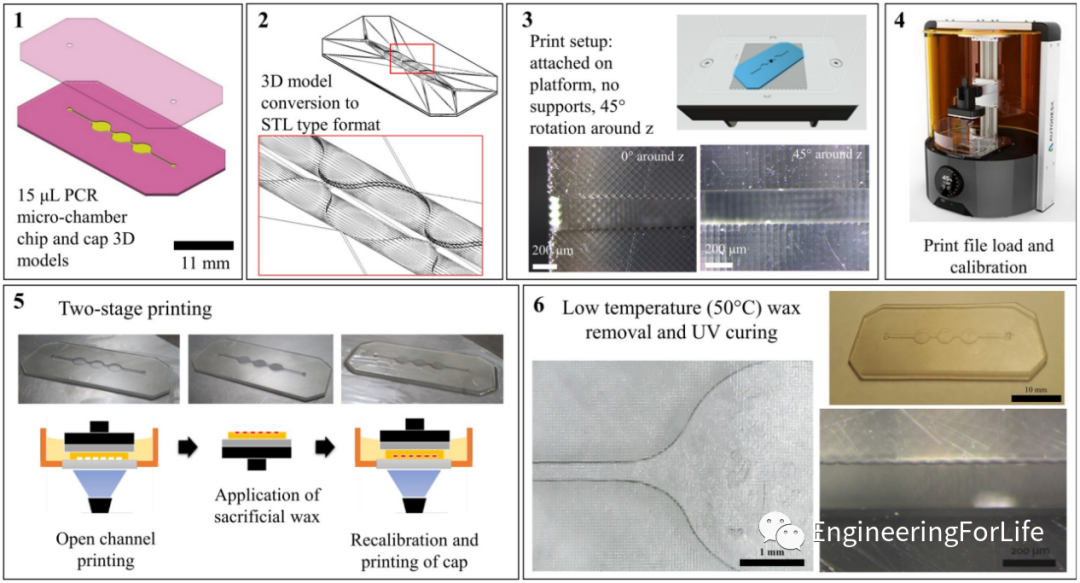
Introduction: Projection photopolymerization offers a low-cost alternative for the fabrication of microfluidic chips. Charalampos Tzivelekis from Newcastle University investigated the projection photopolymerization printing performance for the geometries of microfluidic chips suitable for polymerase chain reaction (PCR), developing and evaluating the projection photopolymerization printing process for microfluidic chip manufacturing. Considering factors such as low cost and design flexibility, projection photopolymerization is expected to play a key role in future microfluidic chip designs, especially in biological research and molecular diagnostics. From a system perspective, the proposed thermal cycling method shows potential for functional and modular integration for diagnostic or research applications utilizing nucleic acid amplification technologies. The related research “Fabrication routes via projection stereolithography for 3D-printing of microfluidic geometries for nucleic acid amplification” was published in PLoS One.
Original link:
https://doi.org/10.1371/journal.pone.0240237
5. “Biofabrication”: Custom Microfluidic Chips and Cell-Laden Hydrogel Structures Manufactured Using Projection Photopolymerization (2016)
Introduction:3D printing offers the potential for manufacturing high-throughput and low-cost microfluidic devices, serving as a promising alternative to traditional techniques that enable efficient design iterations during the development phase. Savas Tasoglu from the University of Connecticut utilized projection photopolymerization 3D printers for microfluidic chip manufacturing. Compared to traditional manufacturing methods using relatively expensive materials and labor-intensive processes, this approach provides a low-cost and rapid prototyping technology for functional microfluidic chips. It enhances the capabilities of microfluidic chips by coupling cells and patterned structures within photopolymerizable gelatin methacrylate (GelMA). This study demonstrates the new uses of projection photopolymerization printed microfluidic chips as controllable 3D cell culture environments, improving the applicability of 3D printing in engineering physiological systems for future bioengineering applications. The related research “3D-printed microfluidic chips with patterned, cell-laden hydrogel constructs” was published in Biofabrication.
Original link:
https://iopscience.iop.org/article/10.1088/1758-5090/8/2/025019
Projection Photopolymerization Bioprinter (EFL-BP86 Series)
— Click the image linkView Product Details —