The Role of Additive Manufacturing (3D Printing) Technology in the Innovation of Humanoid Robots
With the rapid development of robotics technology, especially the breakthrough advancements in the field of humanoid robots, traditional manufacturing processes are gradually revealing their limitations when faced with complex structures and personalized customization demands.
The emergence of 3D printing technology has brought new development opportunities to the robotics field, particularly in the design and production of humanoid robots, where 3D printing technology is playing an increasingly important role.
▍How does 3D printing technology empower humanoid robots and lead the industry towards innovation?
As a cutting-edge direction in the robotics field, humanoid robots have extremely high requirements for precision, lightweight design, and functionality in their core components. Traditional manufacturing processes often face issues such as high costs and long cycles when dealing with complex structures, while 3D printing technology, with its flexibility and efficiency, can quickly produce complex joint structures, lightweight components, and high-precision sensor housings, significantly enhancing the performance and reliability of humanoid robots, and providing new possibilities for robot manufacturing.
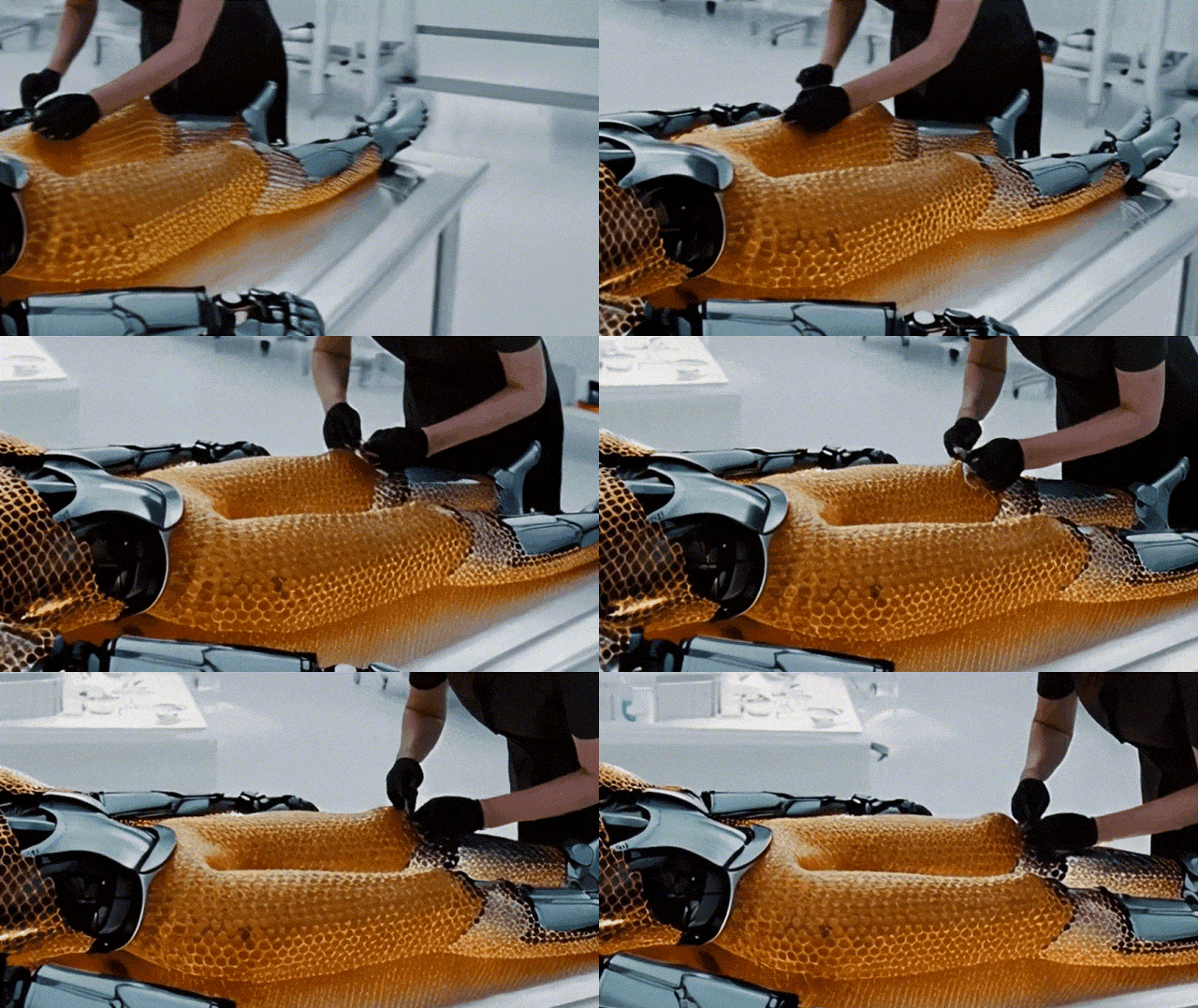
For example, in Figure 02, the application of 3D printing materials significantly enhances the performance of the robot. The newly added honeycomb-like compressible tissue near the elbow and knee joints is a new composite material produced by 3D printing. This soft stop device provides motion buffering while achieving lightweight design and enhanced heat dissipation performance, giving the humanoid robot greater flexibility and significantly extending its lifespan. By using high-performance 3D printing materials, the complex structural design of Figure 02 is realized, meeting strict requirements for motion flexibility, shock absorption, and heat dissipation, while also reducing manufacturing costs and cycles.
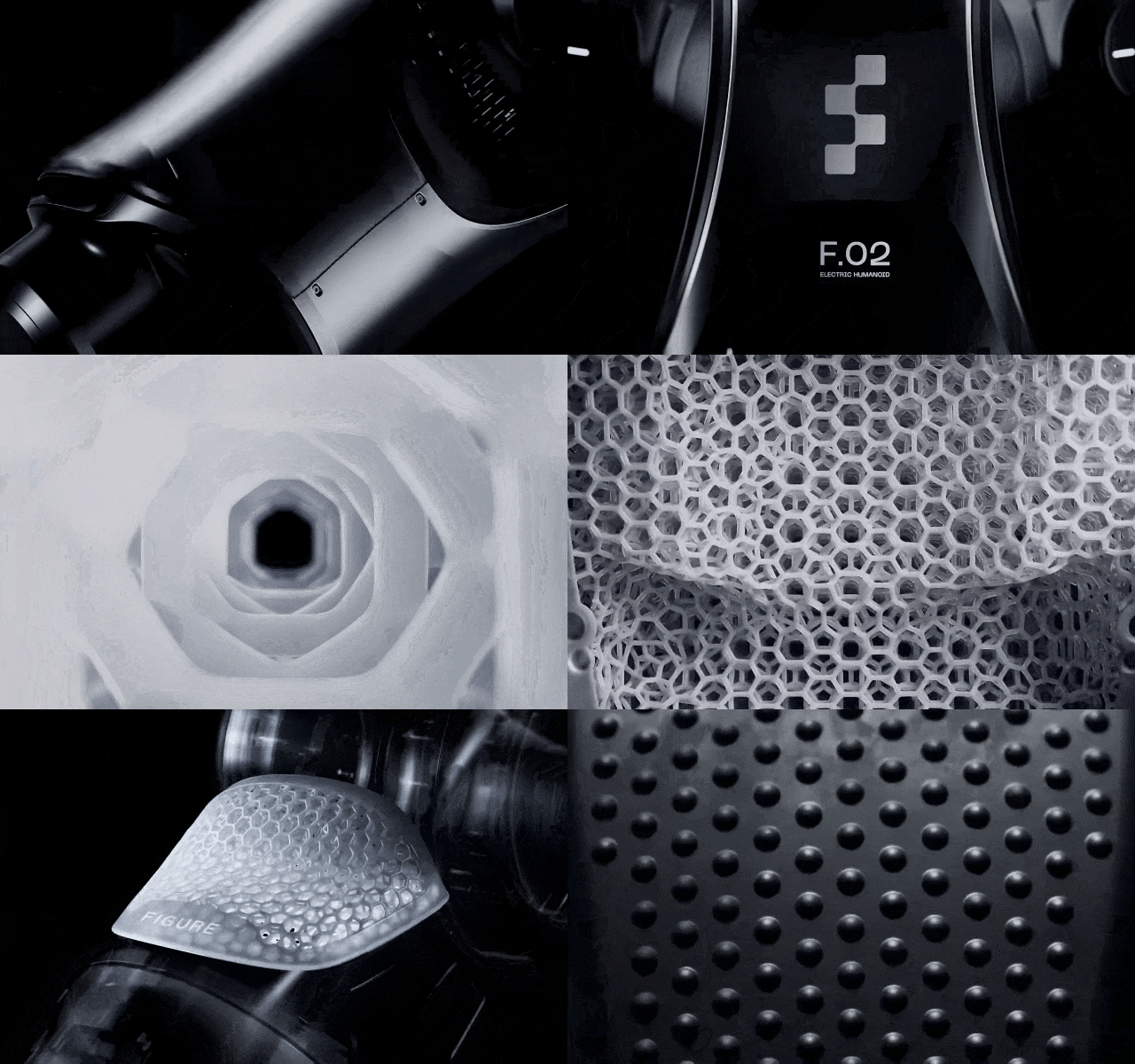
In the field of 3D printing, more and more companies are driving the rapid development of the humanoid robot industry through innovative applications of 3D printing technology.
Founded in 2017, Boli Technology, as a high-tech enterprise specializing in ultra-high-speed 3D printing across the entire industry chain, has been deeply engaged in this field for seven years, building a globally leading ultra-high-speed 3D printing technology system. The 3D printing multi-layer structured honeycomb composite material launched by Boli Technology plays a key role in enhancing the performance of humanoid robots. This material has achieved over 1 million bending cycles, and possesses high elasticity, tear resistance, and strong fatigue performance, with adjustable strength, hardness, color, and toughness, making it particularly suitable for the production of key motion nodes in humanoid robots. Its excellent performance in shock absorption, lightweight design, and heat dissipation will also provide important support for enhancing the performance of humanoid robots.
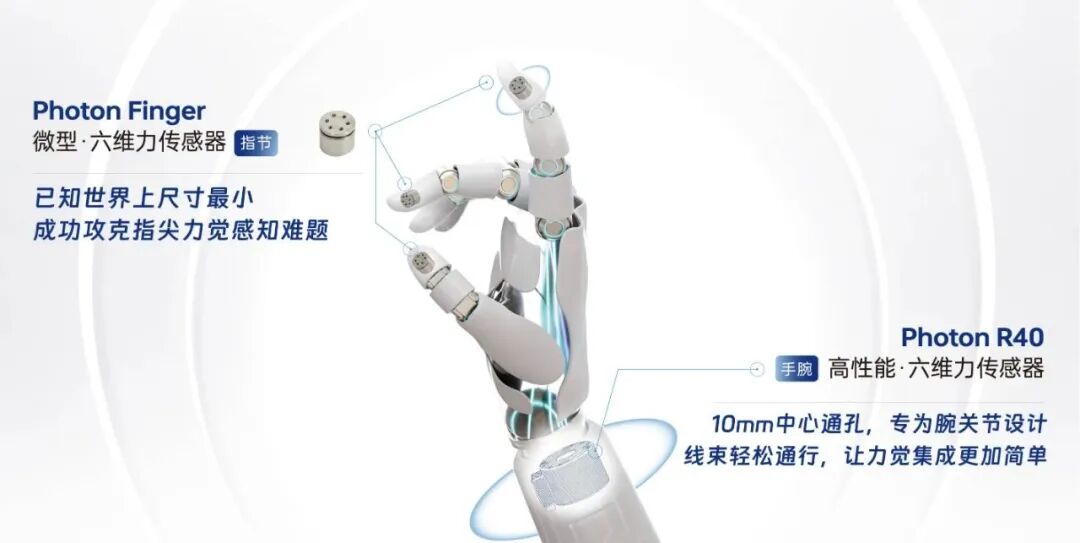
Founded in 2011, Plater, as a global leader in providing a complete set of additive technology solutions, utilizes its self-developed metal 3D printing equipment and processes, in deep collaboration with Huali Chuang Science, to solve the bottleneck issues of traditional manufacturing processes, providing efficient and precise solutions for the manufacturing of core components of humanoid robots. In the development of six-dimensional force sensors, Plater’s metal 3D printing technology not only achieves precise manufacturing of complex structures but also effectively controls costs and shortens overall delivery cycles by simplifying production processes and reducing material waste. For example, in the manufacturing process of the world’s smallest six-dimensional force sensor, Photon Finger, Plater optimized the structural design to achieve one-piece forming of components, reducing assembly and processing difficulties, shortening the processing cycle to 20 minutes per batch, and increasing production efficiency to 15-30 units per batch, significantly enhancing product performance. In the manufacturing processes of the wrist joint six-dimensional force sensor PhotonR40 and the ankle joint six-dimensional force sensor, Plater’s technology also played a key role, aiding in the mass production of core structures, reducing weight, and enhancing the robot’s flexibility, agility, and endurance.
Founded in 2010, Applause, as a company focused on FFF2.0 high-throughput 3D printing technology, has launched the Blast series agile manufacturing platform, which provides a full lifecycle solution from prototype design to mass production for embodied intelligent devices. Its high-performance filament series (such as PPS-CF, PAHT-CF25) demonstrates significant advantages in the manufacturing of shell components and functional parts for humanoid robots.
In addition to the companies mentioned above, Siemens, Huashu High-Tech, Xinjinghe & Leiming, Hanbang Technology, Yijia 3D, Zhongrui Technology, Haitan Additive, Zhongke Yucheng, Weilai, Xidimo, Aerospace Additive, AVIC Mite, Enigma, HP, 3D Systems, Forward AM, Lian Tai Technology, Polymaker, San Green, eSUN, Raise3D, Xianlin 3D, Sikan Technology, Maris, Mangge, Yuan Casting Intelligent, Xikong Intelligent Manufacturing, IPG, China Steel Research Group, Dazhu Juwei, Arburg, Shared Intelligent Equipment, Xihe Additive, Yongnian Laser, Qingyan Zhizhu, Hunan Cloud Arrow, Beifeng Technology, Zhongti New Materials, Chuangxiang 3D, Zongwei Cube, Aileku, Tianhong Laser, Hanprint, Panxing, Jinyuan Intelligent, Mofang Precision, Phaetus, Saina 3D, Tuobo, Xietong High-Tech, Aurora Innovation, and Flash 3D (in no particular order) are among over 450 enterprises across the upstream and downstream of the industry chain that will showcase their technological innovations in various fields, including robotics. These new products feature more diverse and high-performance materials, with unprecedented levels of printing speed and precision, providing strong support for rapid manufacturing and customized production in various fields, including robotics.