1. Introduction by Teacher Wu Bin: What is an Image Sensor?In simple terms, it is a device that converts light signals into electronic signals. The images captured by mobile phone cameras need to be transformed into electronic signals through the image sensor before they can be stored on a memory card.Therefore, image sensors are crucial; without them, mobile phone photography in the digital age would not exist.Previously, image sensors merely increased electronic pixels, boasting numbers like 50 million or 100 million, but today Sony has delivered shocking news: AI automatic learning capabilities have been integrated into image sensors, which will cause a significant upheaval in the photography industry.Of course, it is still too early to assess the impact on cameras, as the size of the image sensor released by Sony this time is 1/1.12 inches, far smaller than the full-frame size of cameras. Thus, this AI image sensor is intended for mobile use.However, once Sony masters the entire process of the AI image sensor and increases its size to be usable in cameras, how far off could that be?Let’s take a look at how AI image sensors will change our future photography. 2. Introduction to Sony’s First AI Image Sensor
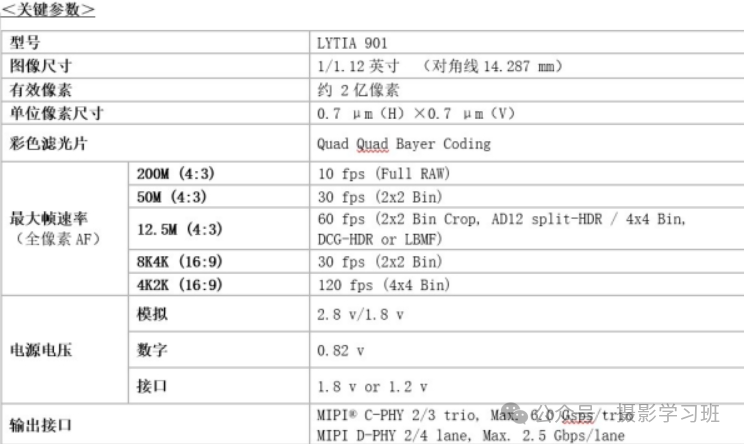
Sony’s first AI image sensor, with 200 million pixels, is namedLYTIA 901. Sony claims that from the “LYTIA 901” onwards, all subsequent products will uniformly adopt the naming convention of “LYTIA (product number)” for operation.
This is not just another high-pixel sensor; its core innovation lies inintegrating AI technology directly into the sensor hardware, achieving a leap from “calculating photos” to “perceptual recognition,” which will bring three major qualitative changes to the photography experience, detailed below.
3. Differences Between AI Sensors and Traditional Image Sensors
In traditional models, the sensor is responsible for “collecting light,” while all subsequent processing is handled by the AI algorithms on the mobile processor (SoC). The innovation of the LYTIA 901 is that it features anintegrated AI-based image processing circuit.
This means that AI begins working before the data leaves the sensor. It is no longer a passive “light signal collector,” but an intelligent terminal with preliminary “visual cognitive abilities,” similar to the human eye, capable of seeing and analyzing.
4. Three Major Qualitative Changes in Photography Experience
1. Low Light Telephoto: From “Seeing” to “Seeing Clearly”
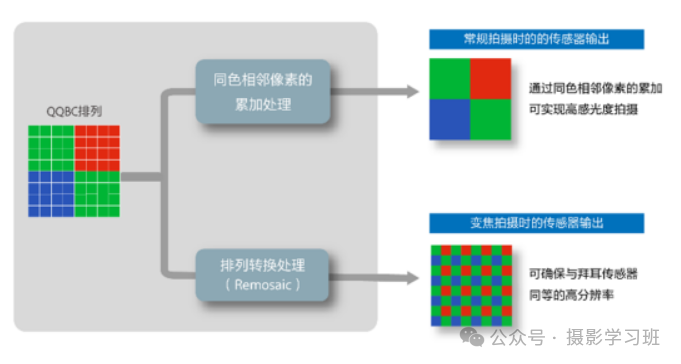
The LYTIA 901 employs aQuad-Quad Bayer array (which can be understood as a 4×4 super pixel merging structure), allowing it to combine 16 same-color pixels into one super pixel in low light, significantly increasing light intake.
However, the real magic lies in itsAI learning-based array rearrangement technology. When you zoom in, the AI circuit inside the sensor can intelligently reconstruct the Bayer image, restoring a detail-rich high-resolution photo. This means that even at 4x zoom, you can achieve solid detail and excellent noise control, rather than the traditional digital cropping.
-
What does this mean for users? In concert settings or night scenes, using a telephoto lens will result in unprecedented improvements in hit rate and image quality.

2. Restoration of Micro World Details: Making Textures and Text Crystal Clear
Sony emphasizes that its built-in AI technology excels at processinghigh-frequency details, such as intricate patterns, textile textures, and even small text.
This addresses a long-standing pain point in mobile photography: due to excessive smoothing or sharpening by algorithms, fabrics lose their texture and small text becomes blurry. The AI of the LYTIA 901 can better preserve the original information of these microscopic structures from the sensor level, achieving a more realistic restoration.
-
What does this mean for users? When photographing documents, pet fur, or fabric close-ups, detail retention is more complete, allowing for scrutiny even when enlarged in post-processing.
3. Breaking Limits in Dynamic Range: Insights Beyond Human Vision
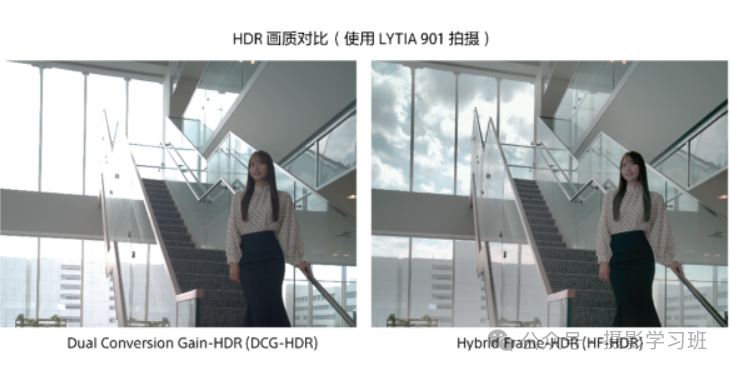
The LYTIA 901 integrates advancedSingle Frame Dual Conversion Gain-HDR (DCG-HDR) technology, combined with a 12-bit ADC, enabling it to capture signals with different gains in one shot.
Its AI’s power lies in efficiently synthesizing this massive data. Ultimately achieving adynamic range exceeding 100dB—a level close to that of professional cameras. In high-contrast backlit scenes, it can perfectly preserve the layers of clouds in the sky and the details in the shadows of buildings, resulting in images that closely resemble what the human eye sees.
-
What does this mean for users? When shooting backlit portraits or sunrise/sunset landscapes, there is no need to wait for HDR mode; the photos can achieve balanced exposure and rich layers straight out of the camera.
5. Conclusion: A New Paradigm Shift in Photography
The launch of the Sony LYTIA 901 marks a change in the competitive landscape of mobile photography. The simple stacking of hardware has reached its ceiling; future breakthroughs will lie inthe deep integration of computation and sensing.
When sensors are endowed with “intelligence,” they are no longer just the “retina” of the lens, but the “pre-processing brain” of the image. This brings faster processing speeds, lower power consumption, and image quality closer to optical essence to mobile photography.
It is foreseeable that the LYTIA 901 and the concept of “AI sensors” it represents will become the imaging core of future flagship smartphones. The lenses in our hands are becoming increasingly “smart.”
Follow the WeChat public account “Photography Learning Class” of Jiyun Photography Equipment Store to see a broader world of photography.