For those who wish to join the China Automotive Electronics Industry Technology Exchange Group, please long press the QR code to add the group owner on WeChat, and note: Company + Main Business + Name (Please note: If not noted, it will not be approved)

As the level of intelligence in automobiles continues to rise, the smart cockpit has become the core experiential space of modern vehicles. However, in the enclosed or semi-enclosed environment of a vehicle, air quality directly affects the health, comfort, and even driving safety of passengers. From carbon dioxide produced by human respiration to formaldehyde and VOCs released from interior materials, and external PM2.5 particles and flammable refrigerants that may leak from the air conditioning system, the sources of air pollution in the cockpit are diverse and hidden. Therefore, real-time, accurate, and comprehensive monitoring and control of in-vehicle air quality is not only key to enhancing passenger comfort but also a necessary requirement for ensuring the health of passengers and the safe operation of the vehicle.
1.Composition of Major Pollutants in Smart Cockpits
CO2: Typically uses non-dispersive infrared (NDIR) technology to monitor the concentration of carbon dioxide produced by vehicle occupants’ respiration, linking with the air conditioning system for fresh air adjustment, achieving air circulation, enhancing comfort, preventing driver fatigue, and avoiding hypoxia for occupants in a long-closed vehicle.
PM2.5: Mainly comes from dust at the air conditioning outlet, exhaust emissions from fuel vehicles, and particulate matter in the external air.PM2.5 particles.
Formaldehyde and Odors: Mainly sourced from the interior, including dashboards, doors, seats, and a series of plastic and leather coverings. Newly produced plastic parts often emit a faint odor, determined by the stability of their chemical properties. Additionally, for covering parts, the plastic skeleton and leather are bonded with glue, which contains a series of irritating odors such as benzene and uric acid, corresponding to the new car smell. These items can emit harmful substances like formaldehyde and benzene when exposed to sunlight, impacting human health.
Refrigerant Leakage from Vehicle Air Conditioning: The domestic market is strongly promoting the application of R290 propane refrigerant (A3 refrigerant) in vehicle air conditioning. This refrigerant is a new type of natural working fluid, which is environmentally friendly, energy-saving, and lower in cost compared to the R744 (carbon dioxide) refrigerant promoted in Europe, but it is flammable, thus requiring real-time detection of R290, R744 and other automotive air conditioning refrigerant leaks, with fast response, high accuracy, and long-term stable performance.

2.Sensor Selection
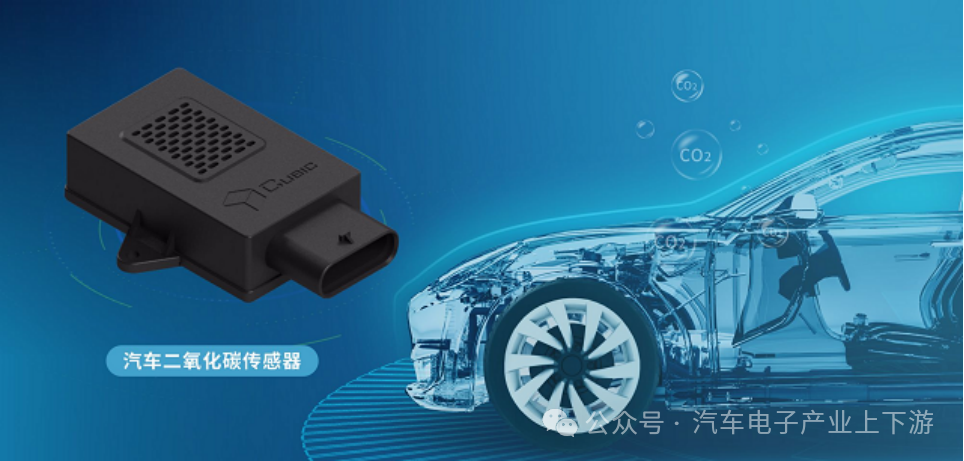
(1)CO2: Infrared sensors, NDIR technology detectsCO2 and has advantages such as resistance to gas cross-interference and high detection accuracy, making it the mainstream choice for automotiveCO2 sensor detection. Its detection principle is based on the absorption characteristics of gas molecules in specific infrared wavelengths, selecting 4.26μm for detection, where the gas absorption rate is highest, infrared radiation attenuation is significant, and water vapor absorption rate is low.
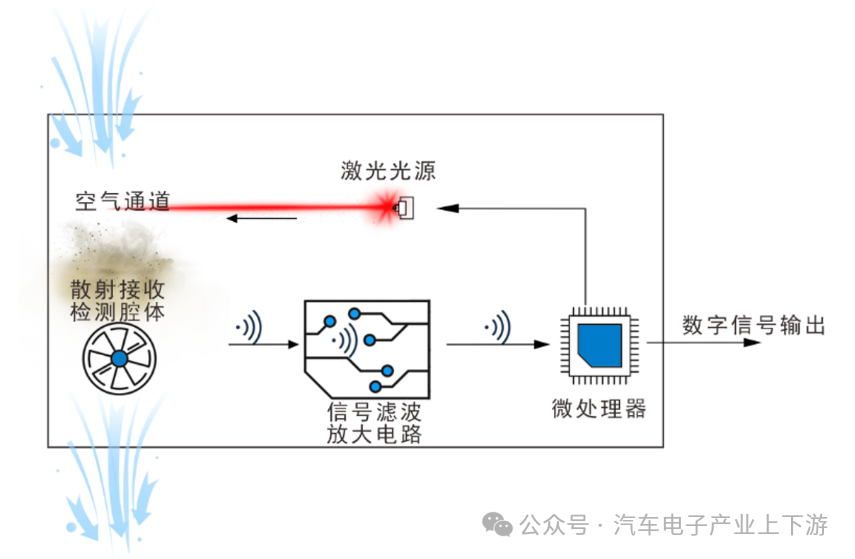
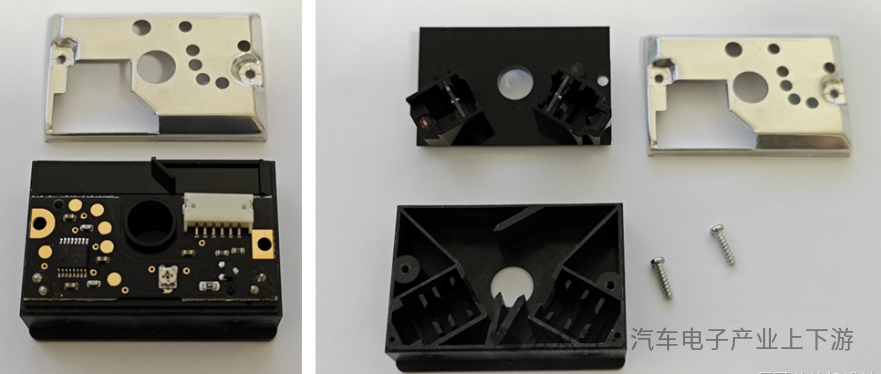
(2)PM2.5: The diameter of particles in the air is much larger than that of gas molecules, so laser scattering sensors can be used, based on the scattering phenomenon of particles to light, measuring the intensity of scattered light to estimate the mass concentration of particles and distinguish the particle size (e.g., differentiating PM2.5 and PM10). Its detection accuracy is far superior to that of cheap infrared scattering sensors, with a fast response speed (5S); however, its pollution resistance is poor, and active cleaning can be achieved by installing a fan inside.
(3)Formaldehyde Sensor: The odors and toxic substances in vehicles are mainly formaldehyde (HCHO) and volatile organic compounds (VOCs), in MOS gas sensors, these gases are adsorbed on the surface of metal oxides at high temperatures and react with surface oxygen ions. This reaction will “inject“ or “extract“ electrons into the semiconductor material, thereby changing its resistance value, ultimately detecting the presence of formaldehyde gas; in electrochemical sensors, formaldehyde gas can undergo redox reactions with the sensor’s detection electrode, generating corresponding current in the circuit, allowing detection of gas concentration based on current magnitude.
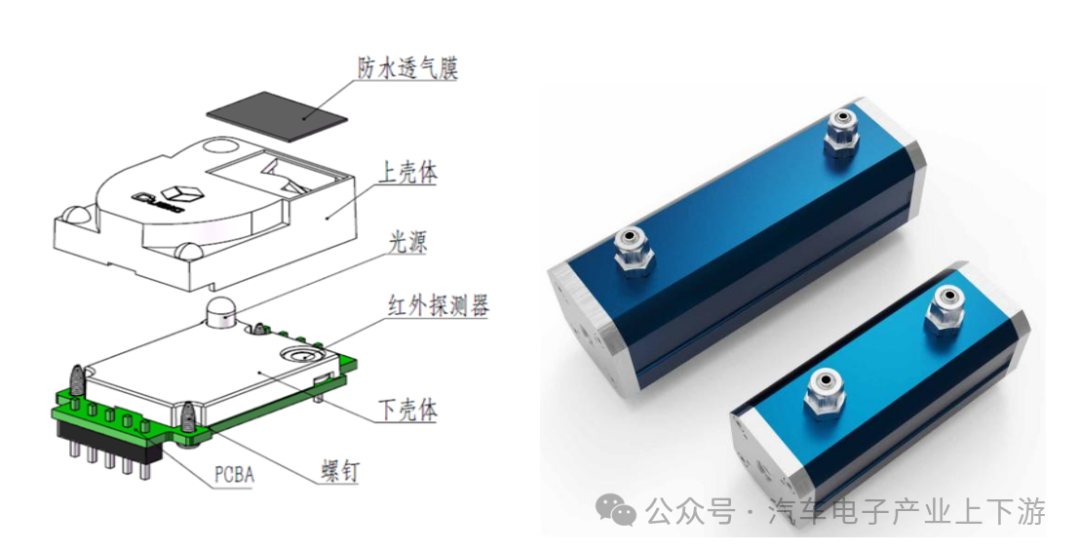
(4)Air Conditioning Leak Prevention: R290 refrigerant in air conditioning is propane and is highly flammable. Ensuring the safety of air conditioning systems, especially in new energy vehicle air conditioning systems, currently, the industry commonly uses gas sensors based on “non-dispersive infrared (NDIR) technology for leak monitoring, which has high reliability and safety, strong anti-interference capability, fast response, and long lifespan. The downside is that it is currently more expensive and larger in size.
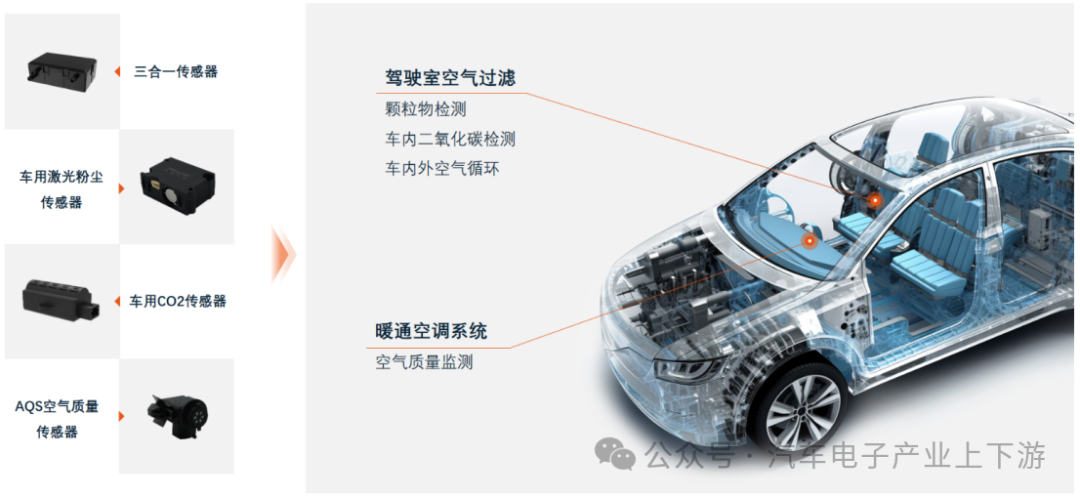
(5)Air Quality Sensors: To reduce costs, save space, improve product integration, and simplify installation complexity, the industry is now beginning to see multi-in-one gas sensors. These sensors combine laser particulate matter sensors, non-dispersive infrared carbon dioxide sensors, and electrochemical and semiconductor principles, capable of simultaneously outputtingPM1.0, PM2.5, PM10, VOC, CO2, CH2O and other gas data indicators. By comprehensively analyzing various data and combining with the air conditioning system, the control strategy for in-vehicle air quality becomes more precise.
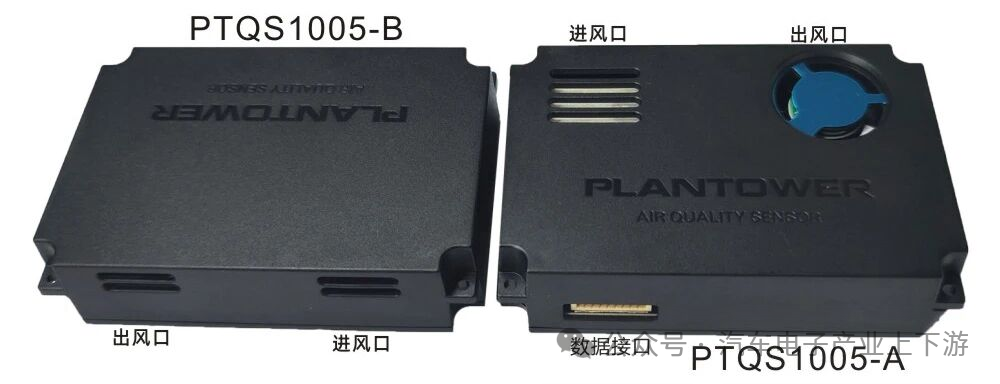
Panteng Technology—Multi-in-One Gas Sensor
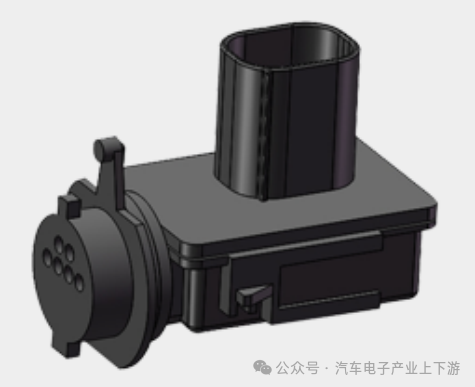
Shengwei Technology—ZM102 In-Vehicle Air Quality Sensor
This module combines MOS gas sensors, MEMS manufacturing processes, and high-performance microprocessors to detect the air pollution level of the external environment of the vehicle. The in-vehicle air quality module is installed at the air conditioning intake to detect the air quality about to enter the vehicle. When pollution is detected, it promptly triggers the air conditioning’s internal circulation function, switching to internal circulation mode, thus keeping the cabin air clean and protecting passengers from pollution. This module is a high-performance sensor module made by closely integrating mature detection technology with high-quality circuit design.
3.Factors Affecting Gas Sensor Performance
The performance of gas sensors is influenced by a series of complex factors. Besides the sensing principle, gas sensors are mainly affected by environmental factors and their own factors, which together determine the sensor’s accuracy, stability, response speed, selectivity, anti-interference capability, and service life.
(1)Environmental Factors
Temperature: Temperature significantly affects sensor performance, influencing gas adsorption/desorption rates, catalytic reaction efficiency, the conductivity of semiconductor materials, and the conductivity of electrolytes in electrochemical sensors.
Humidity: Water vapor competes with target gas molecules for adsorption on the sensitive material surface of the sensor, thereby suppressing or enhancing the sensor’s response signal. For example, MOS and EC gas sensors can cause baseline drift and reduced sensitivity in high humidity environments.
Pressure: The diffusion rate of gases is related to pressure. For sensors that rely on gas diffusion (such as electrochemical sensors), changes in environmental pressure will affect the rate at which gas enters the sensitive area, thus affecting the stability of readings.
(2)Sensor Self-Factors
From the perspective of the sensor itself, the detection method, detection materials, structural design of core components, signal processing and algorithms, filtering membranes, etc., all affect its performance. Today, we mainly discuss a key component that is often overlooked—Waterproof and Breathable Membrane
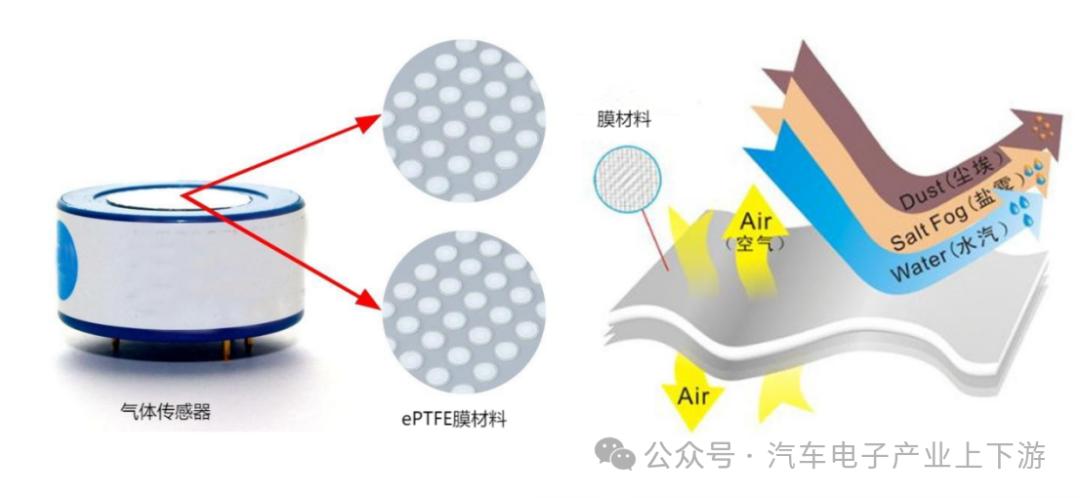
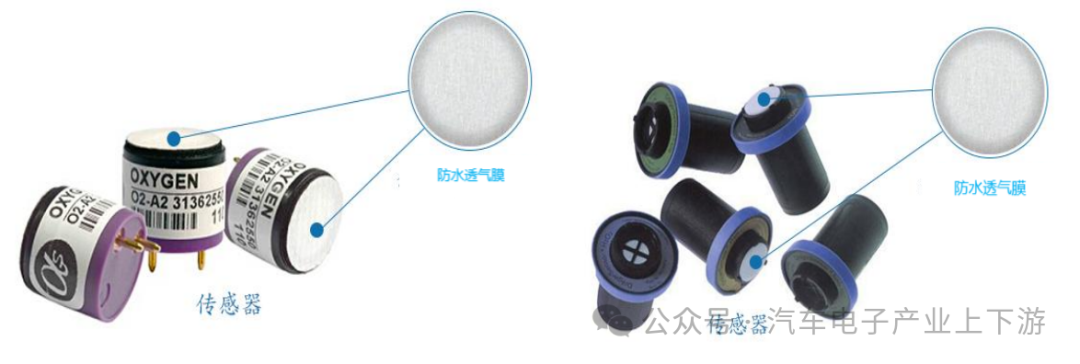
Function
Water and Dust Resistance: Prevents external moisture, dust, and particles from entering the sensor cavity, avoiding electrolysis or short circuits, protecting sensitive electrodes and circuits, thus extending sensor life and maintaining measurement stability.
Pressure Balance: When temperature and altitude change, a pressure difference occurs inside and outside the device. The waterproof and breathable membrane can quickly balance this pressure difference, effectively preventing excessive pressure from deforming or cracking the sensor housing. At the same time, excessive pressure differences can force gas to flow abnormally in or out of the sensor cavity, leading to inaccurate readings or delayed responses.
A good breathable membrane should maximize permeability, allowing gas molecules to pass through, ensuring that the concentration of gas molecules inside and outside the sensor cavity is consistent, thus improving detection accuracy.
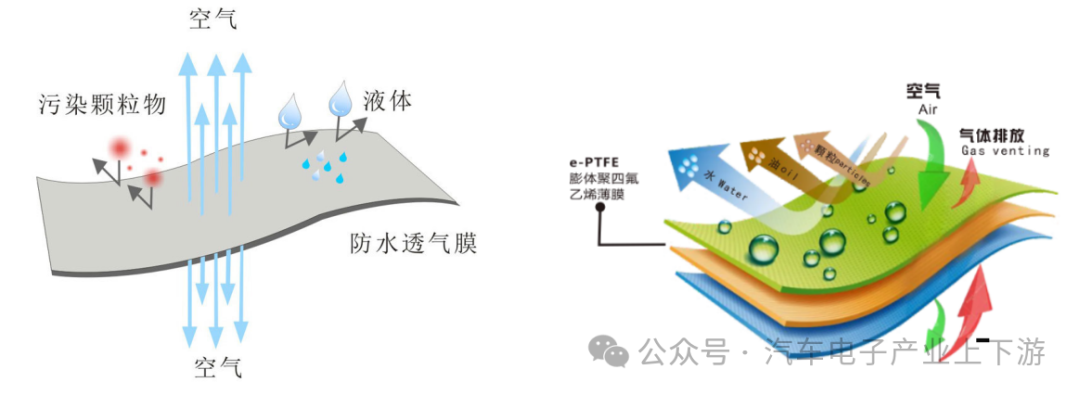
Impact of Waterproof and Breathable Membrane on Gas Sensor Performance
Increased Response Time: This is one of the most significant impacts, as gas molecules need to diffuse through the micropores of the membrane to enter the sensor, adding an extra physical transport barrier, thus prolonging the sensor’s response and recovery time. Therefore, to improve response speed, the gas permeability needs to be increased.
Reduced Sensitivity/Signal Strength: The physical barrier of the membrane reduces the number of gas molecules reaching the sensor’s sensitive element per unit time, leading to a decrease in output signal strength, especially when measuring low concentration gases.
Decreased Waterproof and Oil Resistance: To increase response speed and sensitivity, membranes are generally made more permeable by increasing pore size or density, but this reduces their waterproof and oil resistance. Therefore, an excellent breathable membrane needs to strike a balance between the two.
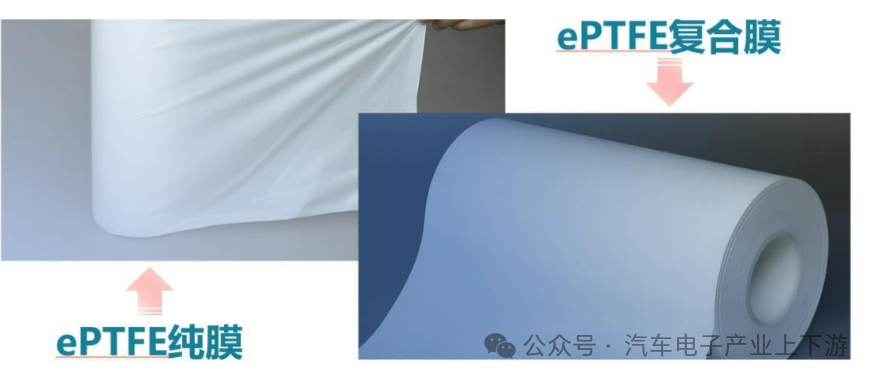
Pure Membrane

Composite Membrane (Enhanced Mechanical Strength)
Challenges in Vehicle Operating Conditions
It can be said that vehicle gas sensors face one of the harshest application scenarios for waterproof and breathable membranes, and their stable performance largely depends on the reliability of the waterproof and breathable membrane. This mainly stems from several extreme requirements:
First, the vehicle environment is extremely harsh. The waterproof and breathable membrane must maintain functional stability under high temperature, high humidity, and continuous vibration conditions, ensuring no detachment or failure occurs. To achieve this, the bonding seal between the membrane and the sensor housing is usually made using ultrasonic welding technology to form a high-strength, aging-resistant permanent seal.
Second, gas sensors integrated within vehicle electronics must also meet automotive-grade lifespan standards, meaning the waterproof and breathable membrane must maintain its performance consistency throughout the product lifecycle—typically lasting several years—without degradation due to environmental stress.
Additionally, to ensure the sensor’s measurement accuracy and rapid response (usually requiring a response time of 5 seconds), the gas permeability of the breathable membrane must reach extremely high levels—generally requiring ≥10000ml/min/cm²@7KPa. This value far exceeds that of other application scenarios (sensors), for example, the waterproof and breathable membrane inside radar only needs a few thousand levels of gas permeability. At the same time, such high permeability must coexist with an IP67 or higher waterproof protection level, achieving a perfect balance between “high permeability” and “strong waterproofing.” Furthermore, when achieving high permeability and strong waterproofing, the mechanical strength must be maximized, which can be achieved through composite membranes or increased thickness, but this will also affect gas permeability.
It is precisely these stringent comprehensive requirements that create a high technical barrier, and currently, only a few domestic companies’ products can truly meet all the demands of vehicle gas sensors.