Aerospace-grade technological genes are being injected into the “tactile nerves” of humanoid robots through a private technology enterprise.
At a technology company named Kunwei in Beijing, a group of engineers from the China Aerospace Science and Technology Corporation is transforming technologies once used for rocket and missile testing into the “tactile nerves” that allow robots to perceive the world.
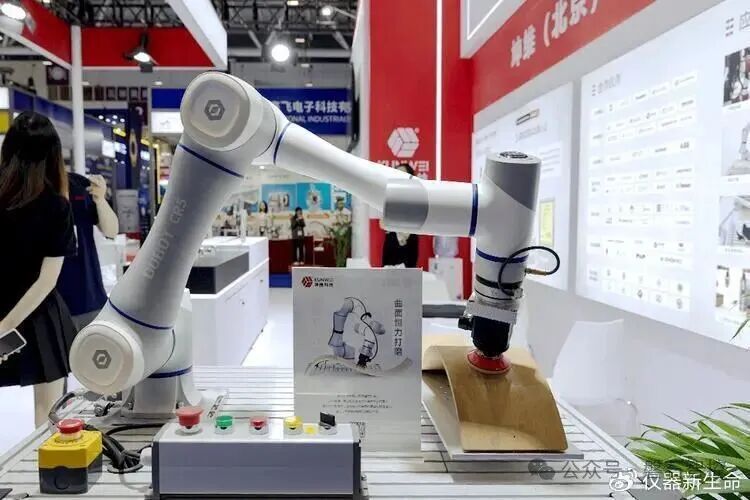
Founded in 2018, Kunwei Technology has broken the foreign monopoly in the high-end sensor field of six-dimensional force sensors, relying on itsaerospace-grade technological genes andself-developed calibration system.
Today, its products hold a market share ofover 70% in the collaborative robot segment, making it a leader in the domestic high-precision force sensing field..
01 Aerospace Genes: From National Missions to Commercial Innovation
The core founding team of Kunwei Technology comes entirely from the 11th Research Institute of the China Aerospace Science and Technology Corporation (Aerospace 701 Institute), the first aerospace research institute established by Qian Xuesen in Beijing, which carries out top domestic research in aerodynamic testing technology.
Company founder Xiong Lin has been engaged in aerodynamic testing technology research since 2004 at this research institute..
In the aerospace field, the requirements for testing the aerodynamic performance parameters of high-speed aircraft are extremely high, laying a solid foundation for the technical development of six-dimensional force sensors..
In 2018, Kunwei Technology was established with the aim of applying aerospace military-grade technology to the development of civilian six-dimensional force sensors..
The path of technology transfer is not merely a simple replication. Kunwei Technology not only produces six-dimensional sensors but also independently develops specialized equipment..
Without this equipment, it is difficult to produce six-dimensional sensors with an accuracy better than 1%. Kunwei Technology has improved the accuracy of its products to0.3%FS, with repeatability accuracy reaching0.1%FS.
02 Technical Breakthroughs: Overcoming Core Technical Bottlenecks of Six-Dimensional Force Sensors
A six-dimensional force sensor is a special sensor that can simultaneously sense forces and torques along the X, Y, and Z axes, capable of measuring applied loads in any direction and on any axis, making it the highest dimensional force sensing device..
However, its technical threshold is extremely high. In addition to solving the monotonicity and consistency issues sensitive to the measured force components, it must also addresscross-talk issues between dimensions, dynamic and static calibration problems, as well as decoupling algorithms and circuit implementations in vector calculations..
Kunwei Technology has tackled the cross-talk problem throughstructural decoupling andalgorithmic decoupling.
On one hand, they designed the internal structure of the sensor to form a force-sensitive structure that is only sensitive to forces in specific directions through integrated molding; on the other hand, they used machine learning technology to obtain internal parameters for algorithmic decoupling..
Calibration technology is also Kunwei Technology’s core competitive advantage. The company has independently developed a six-dimensional joint calibration system, becoming the only private enterprise in China with a six-dimensional joint calibration laboratory..
These devices can force the six-dimensional force sensors to learn and train the parameters of the decoupling algorithm..
03 Product Layout: Building a Complete Force Control Solution
After six years of research and accumulation, Kunwei Technology has formed adiversified product matrix. Currently, the company offers six-dimensional force sensors, joint torque sensors, uniaxial force sensors, high-precision data acquisition modules, and motion force platforms..
These products can basically cover the application scenarios of collaborative robots, small-load six-axis industrial robots, and humanoid robots..
With sensors ranging from 36mm to 200mm in diameter, Kunwei Technology’s products can cover all application scenarios of various intelligent robots..
Among them, the KWR36 series six-dimensional force sensor is a miniature high-precision force sensing device made of aerospace alloy, featuring high overload capacity, high rigidity, and high sensitivity..
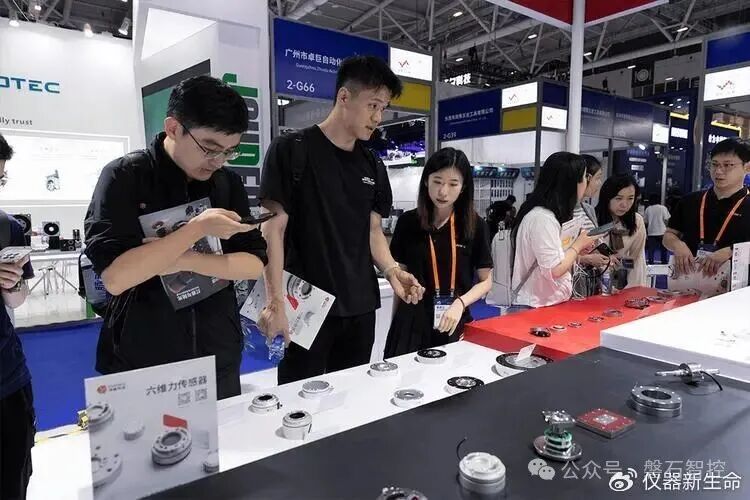
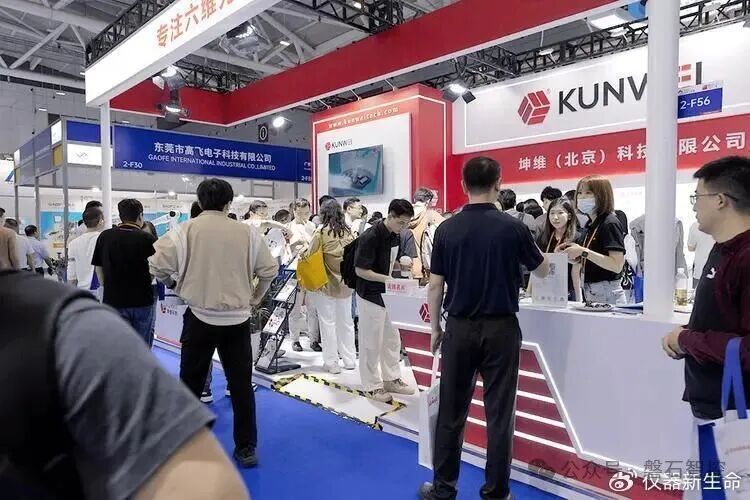
At the 2025 China International Industrial Expo, Kunwei Technology showcased its five major product lines, reflecting a complete solution layout in force sensing technology..
04 Market Recognition: From Capital Confidence to Industry Applications
Kunwei Technology’s technical strength and market prospects have gained recognition fromtop industry capital and industry chain giants..
In early 2025, the company announced the completion of its Series B financing, with investors including Xiaomi Industrial Investment, Sunny Optical Industry Fund, Shenzhen Capital Group, Hillhouse Capital, and other well-known institutions..
After this round of financing, based on the existing calibration capacity of 15,000 six-dimensional force sensors per year, Kunwei Technology will continue to establish a calibration capacity of 30,000 units per year..
In terms of market performance, Kunwei Technology has servedover 260 customers, accumulating a large number of clients in collaborative robots, medical robots, and automation integration companies..
In 2022, the company achievedtens of millions in revenue, and is expected to achieve over 50% growth in 2023..
Notably, in the collaborative robot segment, Kunwei Technology’s market shareexceeds 70%; in the humanoid robot sector, it has begun to supply products in bulk to the humanoid robot product lines of Xiaomi, Zhiyuan, Galaxy General, Xinghai Map, and Fourier..
05 Industry Leadership: Setting National Standards and Promoting Industry Standardization
As a leader in the field of six-dimensional force sensors for robots, Kunwei Technology also plays the role ofnational standard setter.
The national standardGB/T 43199-2023 “Testing Specifications for Multi-Dimensional Force/Torque Sensors for Robots”, drafted by Kunwei Technology as a major drafting unit, will officially be implemented on April 1, 2024..
This standard, written by Kunwei Technology, is under the jurisdiction of the National Technical Committee for Standardization of Robots (SAC/TC 591). It specifies the testing conditions for multi-dimensional force/torque sensors for robots and describes the testing methods for general and special performance..
Before the release of this standard, the testing methods and evaluation standards for robot force sensing products on the market varied and were not rigorous, with some even using one-dimensional force sensor testing methods to evaluate six-dimensional force sensors..
This method of treating six-dimensional force sensors as six one-dimensional force sensors for testing cannot objectively evaluate their core technical indicators..
06 Future Prospects: A 10 Billion Market Opens, Accelerating Domestic Substitution
With the popularity of humanoid robots and load-collaborative robots, six-dimensional force sensors, as a key component, are ushering in unprecedented development opportunities..
According to relevant data, it is expected that by2027, the market size for six-dimensional force/torque sensors in China will exceed 1.5 billion yuan, with a compound annual growth rate of over 45%; sales are expected to exceed 84,000 units, with a compound annual growth rate of over 60%..
Among them, sales in the robotics industry are expected to exceed 42,000 units..
Driven by the humanoid robot market, it is expected to reach a market space of100 billion yuan..
Kunwei Technology’s Deputy General Manager Gu Huixin stated that sensor companies are expected to achieve profitability by 2025 or 2026, especially with 2025 being a key year..
If several leading humanoid robot companies can successfully mass-produce, it will quickly drive the sensor industry to profitability..
Currently, Kunwei Technology’s products have extended from the end of collaborative robots to the supply chains of many global robot giants. At the booth of the 2025 Industrial Expo, its precise force control demonstration unit was surrounded by professional audiences—robot grippers can sensitively perceive changes in force and adaptively complete precision assembly tasks..
As humanoid robots move from the laboratory to industrialization,high-precision force sensing sensors are no longer just a component but a key bridge for robots to transition from automation to intelligence.
Kunwei Technology, a technology enterprise carrying aerospace genes, is equipping robots in China and around the world with precise “perceptual nerves”.
Source: Instrument New Life