 Article Overview
This article provides a comprehensive introduction to angle sensors by DigiKey, covering the selection and applications of angle sensors, including their working principles, types, and application scenarios. The article defines the basic functions of angle sensors, elaborates on the working principles and characteristics of various angle sensors, and provides considerations for selecting angle sensors while discussing common issues and solutions in applications.
Angle sensors are sensors used to measure the angular changes of objects or systems and convert them into usable output signals. They are widely used in various fields, including automotive, engineering machinery, and aerospace, where angle sensors are needed to detect angular changes to determine the position of objects.
For instance, in the aerospace industry, angle sensors are used to monitor the attitude, posture, and direction of aircraft, rockets, and spacecraft. These sensors help pilots or autonomous systems determine the position, speed, and heading of the aircraft.
In automotive applications, angle sensors measure the steering angle of the steering wheel, the angle of the tires, and the tilt angle of the vehicle. This information is crucial for vehicle control and safety. In mechanical manufacturing processes, angle sensors can monitor the motion trajectory and position of robots, robotic arms, or other automated devices, ensuring the accuracy and efficiency of the production process.
In maritime applications, angle sensors can monitor the tilt angle of ships, rudder angle, and the ship’s posture, which are important for navigation, ship stability, and safety. In construction engineering, angle sensors can monitor the tilt and deformation of buildings, ensuring their safety and stability.
Currently, the development of angle sensors is continuously advancing and innovating, including higher precision, wider measurement ranges, faster response times, and more durable materials. With the continuous evolution of technology, angle sensors will play an important role in more fields, promoting improvements and innovations in various applications.
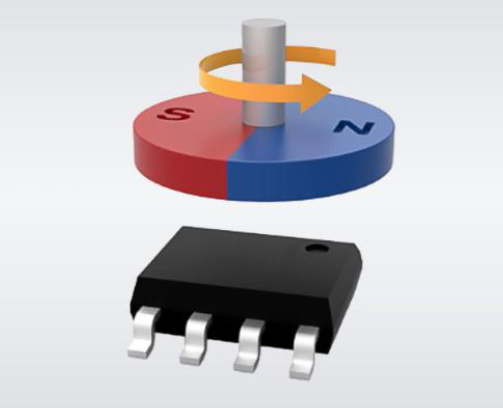
Angle sensors
Working Principles and Application Scenarios of Angle Sensors
Angle sensors can be classified into various types based on their working principles and application scenarios, including optical, resistive, pressure, magnetic, and inertial types. Each type has its unique characteristics, and suitable products can be selected based on the characteristics of different angle sensor types.
1. Optical Angle Sensors
Optical angle sensors are sensors that utilize optical principles to measure angular changes of objects. They use optical devices (such as photodiodes or lasers) to measure the angular changes of objects, characterized by high precision and fast response, suitable for applications requiring precise measurements, such as industrial automation and robotic control.
Optical angle sensors typically use light sources such as photodiodes or lasers to illuminate reflective surfaces and then collect the reflected light. The sensor calculates the angular changes of the object by analyzing the characteristics of the collected reflected light (such as the position and intensity of the light). When the angle of the object changes, the reflected light will shift accordingly, and the sensor determines the angle by measuring this shift.
Optical angle sensors have very high measurement accuracy, capable of precisely measuring small angular changes. Due to the extremely fast speed of light, optical angle sensors usually have fast response times, making them suitable for applications requiring real-time responses.
Optical angle sensors typically do not require direct contact with the measurement object during operation, thus not damaging or interfering with the measurement object, making them suitable for applications requiring non-contact measurements. Additionally, optical angle sensors have strong adaptability to different surfaces and environments, capable of handling various object surface characteristics and lighting conditions.
Due to their high precision and fast response characteristics, optical angle sensors are widely used in industrial automation, robotic control, aerospace, and are also commonly found in consumer products such as game controllers and smartphone gyroscopes.
2. Resistive Angle Sensors
Resistive angle sensors are a common type of angle sensor that measures angular changes of objects by utilizing changes in resistance. Common types include rotary potentiometers and spring resistors. Resistive angle sensors are cost-effective and highly reliable, suitable for applications where precision requirements are not very high, such as knob controls in household appliances.
Rotary potentiometers are a common type of resistive angle sensor, consisting of a fixed resistor and a rotatable sliding contact. As the sliding contact rotates with the angular change of the object, the contact point position between the contactor and the resistor changes, resulting in a change in resistance value. The angle sensor reflects the angular change of the object by measuring the resistance value corresponding to the position of the sliding contact. Typically, there is a linear relationship between resistance value and angle, or it can be converted based on specific calibration methods.
Spring resistors are another type of angle sensor used for measuring angles, such as in knobs and potentiometers. The structure of a spring resistor includes a rotating spring coil and a fixed resistor (such as a carbon film resistor), with physical contact between the two. When the user rotates the spring resistor, the rotation of the spring coil changes the contact area between the spring and the resistor, affecting the resistance value. When the contact area increases, the resistance value decreases; conversely, when the contact area decreases, the resistance value increases. By measuring the resistance value, the rotation angle can be inferred, thus achieving corresponding angle measurement.
Resistive angle sensors typically have lower manufacturing costs, making them widely used in cost-sensitive applications. Due to their relatively simple structure and resistance to external interference, they have high reliability.
Resistive angle sensors are suitable for applications where measurement precision is not very high, such as knob controls in household appliances and angle monitoring in mechanical devices. Due to their relatively simple structure, they are also easy to install and use. Compared to some other angle sensors, resistive angle sensors may experience some wear and tear during long-term use, requiring regular maintenance and replacement.
3. Pressure Angle Sensors
Pressure angle sensors are sensors that infer angular changes of objects based on pressure changes, commonly including piezoelectric and piezoresistive sensors, suitable for applications requiring high pressure and high-temperature environments, such as angle sensing in automotive engines.
A common type of pressure angle sensor is the piezoelectric sensor. It contains piezoelectric materials that generate charge changes when external pressure is applied. By measuring these charge changes, the angular changes of the object can be inferred. Another type is the piezoresistive sensor, which measures angular changes based on the effect of pressure on resistance. When the object undergoes angular changes, the resistance of the piezoresistive sensor changes accordingly, reflecting the angular changes.
Pressure angle sensors typically have high pressure and temperature resistance, suitable for applications in harsh environmental conditions, such as angle sensing in automotive engines. Pressure sensors usually have high reliability, are not easily affected by external interference, can operate stably, and have fast dynamic response capabilities, making them suitable for applications requiring quick responses.
Due to the characteristics of pressure angle sensors, they are suitable for various application scenarios, such as the automotive industry, maritime shipping, and construction engineering, with a wide range of applicability. When using pressure angle sensors, attention must be paid to their pressure range to ensure that the pressure changes produced by the object to be measured are considered in the design.
4. Magnetic Angle Sensors
Magnetic angle sensors measure angular changes of objects using the principle of magnetic field induction, including magnetoresistive, Hall effect, and magnetoelectric sensors. Magnetic angle sensors are durable and not affected by external light interference, suitable for applications in harsh environmental conditions, such as automotive steering systems.
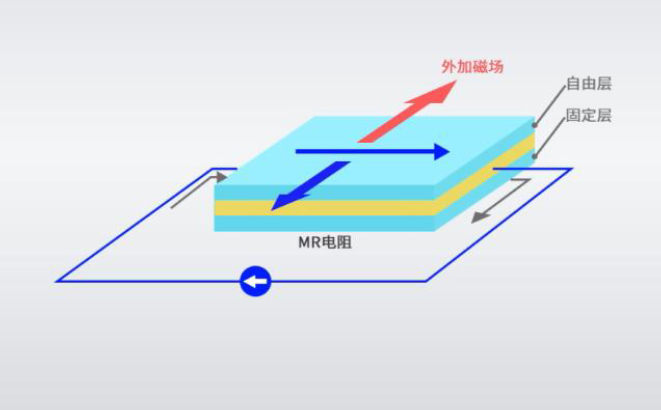
Magnetoresistance (MR)
Magnetoresistive angle sensors measure angular changes using the magnetoresistance effect. They consist of a magnetic field source and a magnetoresistive device. When the object undergoes angular changes, the direction and strength of the magnetic field change accordingly, affecting the resistance of the magnetoresistive device. The sensor infers angular changes by measuring the resistance changes.
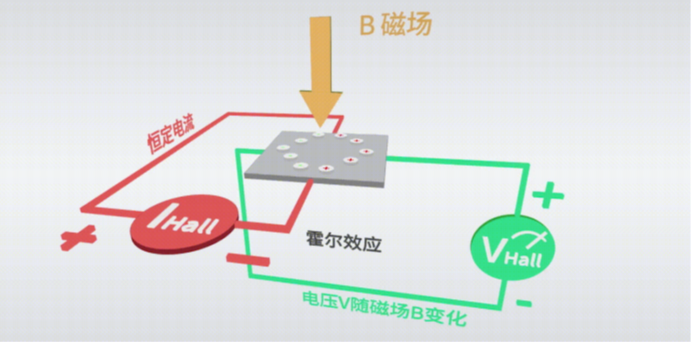
Principle of Hall Effect
Hall effect angle sensors utilize Hall devices to sense changes in the magnetic field. When the object undergoes angular changes, the direction and strength of the magnetic field change, and the Hall device senses this magnetic field change, producing a corresponding voltage change. The sensor infers angular changes by measuring the voltage changes.
Magnetoelectric sensors utilize the piezoelectric effect and magnetic structure to sense angular changes. When the object undergoes angular changes, the magnetic structure generates mechanical strain, affecting the charge output of the piezoelectric material. The sensor infers angular changes by measuring the charge changes.
Magnetic angle sensors typically have high durability, are not easily affected by external environmental interference, and are suitable for harsh industrial environments. Since the working principle of magnetic sensors is independent of light, they are not affected by external light interference, making them suitable for applications that need to operate in strong or variable lighting conditions.
Magnetic angle sensors have high sensitivity, capable of accurately measuring small angular changes. Some magnetic angle sensors have fast dynamic response capabilities, suitable for dynamic applications requiring quick responses. Due to the characteristics of magnetic angle sensors, they are suitable for various applications in industrial, mechanical, and aerospace fields, such as automotive steering systems and drone attitude control.
5. Inertial Angle Sensors
Inertial angle sensors are sensors that use inertial sensors (such as gyroscopes and accelerometers) to measure the angular velocity and acceleration of objects, inferring angular changes. They are suitable for applications requiring quick responses and dynamic tracking, such as drone flight control and virtual reality technology.
Gyroscopes are a key component of inertial angle sensors, utilizing the gyroscopic effect to measure the angular velocity of objects. When the object undergoes angular changes, the gyroscope senses this change and produces corresponding output signals, which can be used to calculate angular changes.
Accelerometers are another type of inertial sensor used to measure the acceleration of objects. In inertial angle sensors, accelerometers can be used to infer the directional changes of objects, and combined with the angular velocity data from the gyroscope, calculate angular changes.
Inertial angle sensors typically use fusion algorithms (such as Kalman filters) to comprehensively utilize data from gyroscopes and accelerometers to improve the accuracy and stability of angle measurements.
Inertial angle sensors have very fast response times, capable of real-time sensing and responding to angular changes of objects, suitable for applications requiring high-speed dynamic control. With the high-precision measurements of gyroscopes and accelerometers, inertial angle sensors can achieve precise measurements of small angular changes.
Inertial angle sensors are suitable for applications requiring dynamic tracking and attitude control, such as drone flight control and virtual reality technology. Since the working principle of inertial sensors is independent of external environmental light, magnetic fields, etc., they are not affected by external interference, can operate stably, and usually have high durability, allowing them to work stably in various working environments.
Secrets and Considerations for Selecting Angle Sensors
There are many types of angle sensors, each with different product characteristics. When selecting angle sensors, the first consideration should be the accuracy requirements for angle measurements in the application scenario. Some applications may require very high precision, while others may accept lower precision. It is crucial to select angle sensors with appropriate precision based on application needs.
Some applications require real-time responses to rapid dynamic changes of objects, so the dynamic response capability of angle sensors must be considered. Inertial angle sensors typically have better dynamic performance, while other types of sensors may be more suitable for static measurements.
Additionally, it is important to select suitable angle sensors based on the characteristics of the working environment. For example, angle sensors inside automotive engines need to have high-temperature and vibration resistance; while angle sensors used outdoors or in harsh environments need to be waterproof, pressure-resistant, and corrosion-resistant.
On the other hand, it is essential to ensure that the selected angle sensor’s measurement range and accuracy meet the actual application requirements. Selecting angle sensors with ranges that are too large or too small may lead to inaccurate measurement results or fail to meet requirements. Attention should also be paid to the sensor’s signal-to-noise ratio and stability, as a good signal-to-noise ratio can improve measurement accuracy, while stability ensures long-term stable measurement performance.
Finally, it is necessary to comprehensively consider the cost and performance of angle sensors. Sometimes, high-performance sensors are costly, while some low-cost sensors may not meet high precision or special environmental needs. Therefore, it is necessary to make appropriate choices balancing cost and performance.
Overall, when selecting angle sensors, it is essential to consider factors such as precision, dynamic performance, environmental conditions, range and accuracy matching, signal-to-noise ratio and stability, as well as cost and performance based on specific application needs.
Common Issues and Solutions in Applying Angle Sensors
When applying angle sensors, common issues may include accuracy issues, calibration issues, external interference, and dynamic response. For instance, if the angle sensor’s accuracy is insufficient, leading to inaccurate measurement results, high-precision angle sensors can be used, or methods that fuse data from multiple sensors (such as Kalman filters) can be employed to improve accuracy.
Additionally, angle sensors need regular calibration; otherwise, measurement results may deviate. Regular calibration of angle sensors should be performed according to the calibration methods provided by the manufacturer to ensure accurate and reliable measurement results.
On the other hand, external environmental interferences (such as magnetic fields, light, vibrations, etc.) can also affect the measurement accuracy and stability of angle sensors. In this case, it is advisable to select angle sensors with good anti-interference capabilities or to avoid the influence of external interference during installation and use, such as appropriately shielding magnetic fields and avoiding direct exposure to strong light.
In applications requiring quick responses, there may be instances where the dynamic performance of angle sensors is insufficient. The solution is to select inertial angle sensors with fast dynamic responses or to improve dynamic response performance by fusing data from multiple sensors.
Angle sensors may also face durability issues, as some angle sensors may be easily damaged or fail in harsh environments. When procuring, it is advisable to select angle sensors with high durability and provide appropriate protective measures based on the application scenario, such as waterproofing and high-temperature resistance..
Of course, balancing cost and performance is also very important, and it may be necessary to make choices between cost and performance. Based on application needs and budget, it is essential to consider cost and performance factors to select the most suitable angle sensor. It is also possible to consider using multiple low-cost sensors to improve performance.
|
Type |
Application Characteristics |
|
Optical Angle Sensors |
Optical angle sensors play an important role in many application scenarios due to their high precision, fast response, and non-contact measurement characteristics. |
|
Resistive Angle Sensors |
Resistive angle sensors are widely used in some angle measurement applications with medium to low precision requirements due to their low cost, high reliability, and wide applicability. |
|
Pressure Angle Sensors |
Pressure angle sensors are widely used in many industrial and engineering applications due to their pressure resistance, high reliability, and wide applicability. |
|
Magnetic Angle Sensors |
Magnetic angle sensors are widely used in many industrial and technological applications due to their durability, immunity to light interference, high sensitivity, and wide applicability. |
|
Inertial Angle Sensors |
Inertial angle sensors are widely used in many applications requiring dynamic control and high-precision angle measurements due to their fast response, high precision, and dynamic tracking characteristics. |
Conclusion
Each type of angle sensor has its unique advantages and disadvantages and applicable scenarios. When using angle sensors, it is essential to select the most suitable type based on specific application needs. Additionally, appropriate solutions should be adopted based on requirements and issues encountered during the application of angle sensors, and attention should be paid to maintenance and upkeep to ensure that angle sensors operate normally and provide accurate measurement results. The information presented in this article about angle sensors should assist you in purchasing and using angle sensors.
To learn more about angle sensors or the selection and application of other sensors, please click “Read More” to visit theDigiKey application and technology page’s sensor section.
 Editor’s Note
The selection of angle sensors is a systematic decision balancing multiple factors such as precision, environment, cost, and lifespan, directly impacting project success and overall lifecycle value. Properly selecting angle sensors can ensure stable, precise, and efficient system operation while reducing overall lifecycle costs. For engineers new to angle sensors, this article provides a comprehensive introduction to relevant knowledge, serving as a reference for selection. What insights or questions do you have regarding the selection of angle sensors? Feel free to leave a message and share with friends fromDigiKey!



“Star” us, and don’t miss fresh cases and industry insights