💥💥💞💞Welcome to this blog❤️❤️💥💥
🏆Author’s Advantage: 🌞🌞🌞The blog content aims to be logically coherent and clear for the convenience of readers.
⛳️Motto: A journey of a hundred miles begins with a single step.
📋📋📋The content of this article is as follows:🎁🎁🎁
⛳️Gift to Readers
👨💻Conducting research involves a profound system of thought, requiring researchers to be logical, diligent, and serious. However, effort alone is not enough; leveraging resources is often more important. Additionally, one must have innovative and inspiring ideas. Readers are advised to browse in order to avoid suddenly falling into a dark maze without finding their way back. This article may not reveal all the answers to your questions, but if it can clarify the doubts rising in your mind, it may create a beautiful sunset of colors. If it brings you a storm in your spiritual world, then take the opportunity to brush off the dust that has settled on your ‘lying flat’ mindset.
Perhaps, after the rain, the sky will be clearer…….🔎🔎🔎
💥1 Overview
Research on short-term wind power generation probability forecasting
Abstract
Wind power generation, as an important form of clean and renewable energy, plays a key role in the global energy transition. However, its inherent intermittency and volatility pose challenges to the stable operation and scheduling of power systems. Short-term wind power generation probability forecasting quantifies the uncertainty of wind power output, providing critical decision-making support for power system scheduling, risk management, and market trading. This article systematically reviews the importance, mainstream methods, and challenges of short-term wind power generation probability forecasting, proposes a probability forecasting framework based on hybrid models, and validates its effectiveness through empirical analysis. The research results indicate that hybrid models significantly outperform single models in terms of forecasting accuracy and robustness, providing theoretical support for enhancing wind power absorption capacity and grid stability.
Keywords
Wind power generation; short-term probability forecasting; hybrid models; uncertainty quantification; power system scheduling
-
Introduction
With the growth of global energy demand and the transition of energy structures, wind power generation has become a focal point in the energy sector due to its clean and renewable characteristics. China’s cumulative installed capacity of wind power continues to rise, the commercialization process of offshore wind power is accelerating, and the cost of wind power has significantly decreased. However, the randomness and intermittency of wind energy lead to severe fluctuations in wind power output, posing higher demands on the stable operation and scheduling of the grid. Traditional point forecasting methods only provide a single forecast value and cannot reflect the uncertainty of wind power output, while probability forecasting quantifies the prediction interval or probability distribution, providing more comprehensive risk information for the power system, making it a key technology for enhancing wind power absorption capacity.
-
The Importance of Short-Term Wind Power Generation Probability Forecasting
2.1 Enhancing Grid Operational Safety and Reliability
The rapid fluctuations in wind power output can cause dramatic changes in grid frequency and voltage, potentially leading to grid collapse. Probability forecasting provides the possible range and probability distribution of future wind power output, enabling dispatchers to formulate response strategies in advance, such as adjusting reserve capacity and optimizing generation plans, effectively mitigating the impact of power fluctuations on the grid. For example, a model developed by the Fraunhofer Institute in Germany, which combines numerical weather forecasting with machine learning, significantly improves wind power forecasting accuracy and reduces grid scheduling risks.
2.2 Optimizing Power Scheduling and Reducing Operating Costs
Based on probability forecasting results, dispatch centers can scientifically formulate generation plans, reducing fossil fuel consumption and carbon emissions. During periods with high probability of wind power forecasting, the output of thermal power units can be reduced; during periods with low forecasting probability, standby units can be activated in advance to avoid power shortages. Additionally, probability forecasting can optimize the operation strategy of energy storage systems, smoothing power fluctuations and further reducing system operating costs.
2.3 Enhancing Risk Management Capabilities of Power Market Participants
Power market participants need to accurately forecast wind power output to formulate trading strategies and risk hedging plans. Probability forecasting provides comprehensive uncertainty information, helping power generation companies, electricity sales companies, and users assess market risks and develop robust trading strategies. For example, power generation companies can choose appropriate trading models based on forecasting results to avoid penalties for insufficient generation.
2.4 Promoting Renewable Energy Absorption
The large-scale integration of wind power poses higher requirements for the stability and adjustability of the grid. Probability forecasting quantifies the uncertainty of wind power output, allowing the grid to adjust scheduling strategies more flexibly, thereby improving the absorption capacity of renewable energy. For instance, in China’s “Three North” region, the joint optimization scheduling of wind power output forecasting and load forecasting has effectively reduced the wind abandonment rate.
-
Methods for Short-Term Wind Power Generation Probability Forecasting
3.1 Physical Methods
Physical methods are based on atmospheric dynamics and thermodynamics equations, utilizing meteorological data such as wind speed, wind direction, temperature, and pressure provided by numerical weather prediction (NWP) systems to calculate wind power output through physical models. This method has a solid theoretical foundation but relies on high-precision meteorological data, and the models are complex and computationally intensive. For example, mesoscale numerical weather prediction models need to adapt to the terrain of wind farms through downscaling techniques, but errors in numerical weather prediction itself can propagate to the forecasting results, often requiring the combination of statistical methods or artificial intelligence algorithms for error correction.
3.2 Statistical Methods
Statistical methods establish statistical models based on historical wind power data and meteorological data, such as autoregressive moving average models (ARMA) and Kalman filter models, to predict future wind power output. This method is computationally efficient but relies on the quality of historical data and struggles to capture nonlinear features and abrupt changes. Improved models such as quantile regression (QR) and Gaussian process regression (GPR) predict wind power output values at different quantiles or directly output probability distributions, enhancing forecasting accuracy. For instance, quantile regression quantifies prediction uncertainty by constructing prediction intervals.
3.3 Artificial Intelligence Methods
Artificial intelligence methods utilize technologies such as neural networks and deep learning to learn the complex relationships between historical data and wind power output, achieving high-accuracy predictions. Models like Long Short-Term Memory (LSTM) networks and Convolutional Neural Networks (CNN) excel in handling time series data and nonlinear relationships. For example, researchers in Spain used LSTM models to predict wind speed and power at wind farms, significantly reducing root mean square error (RMSE) and mean absolute error (MAE). However, artificial intelligence models require large amounts of training data and carry the risk of overfitting, necessitating optimization through regularization measures.
3.4 Hybrid Methods
Hybrid methods combine the advantages of different forecasting methods to compensate for the shortcomings of single models. For example, physical-statistical hybrid models use physical models to predict the overall trend of wind power output and then correct errors using statistical models; artificial intelligence-statistical hybrid models utilize deep learning to capture nonlinear features and then perform error analysis and confidence interval estimation using statistical models. Research shows that hybrid models significantly outperform single models in terms of forecasting accuracy and robustness. For instance, a model that integrates quantile regression, Monte Carlo simulation, and Bayesian methods achieves high-accuracy probability forecasting through dynamic parameter adjustment.
-
Challenges in Short-Term Wind Power Generation Probability Forecasting
4.1 Data Quality Issues
Wind power forecasting relies on high-quality historical and meteorological data, but practical applications often face issues such as data missingness and outliers. Sensor failures, data transmission errors, and other factors can lead to decreased data quality, affecting forecasting accuracy. For example, missing wind speed data may prevent forecasting models from accurately capturing changes in wind power output trends.
4.2 Model Interpretability
While deep learning models have high forecasting accuracy, their internal mechanisms are complex and difficult to interpret, complicating model debugging and optimization. For instance, the hidden layer parameters of LSTM models lack physical significance, making it difficult for dispatchers to trust their forecasting results. Improving model interpretability is an important direction for future research.
4.3 Computational Efficiency Issues
Complex forecasting models require substantial computational resources and time, making it challenging to meet the real-time requirements of power systems. For example, Monte Carlo simulations require extensive random sampling to generate prediction intervals, resulting in high computational costs. Researching efficient computational algorithms and hardware acceleration technologies is key to enhancing model practicality.
4.4 Spatial Correlation
Traditional forecasting methods primarily focus on the output of individual wind farms, but there is spatial correlation between wind farms; the output changes of one wind farm can affect others. For example, regional weather systems may cause simultaneous output fluctuations across multiple wind farms. Future research needs to consider spatial correlation and establish joint probability forecasting models for multiple wind farms to improve regional wind power forecasting accuracy.
-
Research Progress at Home and Abroad
5.1 International Research Progress
European and American countries are at the forefront of wind power forecasting technology research and development. The Fraunhofer Institute in Germany has developed a model that combines numerical weather forecasting with machine learning, significantly improving wind power forecasting accuracy through high-resolution meteorological data mining and deep learning algorithms. The University of Warwick in the UK has constructed an adaptive wind power forecasting model using big data analysis techniques, capable of adjusting parameters in real-time based on meteorological conditions and grid status, enhancing model adaptability. The National Renewable Energy Laboratory (NREL) in the United States has developed a wind power forecasting system that integrates physical and statistical models, suitable for forecasting wind farms in complex terrains.
5.2 Domestic Research Progress
Domestic research focuses on practical issues related to the large-scale integration of wind power into the grid, considering national conditions. The China Electric Power Research Institute has conducted joint optimization scheduling research based on ultra-short-term load forecasting and wind power forecasting for large-scale wind power bases in the “Three North” region, improving the grid’s capacity to accept wind power. North China Electric Power University has established a wind power forecasting model based on multi-source information fusion for offshore wind farms, considering complex meteorological conditions and wave impacts, enhancing forecasting accuracy. Additionally, domestic scholars have explored the application of new technologies such as satellite remote sensing and drone monitoring in wind power forecasting, further enriching data sources.
-
Empirical Analysis: Wind Power Probability Forecasting Based on Hybrid Models
6.1 Data Sources and Preprocessing
This study takes a certain offshore wind farm in China as an example, collecting historical wind power output data, numerical weather forecast data (wind speed, wind direction, temperature, pressure, etc.), and meteorological tower data from January 2023 to December 2024. The data is cleaned to remove outliers and missing values, and linear interpolation is used to fill in missing data. The data is normalized to map different feature data to the range [0,1], improving model training efficiency.
6.2 Model Construction
A hybrid model is used for wind power probability forecasting, combining the advantages of LSTM models and quantile regression models. The LSTM model captures the nonlinear features and temporal dependencies of wind power output, while the quantile regression model constructs prediction intervals to quantify prediction uncertainty. The specific steps are as follows:
Feature Extraction: Extract features such as wind speed, wind direction, temperature, and pressure from the raw data, and calculate their temporal change rates as additional features.
LSTM Model Training: Using historical wind power output and meteorological features as input, train the LSTM model to predict point estimates of future wind power output.
Quantile Regression Model Training: Using the prediction errors of the LSTM model as input, train the quantile regression model to predict error values at different quantiles and construct prediction intervals.
Model Fusion: Combine the point estimates from the LSTM model with the prediction intervals from the quantile regression model to generate probability forecasting results for wind power output.
6.3 Result Analysis
Using root mean square error (RMSE), mean absolute error (MAE), and prediction interval coverage probability (PICP) as evaluation metrics, compare the forecasting performance of the LSTM model, quantile regression model, and hybrid model. The results indicate that the hybrid model significantly outperforms single models in terms of RMSE and MAE, and the prediction interval coverage probability is close to the theoretical value, indicating its ability to accurately quantify prediction uncertainty. For example, in a 4-hour ahead forecast, the hybrid model’s RMSE is reduced by 12% compared to the LSTM model, and the PICP reaches 92%, meeting the scheduling needs of the power system.
-
Conclusion and Outlook
Short-term wind power generation probability forecasting is a key technology for enhancing the stability and economic efficiency of energy systems. This article systematically reviews the importance, mainstream methods, and challenges of probability forecasting, proposes a probability forecasting framework based on hybrid models, and validates its effectiveness through empirical analysis. The research results indicate that hybrid models significantly outperform single models in terms of forecasting accuracy and robustness, providing scientific basis for power system scheduling, risk management, and market trading.
Future research should further focus on the following directions:
Data Fusion and Quality Improvement: Integrate historical wind power data, meteorological data, satellite remote sensing data, and other multi-source information to enhance data coverage and accuracy.
Artificial Intelligence Model Optimization: Research advanced models such as graph neural networks and attention mechanisms to improve forecasting accuracy and interpretability.
Deepening Hybrid Forecasting Methods: Explore more effective model fusion strategies to fully utilize the advantages of different models.
Applications of Cloud Computing and Edge Computing: Utilize cloud computing platforms to process large-scale data and achieve real-time forecasting and rapid response through edge computing.
Consideration of Spatial Correlation: Establish joint probability forecasting models for multiple wind farms to improve regional wind power forecasting accuracy.
Through continuous technological innovation and practical application, short-term wind power generation probability forecasting technology will contribute significantly to building a clean, efficient, safe, and reliable modern energy system.
📚2 Operational Results
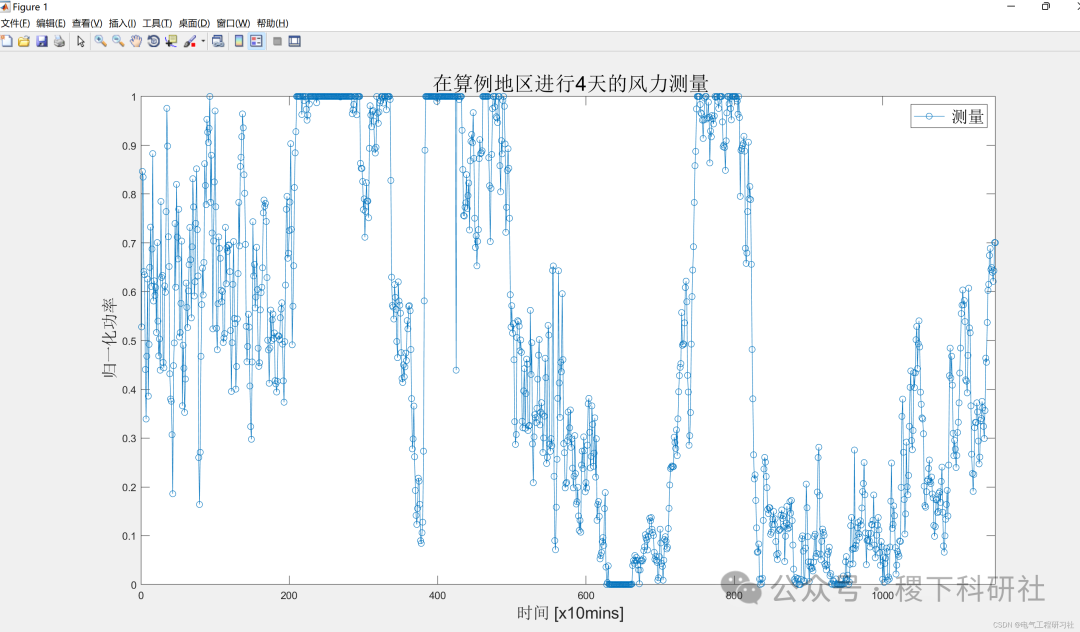
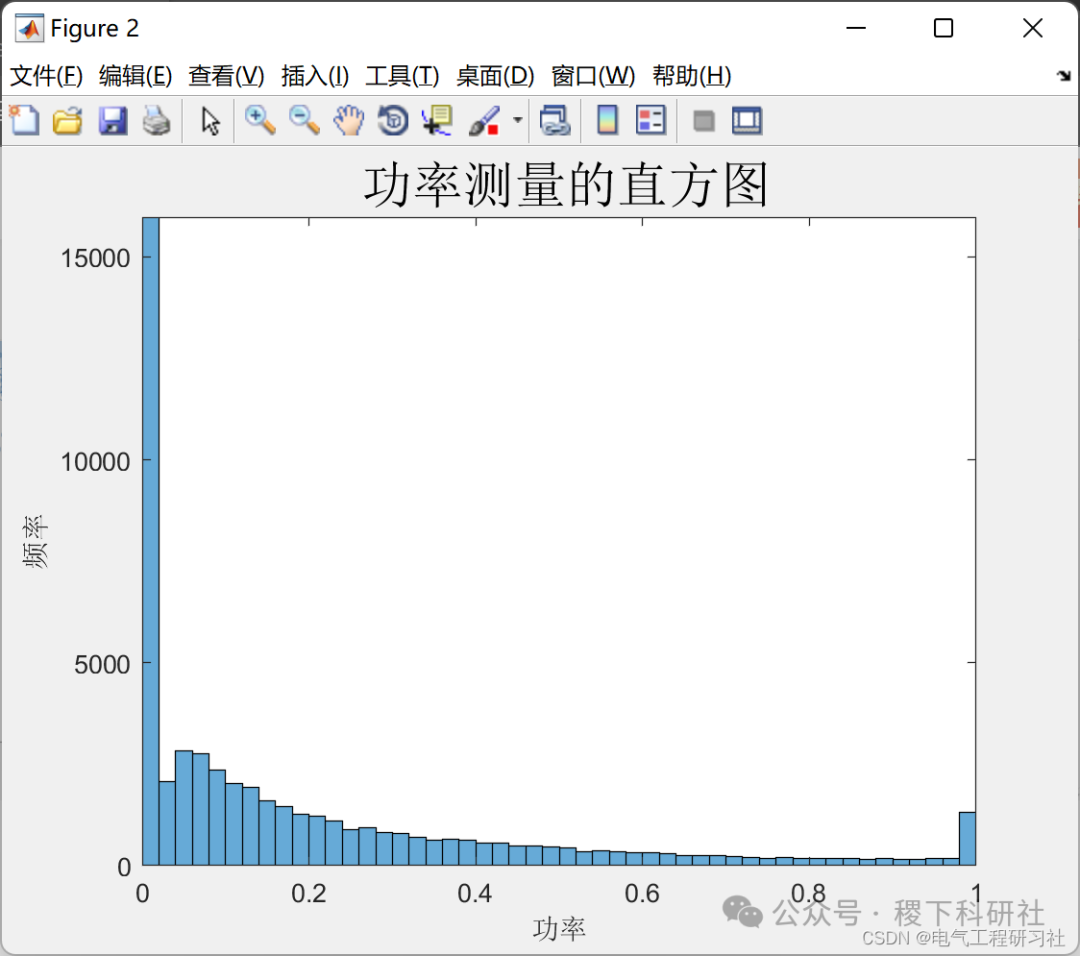
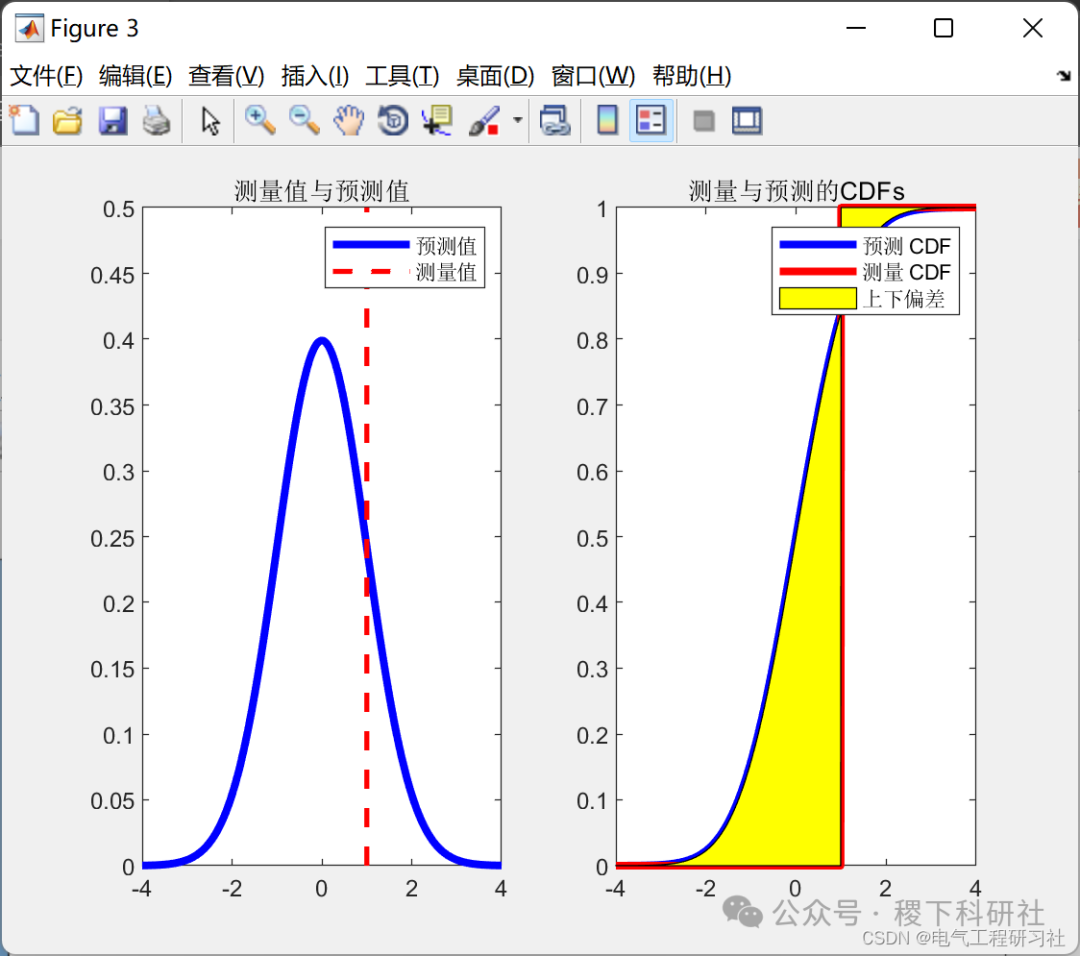
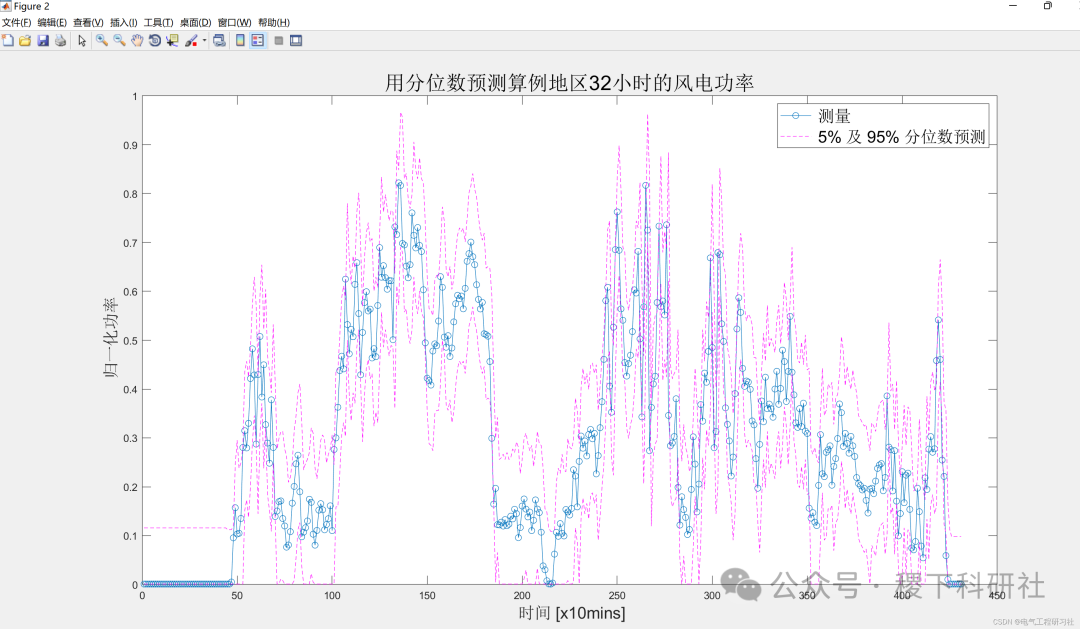
6.1 Example 1 Results




6.2 Example 2






🎉3 References
Some content in this article is sourced from the internet, and references will be noted or cited. If there are any inaccuracies, please feel free to contact us for removal. (The content of the article is for reference only; specific effects are subject to operational results)
🌈4 Matlab Code and Data Download
For more resources, including MATLAB|Simulink|Python resources, please follow us.